PHNOM PENH, Cambodia (AP) — A Cambodian court on Monday convicted a prominent opposition politician of incitement and sentenced him to four years in prison, in the latest legal move to stifle criticism of the government of Prime Minister Hun Manet.
Rong Chhun, a top advisor to the newly formed Nation Power Party, was found guilty of inciting social unrest related to his political activity for meeting with villagers displaced by government construction projects, including the new Phnom Penh International Airport. In addition to the prison term, he was barred from running for office and from voting.
Click to Gallery
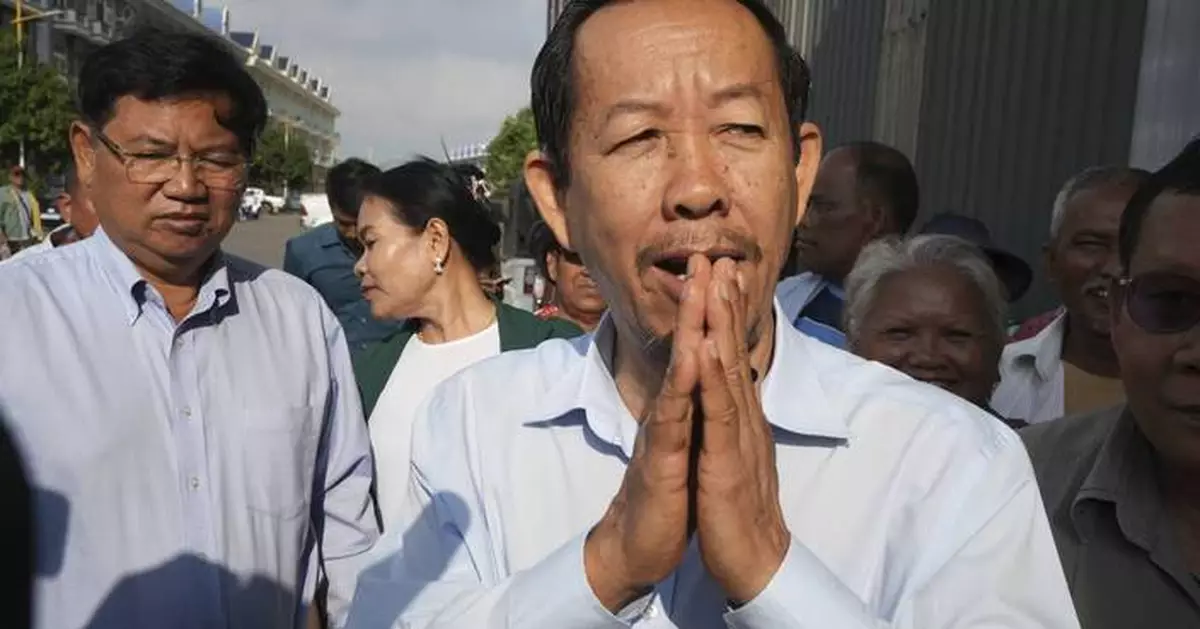
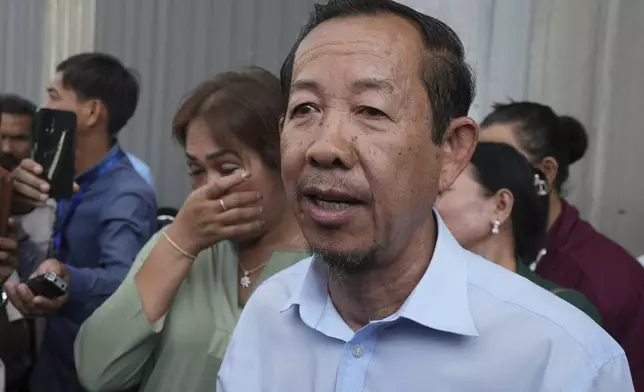
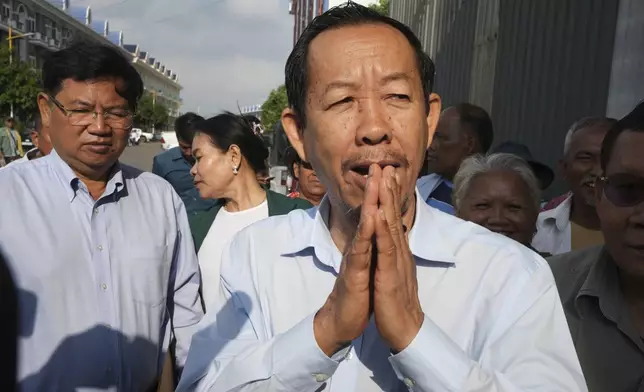
Cambodian prominent opposition politician Rong Chhun talks to media near the Phnom Penh Municipal Court in Phnom Penh, Cambodia, Monday, May 5, 2025. (AP Photo/Heng Sinith)
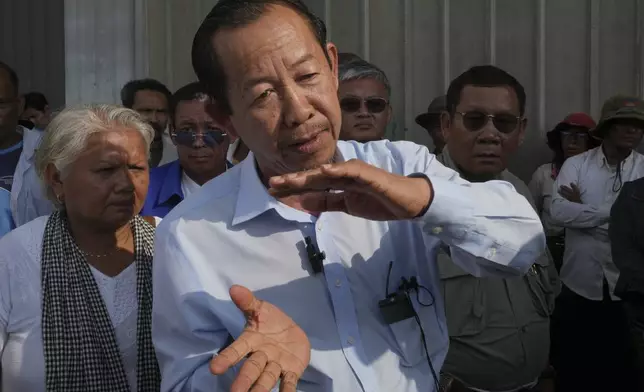
Cambodian prominent opposition politician Rong Chhun, foreground, gestures as he talks to media members near the Phnom Penh Municipal Court in Phnom Penh, Cambodia, Monday, May 5, 2025. (AP Photo/Heng Sinith)
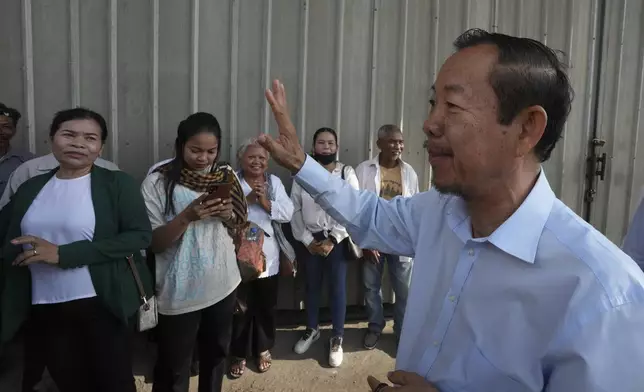
Cambodian prominent opposition politician Rong Chhun, right, waves to his supporters near the Phnom Penh Municipal Court in Phnom Penh, Cambodia, Monday, May 5, 2025. (AP Photo/Heng Sinith)
Cambodian prominent opposition politician Rong Chhun greets his supporters near the Phnom Penh Municipal Court in Phnom Penh, Cambodia, Monday, May 5, 2025. (AP Photo/Heng Sinith)
The 56-year-old had denied the incitement charge, saying all he did was post photos of himself with the villagers and comments on Facebook.
“This is not a law enforcement issue,” Rong Chhun told reporters after the verdict. "It's about politics."
He remains free for a month with the opportunity to file an appeal during that time and said he would do so.
The U.S. Embassy, which has been critical of Cambodia's human rights record, had an observer at the hearing but did not immediately respond to a request for comment.
Incitement allegations are frequently used by authorities in Cambodia against opponents. Rong Chhun was already sentenced to two years for incitement in 2021, on accusations he spread false information about Cambodia's border with Vietnam after meeting with farmers in the area. He was released later the same year by an appeals court.
Cambodia’s government has long been accused of using the judicial system to persecute critics and political opponents. It insists it promotes the rule of law under an electoral democracy, but political parties seen as mounting strong challenges to the ruling Cambodian People’s Party have been dissolved by the courts or had their leaders jailed or harassed.
Under almost four decades of autocratic former Prime Minister Hun Sen, Cambodia was widely criticized for human rights abuses that included suppression of freedom of speech and association. He was succeeded in August 2023 by his American-educated son, Hun Manet, but there have been few signs of political liberalization.
Late last year, the president of the Nation Power Party, Sun Chanthy, was himself convicted of inciting social disorder and sentenced to two years. Sun Chanthy had been a top leader of the former Cambodia National Rescue Party, which had been expected to present a strong challenge to Hun Sen's ruling party in 2018 elections, but was dissolved by the high court as part of a sweeping crackdown on opposition.
Sun Chanthy then joined the Candlelight Party, the successor to the Cambodia National Rescue Party, but it in turn was barred from competing in the 2023 general election on a technicality. He then helped form the Nation Power Party at the end of 2023, along with Rong Chhun and others.
After his conviction Monday, Rong Chhun said he was not surprised by the verdict and vowed to continue “actively to protect the constitution.”
“We must hold to a path that is based on the truth,” he said.
He urged members of the Nation Power Party to stay the course while he serves his sentence.
“Let's not lose heart,” he said. “We must all be strong.”
Rising reported from Bangkok.
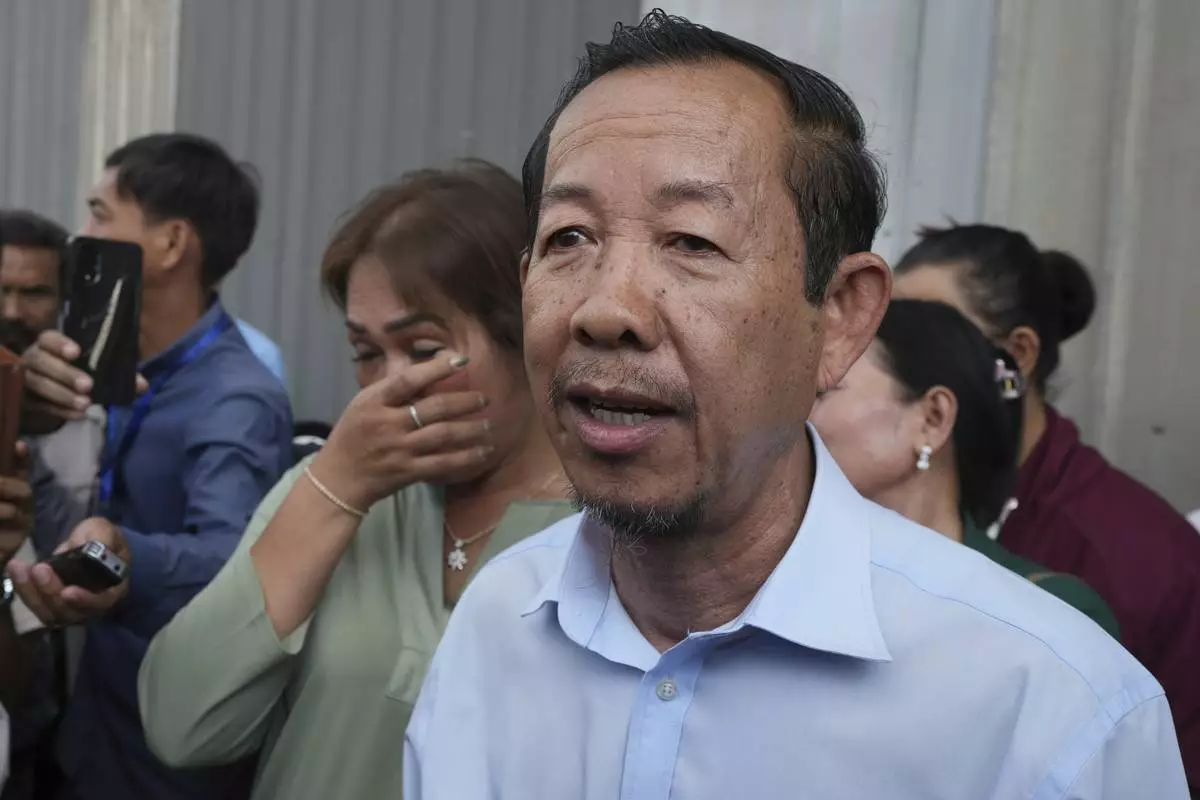
Cambodian prominent opposition politician Rong Chhun talks to media near the Phnom Penh Municipal Court in Phnom Penh, Cambodia, Monday, May 5, 2025. (AP Photo/Heng Sinith)
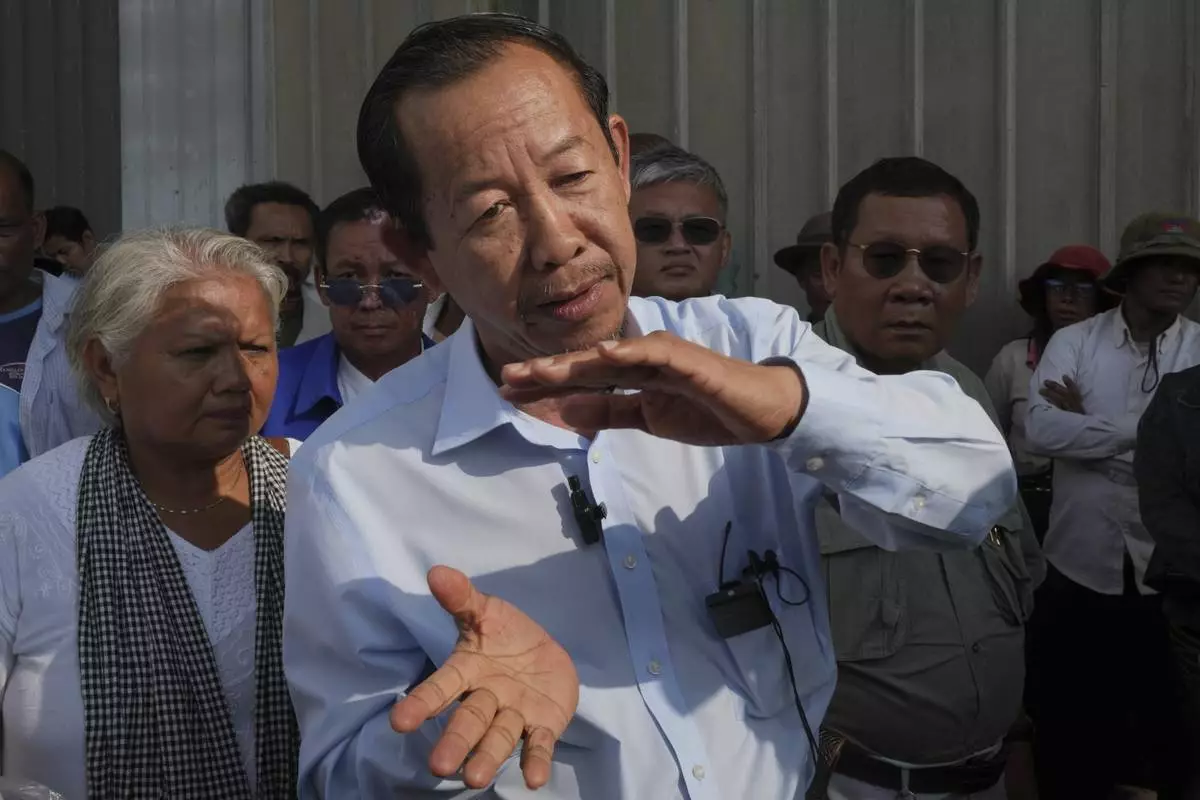
Cambodian prominent opposition politician Rong Chhun, foreground, gestures as he talks to media members near the Phnom Penh Municipal Court in Phnom Penh, Cambodia, Monday, May 5, 2025. (AP Photo/Heng Sinith)
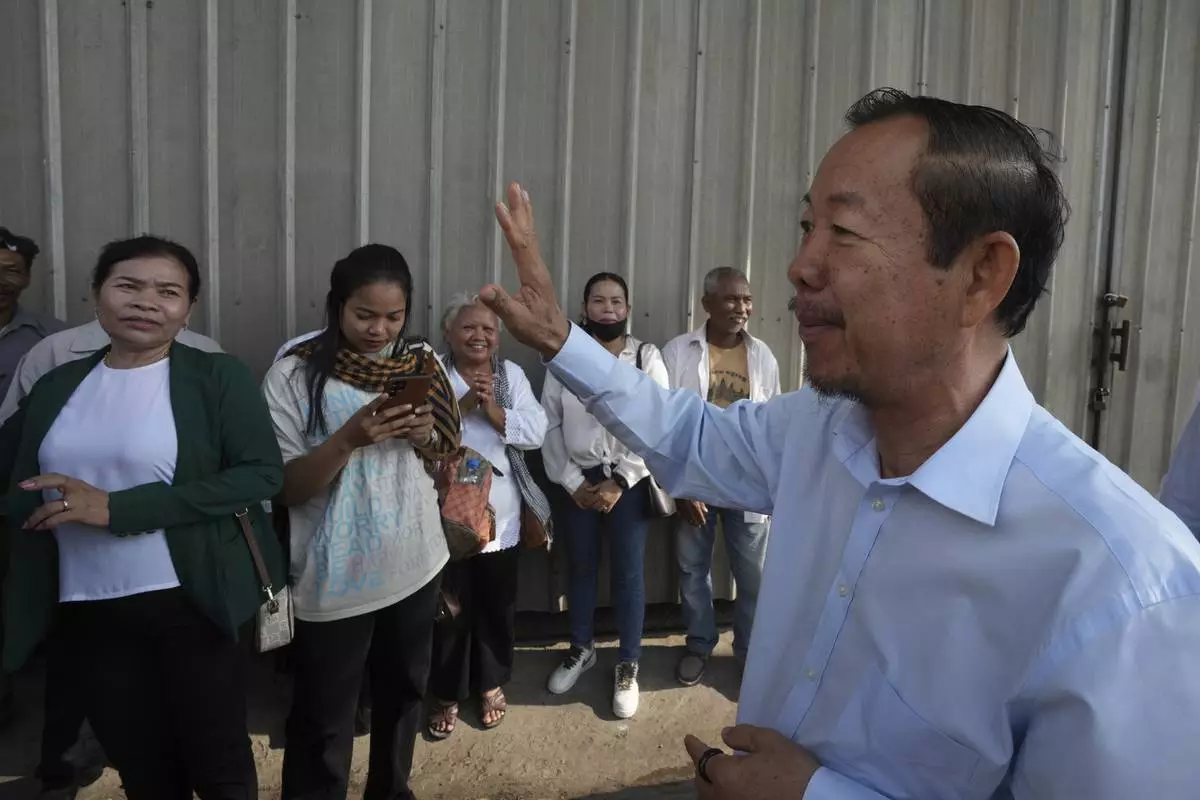
Cambodian prominent opposition politician Rong Chhun, right, waves to his supporters near the Phnom Penh Municipal Court in Phnom Penh, Cambodia, Monday, May 5, 2025. (AP Photo/Heng Sinith)
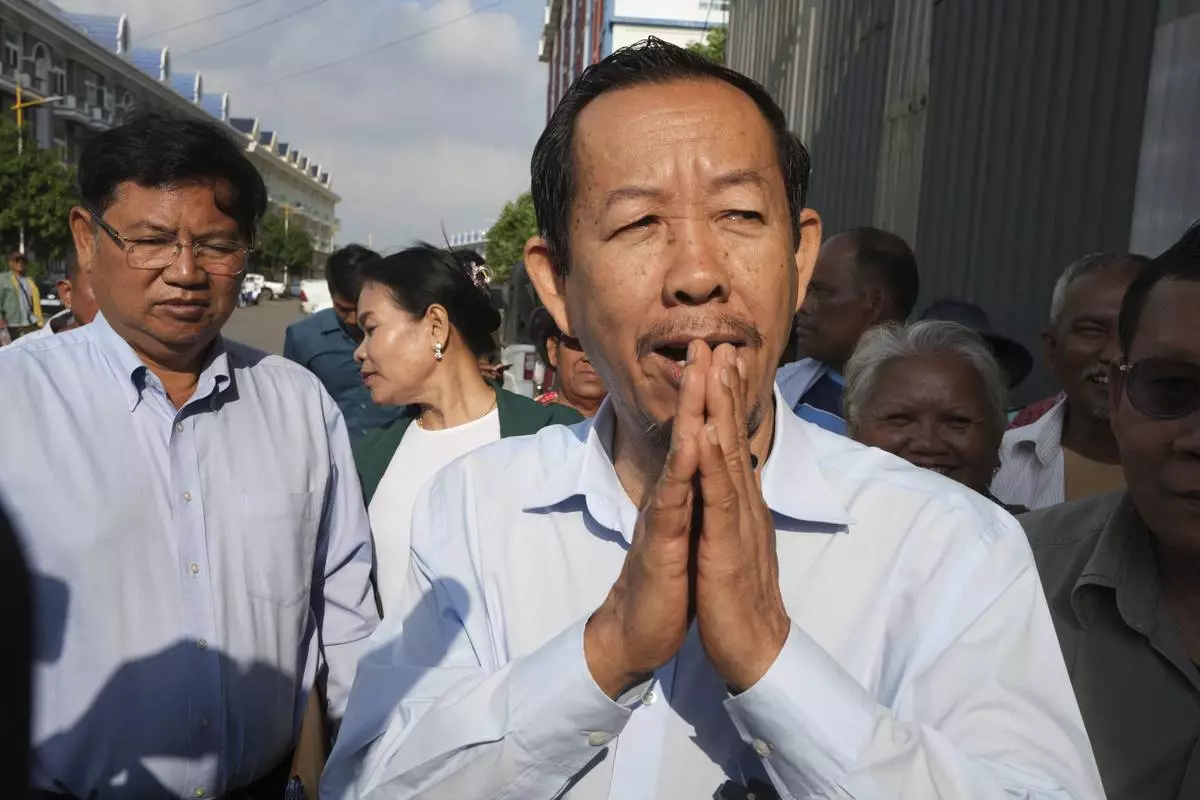
Cambodian prominent opposition politician Rong Chhun greets his supporters near the Phnom Penh Municipal Court in Phnom Penh, Cambodia, Monday, May 5, 2025. (AP Photo/Heng Sinith)
U.S. President Donald Trump says Iran has proposed negotiations after his threat to strike the Islamic Republic as an ongoing crackdown on demonstrators has led to hundreds of deaths.
Trump said late Sunday that his administration was in talks to set up a meeting with Tehran, but cautioned that he may have to act first as reports mount of increasing deaths and the government continues to arrest protesters.
“The meeting is being set up, but we may have to act because of what’s happening before the meeting. But a meeting is being set up. Iran called, they want to negotiate,” Trump told reporters on Air Force One on Sunday night.
Iran did not acknowledge Trump’s comments immediately. It has previously warned the U.S. military and Israel would be “legitimate targets” if America uses force to protect demonstrators.
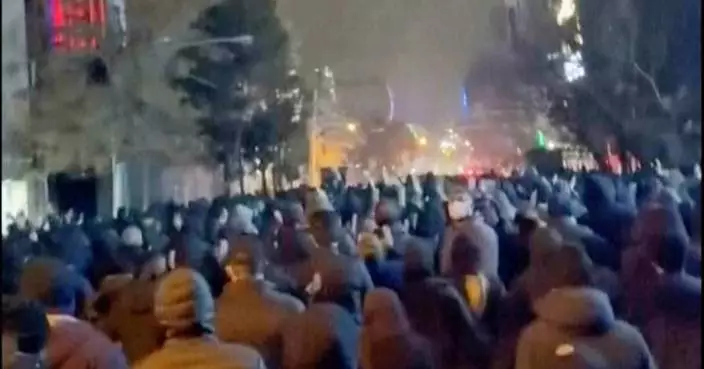
The U.S.-based Human Rights Activists News Agency, which has accurately reported on past unrest in Iran, gave the death toll. It relies on supporters in Iran cross checking information. It said at least 544 people have been killed so far, including 496 protesters and 48 people from the security forces. It said more than 10,600 people also have been detained over the two weeks of protests.
With the internet down in Iran and phone lines cut off, gauging the demonstrations from abroad has grown more difficult. Iran’s government has not offered overall casualty figures.
The Latest:
China says it opposes the use of force in international relations and expressed hope the Iranian government and people are “able to overcome the current difficulties and maintain national stability.”
Chinese Foreign Ministry spokesperson Mao Ning said Monday that Beijing “always opposes interference in other countries’ internal affairs, maintains that the sovereignty and security of all countries should be fully protected under international law, and opposes the use or threat of use of force in international relations.”
German Chancellor Friedrich Merz condemned “in the strongest terms the violence that the leadership in Iran is directing against its own people.”
He said it was a sign of weakness rather than strength, adding that “this violence must end.”
Merz said during a visit to India that the demonstrators deserve “the greatest respect” for the courage with which “they are resisting the disproportional, brutal violence of Iranian security forces.”
He said: “I call on the Iranian leadership to protect its population rather than threatening it.”
Iran’s Foreign Ministry spokesman on Monday suggested that a channel remained open with the United States.
Esmail Baghaei made the comment during a news conference in Tehran.
“It is open and whenever needed, through that channel, the necessary messages are exchanged,” he said.
However, Baghaei said such talks needed to be “based on the acceptance of mutual interests and concerns, not a negotiation that is one-sided, unilateral and based on dictation.”
The semiofficial Fars news agency in Iran, which is close to the paramilitary Revolutionary Guard, on Monday began calling out Iranian celebrities and leaders on social media who have expressed support for the protests over the past two weeks, especially before the internet was shut down.
The threat comes as writers and other cultural leaders were targeted even before protests. The news agency highlighted specific celebrities who posted in solidarity with the protesters and scolded them for not condemning vandalism and destruction to public property or the deaths of security forces killed during clashes. The news agency accused those celebrities and leaders of inciting riots by expressing their support.
Canada said it “stands with the brave people of Iran” in a statement on social media that strongly condemned the killing of protesters during widespread protests that have rocked the country over the past two weeks.
“The Iranian regime must halt its horrific repression and intimidation and respect the human rights of its citizens,” Canada’s government said on Monday.
Iran’s foreign minister claimed Monday that “the situation has come under total control” after a bloody crackdown on nationwide protests in the country.
Abbas Araghchi offered no evidence for his claim.
Araghchi spoke to foreign diplomats in Tehran. The Qatar-funded Al Jazeera satellite news network, which has been allowed to work despite the internet being cut off in the country, carried his remarks.
Iran’s foreign minister alleged Monday that nationwide protests in his nation “turned violent and bloody to give an excuse” for U.S. President Donald Trump to intervene.
Abbas Araghchi offered no evidence for his claim, which comes after over 500 have been reported killed by activists -- the vast majority coming from demonstrators.
Araghchi spoke to foreign diplomats in Tehran. The Qatar-funded Al Jazeera satellite news network, which has been allowed to work despite the internet being cut off in the country, carried his remarks.
Iran has summoned the British ambassador over protesters twice taking down the Iranian flag at their embassy in London.
Iranian state television also said Monday that it complained about “certain terrorist organization that, under the guise of media, spread lies and promote violence and terrorism.” The United Kingdom is home to offices of the BBC’s Persian service and Iran International, both which long have been targeted by Iran.
A huge crowd of demonstrators, some waving the flag of Iran, gathered Sunday afternoon along Veteran Avenue in LA’s Westwood neighborhood to protest against the Iranian government. Police eventually issued a dispersal order, and by early evening only about a hundred protesters were still in the area, ABC7 reported.
Los Angeles is home to the largest Iranian community outside of Iran.
Los Angeles police responded Sunday after somebody drove a U-Haul box truck down a street crowded with the the demonstrators, causing protesters to scramble out of the way and then run after the speeding vehicle to try to attack the driver. A police statement said one person was hit by the truck but nobody was seriously hurt.
The driver, a man who was not identified, was detained “pending further investigation,” police said in a statement Sunday evening.
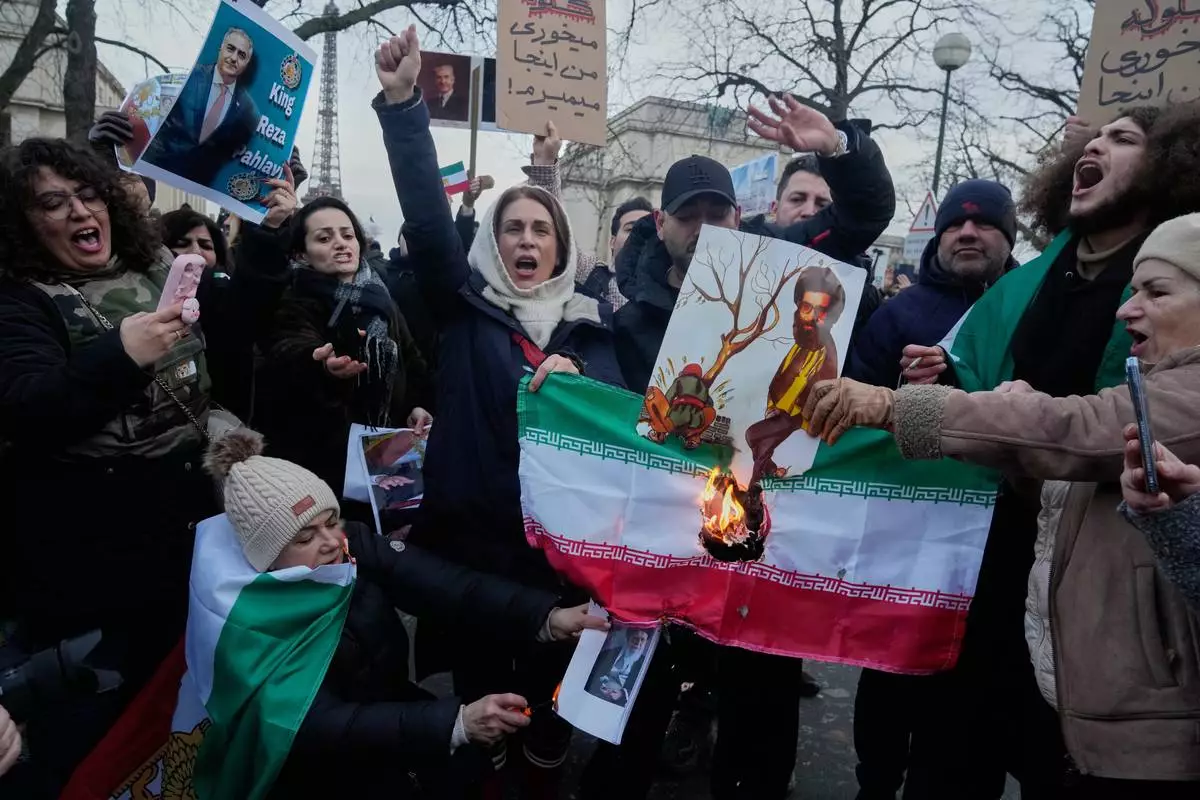
Protesters burn the Iranian national flag during a rally in support of the nationwide mass demonstrations in Iran against the government in Paris, Sunday, Jan. 11, 2026. (AP Photo/Michel Euler)