Skip to Content Facebook Feature Image

Iraq's justice minister says prisons are at double their capacity as amnesty law takes effect

News

Iraq's justice minister says prisons are at double their capacity as amnesty law takes effect
News

News

Iraq's justice minister says prisons are at double their capacity as amnesty law takes effect

2025-05-05 13:12 Last Updated At:13:43

BAGHDAD (AP) — As a general amnesty law takes effect in Iraq, the country's prisons are facing a crisis of overcrowding, housing more than double their intended capacity, the country's justice minister said in an interview.

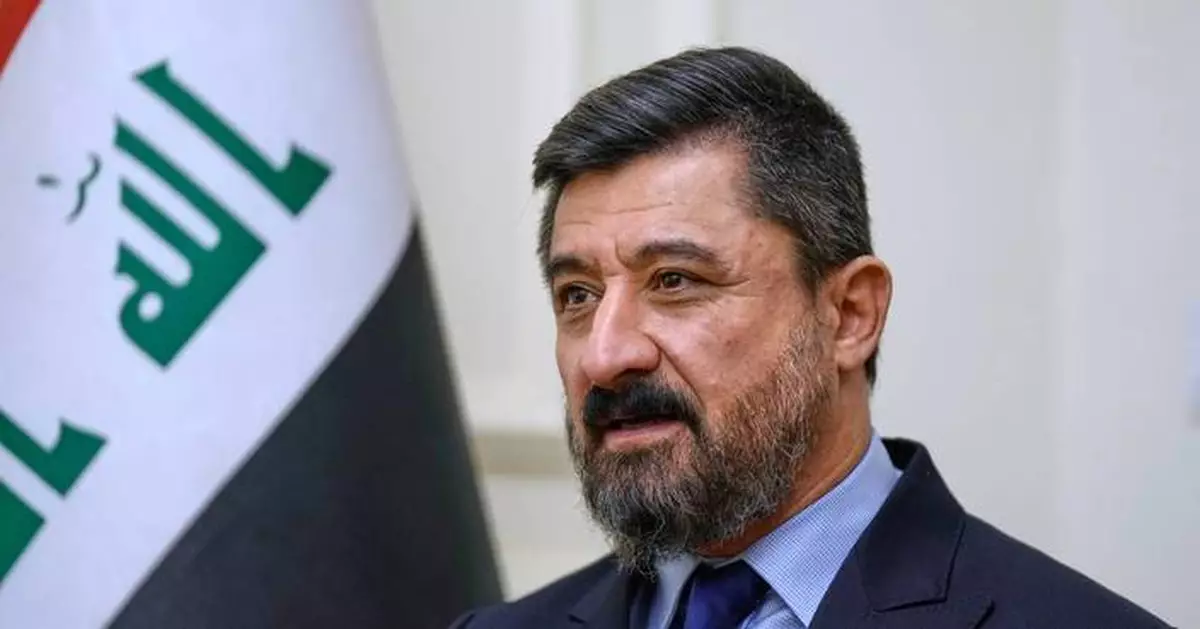
Justice Minister Khaled Shwani told The Associated Press on Saturday that Iraq's 31 prisons currently hold approximately 65,000 inmates, despite the system being built to accommodate only half that number.

He acknowledged that the overcrowding has put a severe strain on prison healthcare and human rights standards.

“When we took office, overcrowding stood at 300%," he said. "After two years of reform, we’ve reduced it to 200%. Our goal is to bring that down to 100% by next year in line with international standards.”

Thousands more detainees remain in the custody of security agencies but have not yet been transferred to the Ministry of Justice due to lack of prison capacity. Four new prisons are under construction, Shwani said, while three have been closed in recent years. Two others have been opened and six existing prisons expanded.

The general amnesty law passed in January had strong support from Sunni lawmakers who argue that their community has been disproportionately targeted by terrorism charges, with confessions sometimes extracted under torture.

But opponents say the law would allow the release of people involved in public corruption and embezzlement as well as militants who committed war crimes.

The Iraqi Observatory for Human Rights, a watchdog group, said in a statement that “the current version of the general amnesty law raises deep concerns over its potential legal and security consequences.”'

Shwani said 2,118 prisoners have been released from the justice ministry's prisons since the amnesty law took effect, while others had been released from the custody of security agencies before being transferred to the Ministry of Justice.

“We have a committee studying the status of inmates and identifying those who may qualify for release, but the vision is not yet final,” he said. The minister said he expects a “good number” to be released but “cannot specify an exact percentage until we receive clarity from the judiciary on who qualifies for the amnesty.”

Iraq’s prisons house hundreds of foreign nationals, most of them convicted of terrorism-related charges or affiliation with the al-Qaida and Islamic State militant groups.

The inmates hail from countries including Kyrgyzstan, Kazakhstan, Azerbaijan, Turkey, Egypt, North African nations, and several European states, as well as a handful of U.S. citizens. Shwani said discussions are underway with several governments to repatriate their citizens, excluding those sentenced to death.

He said inmates have been repatriated under existing agreements with Iran, Turkey, and the United Kingdom, including 127 Iranian inmates who were recently transferred back to Tehran.

An Iranian who was convicted in the 2022 killing of a U.S. citizen in Baghdad remains in custody, however, Shwani said.

Stephen Edward Troell, 45, a native of Tennessee, was fatally shot in his car in November by assailants as he pulled up to the street where he lived in Baghdad’s central Karrada district with his family. Iranian citizen Mohammed Ali Ridha was convicted in the killing, along with four Iraqis, in what was described as a kidnapping gone wrong.

All executions have been halted following the issuance of the general amnesty law, Shwani said.

Iraq has faced criticism from human rights groups over its application of the death penalty and particularly over mass executions carried out without prior notice to lawyers or family members of the prisoners.

Shwani pushed back against the criticisms of prison conditions and of the executions.

“There are strict measures in place for any violations committed against inmates,” he said. “Many employees have been referred for investigation, dismissed, and prosecuted.”

He insisted that the “number of executions carried out is limited — not as high as reported in the media” and said the death penalty is only applied in “crimes that severely threaten national security and public safety," including inmates convicted in a 2016 bombing attack in Baghdad's Karrada district that killed hundreds of people, as well as cases of child rape and high-ranking IS leaders.

Executions have been paused to reassess cases under the new amnesty law, he said.
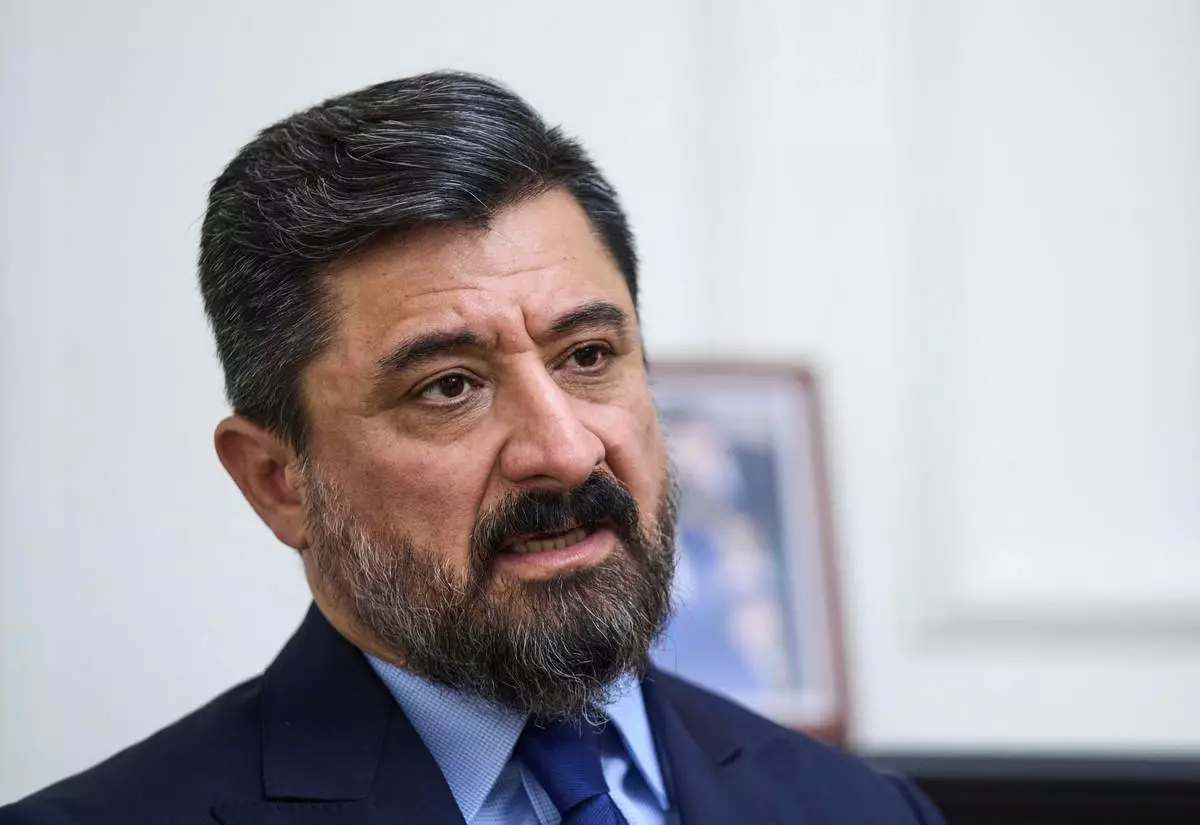
Iraqi Justice Minister Khaled Shwani speaks during an interview with The Associated Press in Baghdad, Iraq, Saturday, May 3, 2025. (AP Photo/Hadi Mizban)
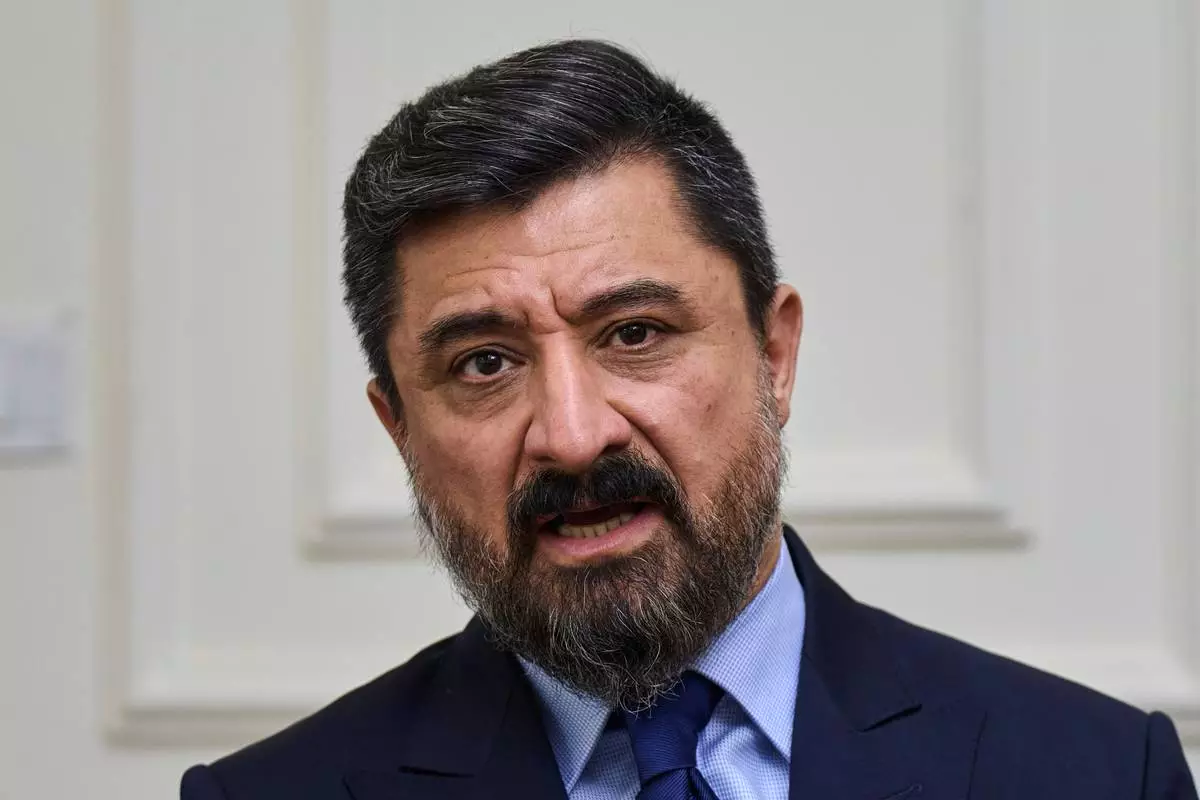
Iraqi Justice Minister Khaled Shwani speaks during an interview with The Associated Press in Baghdad, Iraq, Saturday, May 3, 2025. (AP Photo/Hadi Mizban)
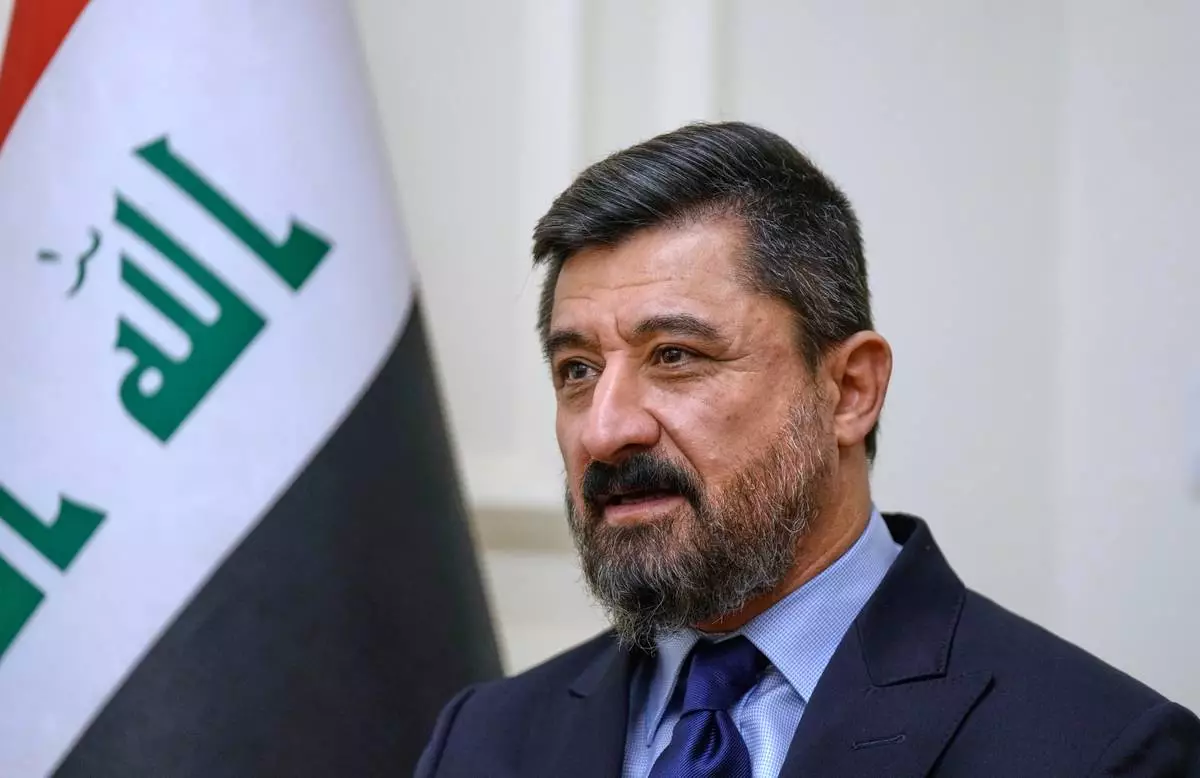
Iraqi Justice Minister Khaled Shwani speaks during an interview with The Associated Press in Baghdad, Iraq, Saturday, May 3, 2025. (AP Photo/Hadi Mizban)
Iraqi Justice Minister Khaled Shwani speaks during an interview with The Associated Press in Baghdad, Iraq, Saturday, May 3, 2025. (AP Photo/Hadi Mizban)
Iraqi Justice Minister Khaled Shwani speaks during an interview with The Associated Press in Baghdad, Iraq, Saturday, May 3, 2025. (AP Photo/Hadi Mizban)
Iraqi Justice Minister Khaled Shwani speaks during an interview with The Associated Press in Baghdad, Iraq, Saturday, May 3, 2025. (AP Photo/Hadi Mizban)
SEOUL, South Korea (AP) — An independent counsel on Tuesday demanded a death sentence for former South Korean President Yoon Suk Yeol on rebellion charges in connection with his short-lived imposition of martial law in December 2024.

Removed from office last April, Yoon faces eight trials over various criminal charges related to his martial law debacle and other scandals related to his time in office. Charges that he directed a rebellion are the most significant ones.

Independent counsel Cho Eun-suk’s team requested the Seoul Central District Court to sentence Yoon to death, according to the court.

The Seoul court is expected to deliver a verdict on Yoon in February. Experts say the court likely will sentence him to life in prison. South Korea hasn't executed anyone since 1997.

Yoon was scheduled to make remarks at Tuesday's hearing. He has maintained that his decree was a desperate yet peaceful attempt to raise public awareness about what he considered the danger of the liberal opposition Democratic Party, which used its legislative majority to obstruct his agenda. He called the opposition-controlled parliament “a den of criminals” and “anti-state forces.”

Yoon’s decree, the first of its kind in more than 40 years in South Korea, brought armed troops into Seoul streets to encircle the assembly and enter election offices. That evoked traumatic memories of dictatorships in the 1970s and 1980s, when military-backed rulers used martial law and other emergency decrees to station soldiers and armored vehicles in public places to suppress pro-democracy protests.

On the night of Yoon's martial law declaration, thousands of people rushed to the National Assembly to object to the decree and demand his resignation in dramatic scenes. Enough lawmakers, including even those in Yoon’s ruling party, managed to enter an assembly hall to vote down the decree.

Observers described Yoon’s action as political suicide. Parliament impeached him and sent the case to the Constitutional Court, which ruled to dismiss him as president.

It was a spectacular downfall for Yoon, a former star prosecutor who won South Korea’s presidency in 2022, a year after entering politics.

Lee Jae Myung, a former Democratic Party leader who led Yoon's impeachment bid, became president by winning a snap election last June. After taking office, Lee appointed three independent counsels to delve into allegations involving Yoon, his wife and associates.

There had been speculation that Yoon resorted to martial law to protect his wife, Kim Keon Hee, from potential corruption investigations. But in wrapping up a six-month investigation last month, independent counsel Cho’s team concluded that Yoon plotted for over a year to impose martial law to eliminate his political rivals and monopolize power.

Yoon’s decree and ensuing power vacuum plunged South Korea into political turmoil, halted the country’s high-level diplomacy and rattled its financial markets.

Yoon’s earlier vows to fight attempts to impeach and arrest him deepened the country’s political divide. In January last year, he became the country’s first sitting president to be detained.

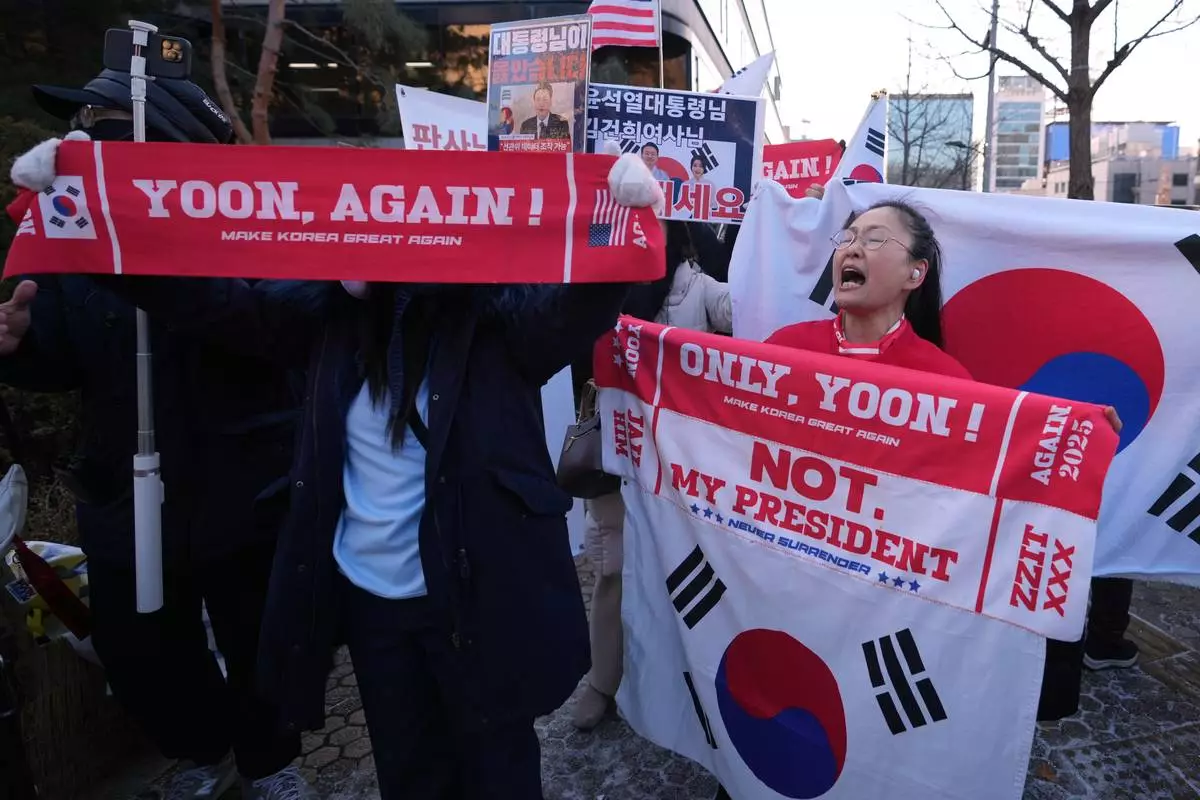
Supporters of former South Korean President Yoon Suk Yeol hold signs outside of Seoul Central District Court, in Seoul, South Korea, Tuesday, Jan. 13, 2026. (AP Photo/Lee Jin-man)

Supporters of former South Korean President Yoon Suk Yeol hold signs outside of Seoul Central District Court, in Seoul, South Korea, Tuesday, Jan. 13, 2026. (AP Photo/Lee Jin-man)

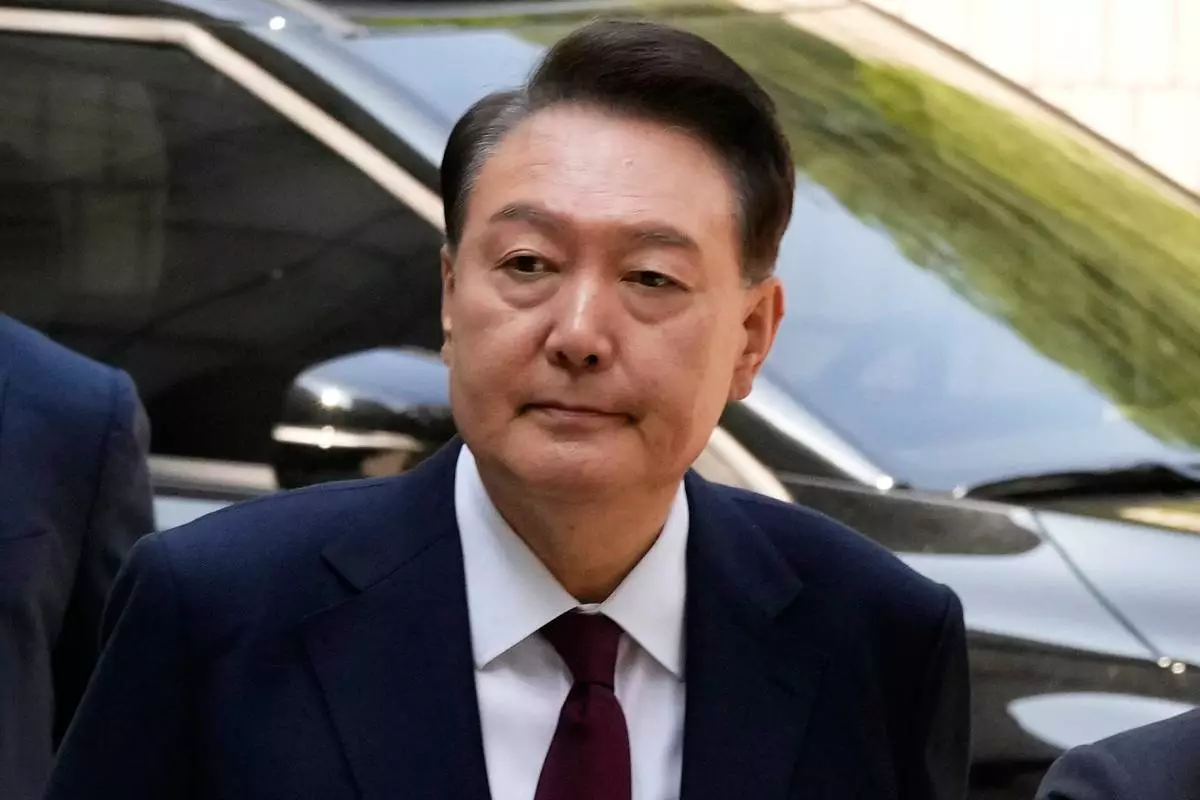
FILE - Then South Korea's ousted former President Yoon Suk Yeol who is facing charges of orchestrating a rebellion when he declared martial law on Dec. 3, arrives to attend his trial at the Seoul Central District Court in Seoul, South Korea, Monday, May 12, 2025. (AP Photo/Ahn Young-joon, Pool, File)

FILE - Then South Korea's ousted former President Yoon Suk Yeol who is facing charges of orchestrating a rebellion when he declared martial law on Dec. 3, arrives to attend his trial at the Seoul Central District Court in Seoul, South Korea, Monday, May 12, 2025. (AP Photo/Ahn Young-joon, Pool, File)

Recommended Articles