Skip to Content Facebook Feature Image

China's gold market sees boost during Labor Day holiday

China

China

China

China's gold market sees boost during Labor Day holiday

2025-05-05 16:39 Last Updated At:05-06 11:16

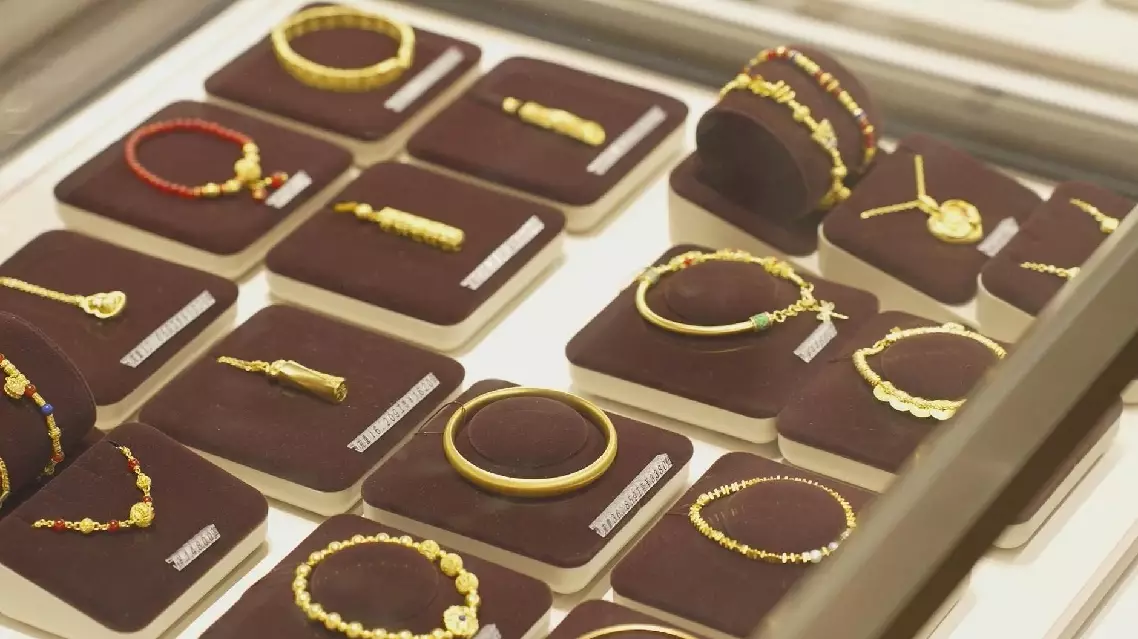
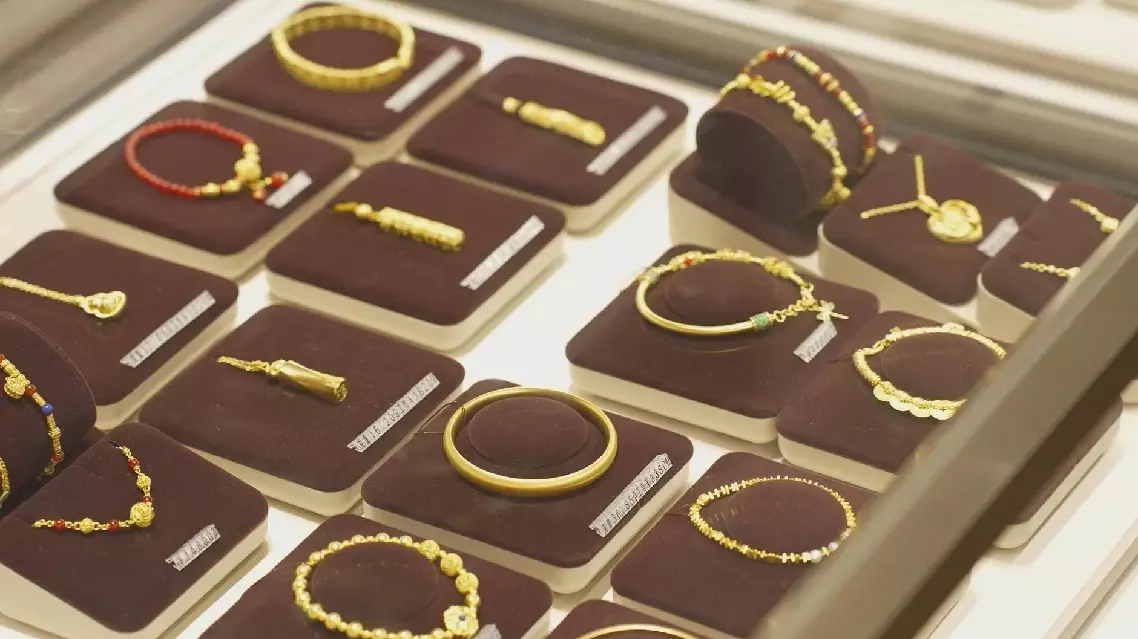
Fueled by attractive promotional activities, China's gold consumption market experienced a boost during the five-day Labor Day holiday, even as the international gold prices remain elevated.

The global gold price hit record highs 20 times in the first quarter of this year, according to a recent report from the World Gold Council.

As a result, global consumption of gold jewelry fell by 21 percent year on year, marking the lowest level since 2020.

In contrast, the demand for gold investment surged, with global investment reaching 551.9 tons, a remarkable 170 percent increase compared to the previous year.

This indicates that while gold prices have reached historic highs, the global demand for gold jewelry has declined, leading more investors to view gold as an attractive investment option.

A shopping mall in central China's Wuhan City saw consumers' demand for gold investment soar in the three days leading up to the holiday, with sales of gold bars and coins nearly tripling.

"As gold prices have fallen, we have launched various promotional activities and experienced a remarkable surge in overall sales," said Cui Jiwang, the person in charge of gold and jewelry counters at the shopping mall.

"We conduct live streaming promotions online to showcase images and styles of our popular products. Currently, around 15 to 20 percent of consumers visit our store after seeing these styles online," said Tan Yiying, head of a gold shop in Changzhou City of east China's Jiangsu Province.

Affected by the current high prices, lightweight gold products have gained popularity in China, such as small gold beans weighing only 0.3 grams.

"Even though gold prices are relatively high now, our lightweight and uniquely designed items remain popular among consumers and are selling well," said Wen Zhuqin, a gold salesperson in Yancheng City of Jiangsu.

Lightweight gold bars are also in high demand. Shuibei Jewelry Park, a renowned gold and jewelry market in south China's Shenzhen City, has been bustling with consumers, many of whom are looking to purchase lightweight gold bars. "Our consumers tend to prefer smaller weights when buying gold. Gold bars, especially those weighing five or 10 grams, have been in short supply recently," said Xu Jiaqi, a gold salesperson in Shuibei.

Many consumers also choose to sell the gold they purchased in previous years to capitalize on price differences, while others are opting to exchange old gold products for new items.

"The gold price has dropped by 60 to 70 yuan (about 8.25 to 9.63 U.S. dollars) per gram from its peak, yet most people still consider it too high. Therefore, the trade-in sales now make up the majority, accounting for 60 percent to 70 percent of our total sales," said You Meiyun, head of a gold shop in Changzhou.
China's gold market sees boost during Labor Day holiday
China's gold market sees boost during Labor Day holiday
China's gold market sees boost during Labor Day holiday

China's gold market sees boost during Labor Day holiday
The extended ceasefire between Lebanon and Israel is a welcome respite for many families and businesses, yet for many, the cost of war is still felt every day.

Months after trying to recover from the 2024 war between Israel and Hezbollah, renewed violence has again displaced families, driven up prices and shaken confidence in an already fragile economy.

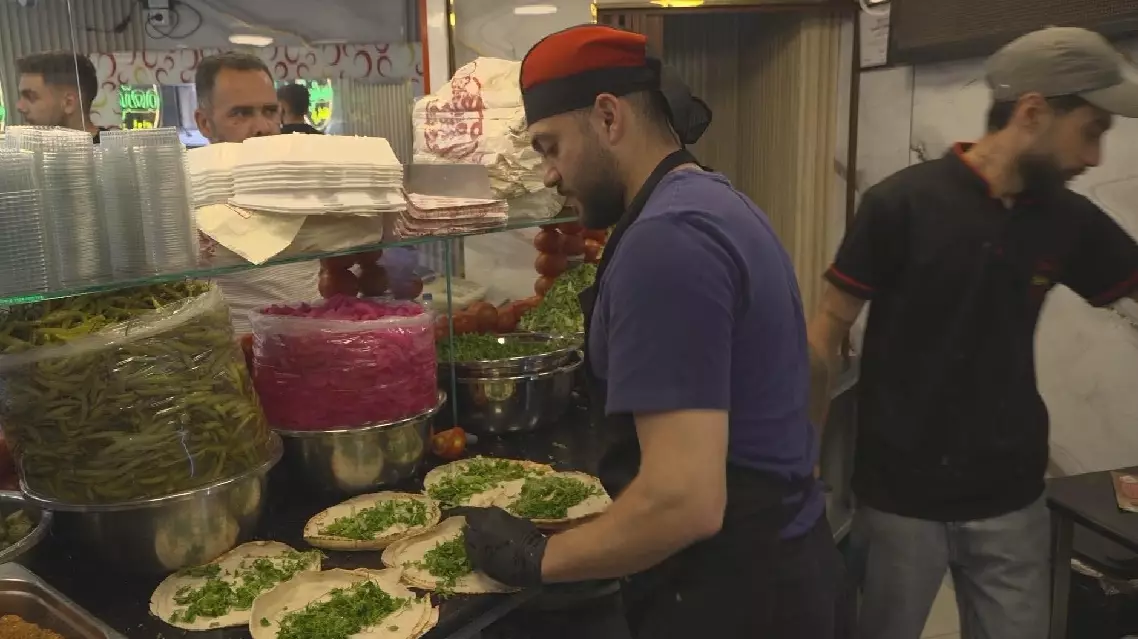
In Beirut's Hamra district, displaced shop owner Mohammad Maatouk is fighting to keep his business running. Even amid the ceasefire, his falafel business has been pushed into survival mode.

"Before the war, things were cheaper than they are now. The situation has become much harder. Everything has gone up: oil, gas, vegetables, pickles, plastic," he said.

For Maatouk, the challenges of being displaced from his home in Dahieh, south of Beirut, are compounded as he strives to keep working in a city where everything costs more.

Deliveries are harder, roads feel less safe, and ingredients are more expensive, but raising prices too much risks losing customers who are also struggling.

"We are still trying to sympathize with people, to feel their pain, because we are a part of the people," said Mohammad.

Hamra, in the heart of Beirut, has become one of the places absorbing people displaced by the renewed fighting — from Dahieh, the south, the Bekaa and other affected areas. That has brought more movement to cafes, shops and streets, but it also means more pressure on rent, food, electricity and basic services in a city that was already stretched.

"When those refugees come, the economic sector boomed, you have the cafe booms and the supermarket worked more. I don't want to say that we have had more influx of cash, but usually there has been more liquidity in the market and there has been more liquidity in the souks and in the supermarkets. Now, unfortunately, these people are not looking for jobs. They're not working," said Maan Barazy, an economic expert.

What appears to be a surge in business activity in Lebanon is not necessarily economic recovery. Much of it reflects survival spending by people displaced once again, even as the country attempts to rebound from the last war.

Renewed fighting, even amid the fragile ceasefire, is now damaging tourism, trade, agriculture and infrastructure -- the very sectors Lebanon needs to rebuild confidence.

Lebanon's Health Ministry said Saturday that the cumulative toll from Israeli attacks between March 2 and April 25 had reached 2,496 killed and 7,725 wounded.

A ceasefire between Israel and Lebanon took effect at midnight between April 16 and 17, following weeks of intensified cross-border fighting linked to the U.S.-Israeli war with Iran.

U.S. President Donald Trump said Thursday that the current 10-day ceasefire would be extended by three weeks.

Pain persists as Lebanon's displaced families struggle to survive

Pain persists as Lebanon's displaced families struggle to survive

Recommended Articles