Yuki, a Beijing native, has transformed his childhood fascination with reptiles into a fulfilling career by opening the Spaceman Reptile Museum, with the goal of deepening people's understanding and appreciation of these creatures.
Yuki's love for reptiles began in his childhood, but in the 1990s, there were few resources available for a curious child eager to explore the world of these creatures.
"Back then, there weren't many ways to acquire such knowledge. I mostly relied on textbooks and other relevant books. I enjoyed reading books about animals, but still, I couldn't find all the information I needed," said Yuki.
It wasn't until he studied abroad and had the opportunity to work closely with reptiles that he gained a broader understanding. Upon returning to China, Yuki was inspired to open a museum that would allow others to gain a deeper, more informed appreciation for his "scaly and slippery friends." "The original intention of opening the museum was to use our approach and the thoughtfully designed museum to help visitors relax and engage with the creatures. We hope that by offering children and visitors their first opportunity to connect with and learn more about reptiles, they will feel less distant and overcome some of their fears," he said.
The museum offers workshops and hands-on sessions, providing young visitors with lessons in biology, ecology, and a profound respect for living creatures.
"We aim to convey our attitude toward these animals in a scientific and rational way, emphasizing both their benefits and drawbacks. For example, we advise visitors not to disturb or touch snakes in the wild, which also prevents us from being hurt. In our museum, visitors can also learn that not all snakes are aggressive, and not all are venomous," he said.
For Yuki, if someone, especially a child, leaves the museum a little less afraid and a little more curious, that, he says, is what makes it all worthwhile.
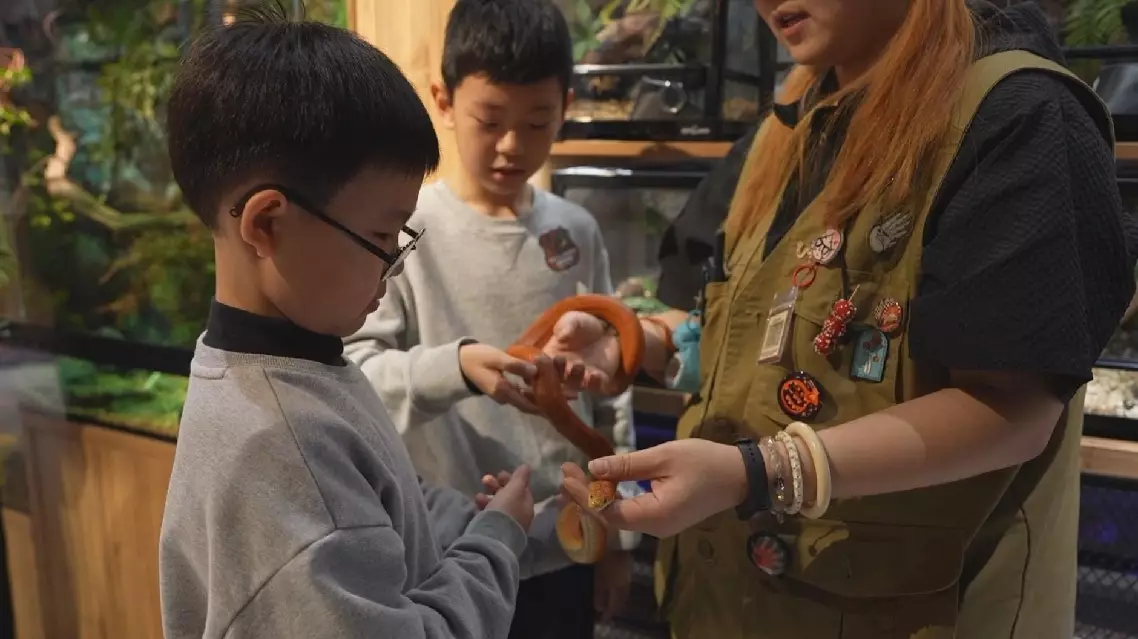
Reptile museum founder turns childhood dream into career
Reptile museum founder turns childhood dream into career