DETROIT--(BUSINESS WIRE)--May 6, 2025--
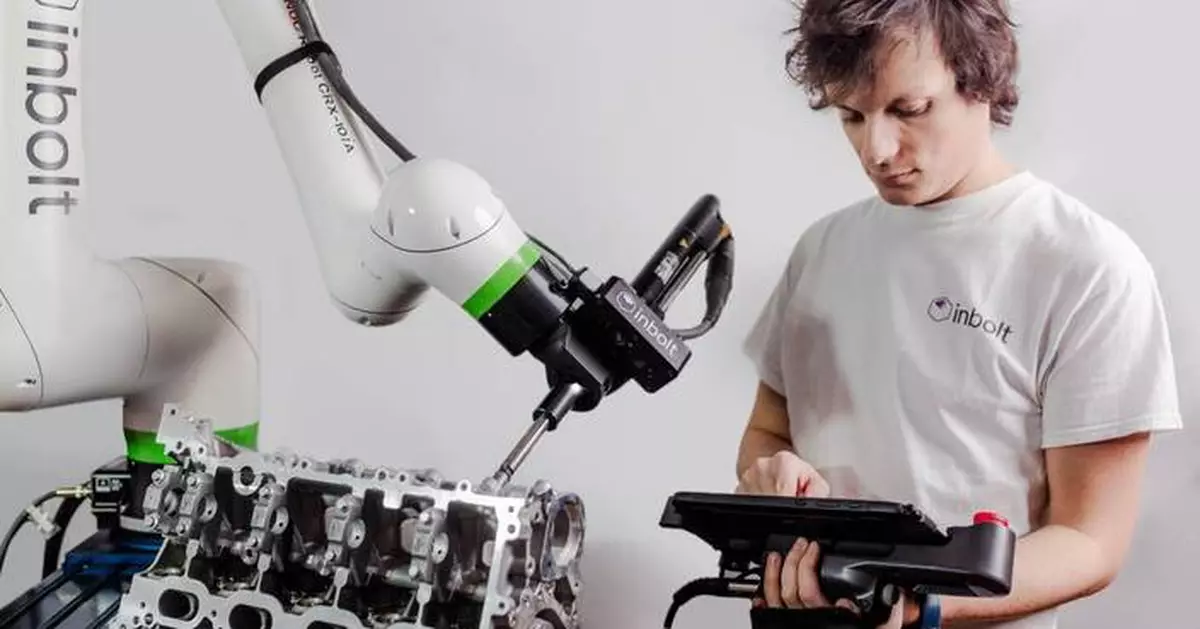
In the race to bring automotive manufacturing back home, the General Assembly Shop, the most manual and unpredictable stage of vehicle production, remains the biggest obstacle. Until now, automating moving lines was considered nearly impossible, requiring massive infrastructure upgrades, expensive fixtures, cycle time compromises, and constant maintenance. The new Inbolt and FANUC integration changes that, allowing the CRX cobot and other FANUC robot models to operate with real-time 3D vision and adaptive trajectory correction, even with part variation or imperfect environments.
This press release features multimedia. View the full release here: https://www.businesswire.com/news/home/20250505415678/en/
The landmark integration with FANUC robots is the first solution of its kind on the market using FANUC’s robots and Inbolt’s intelligence layer and real-time vision. General Motors is the first to adopt this new integration, while other leading brands, including Stellantis, Ford, Whirlpool, ThyssenKrupp Automotive, and Toyota, use Inbolt’s technology across various applications.
Launching at Automate 2025 in Detroit May 12-15
The solution will debut in live demos at Booth #8632 at Automate in Detroit, North America’s largest trade show for industrial automation. “ This new collaboration between Inbolt and FANUC gives car manufacturers a new level of automation: precision tasks, performed by robots, on lines that never stop,” says Rudy Cohen, CEO of Inbolt. “No more expensive indexing. No more undue complexity and maintenance challenges. Just robots operating in a continuous motion environment and a huge leap forward for automakers' General Assembly Shop.”
The system operates up to 100 times faster than conventional solutions, and is designed to scale across diverse production needs, whether for manufacturers worried about maintenance or line throughput or system integrators requirements for easy and quick installation.
How It Works
This solution combines FANUC’s streaming motion capabilities, which enable real-time trajectory input via Ethernet, with Inbolt’s lightweight, robot-mounted vision system and ultra-fast AI model. Key features include:
Built for the Realities of the Line
This integration supports bolt rundown, screw insertion, filter installation, and other tasks which are challenging applications for traditional robotics. The system handles real-world constraints: crowded stations, variable parts, minimal floor space, and most importantly moving lines and variable part position.
“Our primary goal is to reduce the complexity of automation,” says Albane Dersy, COO of Inbolt. “With Inbolt’s guidance system and FANUC’s native motion control, robots can now think and act on the fly.”
“As industries navigate rising demands for efficiency and cost-effectiveness, automation has become an essential solution—and the timing has never been better,” said Lou Finazzo, Vice President, Sales, at FANUC America. “At our new Innovation Lab, FANUC is collaborating with forward-thinking startups like Inbolt to harness cutting-edge solutions, from cobots to AI and streaming motion applications, tackling challenges in the automotive sector and beyond."
Significantly lowering the barriers to high-performance automation, this integration eliminates the need for specialized lighting or custom jigs, making it easier to deploy robots in complex, real-world environments. A single robot can now handle over 100 part models with real-time accuracy, even on continuously moving lines. Deployment is streamlined through Inbolt Studio, an intuitive platform that allows users to import CAD files, train the AI model, validate tracking in real time, and launch the program directly on the line.
Availability
The solution is available immediately for FANUC CRX models and industrial robots with Stream Motion.
Download images and video: Here
Inbolt delivers the intelligence layer for industrial robot guidance, combining real-time 3D vision and AI to automate unpredictable manufacturing environments. Trusted by brands like Stellantis, Toyota, and Ford, their system adapts to moving lines, part variation, and imperfect conditions, boosting uptime, cutting costs, and accelerating the path to autonomous factories. For more information, visit https://www.inbolt.com/
About FANUC America Corporation
FANUC America Corporation is a subsidiary of FANUC CORPORATION in Japan, and provides industry-leading CNC systems, robotics and ROBOMACHINEs. FANUC’s innovative technologies and proven expertise help manufacturers in the Americas maximize productivity, reliability and profitability. Headquartered in Rochester Hills, Mich., FANUC America has facilities throughout North and South America. Visit www.fanucamerica.com for more information or explore the CRX line of cobots at CRX.FANUCAmerica.com.
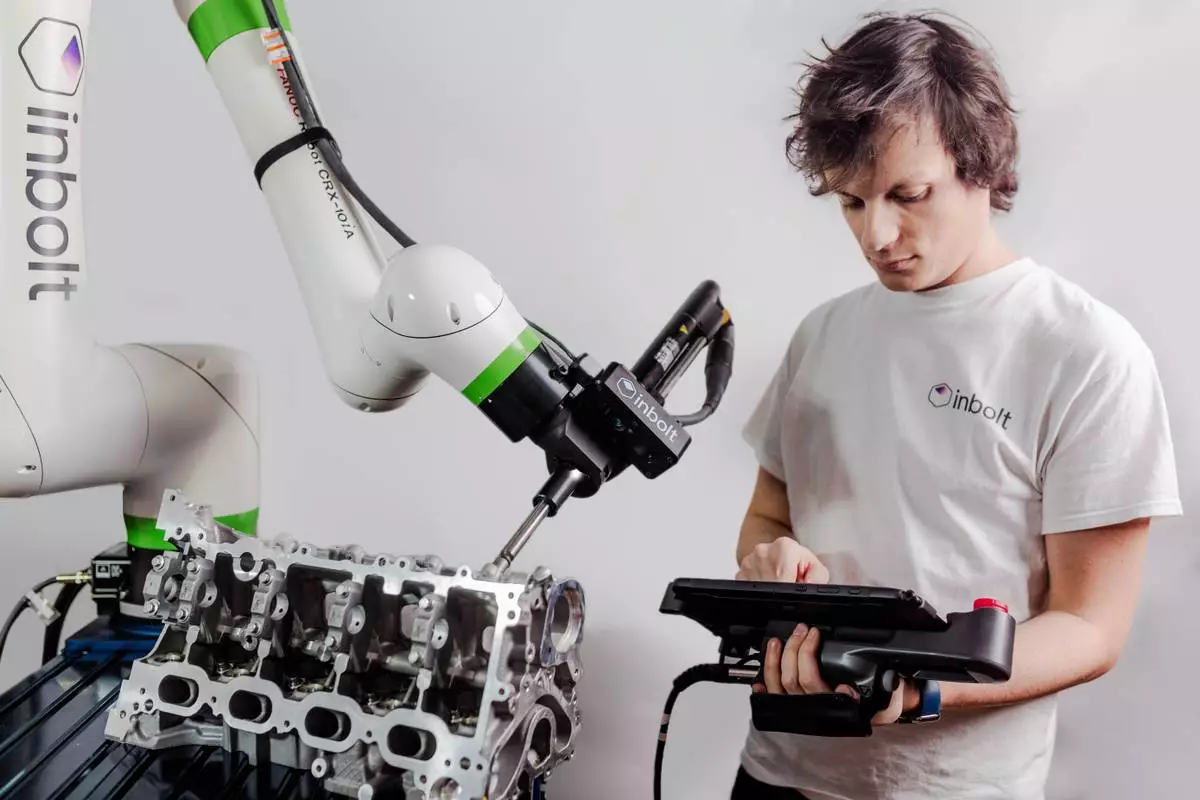
Until now, automating moving lines was considered nearly impossible, requiring massive infrastructure upgrades, expensive fixtures, cycle time compromises, and constant maintenance. The new Inbolt and FANUC integration changes that, allowing FANUC robots to operate with real-time 3D vision and adaptive trajectory correction, even with part variation or imperfect environments.
The economy, inflation and how those forces could impact the lives of Americans were front and center over the past week. Trips to the grocery store and gas station are more painful than they were last year, and rising costs are impacting the decisions of both households and businesses.
Here’s a snapshot of prominent economic data and news that occurred over the past week and what it potentially means for you.
Americans’ confidence in the economy sank to the lowest level in more than a decade this month as prices remain elevated and wages stagnate amid the ongoing Iran war.
The Conference Board said Tuesday that its consumer confidence index tumbled 6.7 points to 81.9 in September, down from 88.6 in August. That’s the lowest reading in the board’s survey since April 2014 and below the lowest level reached during the pandemic.
Respondents’ views of their present situation fell by 7.9 points to 109.3. Their short-term outlook also slid, falling 5.9 points to 63.6.
Americans remain flustered by the economy after five years of elevated inflation, potentially posing a risk to President Donald Trump and Republicans in the midterm elections, which are a little more than a month away.
Write-in responses to the board’s survey, collected from September 1-23, were mostly pessimistic this month, with frequent references to the high cost of gas, goods and services.
The average long-term U.S. mortgage rate jumped this week to its highest level in nearly three years.
The benchmark 30-year fixed-rate mortgage rose to 7.28% from 7.03% last week, mortgage buyer Freddie Mac said Thursday, the biggest leap in several years. A year ago, the average rate was 6.34%.
It is the sixth consecutive week that mortgage rates have increased.
The average rate is now the highest it’s been since Nov. 22, 2023, when it reached 7.29%.
Borrowing costs on 15-year fixed-rate mortgages, often sought by borrowers refinancing a home loan, also climbed this week. That average rate increased to 6.60% from 6.42% last week. A year ago, it was at 5.55%.
U.S. employers added a disappointing 29,000 jobs and the unemployment rate ticked up last month, the government reported Friday, a month before voters go to the polls in pivotal midterm elections at a time of discontent over the high cost of living and the state of the economy.
Hiring dropped from a revised 133,000 in August, the Labor Department said. The unemployment rate rose to a still-low 4.2% from 4.1% in August.
Economists had expected September payrolls to come in around 90,000.
Labor Department revisions also shaved 60,000 jobs off combined July and August payrolls. Average hourly wages were up just 3% last year from a year earlier, the smallest year-over-year gain since May 2021.
U.S. employers posted fewer job openings in August, but the American labor market remains resilient in the face of higher energy costs caused by the fighting with Iran.
U.S. job openings slid to 7.08 million from a revised 7.34 million in July, the Labor Department reported Tuesday. Openings came in below the 7.2 million that forecasters had expected and were the lowest since they hit 6.9 million in March.
The department’s Job Openings and Labor Turnover Survey (JOLTS) also showed that layoffs fell and the number of people quitting their jobs — a sign of confidence in their prospects — was little changed in August. The JOLTS report’s measure of gross hiring — before subtracting people who quit or lost their jobs — ticked up modestly in August.
Employers may not be laying workers off, but they aren’t hiring nearly as many as they did a few years ago. Hiring remains well below the 166,000 monthly jobs created, on average, in 2023 and 2024, and the 491,000 a month recorded during the 2021-2022 hiring boom that followed COVID-19 lockdowns.
Inflation slowed in August as Americans ramped up their spending, though prices are still elevated and a challenge for many voters that will head to the polls for midterm elections in just over a month.
Consumer prices rose 3.4% in August compared with a year earlier, the Commerce Department said Wednesday, below the 3.7% economist expectations. On a monthly basis, prices climbed 0.3%, up from 0.1% in July, a sign prices that are still running hot.
Excluding the volatile energy and food categories, inflation also came in lower than expected, rising 3% in August from a year ago. And from July to August, core prices rose just 0.2%, up from 0.1% the previous month. Many economists feared core prices would rise more quickly month-to-month.
The U.S. economy grew at a solid 2.2% pace from April through June as consumer spending and business investment came in strong.
Growth in gross domestic product — the nation’s output of a goods and services — decelerated from a 2.5% pace from January through March, the Commerce Department reported Wednesday. The second-quarter growth was an improvement on the department’s previous estimate of 1.5% — a surprise to economists who had expected little or no change in the GDP number.
Consumer spending — which accounts for about 70% of U.S. economic activity — increased at a healthy 3.8% annual pace, up from 0.7% in the January-March period. Spending has been helped by a strong stock market, which reflects enthusiasm over the prospects for artificial intelligence and which enriches wealthy investors and gives them more money to buy things with.
There was some relief in the rattled U.S. bond market to end the week after the latest jobs report cooled worries that a hot U.S economy might force the Federal Reserve to raise interest rates at their next meeting. The resulting drop in bond yields helped U.S. stocks climb back toward their all-time high.
The S&P 500 rose and pulled within 0.8% of its record set in August. The Dow Jones Industrial Average was up, and the Nasdaq composite was higher.

FILE - Signs mark the intersection of Wall Street and Broadway in New York's Financial District on Wednesday Dec.11, 2024. (AP Photo/Peter Morgan, File)
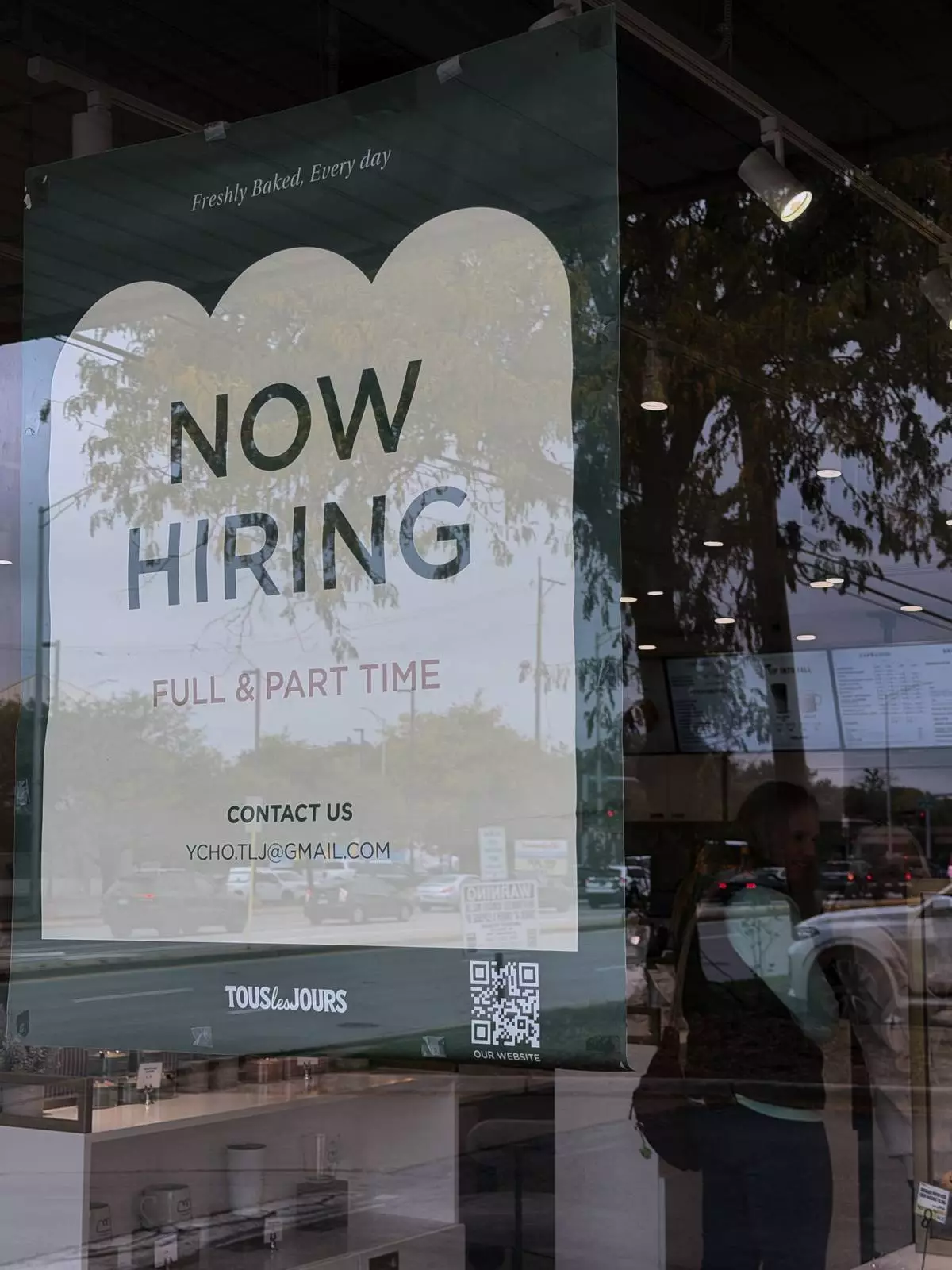
Hiring sign is displayed at a bakery in Arlington Heights, Ill., Wednesday, Sept. 30, 2026. (AP Photo/Nam Y. Huh)