LONDON (AP) — New Zealand was 36-3 in pursuit of an increasingly distant 254 runs to beat England after day two on a minefield of a Lord's test pitch on Friday.
England bagged the big wicket of Kane Williamson just 10 minutes before stumps. In likely his last innings at Lord's, Williamson missed a full length delivery from Josh Tongue that would have crashed into middle stump.
Click to Gallery
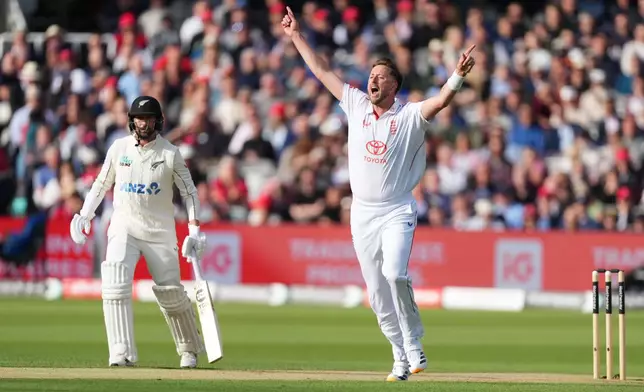
England's Ollie Robinson appeals during the second day of the test match between England and New Zealand at Lord's cricket ground in London, Friday, June 5, 2026. (AP Photo/Kirsty Wigglesworth)
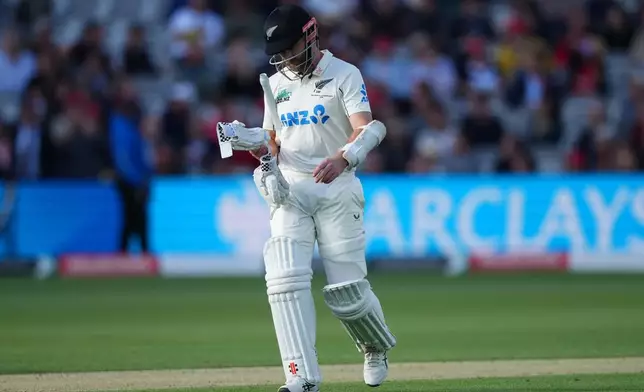
New Zealand's Kane Williamson leaves the pitch after losing his wicket during the second day of the test match between England and New Zealand at Lord's cricket ground in London, Friday, June 5, 2026. (AP Photo/Kirsty Wigglesworth)
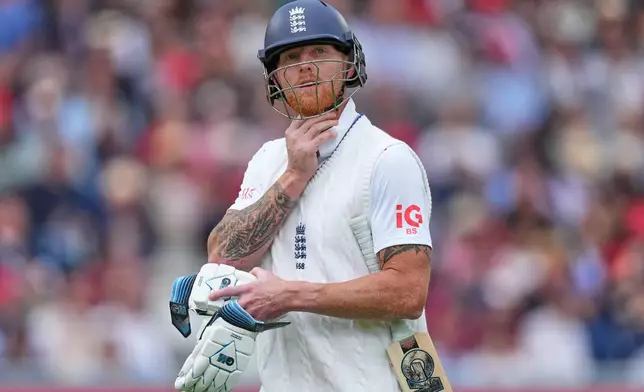
England's Ben Stokes leaves the pitch after losing his wicket during the second day of the test match between England and New Zealand at Lord's cricket ground in London, Friday, June 5, 2026. (AP Photo/Kirsty Wigglesworth)
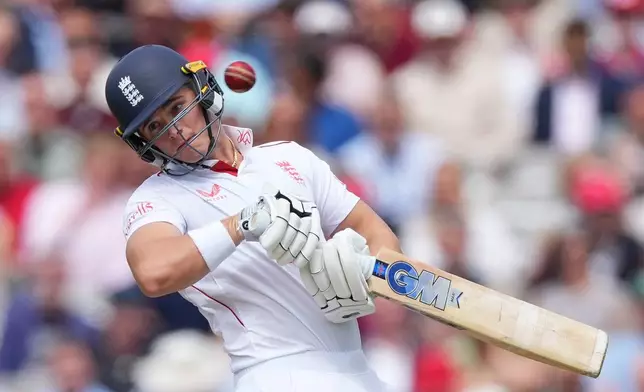
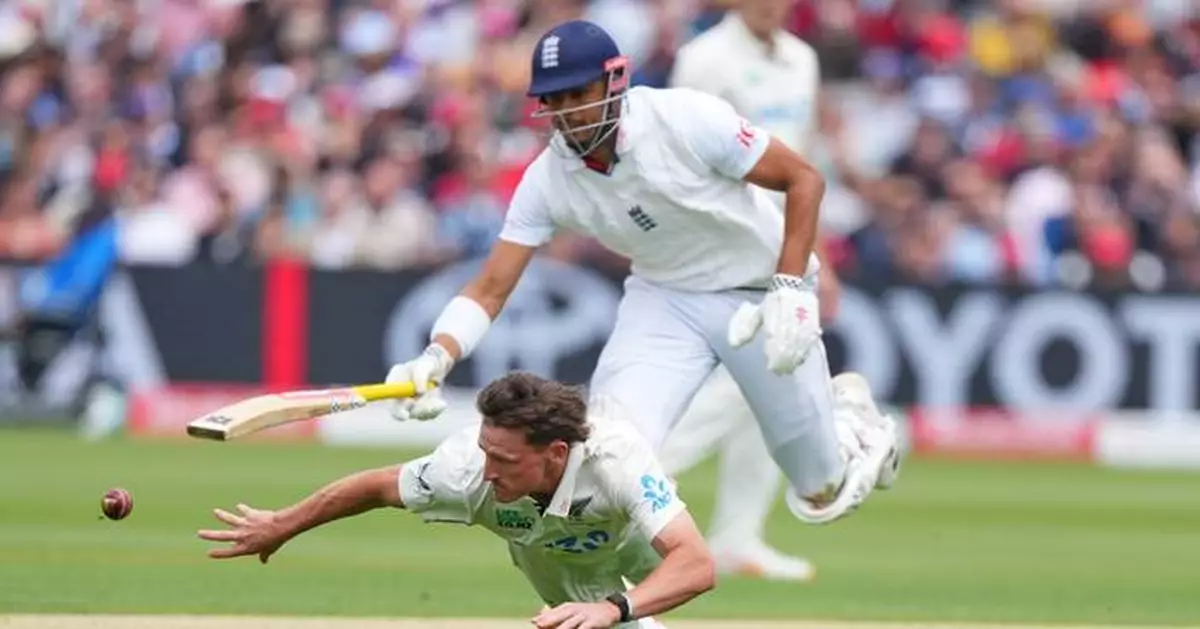
England's Jacob Bethell avoids a ball from New Zealand's Will O'Rourke during the second day of the test match between England and New Zealand at Lord's cricket ground in London, Friday, June 5, 2026. (AP Photo/Kirsty Wigglesworth)
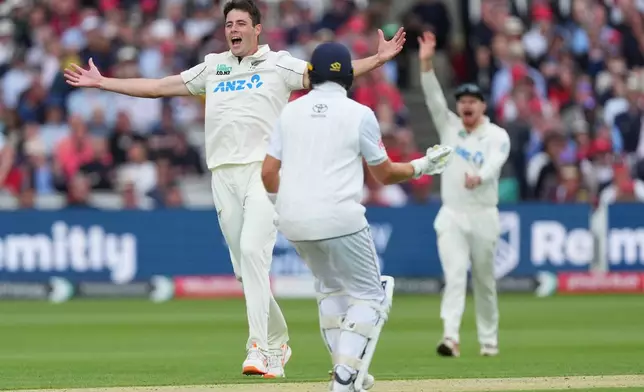
New Zealand's Will O'Rourke celebrates taking the wicket of England's Harry Brook during the second day of the test match between England and New Zealand at Lord's cricket ground in London, Friday, June 5, 2026. (AP Photo/Kirsty Wigglesworth)
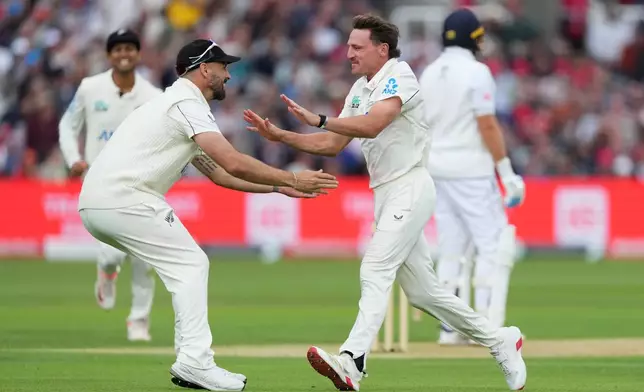
New Zealand's Nathan Smith, right, celebrates taking the wicket of England's Joe Root during the second day of the test match between England and New Zealand at Lord's cricket ground in London, Friday, June 5, 2026. (AP Photo/Kirsty Wigglesworth)
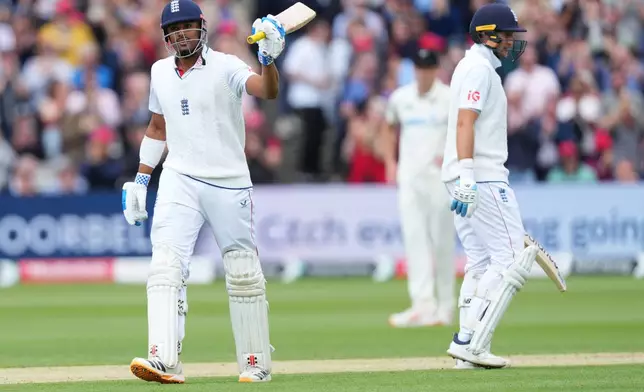
England's Emilio Gay celebrates his half century during the second day of the test match between England and New Zealand at Lord's cricket ground in London, Friday, June 5, 2026. (AP Photo/Kirsty Wigglesworth)
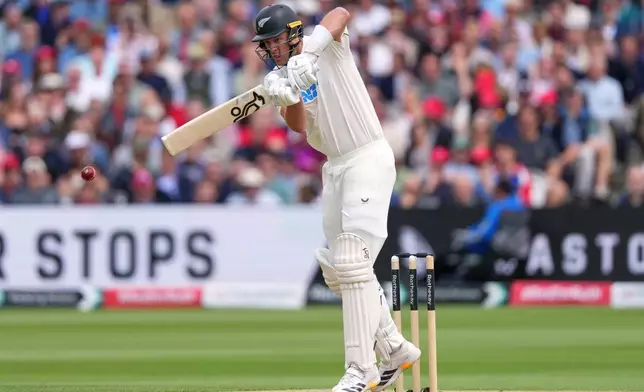
New Zealand's Kyle Jamieson plays a shot during the second day of the test match between England and New Zealand at Lord's cricket ground in London, Friday, June 5, 2026. (AP Photo/Kirsty Wigglesworth)
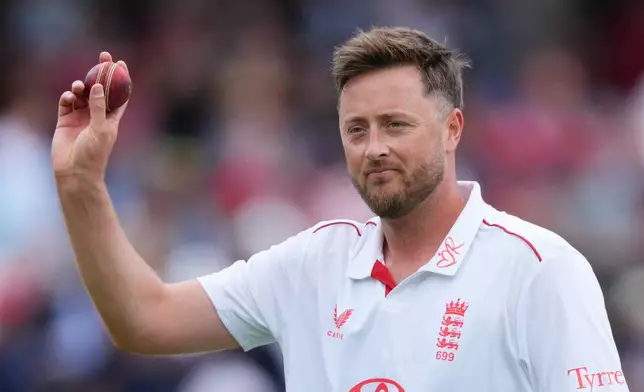
England's Ollie Robinson holds up the match ball after New Zealand are out for 113 during the second day of the test match between England and New Zealand at Lord's cricket ground in London, Friday, June 5, 2026. (AP Photo/Kirsty Wigglesworth)
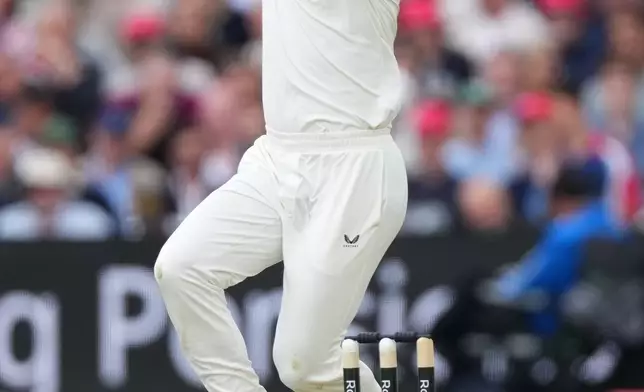
New Zealand's Matt Henry bowls during the second day of the test match between England and New Zealand at Lord's cricket ground in London, Friday, June 5, 2026. (AP Photo/Kirsty Wigglesworth)
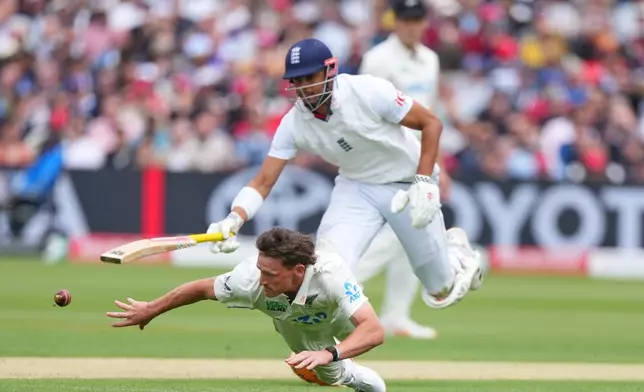
New Zealand's Nathan Smith fields the ball after bowling during the second day of the test match between England and New Zealand at Lord's cricket ground in London, Friday, June 5, 2026. (AP Photo/Kirsty Wigglesworth)
New Zealand started the day still finishing its first innings, which was wrapped up on 113, conceding a 27-run lead to England. New opening batter Emilio Gay with a match-high 57 runs led England to 226 in its second innings. That set New Zealand 254 to win, which requires the fifth highest successful run chase at Lord's.
But New Zealand hopes of adding to its one win at Lord's in 1999 were dramatically slashed in the last hour of the day when captain Tom Latham was out to the third ball of the chase from an unnecessary swat that edged behind, followed by the departures of Williamson and nightwatchman Will O'Rourke. Gus Atkinson had 2-10.
A shaky Devon Conway, on 12, will restart the Kiwi innings on Saturday, which has rain in the forecast.
“I'm new but it's such a relaxed dressing room,” Gay told the BBC. "There's a calmness and confidence that the next man in will do the job. We put a score together and three wickets tonight puts us in the driving seat.
“I have been nervous but the opportunity to play for England is such a cool thing. It's more excitement than nerves. I've dreamed of this for years.”
After 16 wickets fell on the first day, the second day saw 17 wickets taken. A total of 33 wickets have gone down in 137.2 overs, not one of them by a spinner. That's drawn increasing criticism of a perverse pitch that the fast bowlers are fully exploiting; three of them have taken five-fors.
One of them, New Zealand's Nathan Smith, told the BBC, “It's hard to say (if the pitch is bad), it's offering a lot for seamers in terms of lateral movement and now we're seeing a bit more variable bounce as well. It's good fun.”
The highlight of England's innings was Gay, the only debutant in the match. Picked on form after three recent centuries in the County Championship, he shrugged off his 8 in the first innings with an elegant half-century, an old school relic in England's aggressive Bazball era. Gay was compact and patient, impressive in tough conditions for a batter.
When he became the first England opener to score a fifty on debut at home in 22 years, Gay was all business, limiting his brief celebration to a couple of waves of his bat.
He was out for the game's highest score, 57 off 95 balls including eight boundaries, when he edged behind an out-swinger by Smith.
It sparked a mini collapse of four wickets in 11 balls for one run. Harry Brook (0), Joe Root (8) and captain Ben Stokes (0) were cut down by O'Rourke and Smith.
That reduced England from 126-2 to 127-6 in the afternoon.
London-born O'Rourke was revved up all day but somehow took out only Ben Duckett and Brook. Smith, on the other hand, was bowled longer than expected because Matt Henry, after his back spasms on Thursday, managed only 11 under-powered overs.
Smith was fiery and persistent, targeted off stump and got himself on the Lord's honors board with 6-70, his second five-for in his sixth test. Three of his six wickets were bowled and one, Root's, was lbw.
England needed Jamie Smith's 39 and Ollie Robinson's 29 after tea to compile a total that set a target that looked defendable but also teased New Zealand.
New Zealand, aside from being hamstrung by Henry’s injury, didn’t help itself with dropped catches and a missed review. Henry pinned Gay on his front pad on 24 straight after lunch but there was no review, and Rachin Ravindra and Conway dropped catches for the second day in a row.
Ravindra gave life to Duckett on 12 and Conway could have had Jacob Bethell on 8. The damage there was limited because Henry bowled Bethell on 14 with an unplayable daisy-cutter under his bat.
New Zealand was still finishing its first at-bat in the morning, resuming on 61-6 but all out for 113. Tongue quickly knocked over the off stumps of overnight batters Glenn Phillips and Nathan Smith. Those last four batters, though, added 84 runs.
Kyle Jamieson took a hit on his helmet from Tongue and then splashed 38 runs around Lord's but he was stranded when Henry was the last man out. That gave Robinson his test-best figures of 5-39, his first five-for since 2022 and first at Lord’s.
AP cricket: https://apnews.com/hub/cricket
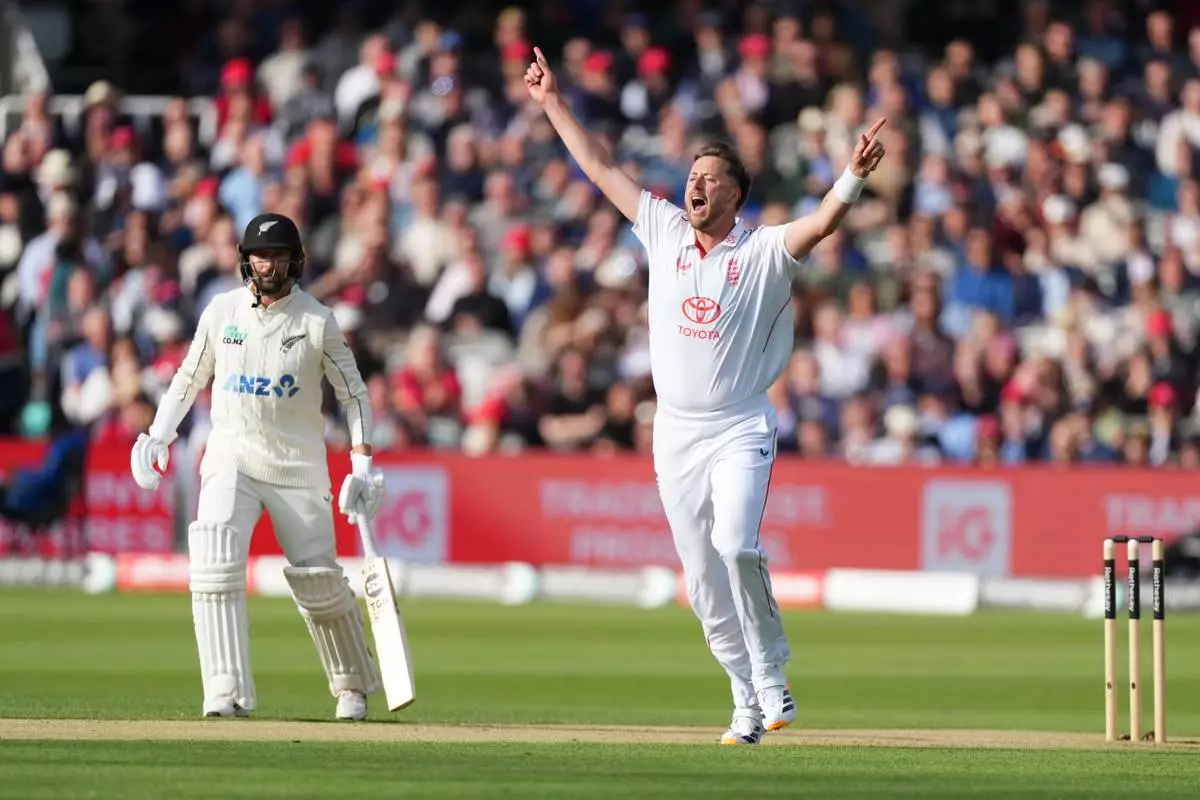
England's Ollie Robinson appeals during the second day of the test match between England and New Zealand at Lord's cricket ground in London, Friday, June 5, 2026. (AP Photo/Kirsty Wigglesworth)
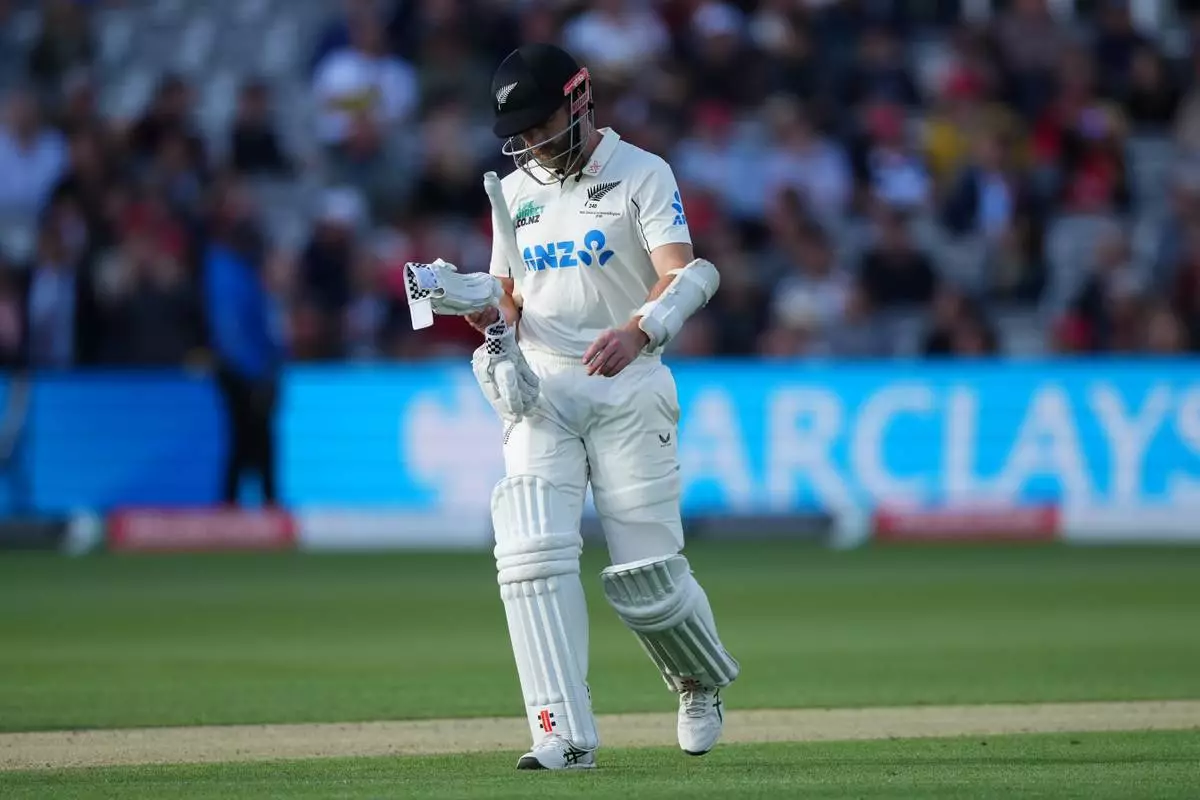
New Zealand's Kane Williamson leaves the pitch after losing his wicket during the second day of the test match between England and New Zealand at Lord's cricket ground in London, Friday, June 5, 2026. (AP Photo/Kirsty Wigglesworth)
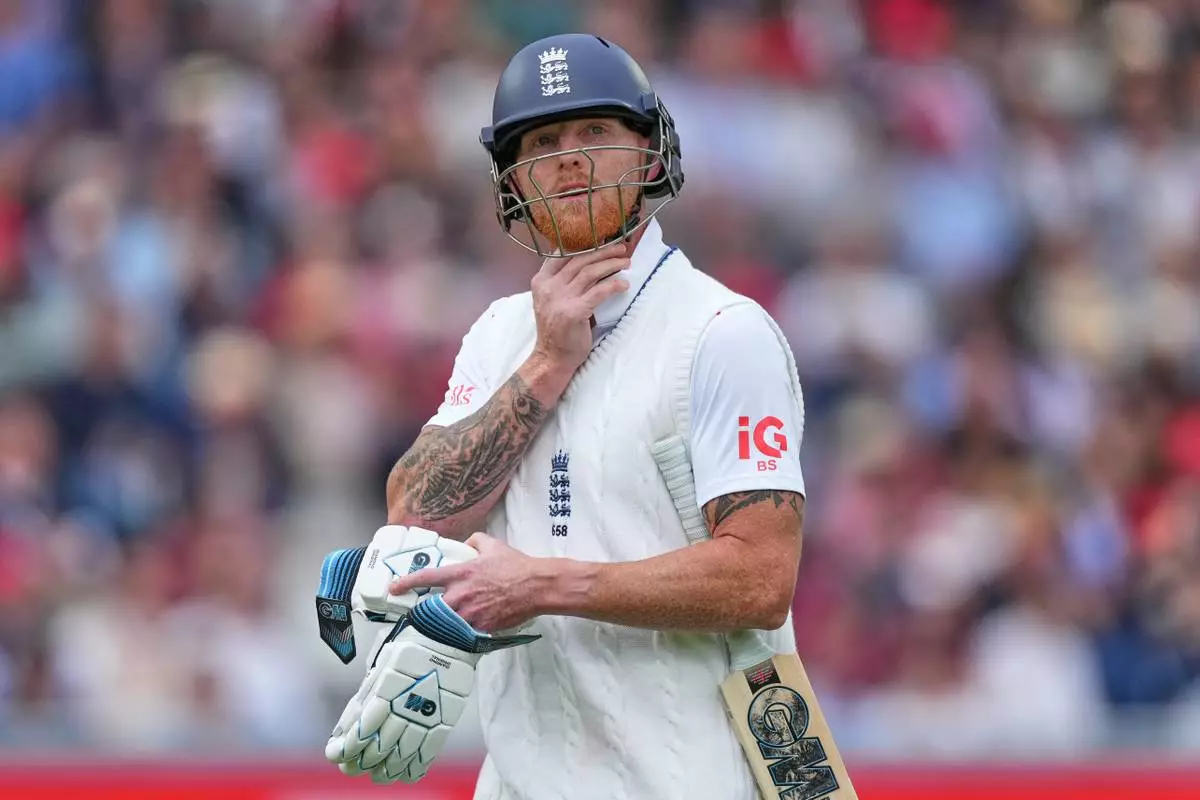
England's Ben Stokes leaves the pitch after losing his wicket during the second day of the test match between England and New Zealand at Lord's cricket ground in London, Friday, June 5, 2026. (AP Photo/Kirsty Wigglesworth)
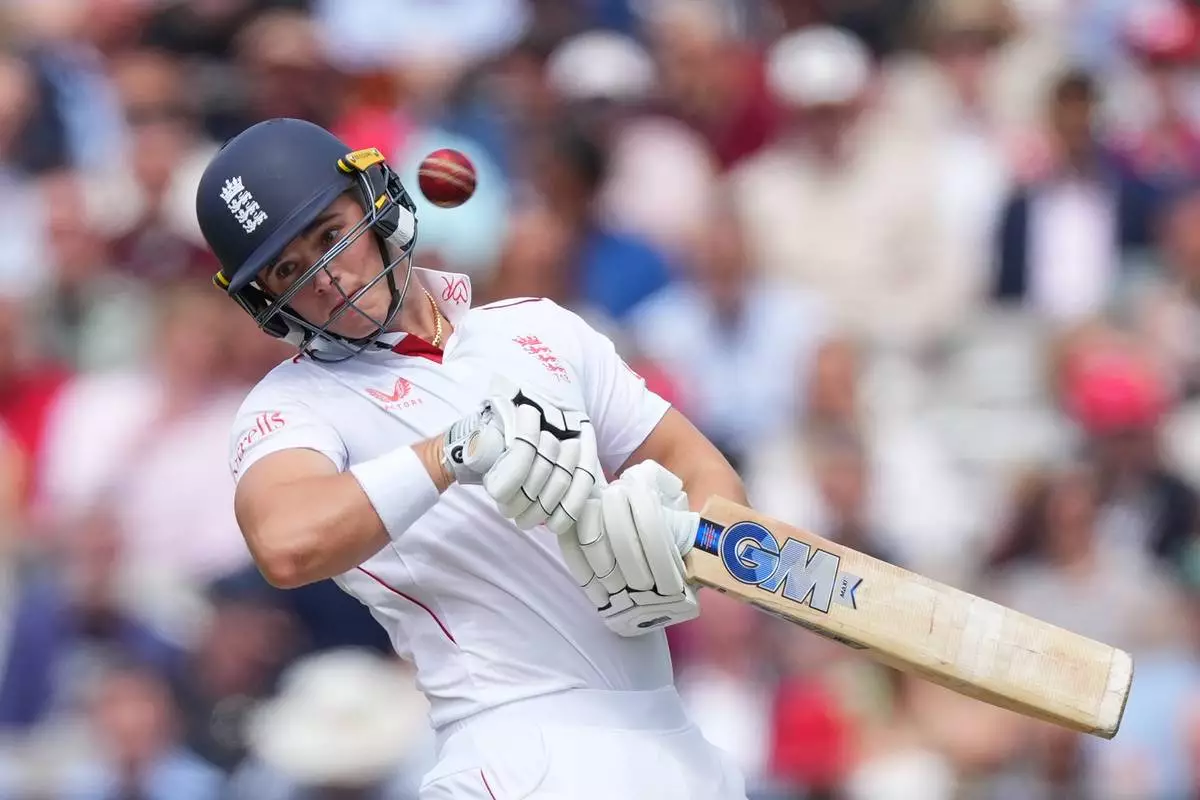
England's Jacob Bethell avoids a ball from New Zealand's Will O'Rourke during the second day of the test match between England and New Zealand at Lord's cricket ground in London, Friday, June 5, 2026. (AP Photo/Kirsty Wigglesworth)
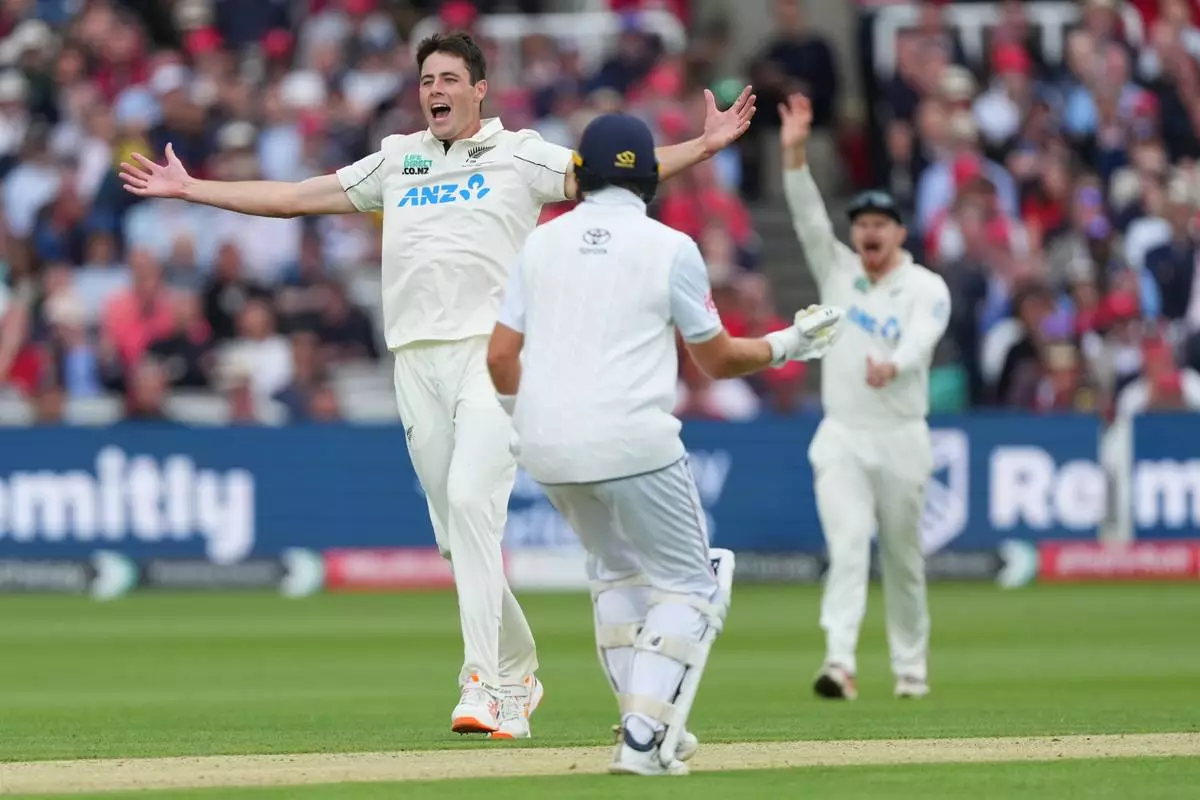
New Zealand's Will O'Rourke celebrates taking the wicket of England's Harry Brook during the second day of the test match between England and New Zealand at Lord's cricket ground in London, Friday, June 5, 2026. (AP Photo/Kirsty Wigglesworth)
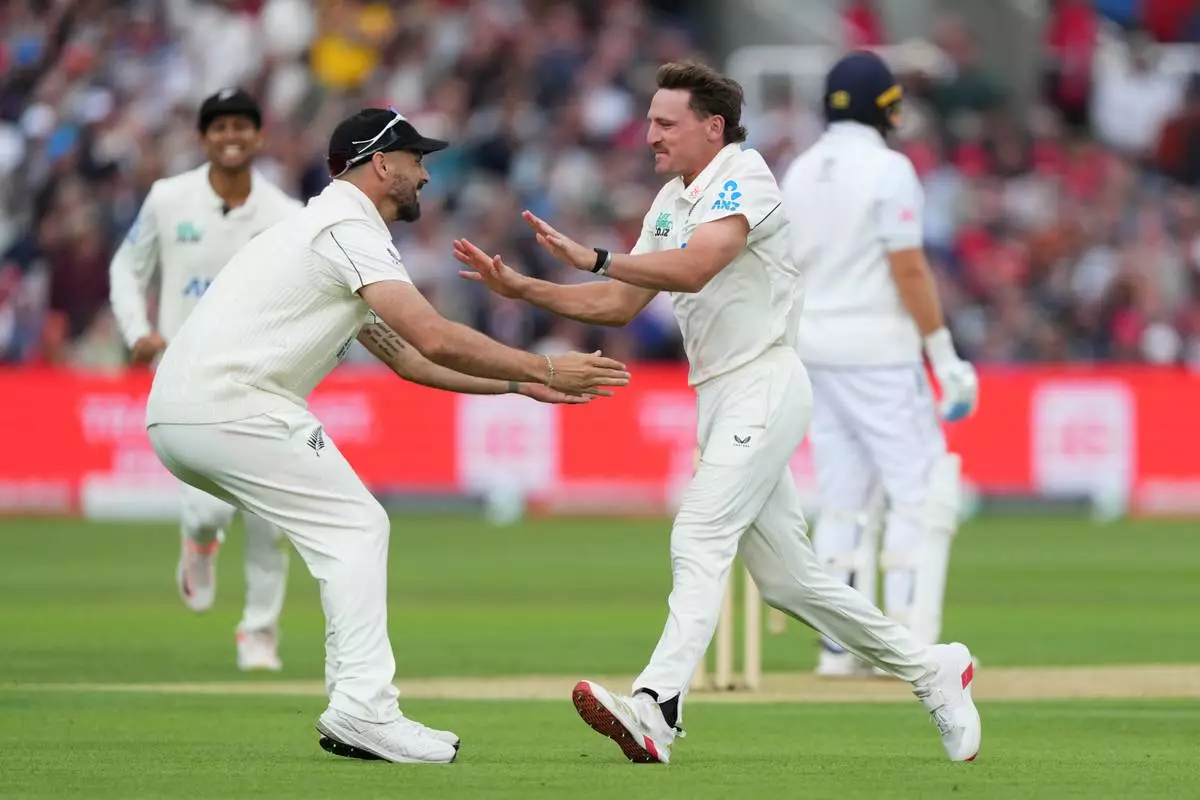
New Zealand's Nathan Smith, right, celebrates taking the wicket of England's Joe Root during the second day of the test match between England and New Zealand at Lord's cricket ground in London, Friday, June 5, 2026. (AP Photo/Kirsty Wigglesworth)
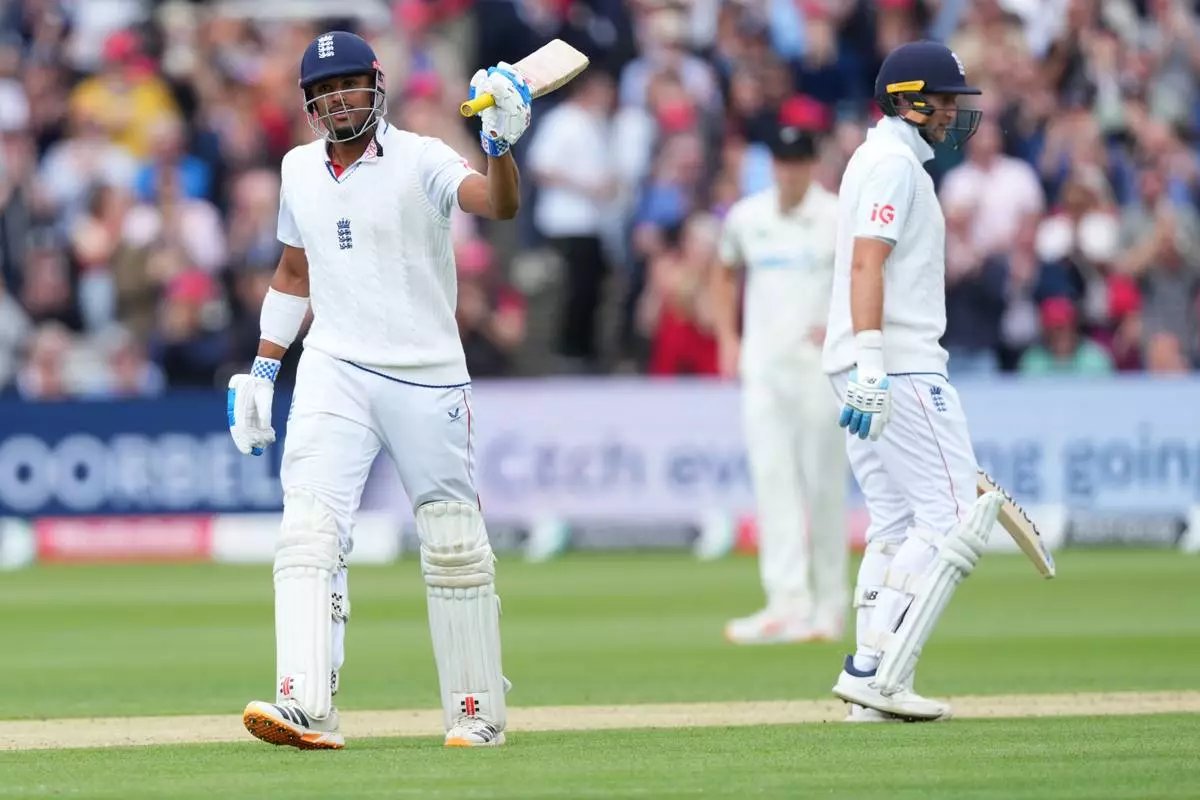
England's Emilio Gay celebrates his half century during the second day of the test match between England and New Zealand at Lord's cricket ground in London, Friday, June 5, 2026. (AP Photo/Kirsty Wigglesworth)
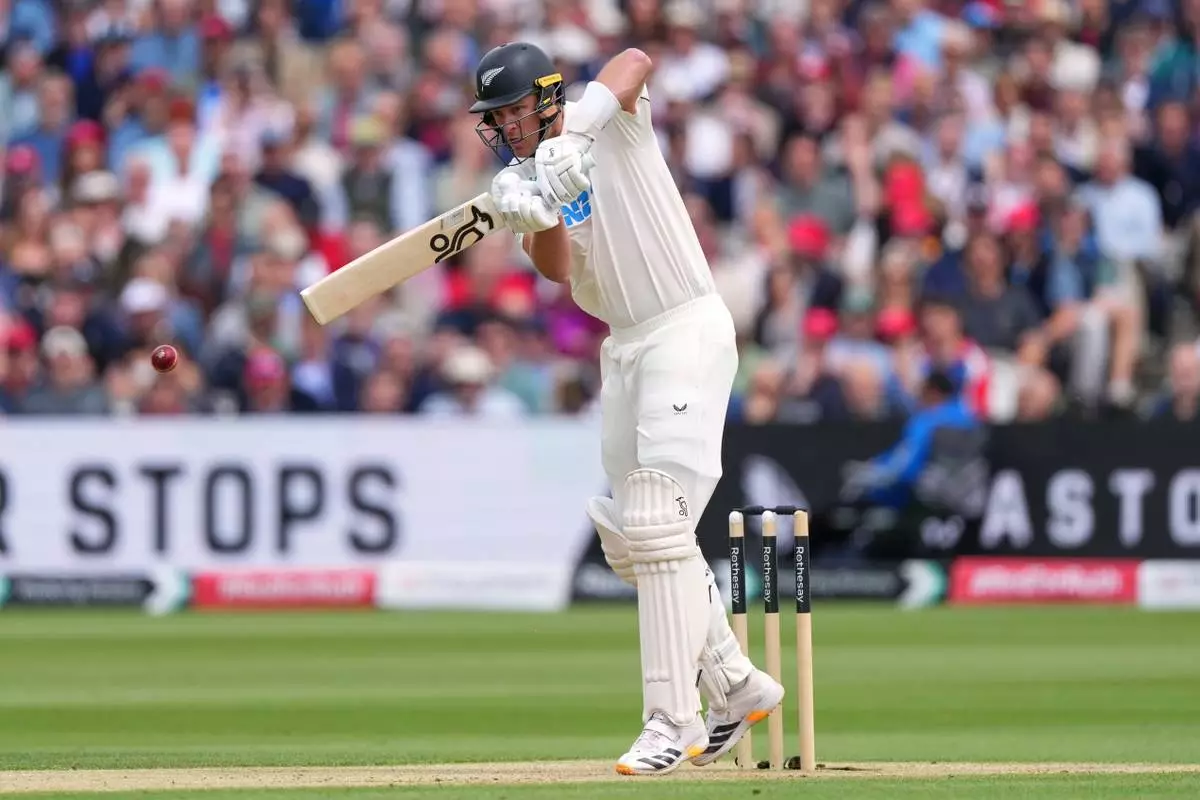
New Zealand's Kyle Jamieson plays a shot during the second day of the test match between England and New Zealand at Lord's cricket ground in London, Friday, June 5, 2026. (AP Photo/Kirsty Wigglesworth)
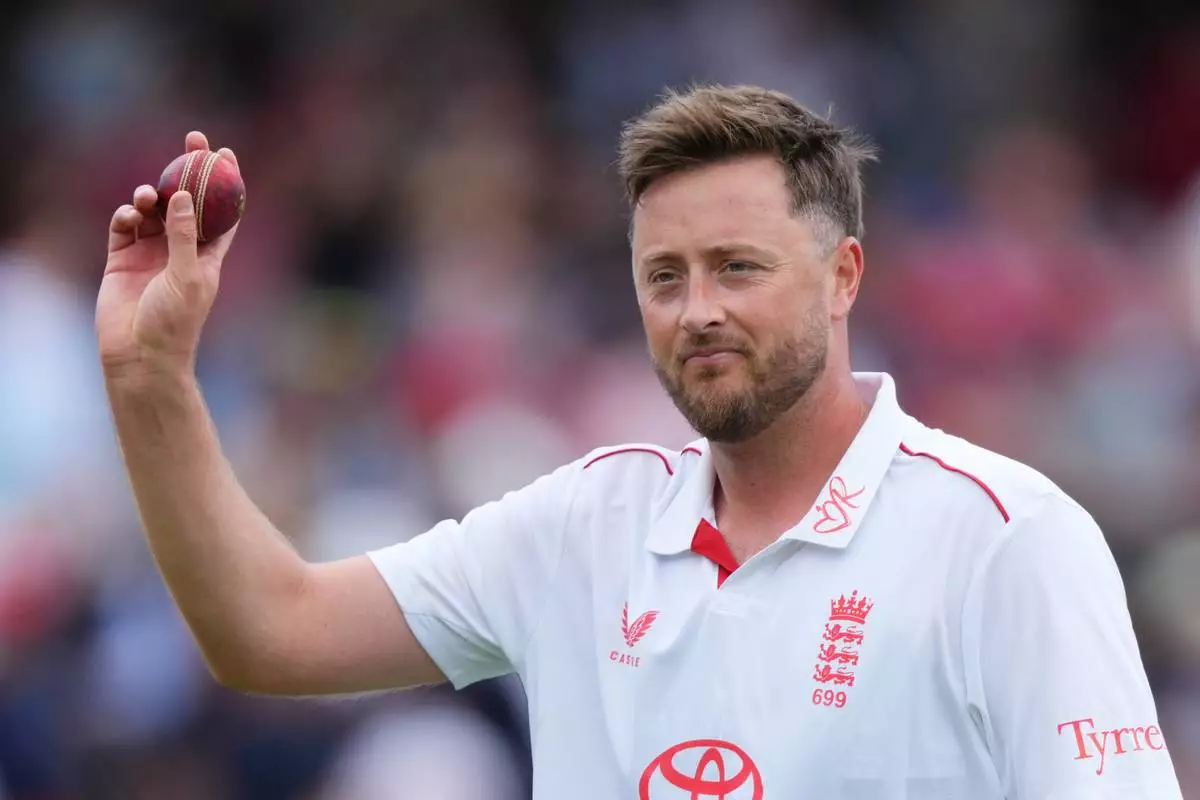
England's Ollie Robinson holds up the match ball after New Zealand are out for 113 during the second day of the test match between England and New Zealand at Lord's cricket ground in London, Friday, June 5, 2026. (AP Photo/Kirsty Wigglesworth)
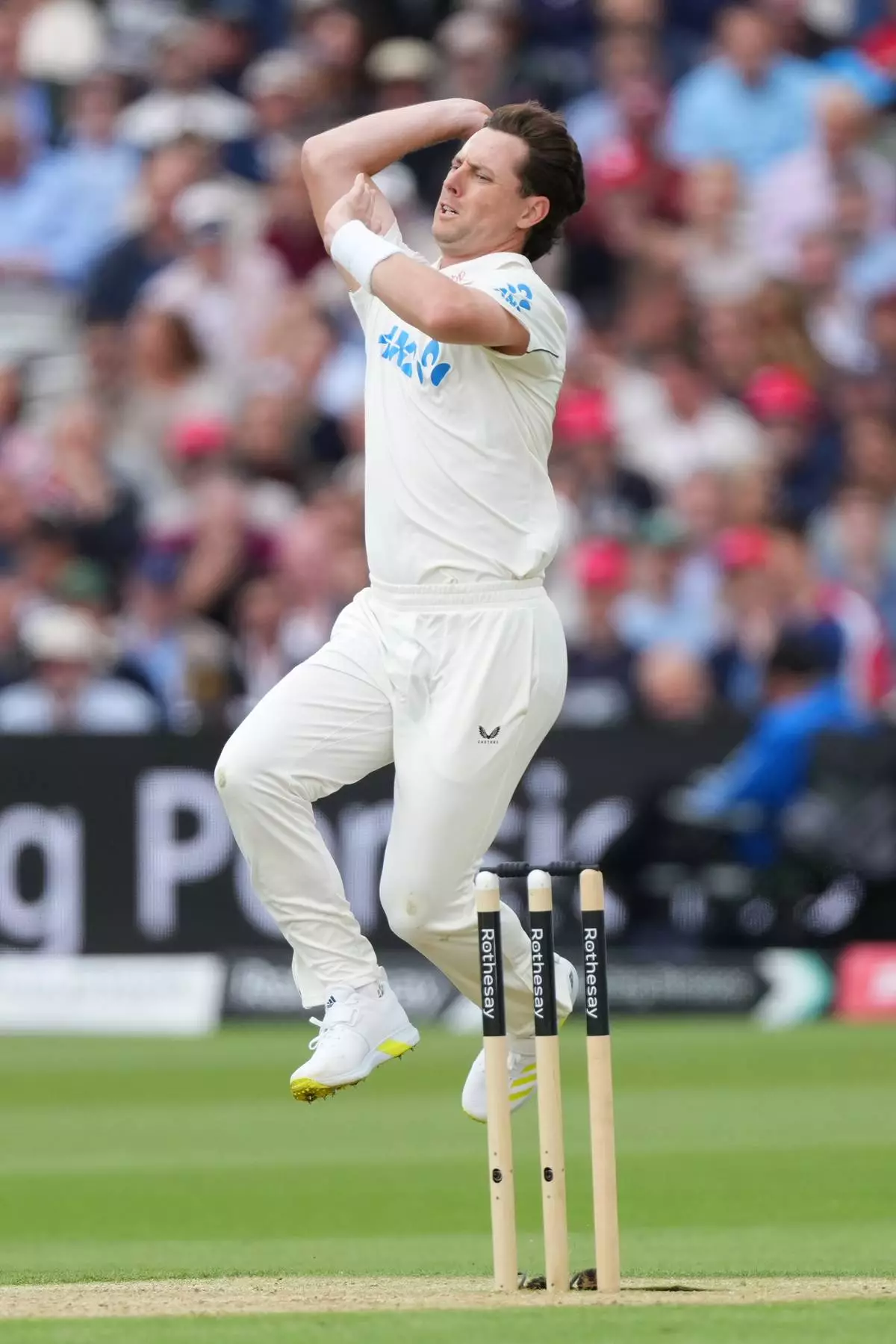
New Zealand's Matt Henry bowls during the second day of the test match between England and New Zealand at Lord's cricket ground in London, Friday, June 5, 2026. (AP Photo/Kirsty Wigglesworth)
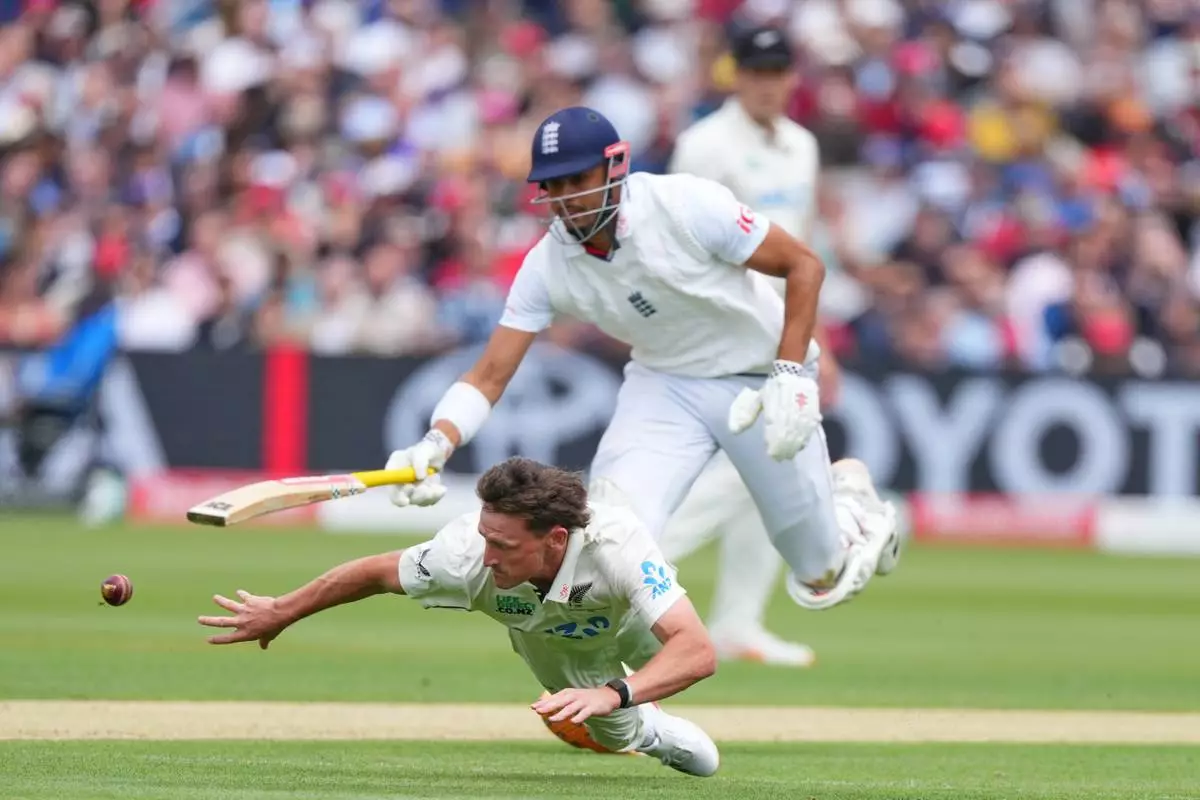
New Zealand's Nathan Smith fields the ball after bowling during the second day of the test match between England and New Zealand at Lord's cricket ground in London, Friday, June 5, 2026. (AP Photo/Kirsty Wigglesworth)