TOKYO--(BUSINESS WIRE)--May 7, 2025--
The film “Black Ox,” directed by Tetsuichiro Tsuta, a graduate of the Department of Imaging Art, Faculty of Arts, at Tokyo Polytechnic University (President: Hiroaki Yoshino; Address: Nakano-ku, Tokyo, hereinafter, “TPU”), won the top prize, the Firebird Award, at the 49th Hong Kong International Film Festival.
This press release features multimedia. View the full release here: https://www.businesswire.com/news/home/20250430321582/en/
At the 49th Hong Kong International Film Festival, held from Thursday, April 10, to Monday, April 21, 2025, the film “Black Ox,” directed by Tetsuichiro Tsuta, a graduate of the Department of Imaging Art, Faculty of Arts, at TPU, was awarded the top prize, the Firebird Award, in the Young Cinema Competition, which is the first in Japanese film history.
“Black Ox” is a film inspired by the “Ten Ox-Herding Pictures,” depicting the path to enlightenment in Zen Buddhism in ten illustrations, and filmed using 70 mm film for some scenes for the first time in Japanese feature films. The movie also uses the music of composer Ryuichi Sakamoto, who expressed his intent to participate before his passing.
The jury reviews this movie: “This artistic creation, emerging from diverse cultural backgrounds, weaves together unique philosophical and aesthetic perspectives, sharp historical insight, and vivid depictions of nature. It constructs an unexpected and original cinematic world—one that draws the viewer into a specific time and place, yet paradoxically elevates the experience into something universal and transcendent.”
Director Tsuta said, “I believe that my experiences as a student in creating movies using films led to this honor. While the film industry is heavily digital, the essence of movies is now and always has been analog film, and this is not going to change in the future. ‘Onko-chishin’: learn from the wisdom of the past. I hope you will be able to experience this work, filled with a love for analog film, in a cinema.”
“Black Ox” is scheduled for screening at the Mooov Film Festival in Belgium from Saturday, April 26, to Thursday, May 1, 2025, and at the Jeonju International Film Festival in South Korea from Wednesday, April 30, to Friday, May 9, 2025, and will be released in cinemas nationwide in Japan in January 2026.
Tetsuichiro Tsuta
Born in Miyoshi, Tokushima Prefecture. Graduated from the Department of Imaging Art, Faculty of Arts, at Tokyo Polytechnic University in 2007. After graduation, he worked on producing films independently while working part-time at the Waseda Shochiku Movie Theater in Takadanobaba. In 2009, his “Islands of Dreams” was selected for the Pia Film Festival and received the Audience Award. In 2013, his “The Tale of Iya” was awarded a Special Mention at the 26th Tokyo International Film Festival. His latest, “Black Ox,” is due for nationwide release in January 2026.
Tokyo Polytechnic University
TPU’s origin dates back to the founding of the Konishi Professional School of Photography in 1923. From its start, it has offered an education that fuses technology and art, and in 2023, TPU celebrated its centenary.
It has two faculties: the Faculty of Engineering, in Atsugi, Kanagawa Prefecture (Information Technology Course, Mechanical Engineering Course, Electrical and Electronics Course, Architecture Course), and the Faculty of Arts in Nakano-ku, Tokyo (Departments of Photography, Imaging Art, Design, Interactive Media, Animation, Manga, and Games).
URLhttps://www.t-kougei.ac.jp/

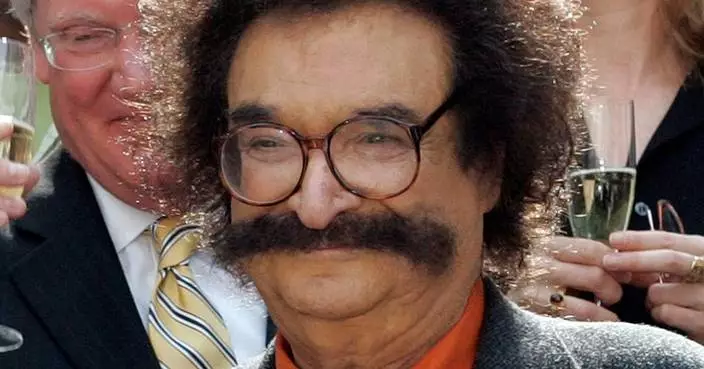
A scene from the film “Black Ox”
An investigation by the U.S. Justice Department into Paramount Skydance’s proposed acquisition of Warner Bros. Discovery has determined that the mammoth Hollywood media merger is not likely to harm competition in the industry or be harmful for consumers.
The agency said Friday that it closed its probe into the deal, with regulators at its antitrust division concluding that the impact of the merger “will be to increase competition across the media and entertainment ecosystem, with benefits for American consumers and workers.”
David Ellison’s Paramount Skydance reached a deal to acquire Warner Bros. Discovery in late February. Paramount’s victory came after months of negotiations and a rival bid by Netflix that ultimately fell short. Paramount was bought by Skydance last year.
The companies contend that merging will be good for growth in the industry and give consumers access to more content, particularly if the HBO Max and Paramount+ libraries are combined. But critics have decried what further consolidation could mean in an industry already controlled by just a few major players.
Among the potential market impacts from the merger, regulators weighed whether the deal would hurt competition in video streaming. They concluded that the merger would likely increase competition by giving customers a more “robust competitive alternative” to larger video streaming alternatives.
The agency also determined that YouTube, TikTok and other social media portals that also offer video streaming content “do not appear to be competitive substitutes here under well-established antitrust legal precedents, although they compete broadly for consumer attention.”
Regulators also concluded that the merger is not likely to harm competition for so-called linear television, citing a strong competition for live programming.
On the question of competition in Hollywood, regulators found that the combination of two major film studio operators is not likely to harm competition in studio development, production or distribution of films for theatrical release.
“Instead, evidence shows extensive competition within the industry, which has generated greater output and diversity of film offerings, and is likely to continue unabated,” regulators concluded.
Thousands of actors, directors, writers and other industry professionals have voiced “unequivocal opposition” to the Paramount deal, arguing that further consolidation will lead to job losses and fewer choices for filmmakers and moviegoers. Many lawmakers have similarly sounded the alarm.
Ellison, chief executive of Paramount Skydance, has pledged to keep Paramount and Warner Bros. as standalone movie studio operations, and vowed to release a combined 30 movies a year in theaters. Paramount has acknowledged the merger will also lead to significant cuts due to duplication.
While the Trump administration’s Justice Department has now confirmed it won’t be challenging Paramount’s $81 billion purchase of Warner, the mega merger is still being reviewed by other regulators both in the U.S. and abroad.
California Attorney General Rob Bonta has been particularly vocal about the transaction, and he said his state is investigating it.
Beyond the U.S., European regulators are also looking into the deal. The European Commission has listed July 7 as a tentative deadline for its review. And the U.K.’s Competition and Markets Authority is aiming to make an initial decision about its probe by early August.
Paramount and Warner previously said that they hoped to close their deal sometime in the third quarter of this year. And that clock is ticking. Paramount pledged to give shareholders some compensation if the acquisition doesn’t close by Sept. 30 — in the form of a 25-cent per share “ticking fee” for every quarter past that date. It has also agreed to a regulatory termination fee of $7 billion.
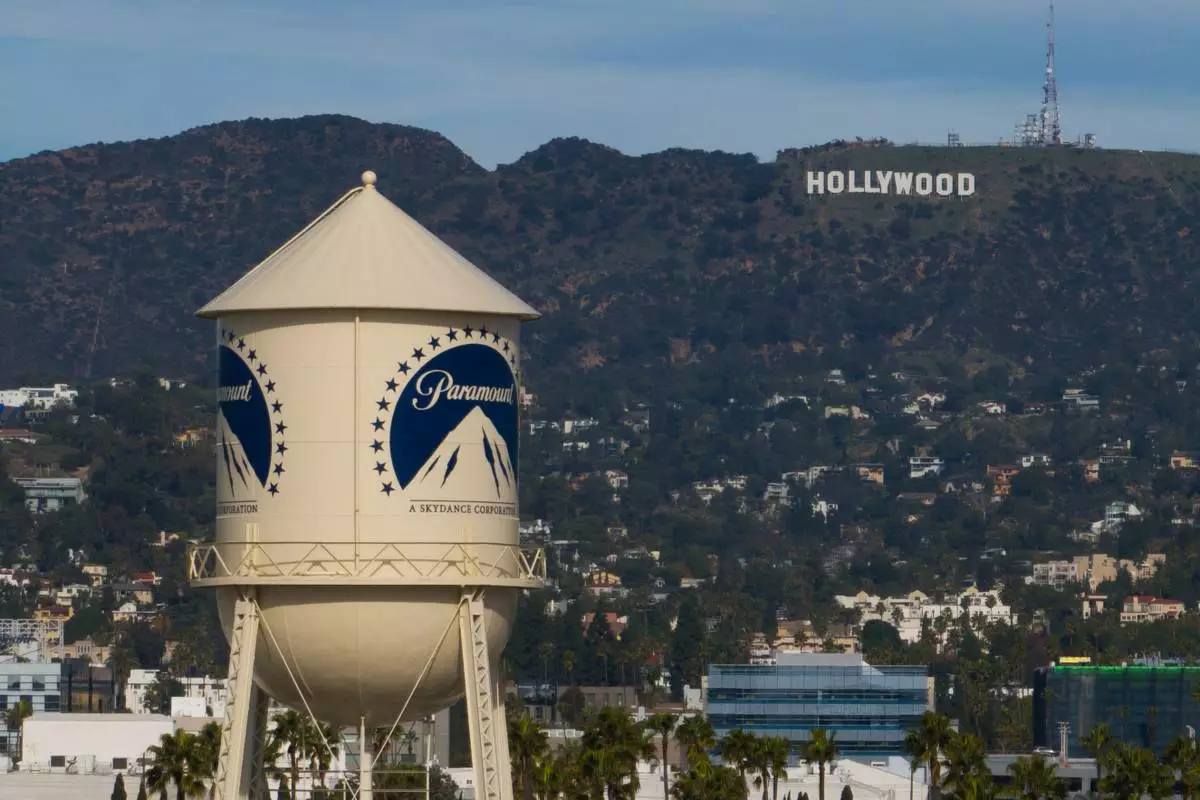
FILE - The Paramount Pictures water tower is seen in Los Angeles, Thursday, Dec. 18, 2025, with the Hollywood sign in the distance. (AP Photo/Jae C. Hong,File)