China urged de-escalation and criticized U.S. "provocations" during a United Nations Security Council (UNSC) session on the Democratic People's Republic of Korea (DPRK) nuclear standoff on Wednesday, stressing the need for humanitarian engagement over sanctions.
Geng Shuang, China's deputy permanent representative to the UN, stressed the need to "prioritize stability, promote dialogue, create favorable conditions, and abandon Cold War mentality" to address the peninsula's complex situation.
He urged all parties to act with "long-term vision and broad perspective," exercise restraint, and avoid actions that escalate tensions.
"Recently, certain countries have persistently conducted military exercises on the Korean Peninsula, introducing new formats and deploying strategic weapons. This has kept hostility at a high level and increased the risk of accidental conflict. The slightest miscalculation could lead to unforeseen consequences. China strongly calls for an immediate end to such dangerous actions," Geng said.
Geng reiterated that sanctions should serve as a means, not an end, and supported international efforts to build trust through humanitarian initiatives. He also criticized the U.S. for "using the peninsula issue as a tool to advance its geopolitical strategy" and called for an end to "blame-shifting diplomacy" at the UNSC.
"I categorically reject the unfounded accusations made by the U.S. representative against China. Let me emphasize: China has strictly implemented all UNSC resolutions on the DPRK, bearing over 90 percent of the international obligations and costs. We have overcome immense difficulties, made significant sacrifices and even born huge losses. We urge the U.S. to get its facts straight and cease its finger-pointing, which only undermines cooperation on the Korean Peninsula issue," Geng said.
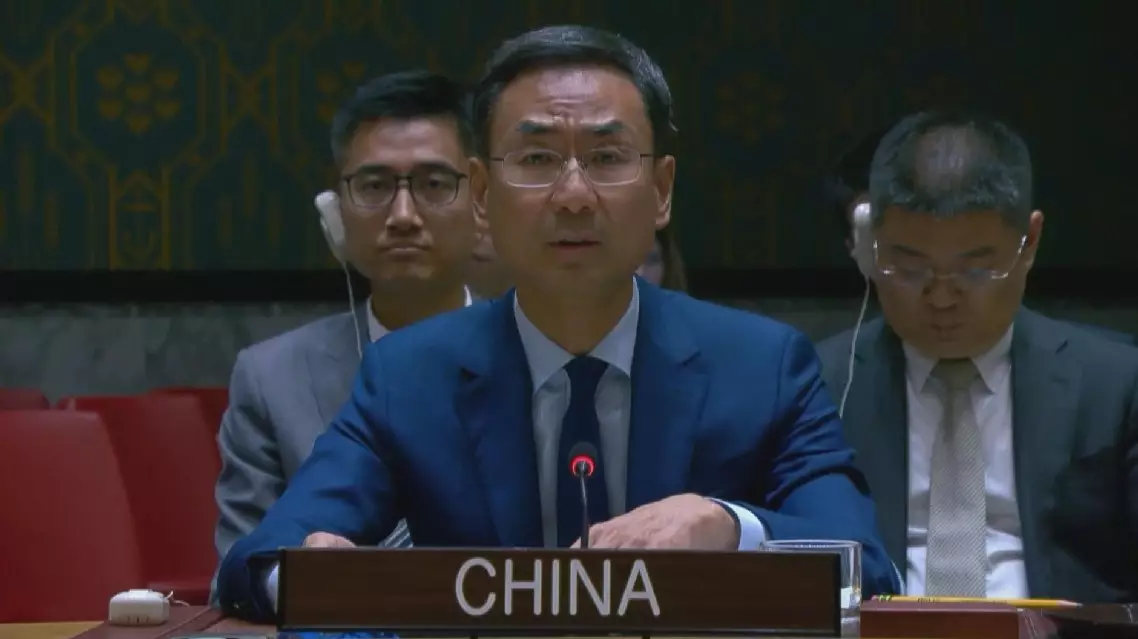
China calls for restraint, dialogue at UN meeting on Korean Peninsula tensions