Skip to Content Facebook Feature Image

China's Red Cross develops 1,000 teams with 100,000 rescuers

China

China

China

China's Red Cross develops 1,000 teams with 100,000 rescuers

2025-05-08 19:08 Last Updated At:19:57

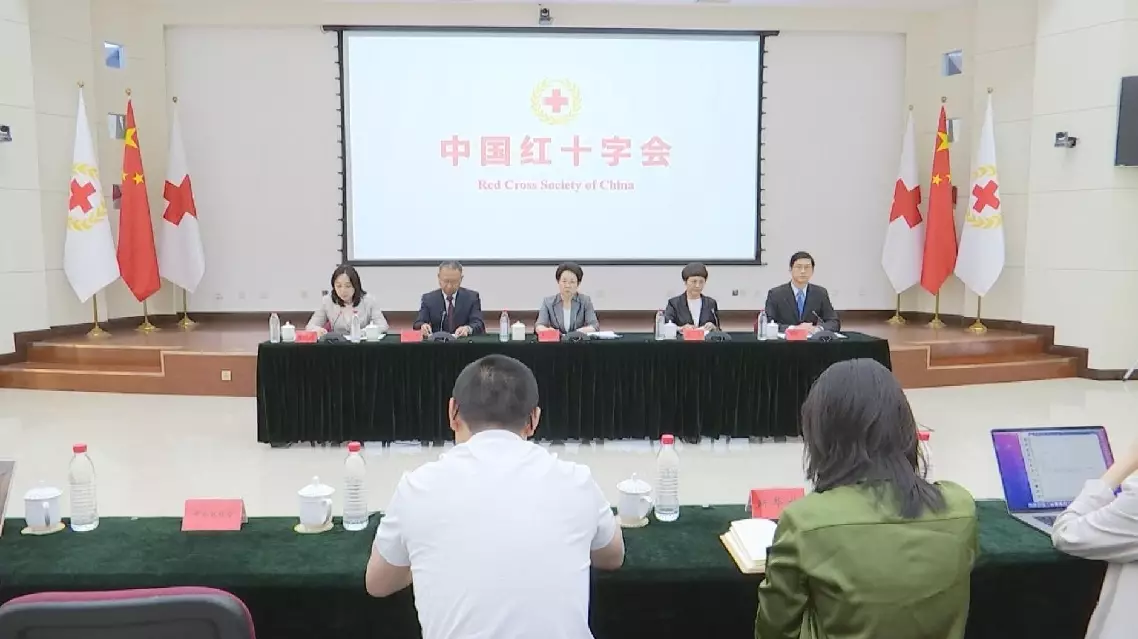
The Red Cross Society of China (RCSC) has developed more than 1,000 specialized teams involving 100,000 personnel for emergency rescue duties, said officials of the organization at a press conference in Beijing on Wednesday.

These teams conduct disaster relief, medical aid, water supply, public health services, emergency transport, psychological support, search and rescue, and aquatic rescue operations.

Wang Bin, vice president of the organization, reported that in 2024, the society conducted 565 emergency response missions and delivered 775,000 relief items.

"Based on the regional distribution features of disasters, we have established six major collaboration zones nationwide in east, southwest, northwest, central, south, and north China, and further optimized the rescue forces and resource allocation at the emergency response stage after disasters. This has significantly improved the frequency, efficiency, and quality of emergency responses," Wang said.

The RCSC, in collaboration with 13 government departments including the National Health Commission and Ministry of Education, has carried out emergency rescue trainings in communities, rural areas, schools, companies, government agencies, and households.

To date, China's Red Cross system has trained over 18 million licensed rescuers and installed more than 83,000 automated external defibrillators (AEDs) in schools, transportation hubs, tourist attractions and other public places.

"While promoting the installation of AEDs in public places, we have placed equal emphasis on training the public. We have compiled and published specialized textbooks on cardiopulmonary resuscitation (CPR) and AED operation, and launched specific courses to enhance training on CPR and AED operation, so that more people could acquire these skills and become able and dare to use them at critical moments," said Bian Xiao, head of the RCSC's relief and health department.

For 27 consecutive years, the RCSC has conducted a charity campaign with the goal of offering support to families in hardships, benefiting over 20 million households in need. Over two decades, the organization has extended medical support to children suffering from leukemia and congenital heart disease, aiding a total of 107,000 children.

As of now, China has registered over 7.07 million organ donors, with 58,000 completed cases of posthumous organ donation. The Chinese Marrow Donor Program's database includes more than 3.6 million registered hematopoietic stem cell donors, achieving 20,000 transplants to date.
China's Red Cross develops 1,000 teams with 100,000 rescuers
China's Red Cross develops 1,000 teams with 100,000 rescuers

The massive production complex of BASF in Zhanjiang City in south China's Guangdong Province has become a major symbol of China-Germany cooperation and green power utilization.

The company on Thursday put the multibillion-euro site into full operation, marking the largest single investment project wholly owned by a German enterprise in China.

With an investment of 8.7 billion euros, the integrated site covers about 4 square kilometers, the company said. Industry analysts say the project underscores BASF's long-term commitment to expanding in China as the country continues to promote high-standard opening up.

Unlike traditional plants, it runs entirely on green power, using 100 percent renewable electricity and fully electric-driven compressors for its core steam cracker.

"By utilizing 100 percent of the renewable energy, our products made in Zhanjiang contribute also significantly to the lower carbon product footprint. Our current product footprint for such a site like ours will probably be around 4 million tons of CO2. And today, we are at 1.7 million tons of CO2," said Haryono Lim, president of Mega Projects Asia at BASF.

Cutting carbon emissions by more than half, the Zhanjiang site is setting new benchmarks for sustainable chemical production.

"We wanted to distinctively move to South China to participate in the strong growth around the Pearl River Delta and in Guangdong Province. And then, of course, Zhanjiang offers great opportunities with its good infrastructure, deep-sea harbor, and great support by the local government," said Markus Kamieth, CEO of BASF.

The local government's support has been key to the company's growth in the region, and the project is now driving broader green ambitions.

"BASF's full operation boosts the region's low-carbon hydrogen transition by developing the hydrogen value chain to attract related industries, supplying low-cost green power from offshore wind and solar, driving green upgrades in local petrochemicals and steel, and helping build a national pilot zone for zero-carbon industrial parks," said Yang Jiedong, director of the Administrative Committee of Zhanjiang Economic and Technological Development Zone.

BASF Zhanjiang production complex goes fully green, using 100 percent renewable electricity

BASF Zhanjiang production complex goes fully green, using 100 percent renewable electricity

Recommended Articles