Members of the Chinese armed forces departed for Cambodia on Thursday to attended a joint military exercise between the two countries scheduled to take place in mid-to-late May.
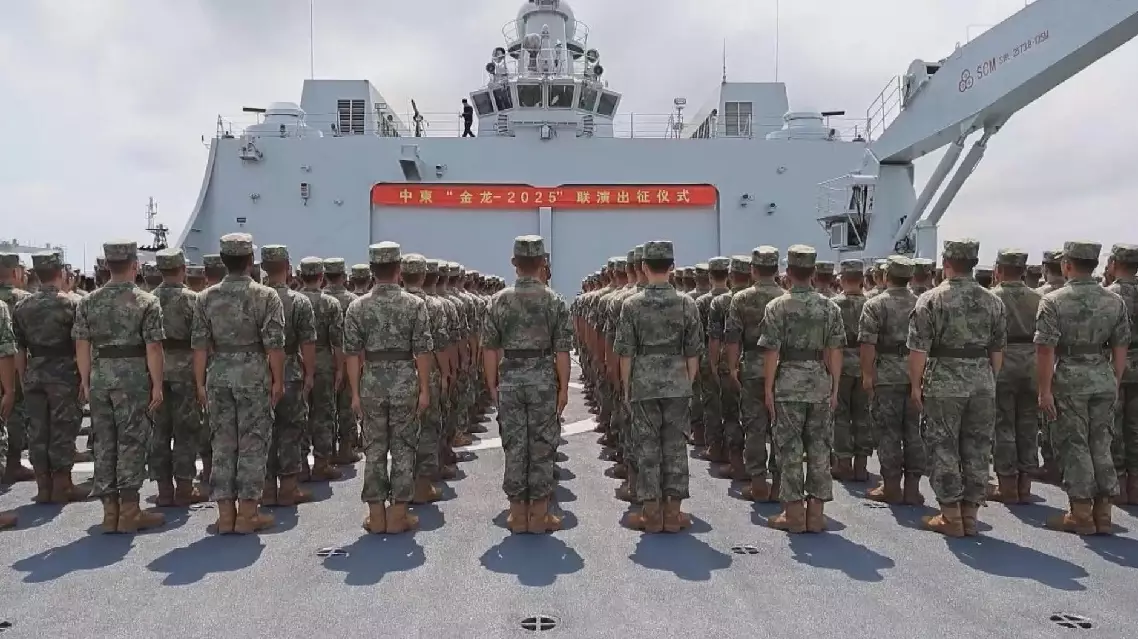
A departure ceremony was held for the departing Chinese troops at a military port in Zhanjiang City, south China's Guangdong Province.
At the ceremony, officers and soldiers from the army, navy, air force and joint logistics support force lined up on the flight deck of amphibious dock landing ship Changbaishan.
The joint military exercise, which is codenamed Golden Dragon-2025, will focus on joint counter-terrorism and humanitarian assistance and disaster relief operations.
The exercise will be conducted both on land and at sea, as well as in relevant air spaces, while there will also be cultural and sports exchanges, and vessel open day activities.
It will be the seventh of its kind between the Chinese and Cambodian armed forces.
Chinese troops leave for joint military exercise with Cambodia
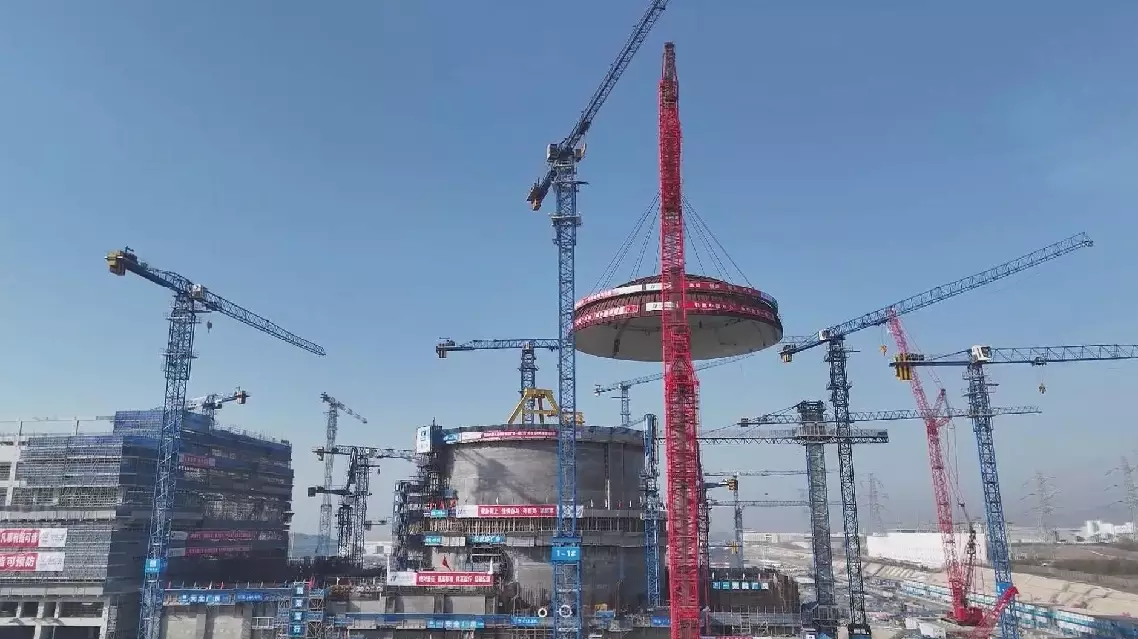
China's first Hualong One nuclear power project in the northern part of the country saw completion of the dome installation for its No. 1 unit in Weihai City of Shandong Province on Saturday, marking a key step forward in the construction of nuclear power generation facilities in northern China, according to China Huaneng Group.
Dome installation is a major milestone in any nuclear power project construction, as the reactor's steel liner is a core safety barrier, ensuring the plant's integrity and airtightness to contain radioactivity. The No. 1 unit's dome is the top structure of the nuclear island's reactor steel liner, composed of 70 wall panels, weighing 227.9 tons and covering an area the size of four basketball courts.
"Hualong One is China's independently developed third-generation pressurized water reactor nuclear technology. It features a double-layer safety containment design and a dual active and passive safety system, with international-leading safety performance. The rate of domestically sourced key equipment exceeds 90 percent, and each unit has a 1.2 million kilowatt capacity. The first phase expansion project of the Shidao Bay has led to the first application of Hualong One in in northern China and provides valuable experience for similar projects going forward in northern China," said Chang Chongxi, general manager of Huaneng Shidao Bay Nuclear Power Development Co., Ltd.
The Huaneng Shidao Bay base is China's first major advanced nuclear power base to simultaneously apply homegrown third- and fourth-generation nuclear technologies. It is already home to the world's first fourth-generation high-temperature gas-cooled reactor demonstration plant, and will be expanded with four Hualong One pressurized water reactors in two phases. Upon completion, the base will be capable of generating 35 billion kilowatt-hours of electricity annually, enough to power 17 million three-person households for a year.
Shidao Bay nuclear plant of 35 billion kilowatt-hours annual output hits major construction milestone