Skip to Content Facebook Feature Image

Fulfilling police career goals

HK

HK

HK

Fulfilling police career goals

2025-05-11 12:00 Last Updated At:12:01

Since 2024, the Police Force has partnered with three post-secondary institutions to offer the Diploma of Applied Education - Police Cadet Training Programme. Through classroom learning, physical training and outdoor experiences, the programme aims to better prepare young people who aspire to join the force.
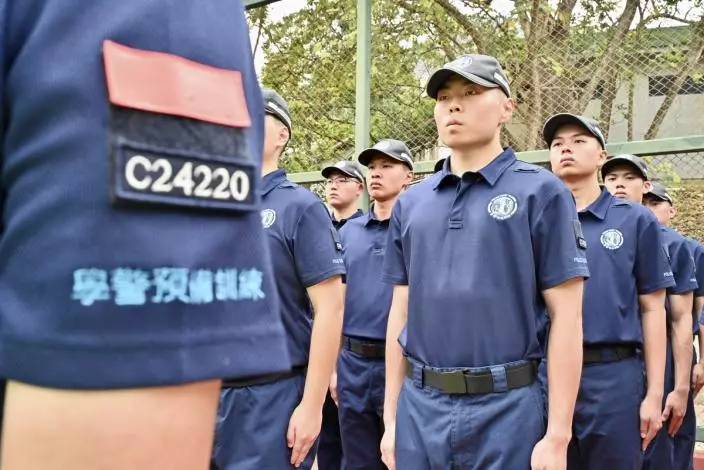
Invaluable experience: As a trainee of the Police Cadet Training Programme, Park Hae-jun (front row, right) describes his experience as beneficial not only for his future career but also for his everyday life.
Invaluable experience: As a trainee of the Police Cadet Training Programme, Park Hae-jun (front row, right) describes his experience as beneficial not only for his future career but also for his everyday life.

Personal growth

More Images
Invaluable experience: As a trainee of the Police Cadet Training Programme, Park Hae-jun (front row, right) describes his experience as beneficial not only for his future career but also for his everyday life.

Invaluable experience: As a trainee of the Police Cadet Training Programme, Park Hae-jun (front row, right) describes his experience as beneficial not only for his future career but also for his everyday life.

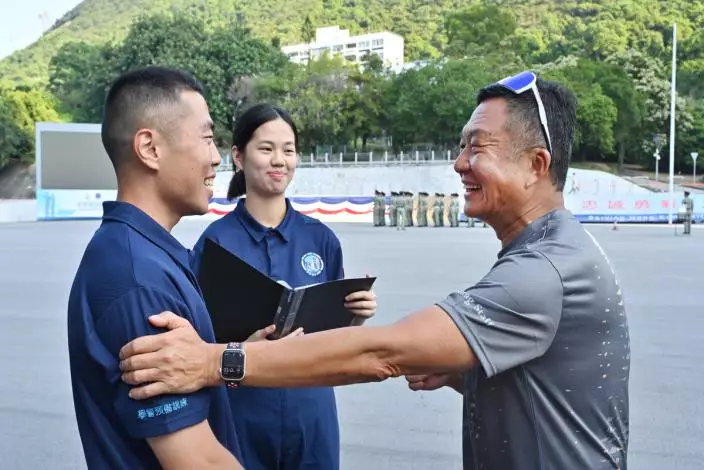
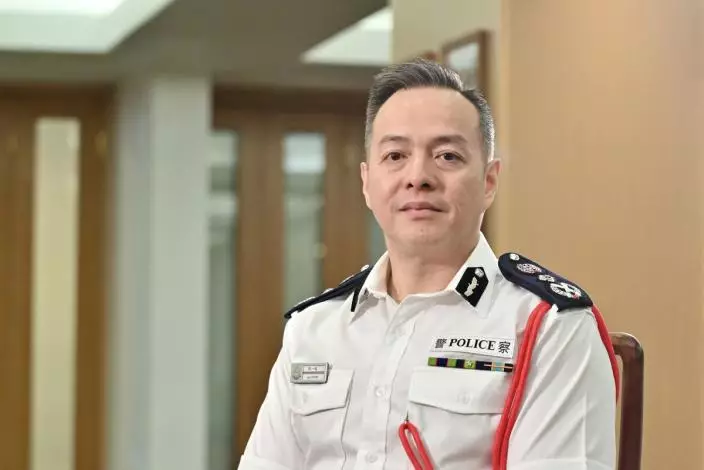
Guiding principles: Chief Inspector Wong Tak-choi (right) says the programme’s instructors encourage cadets to carry on the spirit and values of the former Police Cadet School through their teachings.
Guiding principles: Chief Inspector Wong Tak-choi (right) says the programme’s instructors encourage cadets to carry on the spirit and values of the former Police Cadet School through their teachings.

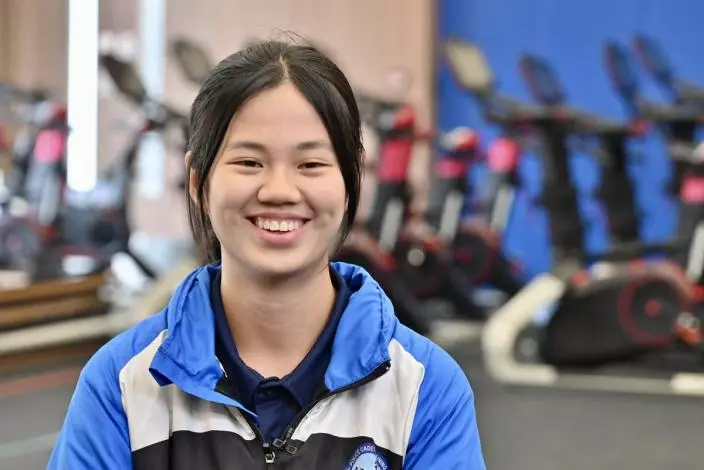
Enhanced knowledge: Sae-ung Wing-man explains that the programme’s field visits helped her gain a deeper understanding of how various police units operate.

Enhanced knowledge: Sae-ung Wing-man explains that the programme’s field visits helped her gain a deeper understanding of how various police units operate.

Praise-worthy accomplishment: Commissioner of Police Chow Yat-ming (front row, second right), while inspecting the cadets’ passing-out parade, offers them words of encouragement, along with recognising their development.
Praise-worthy accomplishment: Commissioner of Police Chow Yat-ming (front row, second right), while inspecting the cadets’ passing-out parade, offers them words of encouragement, along with recognising their development.

Overcoming hurdles: Mr Chow admires the efforts the cadets have made in conquering various challenges during the training.

Overcoming hurdles: Mr Chow admires the efforts the cadets have made in conquering various challenges during the training.

One such trainee is Park Hae-jun, a 27-year-old born in Hong Kong to Korean parents. Before joining the programme, he voluntarily returned to Korea to complete his military service, hoping to build discipline and confidence.

“I was born and raised in Hong Kong, and I consider Hong Kong my home - that is why I chose to come back,” he said.

He shared that the programme offered far more than textbook knowledge. Instructors taught him how to manage conflict and overcome challenges.

“When we face stress or setbacks, most of us want to give up. But here, we are trained to solve problems. The perseverance we have learned will not only help us in our careers but also in life.”

Guiding principles: Chief Inspector Wong Tak-choi (right) says the programme’s instructors encourage cadets to carry on the spirit and values of the former Police Cadet School through their teachings.

Guiding principles: Chief Inspector Wong Tak-choi (right) says the programme’s instructors encourage cadets to carry on the spirit and values of the former Police Cadet School through their teachings.

Hands-on learning

 Another trainee, 19-year-old Sae-ung Wing-man, described the field trips as being the most valuable part of the programme.

“They helped me to understand the work of the department I want to join, and how officers deal with different situations every day.” .

Wing-man has long aspired to join the force in order to support the public.

“The job is meaningful. It helps citizens solve problems. I want to be someone people can rely on.

“In preparation, I will further improve my physical fitness, stress management, legal knowledge and communication skills.”

Enhanced knowledge: Sae-ung Wing-man explains that the programme’s field visits helped her gain a deeper understanding of how various police units operate.

Enhanced knowledge: Sae-ung Wing-man explains that the programme’s field visits helped her gain a deeper understanding of how various police units operate.

Preparatory training

The Police Cadet School was established in 1973 and fulfilled its historical mission by 1990. Chief Inspector Wong Tak-choi, now responsible for physical and experiential training at the Police College, was once a cadet himself.

He hopes that the trainees of the Police Cadet Training Programme can carry forward the spirit of the Police Cadet school.

“Training methods may have changed, but our purpose remains the same - we want to nurture passionate young people who are ready to serve the community,” he said.

He also noted that many who fail to complete police training often lack physical or mental preparation - areas the cadet training programme addresses directly.

Praise-worthy accomplishment: Commissioner of Police Chow Yat-ming (front row, second right), while inspecting the cadets’ passing-out parade, offers them words of encouragement, along with recognising their development.

Praise-worthy accomplishment: Commissioner of Police Chow Yat-ming (front row, second right), while inspecting the cadets’ passing-out parade, offers them words of encouragement, along with recognising their development.

Course structure

The Police Force has co-organised this one-year training programme with the Caritas Institute of Community Education, the Hong Kong College of Technology, and the Hong Kong Institute of Technology.

Apart from core and supplementary subjects, the curriculum includes a 180-hour elective cluster titled “Police Cadet Training”, which is composed of “Police Studies”, “Police Recruit Preparatory Training” and “Physical & Mindset Development”.

Upon graduation, the trainees can attain a qualification equivalent to Level 2 in five Hong Kong Diploma of Secondary Education subjects, meeting the academic requirement for police constable recruitment. 

Overcoming hurdles: Mr Chow admires the efforts the cadets have made in conquering various challenges during the training.

Overcoming hurdles: Mr Chow admires the efforts the cadets have made in conquering various challenges during the training.

Final challenge

 After completing 22 weeks of police cadet training, the cadets took part in a passing-out parade. The event was inspected by Commissioner of Police Chow Yat-ming, who witnessed their growth and expressed his high expectations for their future success.

He highlighted that the final challenge includes a five-day, four-night “hell week” involving outdoor endurance tasks similar to the Outward Bound adventure training. Mr Chow joined cadets on the final early morning hike to Tai Mo Shan and expressed that he was impressed by how spirited they were.

“Some cadets had been injured earlier and could not complete the whole week, but they still tried to take part. Others felt exhausted, but they would still hold their heads up and pressed on.”

During a sharing session on the mountain, cadets reflected on their experiences and Mr Chow shared his own.

“The police career is long. Sometimes it feels lonely or dark - like the weather that day. But when you work as a team, someone will lead, and soon you will see the sunshine.”

Future vision

Mr Chow revealed that the cadet programme took more than three years to develop. He acknowledged the challenges, but praised his team for their dedication.

“It was like witnessing the birth of a child,” he stated.

In addition to preparing future officers, Mr Chow stressed that he hopes the programme will revive the spirit of the former cadet school, whose graduates served with distinction across the force.

“They lived by the values of wisdom, courage, integrity and perseverance. I hope this new generation will carry that torch forward.”

NEW YORK (AP) — The WNBA and its players' union will not agree to another collective bargaining agreement extension after the current deadline passes Friday night, WNBPA vice president Breanna Stewart said.

That does not mean players will strike or the league will lock them out. Stewart told reporters Thursday at an Unrivaled practice that the players would continue to negotiate in good faith.

With the deadline just before midnight Friday night, the league wouldn't confirm that the two sides won't reach an extension. A WNBA spokesman did say the league would “continue to negotiate in good faith with the goal of reaching a deal as quickly as possible.”

“Our focus remains on reaching an agreement that significantly increases player compensation while ensuring the long-term growth of the business,” a league spokesperson said.

The league and the players have had two previous extensions and have met several times this week. Any stalled negotiations could delay the start of the 2026 season. The last CBA was announced in the middle of January 2020, a month after it had been agreed to.

It could easily take two months from when a new CBA is reached to get to the start of free agency, which was supposed to begin later this month.

While a strike or lockout isn't imminent, both sides could change their viewpoints.

Stewart said calling a strike is “not something that we’re going to do right this second, but we have that in our back pocket.” The league hasn't been considering a lockout, according to a person familiar with the decision. The person spoke to The Associated Press on condition of anonymity Thursday because of the sensitive nature of the negotiations.

As of Thursday, the sides remained far apart on many key issues, including salary and revenue sharing, and it seems unlikely a deal could have been reached before Friday's deadline.

The league’s most recent offer last month would guarantee a maximum base salary of $1 million in 2026 that could reach $1.3 million through revenue sharing. That’s up from the current $249,000 and could grow to nearly $2 million over the life of the agreement, a person with knowledge of the negotiations told the AP. The person spoke on condition of anonymity because of the sensitive nature of the negotiations.

Under the league's proposal, players would receive in excess of 70% of net revenue — though that would be their take of the profits after expenses are paid. Those expenses would include upgraded facilities, charter flights, five-star hotels, medical services, security and arenas.

The average salary in 2026 would be more than $530,000, up from its current $120,000, and grow to more than $770,000 over the life of the agreement. The minimum salary would grow from its current $67,000 to approximately $250,000 in the first year, the person told the AP.

The proposal would also financially pay star young players like Caitlin Clark, Angel Reese and Paige Bueckers, who are all still on their rookie contracts, nearly double the league minimum.

Revenue sharing is one of the major sticking points in the negotiations.

The union's counter proposal to the league would give players around 30% of the gross revenue. The player's percentage would be from money generated before expenses for the first year and teams would have a $10.5 million salary cap to sign players. Under the union's proposal, the revenue sharing percent would go up slightly each year.

The union feels that the $750 million in expansion fees that the league just received with the addition of Cleveland, Detroit and Philadelphia by 2030 should be considered revenue and included in projections. The league says that the money actually goes to all the current teams that were in place before expansion to make up for the future money they’ll be losing by dividing the total revenue by more franchises.

Other major sports leagues like the NBA, NHL and NFL don't include expansion fees in their revenue-sharing structures. Major League Baseball's salary structure is not tied to its revenue, so expansion fees don't matter.

The league has proposed making players pay for their housing instead of having teams continue to incur the costs. With the potential new minimum salary at approximately $250,000, the WNBA has said that like most every other pro league, players should pay for their own housing.

The union's stance is that teams should continue to pay for players' housing.

An extended delay in getting a deal done could cause a number of problems, specifically getting the season started on time or even played for several reasons. There are several factors that indicate that time is near:

— Free agency

With nearly all the veteran players free agents this offseason, this will be the biggest year in the league's history as far as potential movement. Free agency was supposed to start later this month. However, once a new CBA is reached, it could take both parties two months to get free agency started.

— Revenue-generating events could be delayed

The release of the schedule has been delayed because of the lack of a new CBA. In the past, the league has tried to get it out before the holidays so teams can sell tickets. With so many players potentially changing teams as free agents, new merchandise wouldn't be able to be sold.

— Expansion draft

With Portland and Toronto entering the league this year, an expansion draft has to be held for the two new teams. Last year when Golden State came into the WNBA, a draft was held in December. Current teams need to figure out who they will be protecting from being selected in the draft, and that is made more complicated due to all the free agents.

AP WNBA: https://apnews.com/hub/wnba-basketball

FILE - The WNBA logo is seen near a hoop before an WNBA basketball game at Mohegan Sun Arena, May 14, 2019, in Uncasville, Conn. (AP Photo/Jessica Hill, File)

FILE - The WNBA logo is seen near a hoop before an WNBA basketball game at Mohegan Sun Arena, May 14, 2019, in Uncasville, Conn. (AP Photo/Jessica Hill, File)

Recommended Articles