Skip to Content Facebook Feature Image

WNBPA and WNBA will not extend CBA deadline; sides will continue to negotiate 'in good faith'

Sport

WNBPA and WNBA will not extend CBA deadline; sides will continue to negotiate 'in good faith'
Sport

Sport

WNBPA and WNBA will not extend CBA deadline; sides will continue to negotiate 'in good faith'

2026-01-09 22:25 Last Updated At:22:30

NEW YORK (AP) — The WNBA and its players' union will not agree to another collective bargaining agreement extension after the current deadline passes Friday night, WNBPA vice president Breanna Stewart said.

That does not mean players will strike or the league will lock them out. Stewart told reporters Thursday at an Unrivaled practice that the players would continue to negotiate in good faith.

With the deadline just before midnight Friday night, the league wouldn't confirm that the two sides won't reach an extension. A WNBA spokesman did say the league would “continue to negotiate in good faith with the goal of reaching a deal as quickly as possible.”

“Our focus remains on reaching an agreement that significantly increases player compensation while ensuring the long-term growth of the business,” a league spokesperson said.

The league and the players have had two previous extensions and have met several times this week. Any stalled negotiations could delay the start of the 2026 season. The last CBA was announced in the middle of January 2020, a month after it had been agreed to.

It could easily take two months from when a new CBA is reached to get to the start of free agency, which was supposed to begin later this month.

While a strike or lockout isn't imminent, both sides could change their viewpoints.

Stewart said calling a strike is “not something that we’re going to do right this second, but we have that in our back pocket.” The league hasn't been considering a lockout, according to a person familiar with the decision. The person spoke to The Associated Press on condition of anonymity Thursday because of the sensitive nature of the negotiations.

As of Thursday, the sides remained far apart on many key issues, including salary and revenue sharing, and it seems unlikely a deal could have been reached before Friday's deadline.

The league’s most recent offer last month would guarantee a maximum base salary of $1 million in 2026 that could reach $1.3 million through revenue sharing. That’s up from the current $249,000 and could grow to nearly $2 million over the life of the agreement, a person with knowledge of the negotiations told the AP. The person spoke on condition of anonymity because of the sensitive nature of the negotiations.

Under the league's proposal, players would receive in excess of 70% of net revenue — though that would be their take of the profits after expenses are paid. Those expenses would include upgraded facilities, charter flights, five-star hotels, medical services, security and arenas.

The average salary in 2026 would be more than $530,000, up from its current $120,000, and grow to more than $770,000 over the life of the agreement. The minimum salary would grow from its current $67,000 to approximately $250,000 in the first year, the person told the AP.

The proposal would also financially pay star young players like Caitlin Clark, Angel Reese and Paige Bueckers, who are all still on their rookie contracts, nearly double the league minimum.

Revenue sharing is one of the major sticking points in the negotiations.

The union's counter proposal to the league would give players around 30% of the gross revenue. The player's percentage would be from money generated before expenses for the first year and teams would have a $10.5 million salary cap to sign players. Under the union's proposal, the revenue sharing percent would go up slightly each year.

The union feels that the $750 million in expansion fees that the league just received with the addition of Cleveland, Detroit and Philadelphia by 2030 should be considered revenue and included in projections. The league says that the money actually goes to all the current teams that were in place before expansion to make up for the future money they’ll be losing by dividing the total revenue by more franchises.

Other major sports leagues like the NBA, NHL and NFL don't include expansion fees in their revenue-sharing structures. Major League Baseball's salary structure is not tied to its revenue, so expansion fees don't matter.

The league has proposed making players pay for their housing instead of having teams continue to incur the costs. With the potential new minimum salary at approximately $250,000, the WNBA has said that like most every other pro league, players should pay for their own housing.

The union's stance is that teams should continue to pay for players' housing.

An extended delay in getting a deal done could cause a number of problems, specifically getting the season started on time or even played for several reasons. There are several factors that indicate that time is near:

— Free agency

With nearly all the veteran players free agents this offseason, this will be the biggest year in the league's history as far as potential movement. Free agency was supposed to start later this month. However, once a new CBA is reached, it could take both parties two months to get free agency started.

— Revenue-generating events could be delayed

The release of the schedule has been delayed because of the lack of a new CBA. In the past, the league has tried to get it out before the holidays so teams can sell tickets. With so many players potentially changing teams as free agents, new merchandise wouldn't be able to be sold.

— Expansion draft

With Portland and Toronto entering the league this year, an expansion draft has to be held for the two new teams. Last year when Golden State came into the WNBA, a draft was held in December. Current teams need to figure out who they will be protecting from being selected in the draft, and that is made more complicated due to all the free agents.

AP WNBA: https://apnews.com/hub/wnba-basketball

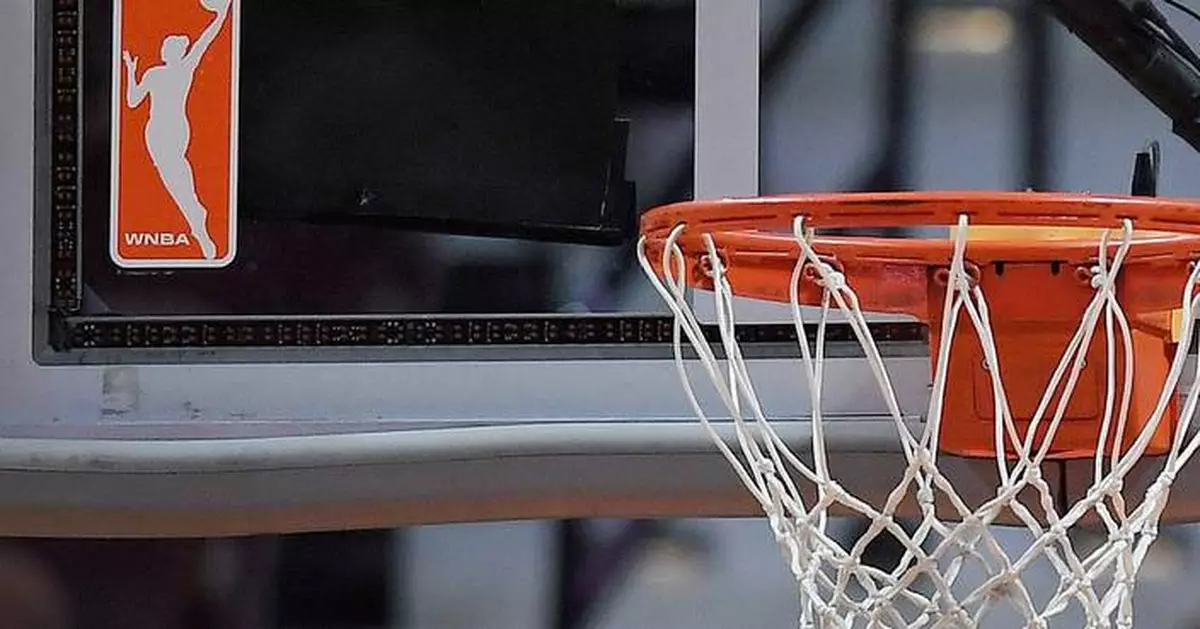
FILE - The WNBA logo is seen near a hoop before an WNBA basketball game at Mohegan Sun Arena, May 14, 2019, in Uncasville, Conn. (AP Photo/Jessica Hill, File)
FILE - The WNBA logo is seen near a hoop before an WNBA basketball game at Mohegan Sun Arena, May 14, 2019, in Uncasville, Conn. (AP Photo/Jessica Hill, File)
CAPE CANAVERAL, Fla. (AP) — NASA’s Artemis II astronauts fired their engines and blazed toward the moon Thursday night, breaking free of the chains that have trapped humanity in shallow laps around Earth in the decades since Apollo.

The so-called translunar ignition came 25 hours after liftoff, putting the three Americans and a Canadian on course for a lunar fly-around early next week. Their Orion capsule bolted out of orbit around Earth right on cue and chased after the moon to nearly 250,000 miles (400,000 kilometers) away.

It was the first such engine firing for a space crew since Apollo 17 set out on that era’s final moonshot on Dec. 7, 1972. NASA said that preliminary reports indicate it went well.

NASA had the Artemis II crew stick close to home for a day to test their capsule’s life-support systems before clearing them for lunar departure.

Now committed to the moon, the Artemis II test flight is the opening act for NASA’s grand plans for a moon base and sustained lunar living.

Commander Reid Wiseman, pilot Victor Glover, Christina Koch and Jeremy Hansen will dash past the moon then hang a U-turn and zip straight home without stopping on land. In the process, they will become the farthest humans have ever traveled from Earth, breaking the Apollo 13 distance record set in 1970. They also may become the fastest during their reentry at flight’s end on April 10.

Glover, Koch and Hansen already have made history as the first Black, the first woman and the first non-U.S. citizen to launch to the moon. Apollo’s 24 lunar travelers were all white men.

To set the mood for the day’s main event, Mission Control woke up the crew with John Legend’s “Green Light” featuring Andre 3000 and a medley of NASA teams cheering them.

“We are ready to go,” Glover said.

Mission Control gave the final go-ahead minutes before the critical engine firing, telling the astronauts that they were embarking on “humanity’s lunar homecoming arc” to bring them back to Earth.

Koch replied: “With this burn to the moon, we do not leave Earth. We choose it.”

The next major milestone will be Monday’s lunar flyby.

Orion will zoom 4,000 miles (6,400 kilometers) beyond the moon before turning back, providing unprecedented and illuminated views of the lunar far side, at least for human eyes. The cosmos will even treat the Artemis II astronauts to a total solar eclipse as the moon temporarily blocks the sun from their perspective.

While awaiting their orbital departure earlier Thursday, the astronauts savored the views of Earth from tens of thousands of miles high. Koch told Mission Control that they can make out the entire coastlines of continents and even the South Pole, her old stomping ground.

“It is just absolutely phenomenal,” radioed Koch, who spent a year at an Antarctic research station before joining NASA.

NASA is counting on the test flight to kickstart the entire Artemis program and lead to a moon landing by two astronauts in 2028. Orion’s toilet may need some design tweaks before that happens.

The so-called lunar loo malfunctioned as soon as the Artemis crew reached orbit Wednesday evening. Mission Control guided astronaut Koch through some plumbing tricks and she finally got it going, but not before having to resort to using contingency urine storage bags.

Controllers also managed to bump up the cabin temperature. It was so cold earlier in the flight that the astronauts had to dig into their suitcases for long-sleeved clothes.

The contingency urine bags came in handy later in the day. Mission Control ordered the crew to fill a bunch of the empty bags with water from the capsule’s dispenser. A valve issue arose with the dispenser following liftoff, and NASA wanted plenty of drinking water on hand for the crew in case the problem worsened. The astronauts used straws and syringes to fill the pouches with more than 2 gallons (7 liters) worth before pivoting to the moon.

The Associated Press Health and Science Department receives support from the Howard Hughes Medical Institute’s Department of Science Education and the Robert Wood Johnson Foundation. The AP is solely responsible for all content.

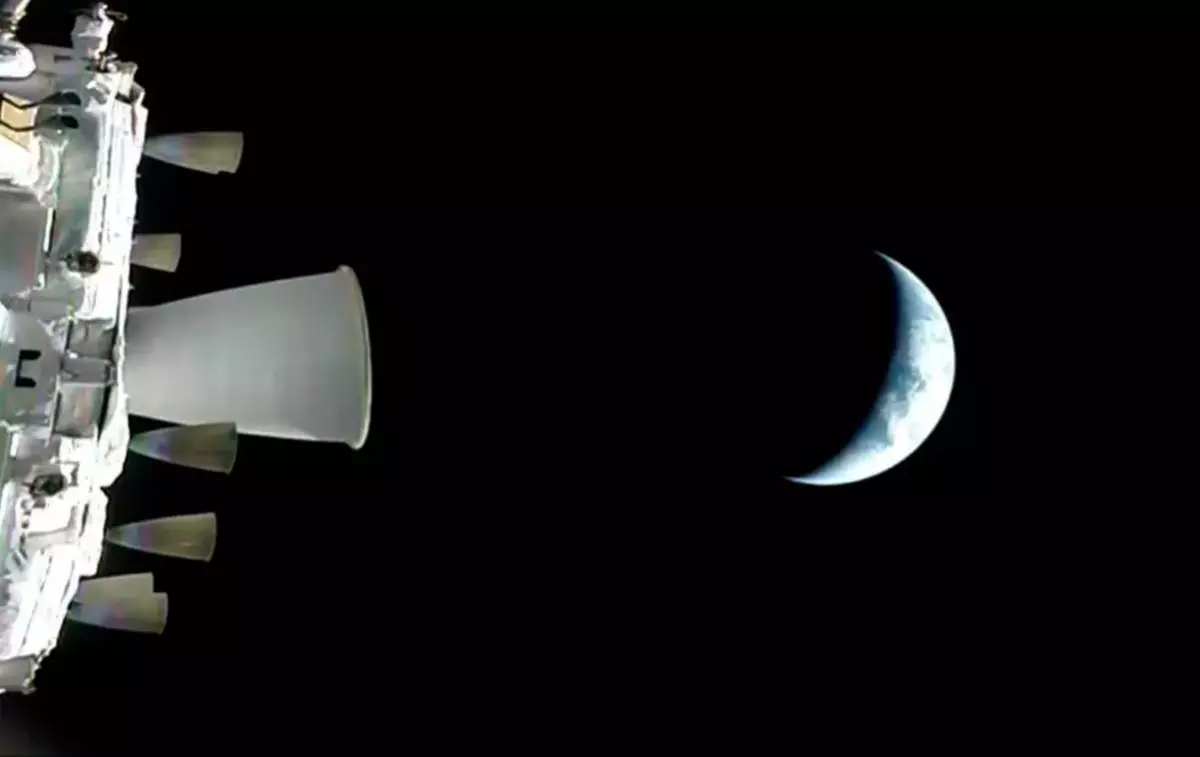
In this photo provided by NASA, a view of the Earth from NASA's Orion spacecraft as it orbits above the planet during the Artemis II test flight, on Thursday, April 2, 2026. (NASA via AP)

In this photo provided by NASA, a view of the Earth from NASA's Orion spacecraft as it orbits above the planet during the Artemis II test flight, on Thursday, April 2, 2026. (NASA via AP)

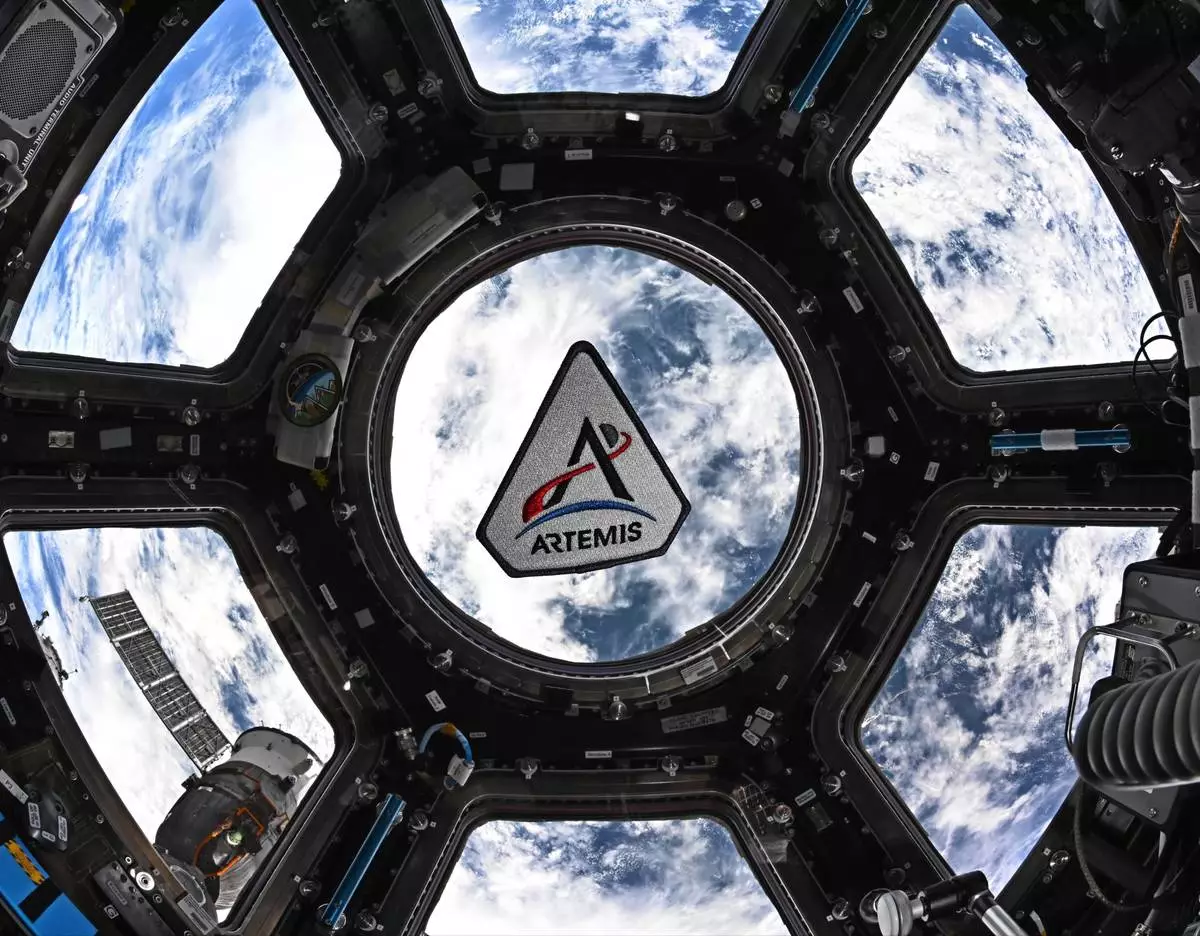
In this photo provided by NASA, an Artemis program patch floating in the International Space Station's cupola, on March 30, 2026. (Jessica Meir/NASA via AP)

In this photo provided by NASA, an Artemis program patch floating in the International Space Station's cupola, on March 30, 2026. (Jessica Meir/NASA via AP)

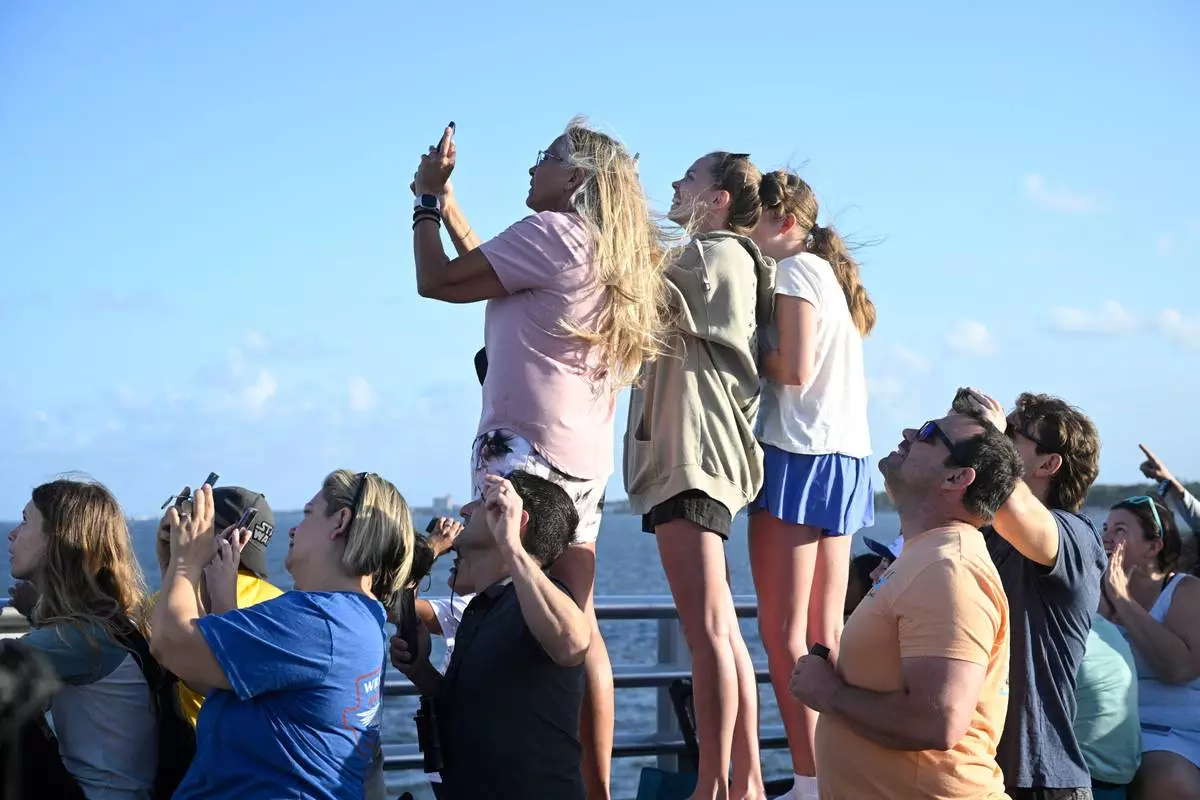
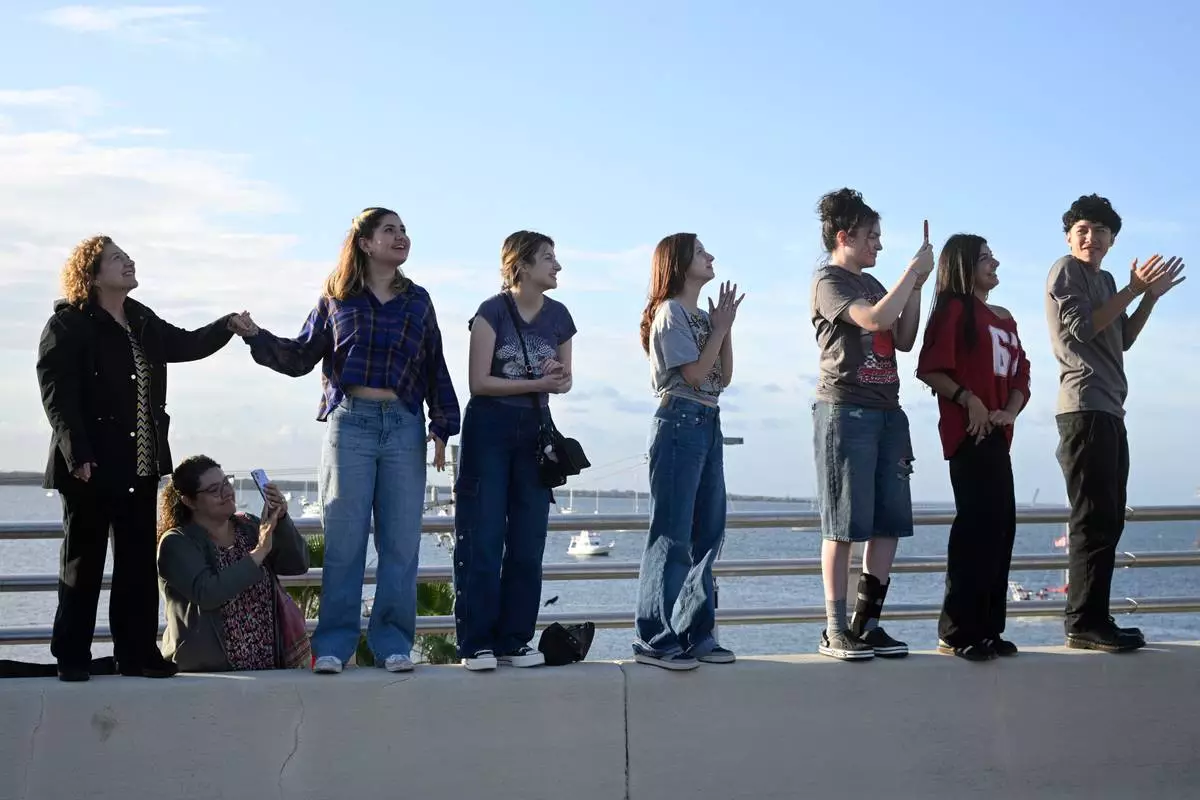
Spectators view NASA's Artemis II moon rocket launch from the A. Max Brewer Bridge, Wednesday, April 1, 2026, in Titusville, Fla. (AP Photo/Phelan M. Ebenhack)

Spectators view NASA's Artemis II moon rocket launch from the A. Max Brewer Bridge, Wednesday, April 1, 2026, in Titusville, Fla. (AP Photo/Phelan M. Ebenhack)

Spectators view NASA's Artemis II moon rocket launch from the A. Max Brewer Bridge, Wednesday, April 1, 2026, in Titusville, Fla. (AP Photo/Phelan M. Ebenhack)

Spectators view NASA's Artemis II moon rocket launch from the A. Max Brewer Bridge, Wednesday, April 1, 2026, in Titusville, Fla. (AP Photo/Phelan M. Ebenhack)

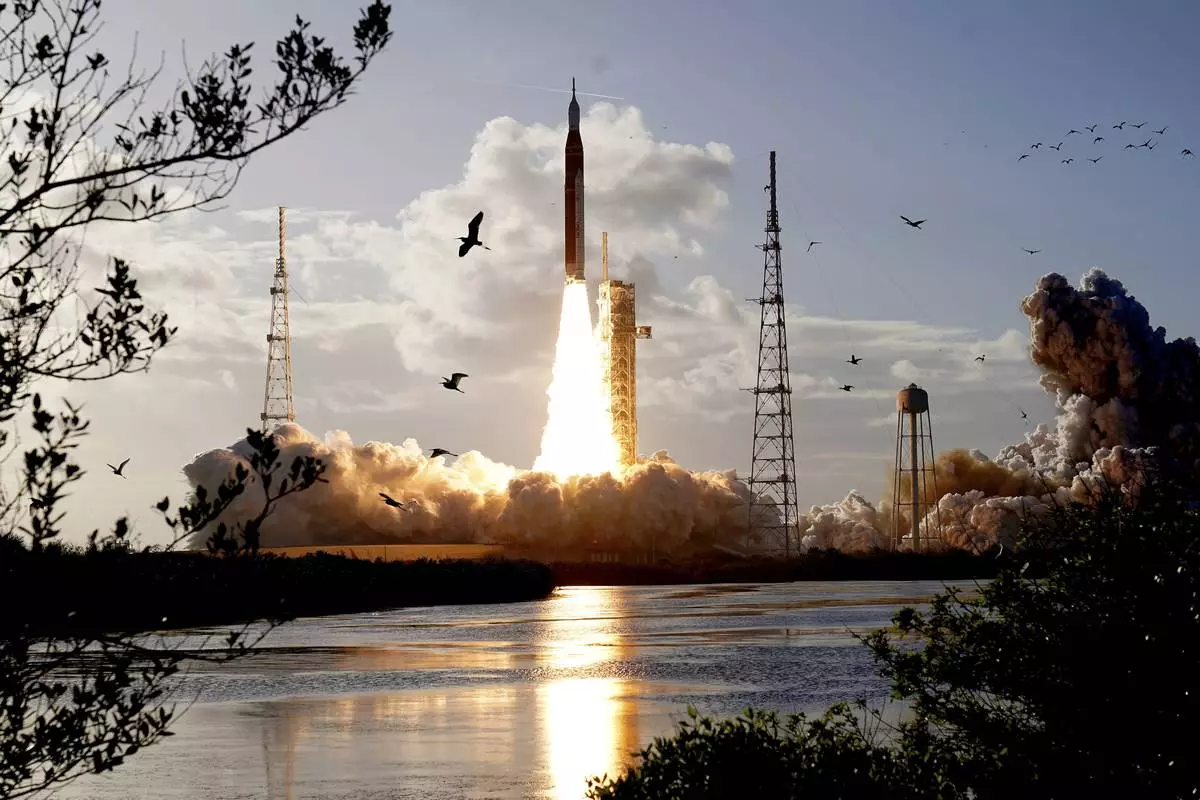
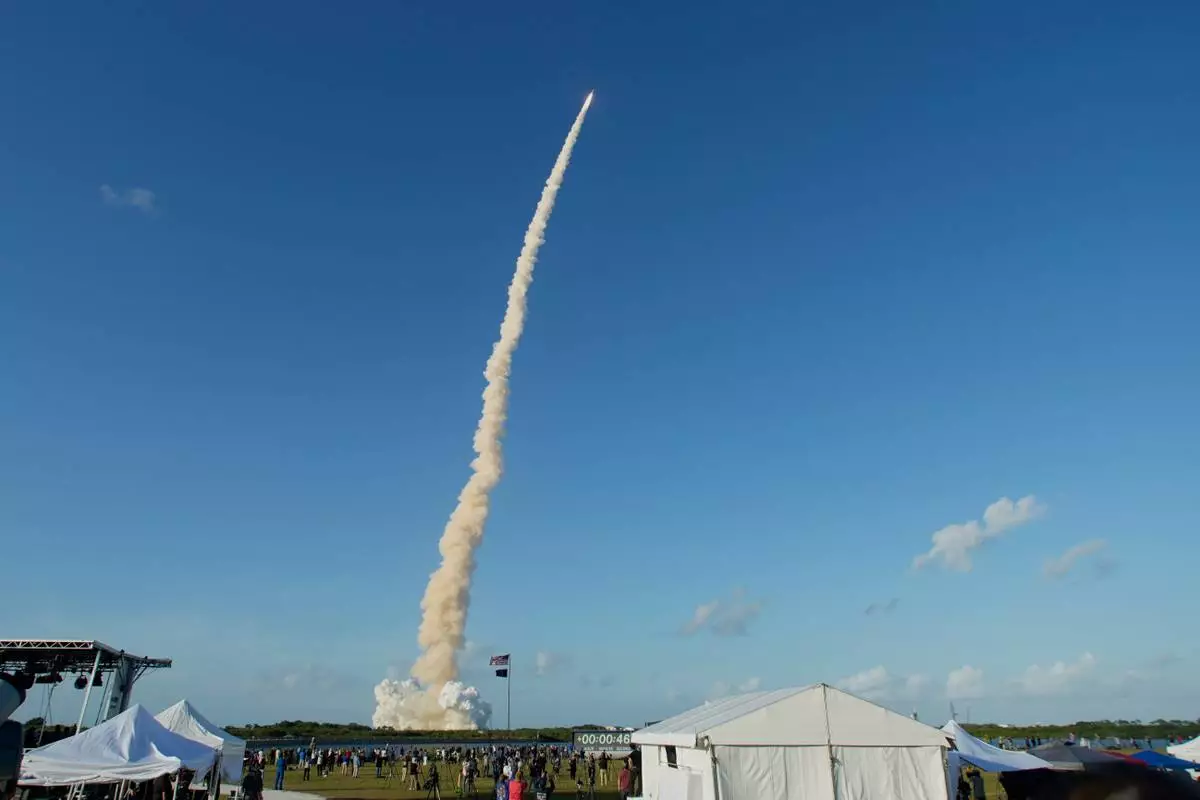
NASA's Artemis II moon rocket lifts off from the Kennedy Space Center's Launch Pad 39-B Wednesday, April 1, 2026, in Cape Canaveral, Fla. (AP Photo/Chris O'Meara)

NASA's Artemis II moon rocket lifts off from the Kennedy Space Center's Launch Pad 39-B Wednesday, April 1, 2026, in Cape Canaveral, Fla. (AP Photo/Chris O'Meara)

NASA's Artemis II moon rocket lifts off from the Kennedy Space Center's Launch Pad 39-B Wednesday, April 1, 2026, in Cape Canaveral, Fla. (AP Photo/Chris O'Meara)

NASA's Artemis II moon rocket lifts off from the Kennedy Space Center's Launch Pad 39-B Wednesday, April 1, 2026, in Cape Canaveral, Fla. (AP Photo/Chris O'Meara)

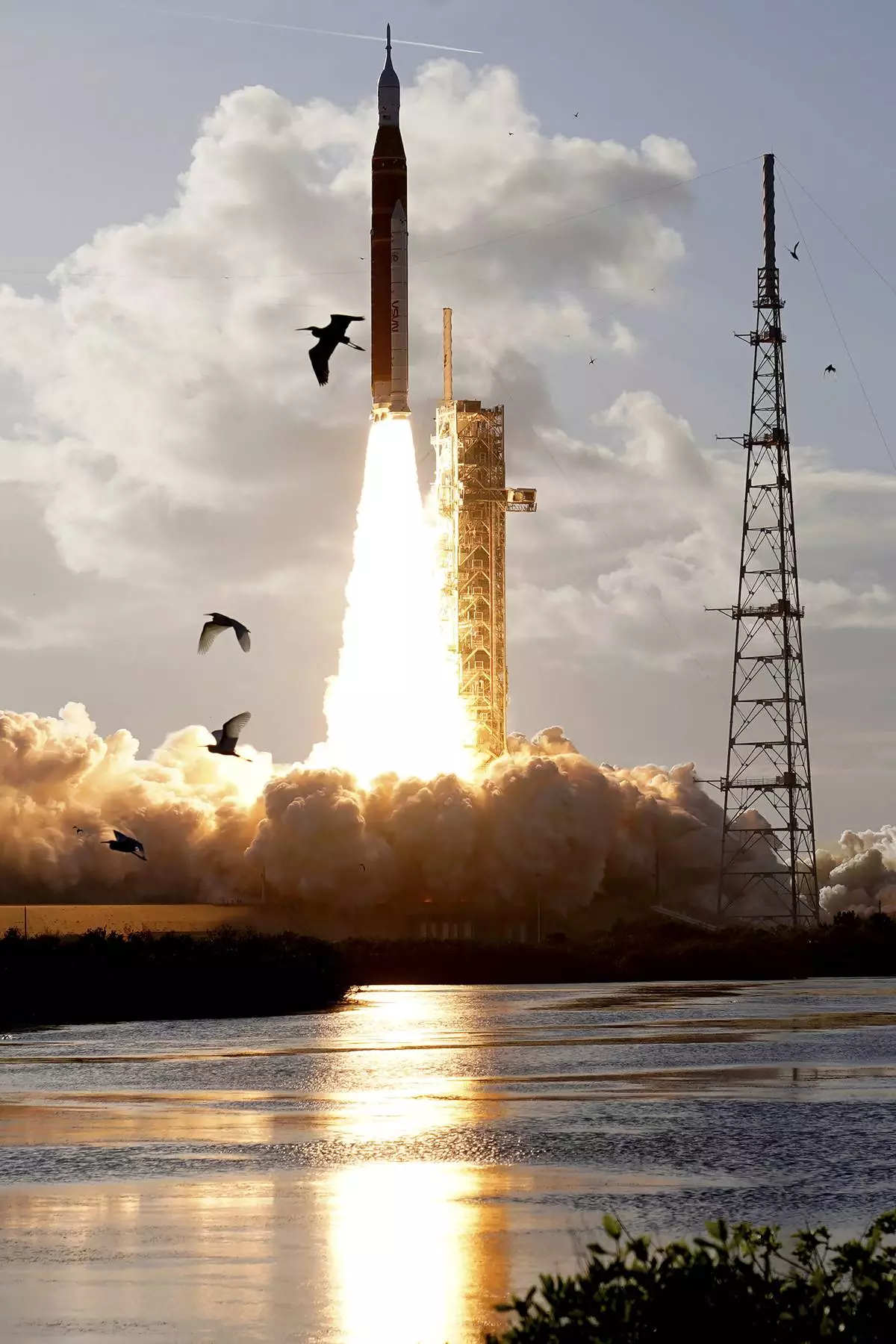
NASA's Artemis II moon rocket lifts off from the Kennedy Space Center's Launch Pad 39-B Wednesday, April 1, 2026, in Cape Canaveral, Fla. (AP Photo/John Raoux)

NASA's Artemis II moon rocket lifts off from the Kennedy Space Center's Launch Pad 39-B Wednesday, April 1, 2026, in Cape Canaveral, Fla. (AP Photo/John Raoux)

Recommended Articles