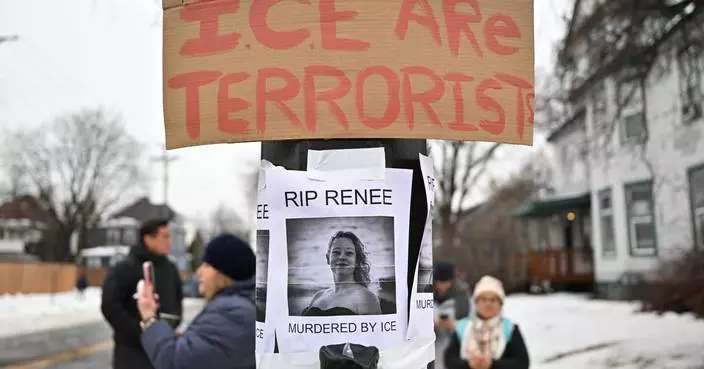
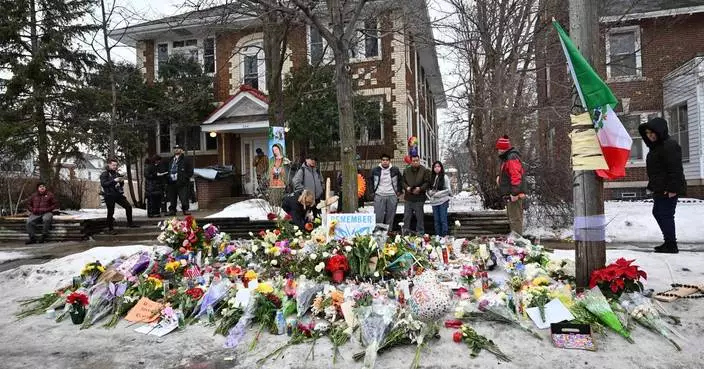
MINNEAPOLIS (AP) — A federal immigration operation in Minneapolis turned deadly this week when a U.S. Immigration and Customs Enforcement officer shot and killed 37-year-old Renee Good during a confrontation involving her vehicle.
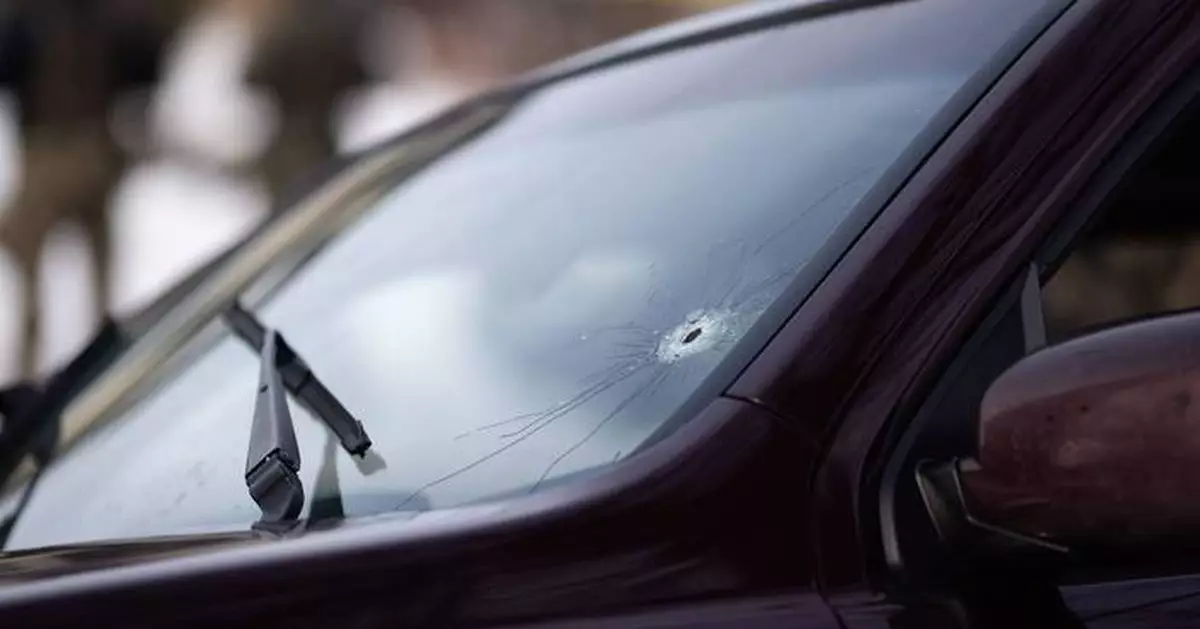
Cellphone video captured the shooting, which federal officials claimed was an act of self-defense but that the city’s mayor described as “reckless” and unnecessary. Video shows an ICE officer approaching Good’s SUV stopped in the road as the vehicle begins to move forward. Another ICE officer standing in front of it draws his gun and fires at close range as he jumps out of the way.
Here's what to know about regulations on using deadly force in these situations:
There is no universal training standard for law enforcement. But most police departments and federal guidance bar shooting at a moving vehicle unless the driver poses an imminent threat of deadly force beyond the car itself.
Experts say firing at a moving car is one of the riskiest forms of lethal force, increasing the chance of stray gunfire or a loss of vehicle control that can endanger bystanders.
Yes. Justice Department policy says deadly force is allowed only when no reasonable alternative exists, including stepping out of the vehicle’s path.
No. Policies generally state officers cannot use deadly force solely to arrest someone or to disable a fleeing vehicle if the person does not pose an immediate threat.
Not fundamentally. ICE and other federal officers operate under similar Justice Department guidance limiting gunfire at vehicles, although federal agents have added legal protections when acting within their official duties.
The Department of Homeland Security, which oversees ICE, allows deadly force only when an officer reasonably believes someone poses an imminent threat of death or serious injury.
Federal agencies conduct internal reviews, and state and local authorities may also pursue criminal investigations. Federal agents are not immune from prosecution if they act outside their authority. The FBI is leading the investigation into the Minneapolis shooting.
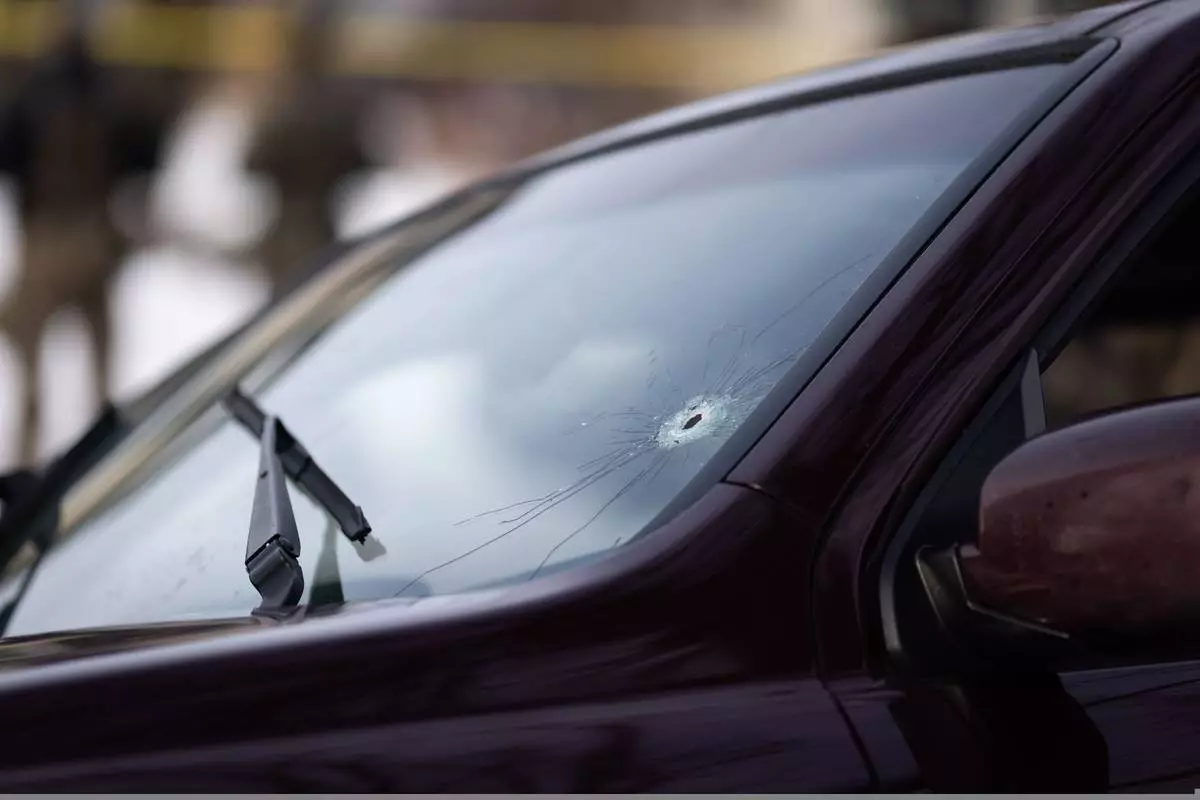
A bullet hole is seen on the windshield of a vehicle at the scene of a shooting in Minneapolis on Wednesday, Jan. 7, 2026. (Ben Hovland /Minnesota Public Radio via AP)
BRISBANE, Australia (AP) — This rematch between the Australian Open finalists was lopsided and Aryna Sabalenka flipped the outcome with a straight-sets win over Madison Keys.
Top-ranked Sabalenka broke Keys' in five straight service games on the way to a 6-3, 6-3 win in 1 1/2 hours Friday to reach the semifinals of the Brisbane International, an important tuneup event for the Australian Open which begins Jan. 18.
“I didn’t really have the throwback to the Australian Open last year, to be honest," Sabalenka said. "I know that I lost in Australia against her and it's a big motivation, of course, to go out and get the win.
"But I always look into the (next) match as like a new match against a new player. That's my approach."
The defending Brisbane champion will next take on 11th-seeded Karolina Muchova, who had a 6-2, 2-6, 6-4 win over Elena Rybakina to end a 13-match streak for the No. 3 seed. Fourth-seeded Jessica Pegula had a 6-3, 7-6 (3) quarterfinal win over No. 10 Liudmila Samsonova and will face either Mirra Andreeva or Marta Kostyuk in the semis.
Muchova has the better of the career head-to-head meetings against WTA Finals champion Rybakina. She also has a 3-1 record against No. 1 Sabalenka.
“Doesn’t matter if I’m the one who is leading head-to-head or I’m the one who is losing — I don’t care,” Sabalenka said, adding that her focus is to control the kinds of emotions that derailed her sometimes when she was younger.
“In the past, I could lose a match because I’d be so frustrated. Now I’m just trying to move on like, ‘OK, whatever,'” she said. “I feel like it’s been working well for me.”
Keys will head to Adelaide aiming to retain the title there and then hope to repeat the sequence from 2025, when she went on to win her first Grand Slam title two weeks later in Melbourne.
“Hopefully I can gain and then just keep a lot of momentum going,” she said. “Hopefully there is many more firsts to come.”
On a warm Friday afternoon on Pat Rafter Arena, Sabalenka got the first service break in the seventh game and then took six of the next seven games. Keys broke serve to open the second set in the only interruption in that sequence.
The 30-year-old American faced immense pressure on her second serve, finishing the match with eight double-faults and winning just 33% of points on her second serve.
Keys saved two match points in the eighth game of the second set but it barely slowed down Sabalenka, who served out at love.
Sabalenka has two straight-set wins over Keys — the other was 6-0, 6-1 at Indian Wells — since that loss at Melbourne Park almost 12 months ago. She also reached the French Open final, won the U.S. Open and finished the competitive season with a runner-up finish at the WTA Finals.
Earlier at the Brisbane tournament, she described the season schedule as “insane” and said she’ll risk fines in order to skip tournaments to avoid injuries or burnout. Still, she wants as much competition as possible before the season's first major.
“I’m just trying to get some matches, get some wins,” she said, "and get the rhythm going again.”
AP tennis: https://apnews.com/hub/tennis
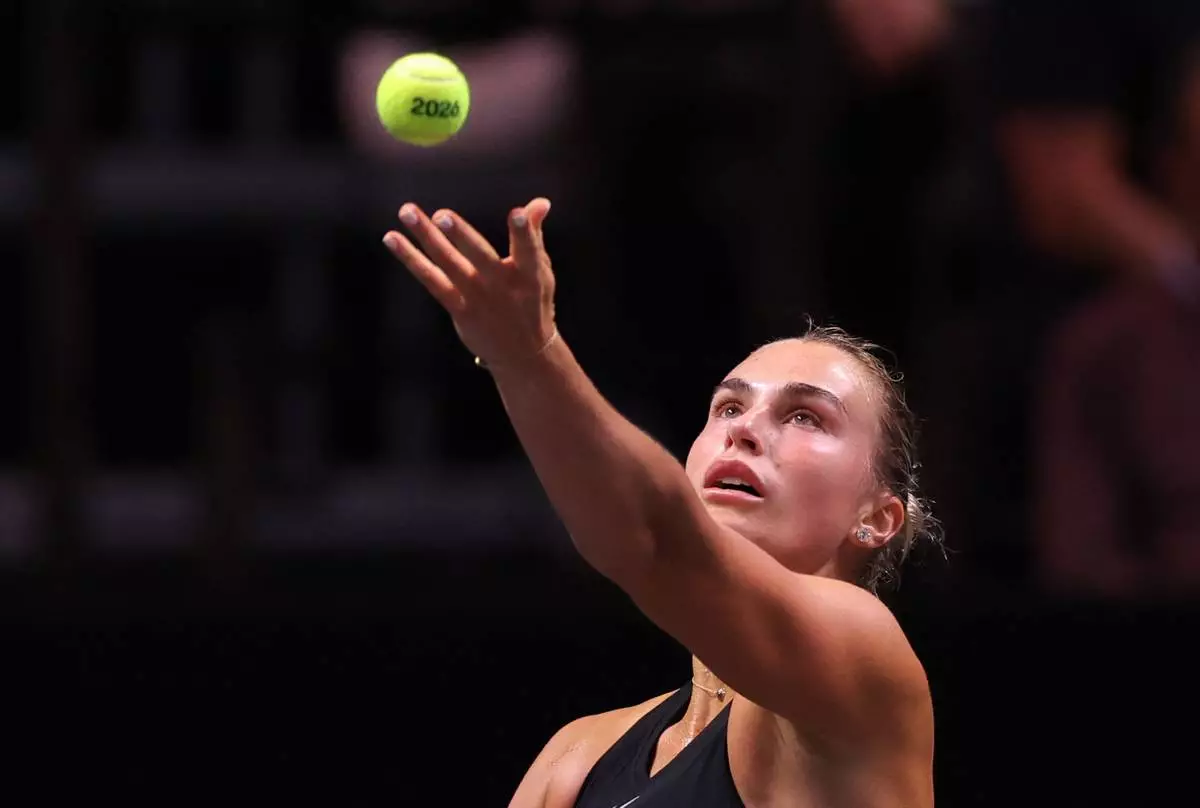
Aryna Sabalenka serves against Nick Kyrgios during their Battle of the Sexes tennis match, in Dubai, United Arab Emirates, Sunday Dec. 28, 2025. (Amr Alfiky/Pool Photo via AP)