Chili transplanting in northwest China's Gansu Province has entered its peak season, enhanced by satellite navigation and smart farming technologies for improved precision and efficiency.
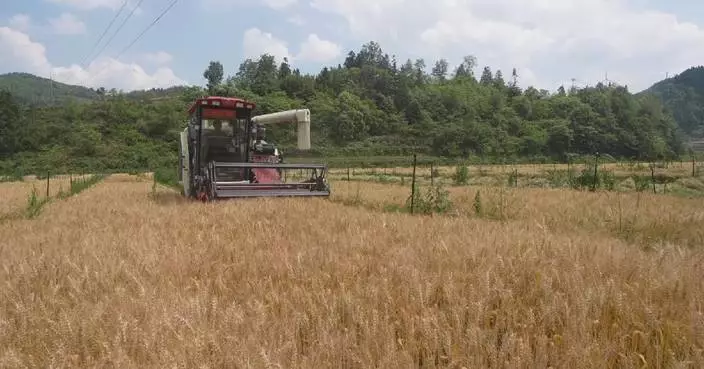
At a chili farm in Jinta County, driverless tractors towing automated transplanting machines move steadily through the fields. In a single pass, these machines punch holes, place seedlings, and complete the transplanting process.
Guided by pre-programmed routes using Beidou satellite navigation, the machines ensure standardized operation, giving each chili seedling a precise spot for growth.
Farmers say the new tech is a game-changer, resolving problems like uneven ridging, labor shortage and low efficiency which they often encounter during transplanting season. The new technologies also greatly increase seedling survival rates.
In addition to intelligent transplanting, the chili fields have also been fitted with integrated irrigation and fertilization systems.
"With our one-film-three-row drip irrigation system and integrated water-fertilizer tech, we're seeing an average yield increase of 100 kilograms per mu (0.067 hectare) compared to the traditional flood irrigation method. The cost savings and efficiency gains are significant," said Chen Wanping, a farm operator. Unmanned agricultural machinery is transforming chili farming, alleviating labor demands while enhancing quality and operational efficiency.

Smart tech ushers chili planting efficiency in Gansu

Smart tech ushers chili planting efficiency in Gansu