Hefty U.S. levies are threatening New Zealand's dairy industry, creating chaos for local dairy exporters and forcing producers to tap into new markets.
Many industrial insiders reported that certain dairy exports from New Zealand to the United States could face a nearly 30 percent tariff following U.S. President Donald Trump's imposition of a 10 percent tariff on imports of New Zealand products. However, the American imports entering New Zealand only face average tariffs of around two percent.
According to industry advocates, the U.S. tariffs are expected to take a toll on New Zealand, where dairy products represent 25 percent of all exports.
"They have a chilling effect on trade. And there's a cost to consumers, there's a cost to producers," said Kimberly Crewther, Executive Director of Dairy Companies Association of New Zealand.
Stephen Jacobi, Executive Director of New Zealand International Business Forum, said the new tariffs are unjustified and discriminatory.
"The ideal situation would clearly be that there was no tariff to pay and that we didn't impose tariffs on them, they didn't impose tariffs on us," he said.
As New Zealand's biggest dairy exporter, Fonterra has underscored that tariffs create additional costs for consumers, but the cooperative is also worried about the negative impact on world trade.
According to Miles Hurrell, Fonterra's Chief Executive, the world has shifted away from a global mindset of collaboration that has dominated over the past two to three decades. In his view, nations are now progressively turning away from one another.
New Zealand's exports to the United States have doubled over the past decade to a record 6 billion U.S. dollars a year, which makes America its second largest trading partner behind China.
The country's dairy companies value their relationship with the U.S., but exporters now want more stable markets in South East Asia to soften the blow of trade wars.
Earlier this year, New Zealand's Prime Minister visited Vietnam and India in search of new free trade partnerships.
To date, the country's dairy product manufacturers have also exported their products to over 120 countries and back the Government's initiatives to develop new markets.
"We support the Prime Minister in continuing to engage with those markets and other markets to positively evolve those trading relationships moving forward," said Crewther.
The current trade war also emphasizes the importance of New Zealand's Free Trade Agreement with China, which takes 30 percent of all dairy exports -- with no tariffs.
"We have a very strong and much-appreciated relationship with China and a very constructive trade relationship," Jacobi said.
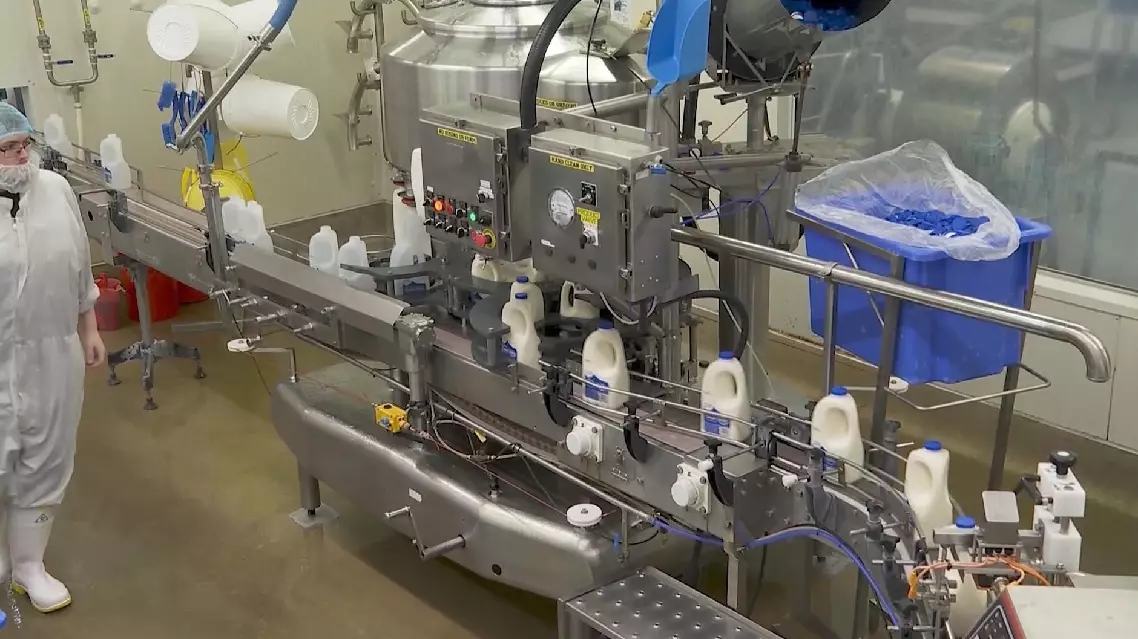
Trump's new tariffs threaten New Zealand dairy exporters