Skip to Content Facebook Feature Image

China's marine fish market remains stable during moratorium

China

China

China

China's marine fish market remains stable during moratorium

2025-05-12 10:57 Last Updated At:11:37

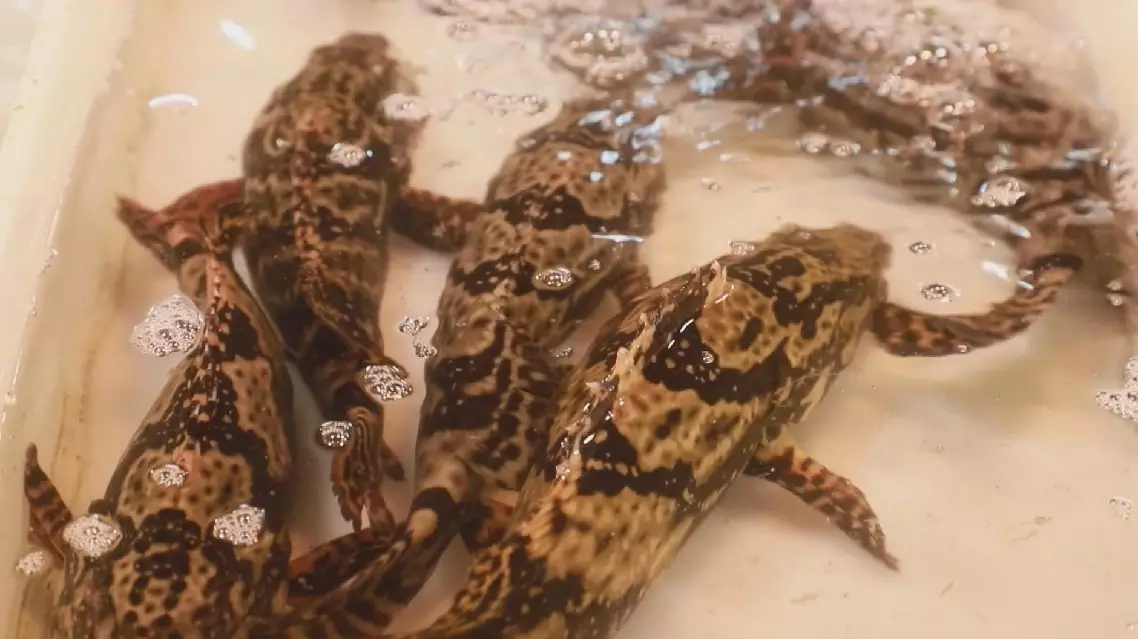
The marine fish market in southern China has remained stable during the current fishing moratorium period, supported by abundant stocks of frozen fish and a substantial amount of farmed fish.

Starting May 1, waters in the South China Sea north of the 12th parallel north entered a three-and-a-half-month annual fishing moratorium period to conserve species and enhance biodiversity.

In the aquatic product markets in Fangchenggang City of south China's Guangxi Zhuang Autonomous Region, the availability of certain marine fish has dropped due to the moratorium, and most offerings in the markets are frozen fish, alongside live fish, shrimp, and crabs harvested from nearby farms.

"These fish were frozen on the ship in advance and are now available for sale. Fishing is prohibited during the moratorium, and everyone is aware of this," said Mr. Cheng, a fish vendor.

"If there is fresh sea fish, I will buy some; if not, I can opt for frozen black pomfret. It's not a big deal; I can still buy fish," said Ms. Hyun, a consumer.

Although the supply of marine fish has decreased, many farmed aquatic products have stepped in to bridge the market gap, stabilizing the overall prices.

"The price is slightly higher than usual, which is to be expected. I don't find it very inconvenient," said Mr. Ling, a consumer.

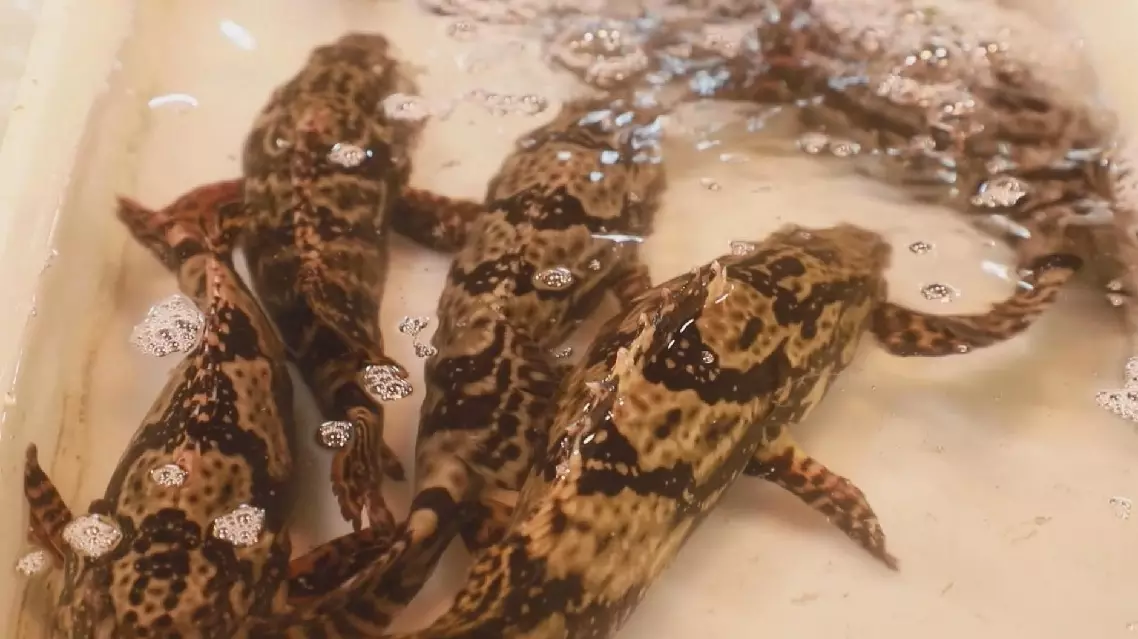
In Lianjiang County of east China's Fujian Province, fish raised in marine farms are entering the market in large quantities, helping to alleviate the seafood supply shortage during the fishing moratorium.

"When our fish arrive at the market, they are still alive and swimming, which makes them more appealing to consumers," said Wu Zhong, a fish farmer.

The marine farms mainly cultivate four popular fish species, totaling around 150,000 fish. These fish supply the local market and are shipped to neighboring cities.

"The fish prices remain about the same as before and after the moratorium, with no significant fluctuations," said Chen Xu, a fish vendor.
China's marine fish market remains stable during moratorium
China's marine fish market remains stable during moratorium

China's marine fish market remains stable during moratorium

China's marine fish market remains stable during moratorium
The Iranian government is focusing on public concerns and maintaining stable supplies of essential goods amid recent protests, Iranian President Masoud Pezeshkian said in a televised interview on Sunday.

In the city of Karaj, northwest of the capital Tehran, daily life has largely continued as normal. A video filmed by a local resident on Sunday shows food stores open and grocery shelves fully stocked.

"This is the block near my home, and there are some food stores here. Daily life continues here. Last night we did not see many protests in Karaj. Right now the city is very safe. This is a grocery store close to my home. All the food is available; nothing is in shortage. Here are noodles and different types of beans. Here are dairy products, cheese, and yogurt. I also checked other grocery stores and didn't see any shortages. Everything is available," said local resident Ali Reza.

Iranian officials have described recent disturbances as acts orchestrated by the "enemy," including some carried out by well-trained and armed "terrorists." The incidents have caused casualties among security personnel and civilians, as well as property damage.

The Secretary of Iran's Supreme National Security Council Ali Larijani has directed authorities to severely punish the "terrorists."

Meanwhile, Iran's police chief Ahmad-Reza Radan said on Sunday that the police had raised alert levels and arrested several leaders of the troublemakers during the operations on Saturday.

President Pezeshkian noted in the interview that the normal demands of the Iranian people are reasonable and justified, but they must realize that triggering riots and carrying out terrorist acts are the enemy's attempts to undermine the country. He urged the public to remain vigilant.

Also on Sunday, Iranian Parliament Speaker Mohammad Baqer Qalibaf warned that Tehran would regard U.S. and Israeli bases and facilities in the Middle East as "legitimate targets" if Washington takes military action against Iran. His remarks followed media reports saying U.S. President Donald Trump is "seriously considering authorizing a strike" against Iran.

Iranian state media reported that at least 109 members of Iran's security forces have been killed in clashes since the protests began 14 days ago. Meanwhile, human rights groups based outside the country said the number of protesters killed has exceeded 200, though the figure could not be independently verified.

The protests initially erupted over a sharp depreciation of the rial and sweeping subsidy reforms. Iranian authorities have blamed the unrest on foreign-linked agents and sanctions imposed by the United States.

Iranian president says government focusing on ensuring supplies amid protests

Iranian president says government focusing on ensuring supplies amid protests

Recommended Articles