The education system in Syria has faced significant challenges as wars have damaged or destroyed many schools and hindered those still in operation from obtaining sufficient teaching staff and upgrading facilities.
In the Eastern Ghouta countryside of Damascus, some schools were destroyed in the war and have not been rebuilt yet, while those were rebuilt with the assistance of international organizations are seriously short of teachers.
The closure of a large number of schools has led students to flock to existing schools. These schools have to make do with dilapidated hardware facilities, and the number of students has far exceeded their carrying capacity.
The over-crowded classrooms are regarded as one of the biggest problems faced by the Syrian education authorities. The Syrian government is making efforts to restore the destroyed schools to ensure the teaching arrangements for the coming year.
Louay Kalsh, director of Eastern Ghouta's education office, said that some schools were completely destroyed and it would be difficult to repair them in the short term, which has led to an increase in the number of students in the schools that can operate.
"There are about 50 students in each class of a school. The excessive number of students has a certain impact on teaching," he said.
Ensuring the operation of the facilities and the supply of electricity and water has been a very heavy workload for them, Kalsh said, and he admitted regretfully that, despite their efforts, massive loss of teachers during the civil war had made them unable to improve the quality of teaching.
Local media reported that at least half of the 20,000 schools in Syria were damaged, some of the schools managed to survive by renovating dilapidated buildings that did not meet the minimum standards of quality education, and some of their students have to study in tents. Despite overcoming numerous difficulties, their dropout rate still exceeded 40 percent.
The Syrian Ministry of Education said that they are stepping up efforts to rebuild schools and alleviate the resource tension by having two classes share one room.
"There is not a single school left in the rural areas of southern Idlib, northern Hama, western Aleppo, Damascus and Latakia. We will strive to build schools in these areas, provide services for these students and implement the 'two-class' mode in these schools," said Mohammed al-Hanoun, director of school buildings at the Syrian Ministry of Education.
According to a report released by the United Nations Children's Fund earlier this year, more than 7.5 million children in Syria need humanitarian assistance. The wars have deprived Syrian children of the opportunity for education that a school-age child should have. Local relief agency said that currently about 3.7 million Syrian children have dropped out of school.
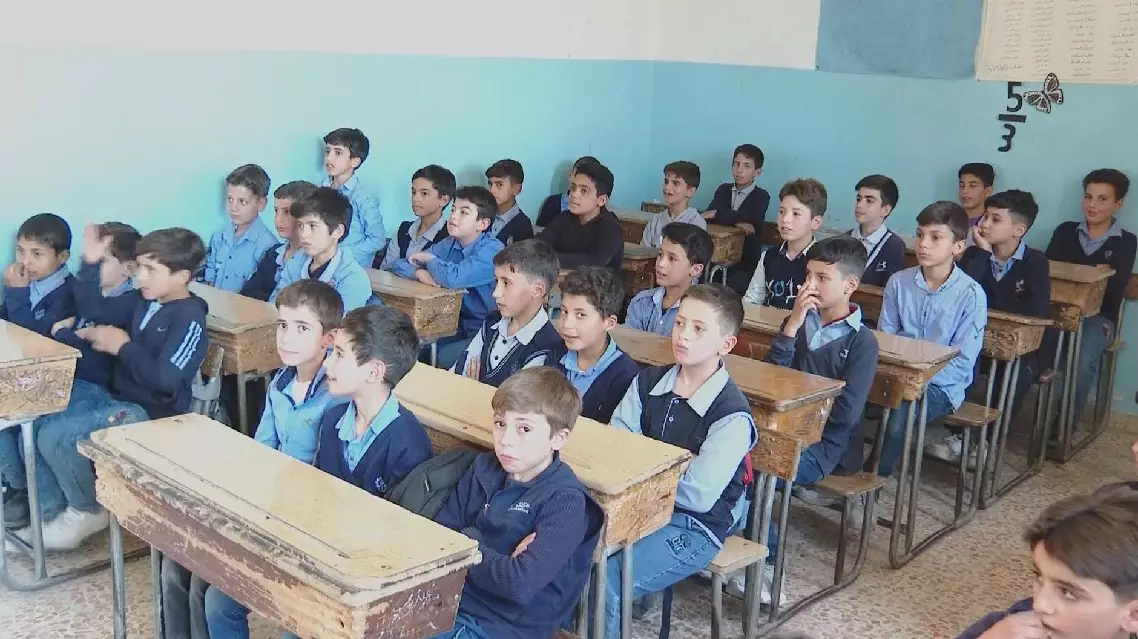
Lack of schools, teachers remains obstacle for Syrian children to get education