Abdul Karim Khalaf, former spokesman of the commander-in-chief of the Iraqi forces, warned that the U.S. withdrawal from multiple bases in Syria and redeployment to Iraq may signal an attempt to undermine Iraq's sovereignty and heighten regional tensions.
The Syrian government has reiterated that the U.S. military presence in Syria is illegal.
Earlier this month, sources from the Iraqi security forces stated that U.S. troops had relocated from six bases in northern and eastern Syria to other military bases within Iraq, while retaining two bases in Syria's Al-Hasakah province and the southeastern desert region.
Khalaf stated that the U.S. military has not fully withdrawn from Syria and continues to maintain two key bases in the country, indicating the U.S. ongoing efforts to monitor Syria's eastern border and its energy resources. These two bases hold high strategic value, enabling U.S. forces to oversee the Iran-Iraq-Syria land corridor and to serve as forward positions to contain Iran.
"The two military bases that the U.S. maintains in Syria hold clear strategic significance. First, these bases control the border area where Syria, Jordan, and Iraq meet, a region of great geopolitical importance. Meanwhile, the bases are located very close to Iran, the U.S. primary adversary. From there, it would take little more than crossing the Iraqi border to reach Iran directly. Therefore, if Israel or the U.S. were to launch any future military operation against Iran, the operation would almost certainly originate from these bases. There is no doubt about that," Khalaf said.
"In reality, although the U.S. has announced a so-called withdrawal, the two bases it retains serve as a 'red line' in the region. They continue to represent a dominant force in Syria, preventing other armed factions from posing any provocation or launching attacks against them," he said.
There has been no official statement on whether the Iraqi government was informed in advance about this round of U.S. military movements. Some Iraqi lawmakers and political party members have criticized the U.S. for bypassing Iraqi sovereignty, arguing that the U.S. military's actions lack transparency.
Khalaf noted that although the Iraqi government has reiterated in recent years its intention to take control of all military operations within its territory, it faces clear limitations in responding to U.S. military actions.
"If Iraqi Shiite militias were to become involved in any conflict due to interference with U.S. military deployments, the U.S. would inevitably use it as a pretext to strike Iraqi infrastructure, harming the country's national interests. The reality is that Iraq can no longer endure any further conflict," he said.
While the U.S. military has committed to a full withdrawal from Iraq by 2026, it has simultaneously redeployed some of its troops from Syria to Iraq, a move that many are questioning whether the U.S. genuinely intends to fulfill its withdrawal promise or is merely maintaining its military presence through redeployment.
"The presence of the international coalition forces no longer holds any legitimacy, as it has been rejected by the Iraqi government. In fact, the Iraqi government has already begun negotiations with the U.S. and has set a clear timetable for the withdrawal of U.S. troops. According to this timetable, some U.S. troops will leave by the end of this year, while the remaining troops will depart next year. The Iraqi government hopes to develop bilateral relations with other countries without the need for a foreign military presence under the guise of the international coalition," Khalaf said.
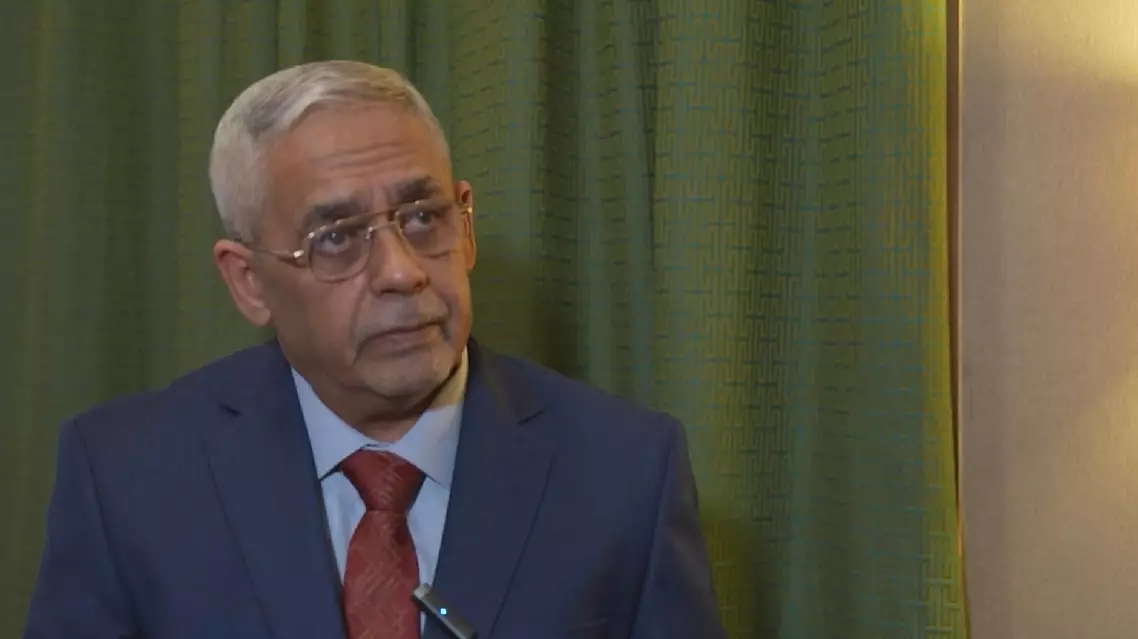
US military redeployment from Syria to Iraq may fuel regional tensions: official