Skip to Content Facebook Feature Image

What's in Trump's big bill? Trillions in tax cuts, changes to Medicaid and more

News

What's in Trump's big bill? Trillions in tax cuts, changes to Medicaid and more
News

News

What's in Trump's big bill? Trillions in tax cuts, changes to Medicaid and more

2025-05-14 08:21 Last Updated At:08:31

WASHINGTON (AP) — Republicans in Congress are moving with rapid speed to advance President Donald Trump's big bill of tax breaks, spending cuts and beefed-up border security funding as leaders work to enact many of his campaign promises.

House committees have been laboring for months to draft the legislation, which Republicans have labeled “THE ONE, BIG, BEAUTIFUL BILL,’’ a nod to Trump himself. Speaker Mike Johnson is pushing to approve the package and send it to the Senate by Memorial Day.

Democrats say they will fight what House party leader Hakeem Jeffries calls “this extreme and toxic bill.”

Here's a look at what's in and out of the legislative package so far:

The tax portion of the GOP legislation contains more than $5 trillion in tax cuts, according to an estimate from the Joint Committee on Taxation — costs that are partially offset by spending cuts elsewhere and other changes in the tax code.

Republicans look to make permanent the individual income tax cuts passed in President Donald Trump’s first term, plus enact some of the promises he made on the campaign trail to not tax tips, overtime and interest on auto loans. Republicans partially offset the tax breaks by rolling back the clean energy tax credits passed during Joe Biden's presidency, such as a $7,500 tax credit for electric vehicles, bringing the overall cost of the tax cuts down to about $3.7 trillion.

The bill is expected to undergo further changes in the coming weeks. Lawmakers from New York are leading an effort to boost the state and local tax deduction, which the bill would already increase from $10,000 to $30,000 for families making less than $400,000 per year.

The legislation provides a deduction for those workers in service industry and other jobs that have traditionally relied on tips.

The package provides tax relief for automobile shoppers with a temporary deduction of up to $10,000 on car loan interest, applying the benefit only for those vehicles where the final assembly occurred in the United States. The tax break would expire at the end of Trump’s term.

For seniors, there would be a bolstered $4,000 deduction on Social Security wages for those with adjusted incomes no higher than $75,000 for individuals and $150,000 for couples.

House Republicans are looking to shift some of the cost of the Supplemental Nutrition and Assistance Program, known as SNAP, to the states. States would shoulder 5% of benefit costs under the bill beginning in fiscal year 2028. The share could also go higher for those states with high rates of overpayments and underpayments. The bill would also require states to pick up 75% of the administrative costs.

Currently, states shoulder none of the benefit costs and half of the administration costs.

Republicans argue that states have minimal incentive to control costs as a result of the current cost-sharing arrangement. But the changes would give them the incentive to enhance efficiencies and improve outcomes for recipients.

Republicans also are expanding work requirements for food aid recipients, which under current law applies to individuals without dependents aged 18-54. The bill expands the work requirement through age 64 and exempts only those caring for a dependent child under the age of 7.

At the same time, the legislation would invest $60 billion in new money for agriculture programs, sending aid to farmers.

A centerpiece of the package is more than $900 billion in reduced spending, most of that coming through the Medicaid program.

Republicans insist they are simply rooting out “waste, fraud and abuse” to generate savings with new work and eligibility requirements. But Democrats warn that millions of Americans will lose coverage. In the 15 years since Obamacare became law, Medicaid has only expanded as most states have tapped into federal funds.

An estimate from the nonpartisan Congressional Budget Office said the proposals would reduce the number of people with health care by at least 7.6 million from the Medicaid changes, and possibly more with other changes to the Affordable Care Act.

To be eligible for Medicaid, there would be new “community engagement requirements” of at least 80 hours per month of work, education or service for able-bodied adults without dependents. The new requirement would not kick in until Jan. 1, 2029. People would also have to verify their eligibility to be in the program twice a year, rather than just once.

Applicants could not qualify for Medicaid if they have a home that is valued at more than $1 million.

The legislation would provide $46.5 billion to revive construction of Trump’s wall along the U.S.-Mexico border, and more money for the deportation agenda.

There's $4 billion to hire an additional 3,000 new Border Patrol agents as well as 5,000 new customs officers, and $2.1 billion for signing and retention bonuses, for a total of $69 billion in new spending.

It includes major changes to immigration policy, imposing a $1,000 fee on migrants seeking asylum — something the nation has never done, putting it on par with few others, including Australia and Iran.

Overall, the plan is to remove 1 million immigrants annually and house 100,000 people in detention centers. It calls for 10,000 more Immigration and Customs Enforcement officers and investigators.

The House Armed Services Committee was tasked with drafting legislation with $100 billion in new spending. But they did that and more, passing a bill with $150 billion for the Defense Department and national security.

Among the highlights, it would provide $25 billion for Trump's “Golden Dome for America,” a long-envisioned missile defense shield, $21 billion to restock the nation's ammunition arsenal, $34 billion to expand the naval fleet with more shipbuilding and some $5 billion for border security.

It also includes $9 billion for servicemember quality of life-related issues, including housing, health care and special pay.

A wholesale revamping of the student loan program is key to the legislation, providing $330 billion in budget cuts and savings.

The proposal would replace all existing student loan repayment plans with just two: a standard option with monthly payments spread out over 10 to 25 years and a “repayment assistance” plan that is generally less generous than those it would replace.

Among other changes, the bill would repeal Biden-era regulations that made it easier for borrowers to get loans canceled if their colleges defrauded them or closed suddenly.

There would be a tax increase, up to 21%, on some university endowments.

The House Committee on Oversight and Government Reform targeted federal workers’ pensions for a projected $50.9 billion in deficit savings over 10 years.

Most of the savings would come from requiring federal workers hired before 2014 to pay more into the retirement system. They would have to match the 4.4% salary rate paid by federal workers hired since 2014.

One section of the bill would allow increased leasing of public lands for drilling, mining and logging while clearing the path for more development by speeding up government approvals. Royalty rates paid by companies to extract oil, gas and coal would be cut, reversing former President Joe Biden’s attempts to curb fossil fuels to help address climate change.

Oil and gas royalty rates would drop from 16.7% on public lands and 18.75% offshore to a uniform 12.5%. Royalties for coal would drop from 12.5% to 7%.

The measure calls for four oil and gas lease sales in the Arctic National Wildlife Refuge over the next decade. It also seeks to boost the ailing coal industry with a mandate to make available for leasing 6,250 square miles of public lands — an area greater in size than Connecticut.

Republican supporters say the lost revenue would be offset by increased development. It’s uncertain if companies would have an appetite for leases given the industry’s precipitous decline in recent years as utilities switched to cleaner burning fuels and renewable energy.

In a last-minute add, Republicans also included a provision authorizing sales of hundreds of thousands of acres of public lands in Nevada and Utah, prompting outrage from Democrats and environmentalists.

Associated Press writers Collin Binkley in Washington and Matthew Brown in Billings, Montana, contributed to this report.
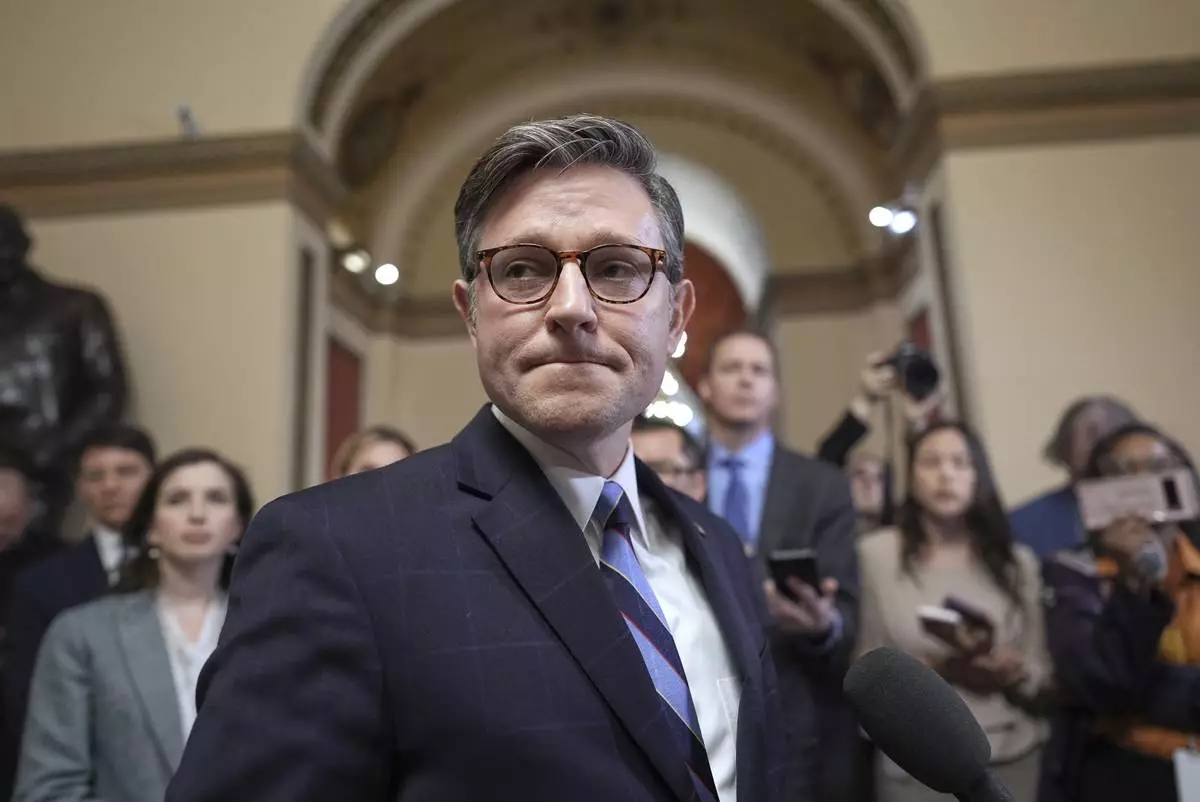
FILE - Speaker of the House Mike Johnson, R-La., talks to reporters just after House Republicans narrowly approved their budget framework, at the Capitol in Washington, April 10, 2025. (AP Photo/J. Scott Applewhite, File)
FILE - Speaker of the House Mike Johnson, R-La., talks to reporters just after House Republicans narrowly approved their budget framework, at the Capitol in Washington, April 10, 2025. (AP Photo/J. Scott Applewhite, File)
DUBAI, United Arab Emirates (AP) — Iranians could call abroad on mobile phones Tuesday for the first time since communications were halted during a crackdown on nationwide protests in which activists said at least 646 people have been killed.

Several people in Tehran were able to call The Associated Press and speak to a journalist there. The AP bureau in Dubai, United Arab Emirates, was unable to call those numbers back. The witnesses said SMS text messaging still was down and that internet users in Iran could connect to government-approved websites locally but nothing abroad.

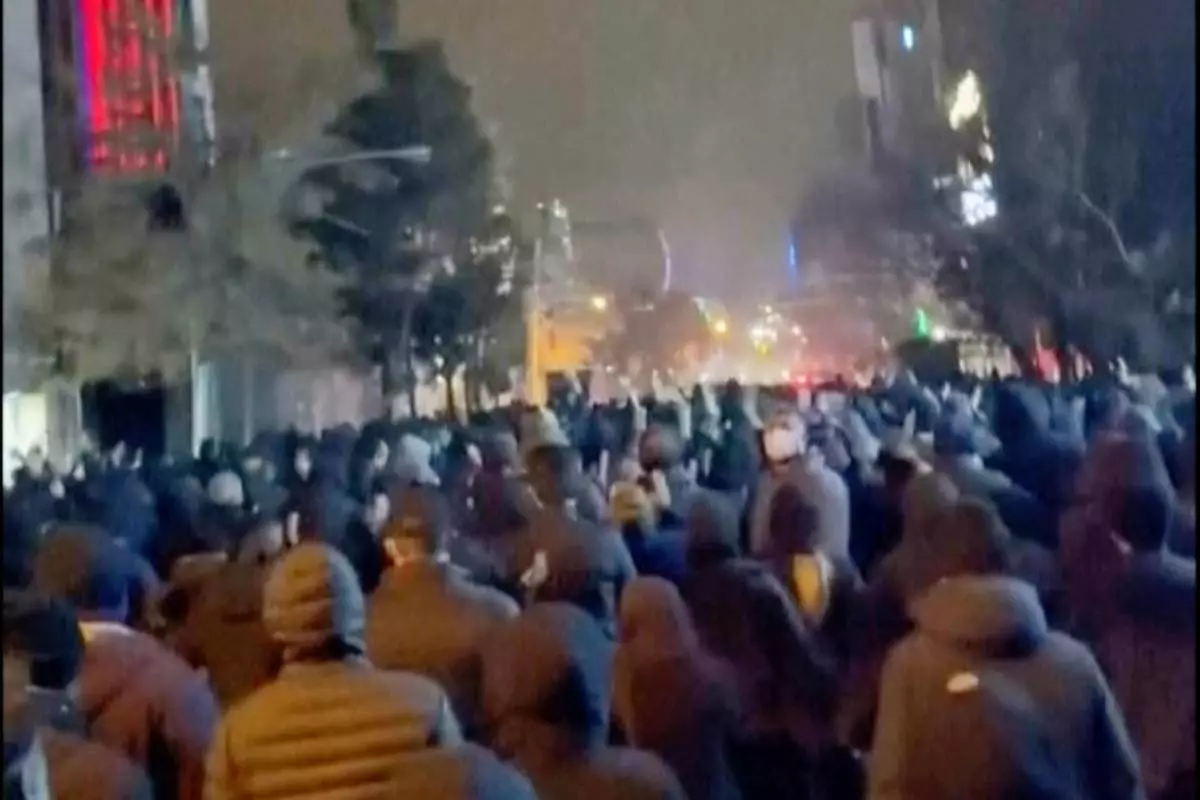
The witnesses gave a brief glimpse into life on the streets of the Iranian capital over the four and a half days of being cut off from the world. They described seeing a heavy security presence in central Tehran.

Anti-riot police officers, wearing helmets and body armor, carried batons, shields, shotguns and tear gas launchers. They stood watch at major intersections. Nearby, the witnesses saw members of the Revolutionary Guard's all-volunteer Basij force, who similarly carried firearms and batons. Security officials in plainclothes were visible in public spaces as well.

Several banks and government offices were burned during the unrest, they said. ATMs had been smashed and banks struggled to complete transactions without the internet, the witnesses added.

However, shops were open, though there was little foot traffic in the capital. Tehran's Grand Bazaar, where the demonstrations began Dec. 28, was to open Tuesday. However, a witness described speaking to multiple shopkeepers who said the security forces ordered them to reopen no matter what. Iranian state media had not acknowledged that order.

The witnesses spoke on condition of anonymity for fear of reprisal.

Many remain concerned about a possible military strike by the U.S., even as President Donald Trump has said Iran wants to negotiate with Washington.

“My customers talk about Trump’s reaction while wondering if he plans a military strike against the Islamic Republic,” said shopkeeper Mahmoud, who gave just his first name out of concerns for his safety. “I don’t expect Trump or any other foreign country cares about the interests of Iranians.”

Reza, a taxi driver who also gave just his first name, said protests also remain front of mind for many.

“People — particularly young ones — are hopeless but they talk about continuing the protests," he said.

Meanwhile, it appeared that security service personnel were searching for Starlink terminals as people in northern Tehran reported authorities raiding apartment buildings with satellite dishes. While satellite television dishes are illegal, many in the capital have them in their homes and officials broadly had given up on enforcing the law in recent years.

On the streets, people also could be seen challenging plainclothes security officials, who were stopping passersby at random.

State television also read a statement about mortuary and morgue services being free — a signal some likely charged high fees for the release of bodies amid the crackdown.

Iranian Foreign Minister Abbas Araghchi, speaking to the Qatar-funded satellite news network Al Jazeera in an interview aired Monday night, said he continued to communicate with U.S. envoy Steve Witkoff.

The communication “continued before and after the protests and are still ongoing," Araghchi said. However, “Washington’s proposed ideas and threats against our country are incompatible.”

White House press secretary Karoline Leavitt said Iran’s public rhetoric diverges from the private messaging the administration has received from Tehran in recent days.

“I think the president has an interest in exploring those messages,” Leavitt said. “However, with that said, the president has shown he’s unafraid to use military options if and when he deems necessary, and nobody knows that better than Iran.”

Meanwhile, pro-government demonstrators flooded the streets Monday in support of the theocracy, a show of force after days of protests directly challenging the rule of 86-year-old Supreme Leader Ayatollah Ali Khamenei. Iranian state television aired chants from the crowd, which appeared to number in the tens of thousands, who shouted “Death to America!” and “Death to Israel!”

Others cried out, “Death to the enemies of God!” Iran’s attorney general has warned that anyone taking part in protests will be considered an “enemy of God,” a death-penalty charge.

Trump announced Monday that countries doing business with Iran will face 25% tariffs from the United States. Trump announced the tariffs in a social media posting, saying they would be “effective immediately.”

It was action against Iran for the protest crackdown from Trump, who believes exacting tariffs can be a useful tool in prodding friends and foes on the global stage to bend to his will.

Brazil, China, Russia, Turkey and the United Arab Emirates are among economies that do business with Tehran.

Trump said Sunday that his administration was in talks to set up a meeting with Tehran, but cautioned that he may have to act first as reports of the death toll in Iran mount and the government continues to arrest protesters.

“I think they’re tired of being beat up by the United States,” Trump said. “Iran wants to negotiate.”

Iran, through the country’s parliamentary speaker, warned Sunday that the U.S. military and Israel would be “legitimate targets” if Washington uses force to protect demonstrators.

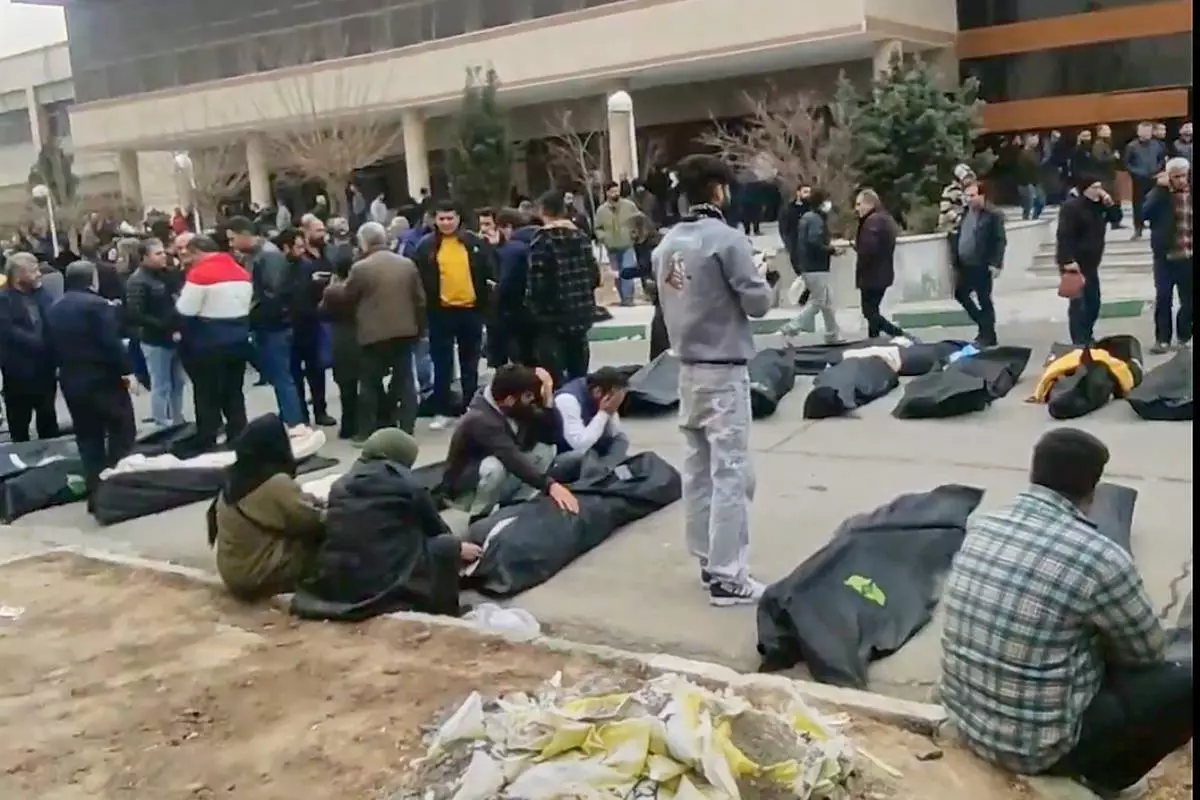
More than 10,700 people also have been detained over the two weeks of protests, said the U.S.-based Human Rights Activists News Agency, which has been accurate in previous unrest in recent years and gave the latest death toll early Tuesday. It relies on supporters in Iran crosschecking information. It said 512 of the dead were protesters and 134 were security force members.

With the internet down in Iran, gauging the demonstrations from abroad has grown more difficult. The Associated Press has been unable to independently assess the toll. Iran’s government hasn’t offered overall casualty figures.

This frame grab from videos taken between Jan. 9 and Jan. 11, 2026, and circulating on social media purportedly shows images from a morgue with dozens of bodies and mourners after crackdown on the outskirts of Iran's capital, in Kahrizak, Tehran Province. (UGC via AP)

This frame grab from videos taken between Jan. 9 and Jan. 11, 2026, and circulating on social media purportedly shows images from a morgue with dozens of bodies and mourners after crackdown on the outskirts of Iran's capital, in Kahrizak, Tehran Province. (UGC via AP)

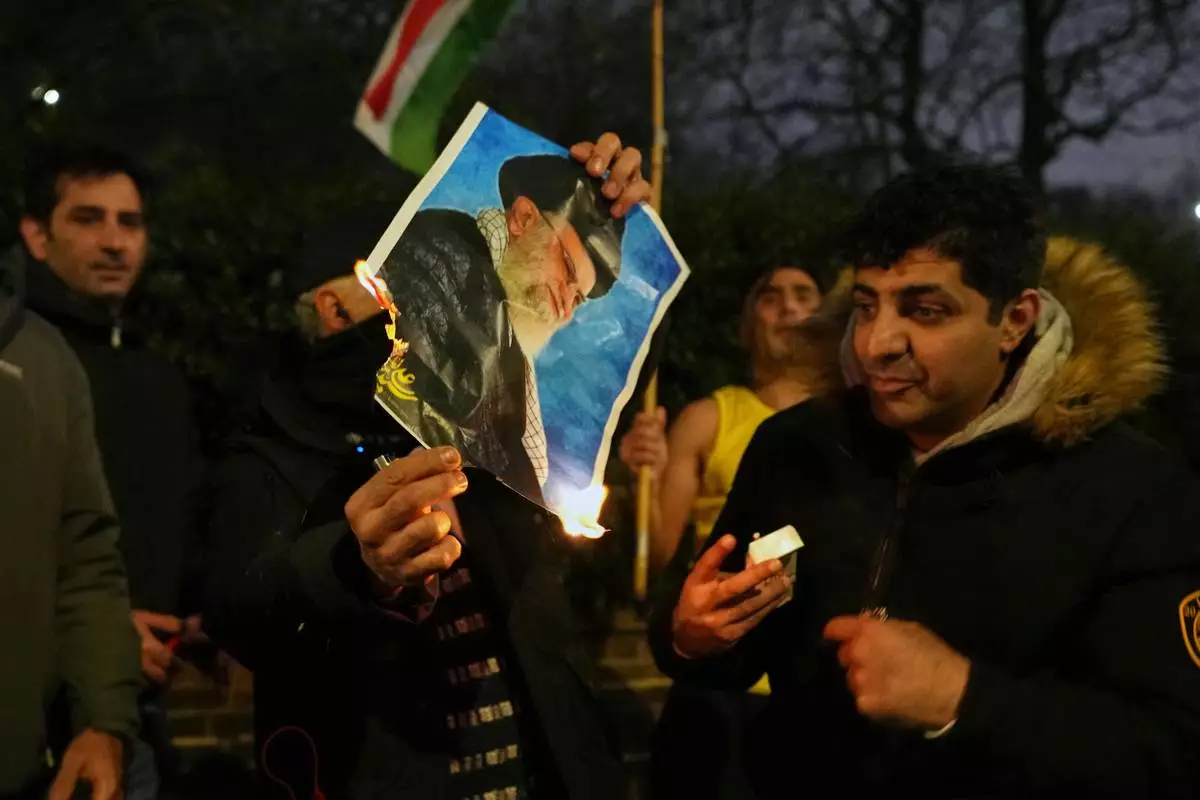
A picture of Ayatollah Ali Khamenei is set alight by protesters outside the Iranian Embassy in London, Monday, Jan. 12, 2026. (AP Photo/Alastair Grant)

A picture of Ayatollah Ali Khamenei is set alight by protesters outside the Iranian Embassy in London, Monday, Jan. 12, 2026. (AP Photo/Alastair Grant)

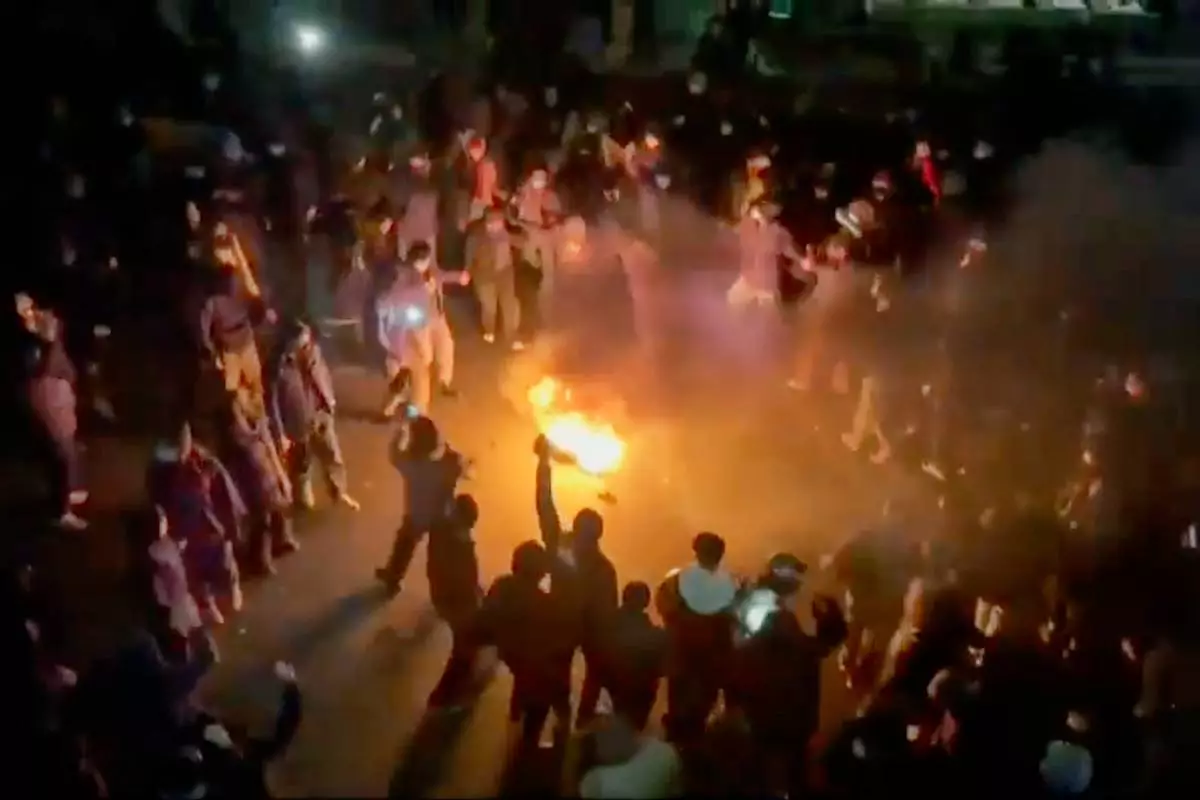
In this frame grab from footage circulating on social media shows protesters dancing and cheering around a bonfire as they take to the streets despite an intensifying crackdown as the Islamic Republic remains cut off from the rest of the world, in Tehran, Iran, Friday, Jan. 9, 2026.(UGC via AP)

In this frame grab from footage circulating on social media shows protesters dancing and cheering around a bonfire as they take to the streets despite an intensifying crackdown as the Islamic Republic remains cut off from the rest of the world, in Tehran, Iran, Friday, Jan. 9, 2026.(UGC via AP)

In this frame grab from footage circulating on social media from Iran showed protesters once again taking to the streets of Tehran despite an intensifying crackdown as the Islamic Republic remains cut off from the rest of the world in Tehran, Iran, Saturday Jan. 10, 2026. (UGC via AP)

In this frame grab from footage circulating on social media from Iran showed protesters once again taking to the streets of Tehran despite an intensifying crackdown as the Islamic Republic remains cut off from the rest of the world in Tehran, Iran, Saturday Jan. 10, 2026. (UGC via AP)

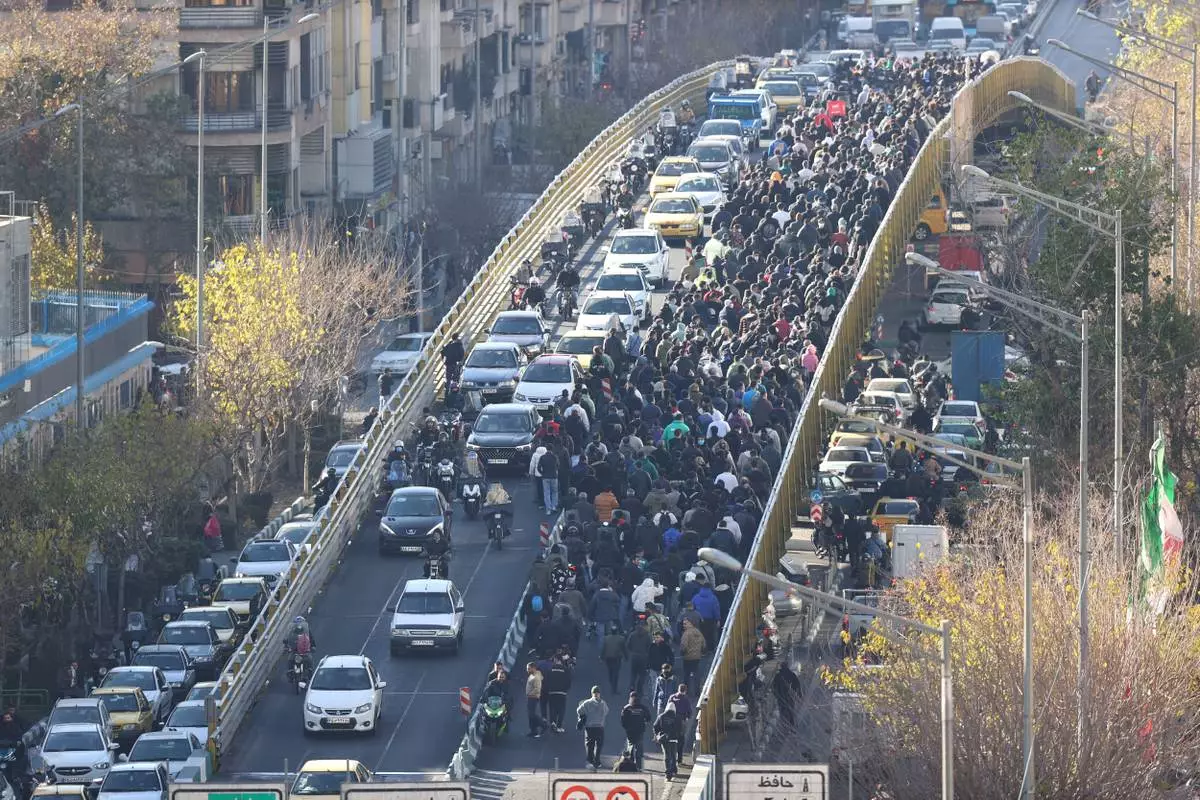
FILE - Protesters march on a bridge in Tehran, Iran, on Dec. 29, 2025. (Fars News Agency via AP, File)

FILE - Protesters march on a bridge in Tehran, Iran, on Dec. 29, 2025. (Fars News Agency via AP, File)

Recommended Articles