The recent chronic delays and cancellations at New Jersey's largest airport have highlighted the shortage of air traffic controllers and the aging equipment they use, which President Donald Trump's administration wants to replace.
The Federal Aviation Administration is working on a short-term fix to the problems at the Newark airport that includes technical repairs and cutting flights to keep traffic manageable while dealing with a shortage of controllers. Officials met with some of the airlines that fly out of Newark on Wednesday to discuss the plan, and those conversations will continue on Thursday.
But even before those problems, aviation was already in the spotlight ever since the deadly midair collision of a passenger jet and a U.S. Army helicopter above Washington, D.C., in January, and a string of other crashes and mishaps since then. The investigations into those crashes continue while the U.S. Department of Transportation tries to make progress on the long-standing issues of not having enough air traffic controllers and relying on outdated equipment. A U.S. Senate hearing on Wednesday focused on the FAA's efforts.
Twice in the past two-and-a-half weeks, the radar and communications systems that air traffic controllers in Philadelphia who direct planes in and out of Newark rely on failed for a short time. That happened because the main line that carries the radar signal down from another FAA facility in New York failed, and the backup line didn't work immediately.
So the controllers were left unable to see or talk to the planes around Newark Liberty International Airport for as long as 90 seconds on April 28 and May 9. The lines — some of which were old copper wires — failed a third time on Sunday, but that time the backup system worked and the radar stayed online.
The FAA's head of air traffic controllers, Frank McIntosh, said during the Senate hearing on Wednesday that he believes the planes remained safe because of what they had been directed to do beforehand, but acknowledged that 90 seconds is “a long disruption for a radar screen to go blank or not to be able to talk to aircraft.”
“I don’t believe there was a heightened significant danger to the flying public. But with that being said, from where I sit, we want to remove all risk to the flying public,” McIntosh said. “And that is what’s concerning to me is how do we remove any bit of that risk. And we need to make sure our contingencies are better placed.”
The first of those stressful outages prompted five to seven controllers to take a 45-day trauma leave, worsening the existing staff shortage at the Philadelphia control facility and prompting the FAA to limit the number of flights in Newark each day.
The FAA currently has 22 fully certified air traffic controllers and five supervisors assigned to Newark in the Philadelphia facility, but the agency wants to have 38 controllers there. Another 21 controllers are in training there, and 10 of them are certified on at least part of the area.
The FAA quickly limited the number of flights in Newark to between 24 and 28 arrivals and the same number of departures every hour to ensure the remaining controllers could handle them safely. At times when controller staffing is especially lean, like Monday, the FAA is limiting traffic even further. Before the problems, 38 or 39 flights would take off and land every hour in Newark.
McIntosh said at the Senate hearing that on Monday, there were only three controllers on duty in Philadelphia for about an hour because some had taken sick leave and others had unplanned leave. That put the facility well below the minimum of seven controllers the FAA wants and led to average delays of more than 90 minutes as the agency limited flights.
The meetings FAA officials are having with all the airlines are focused on a plan that continues limiting takeoffs and landings to no more than 28 apiece an hour until at least mid-June. By then, a runway construction project should be wrapped up, and the controllers who took trauma leave would be scheduled to return. After that, the FAA has said it might be able to bump up the limit to 34 arrivals and 34 departures an hour.
Meanwhile, the number of flights a day must be cut because the airport can't handle everyone on the schedule. That's why Newark has generally led the nation in cancellations and delays in recent weeks — more than 100 flights were cancelled there Wednesday. After the FAA meets with the airlines, it will give them a couple of weeks to submit information in writing, so it likely won't issue a decision before May 28.
The FAA said Wednesday that it is meeting with United Airlines, Delta Air Lines, JetBlue Airways, American Airlines, Alaska Airlines, Spirit Airlines and Allegiant Air about the Newark schedule. United has a major hub in Newark and has been vocal about the need for the FAA to manage the schedule at the airport more closely. United has already cut 35 flights from its daily schedule at the airport.
The FAA has been able to install new fiber optic lines at Newark airport and the two other major airports in the New York area — Kennedy International and LaGuardia — but those are still being tested and won't come online until the end of the month. Officials were able to update some computer software last week that kept the radar from going offline a third time on Sunday when the primary line failed yet again.
Longer-term, the FAA is also planning to build a new radar system in Philadelphia, so that controllers there won't have to rely on the signal piped down from New York anymore. But that might not be done for months, although officials are working with contractors to speed up that project. A third data line is also being added to the facility as an additional backup.
McIntosh said the FAA has similar systems all across the country with a main line and a backup line carrying radar data to controllers, “and we haven’t had a failure like this to this degree in my memory.”
The FAA has been working for a long time to hire more air traffic controllers to replace retiring workers and handle the growing air traffic. But it can be hard to find good candidates for the stressful positions, and it takes years to train controllers to do the job.
Transportation Secretary Sean Duffy has made several moves to try to hire more controllers. The FAA is trying to shorten the time it takes between when someone applies to the air traffic controller academy in Oklahoma City and when they start, and the agency is also trying to improve the graduation rate there by offering more support to the students. The candidates with the highest scores on the entrance exam are also getting top priority.
The FAA is also offering bonuses to experienced controllers if they opt not to retire early and continue working to help ease the shortage.
More high-tech simulators are also being used at airports across the country, including Newark, to train air traffic controllers. The FAA said Tuesday that controllers tend to complete training more quickly when they use one of the 111 simulators it has.
“These new simulators give air traffic control trainees a high-tech space to learn, develop and practice their skills,” said acting FAA Administrator Chris Rocheleau.
The Transportation Department plans to ask Congress for billions and billions of dollars to pay for an overhaul of the air traffic control system nationwide to replace the 618 radars, install 4,600 new high-speed connections and upgrade all the computers controllers use. The exact price tag hasn't been determined.
Duffy blames former President Joe Biden's administration for failing to upgrade the air traffic control system, but Congress first recognized the system was struggling to keep up with the growing number of flights as far back as the 1990s, so the problems go back decades — long before the Biden or first Trump administrations. Biden's former Transportation Secretary Pete Buttigieg has defended their efforts to upgrade some of the technology and expand air traffic controller hiring.
Some of the decades-old computer equipment that controllers rely on was on display at last week's news conference about the plan, which has drawn broad support from more than 50 groups across the industry. Duffy has used an assortment of colorful metaphors to emphasize how old the equipment is, saying the gear looks like it came off the set of the movie “Apollo 13” and comparing it to a 1967 Volkswagen Beetle.
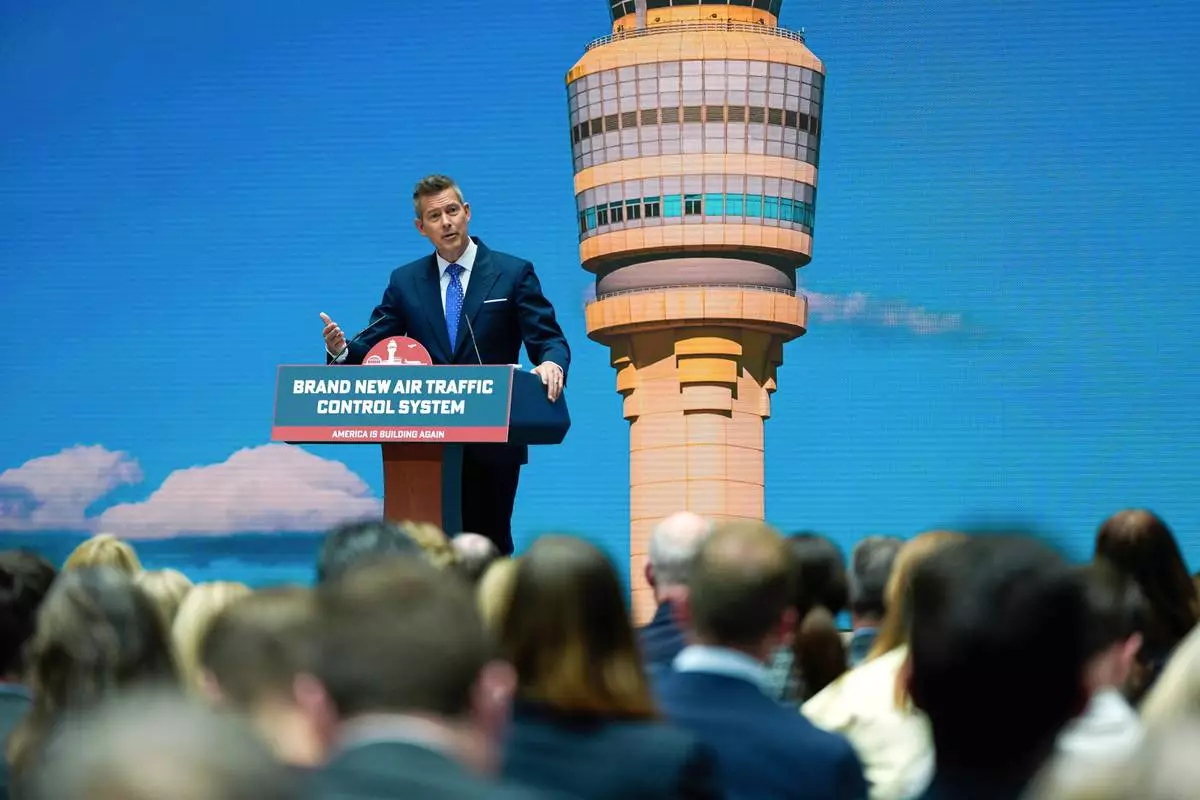
Transportation Secretary Sean Duffy announces a new air traffic control infrastructure plan, Thursday, May 8, 2025, in Washington. (AP Photo/Julia Demaree Nikhinson)
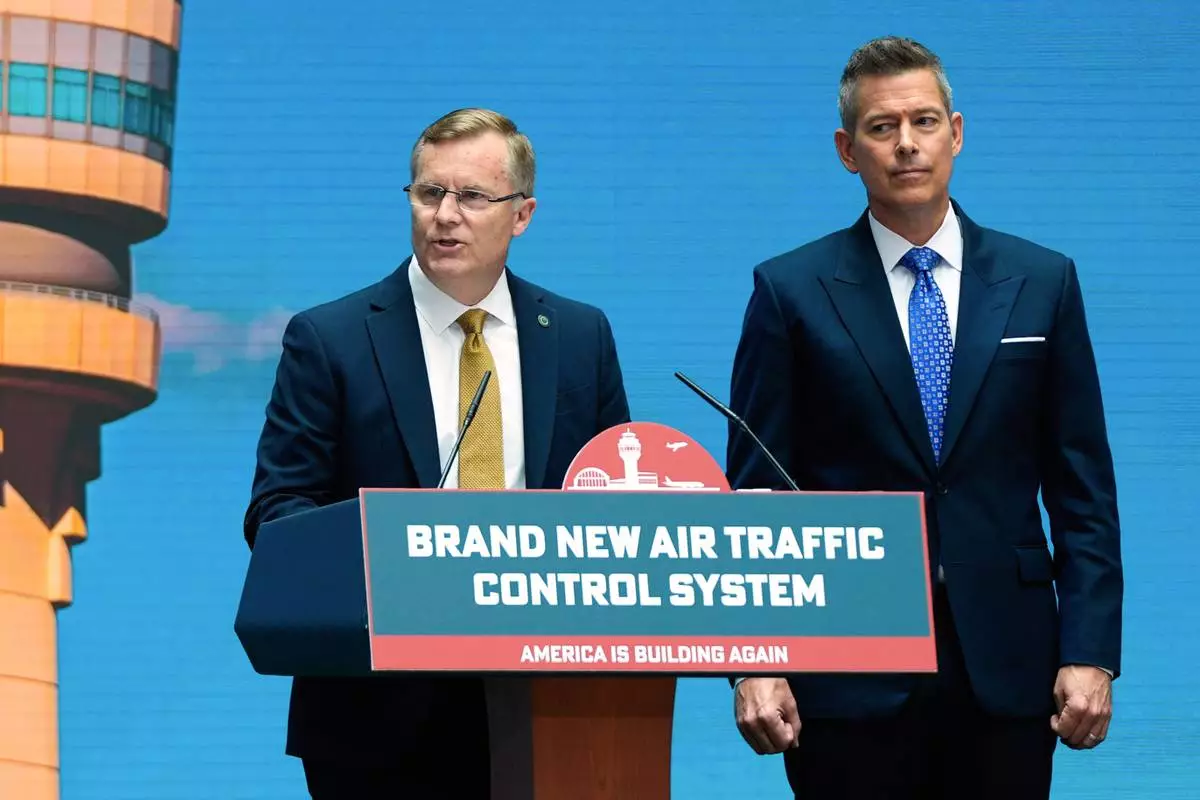
Chris Rocheleau, acting administrator of the Federal Aviation Administration, left, and Transportation Secretary Sean Duffy, right, speak about a new air traffic control infrastructure plan, Thursday, May 8, 2025, in Washington. (AP Photo/Julia Demaree Nikhinson)
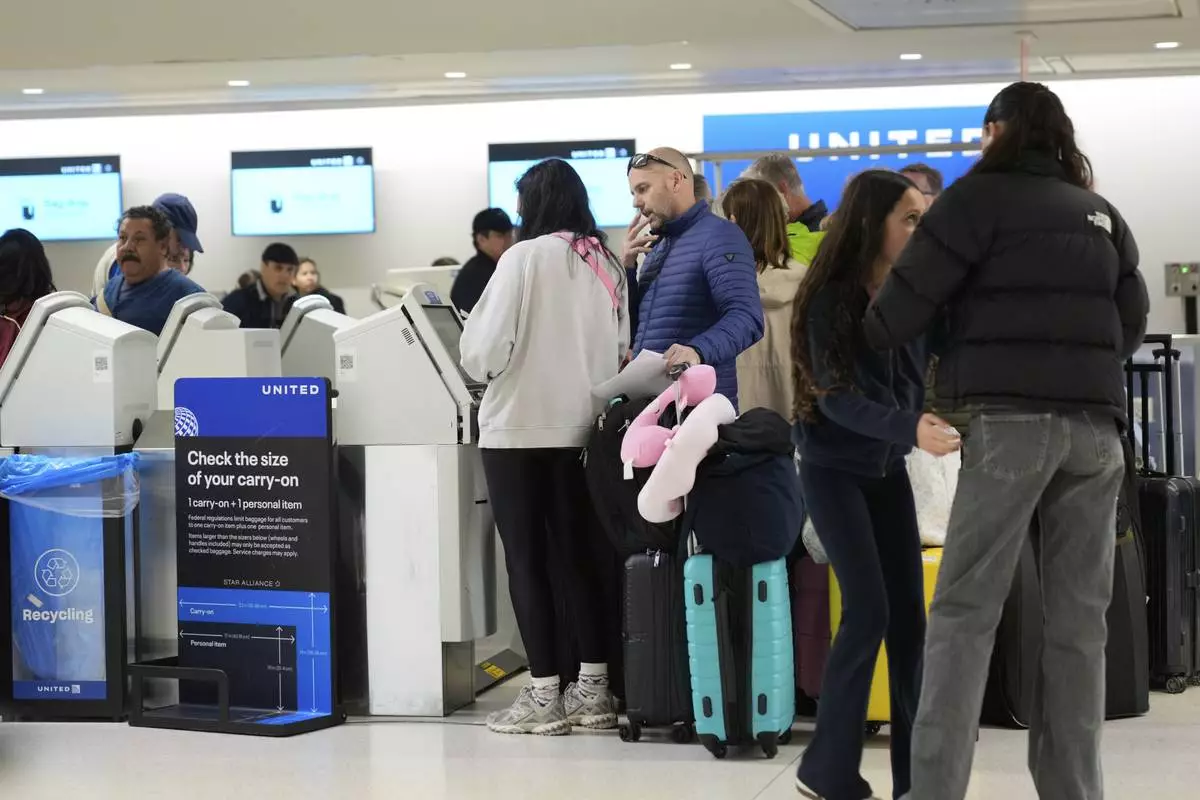
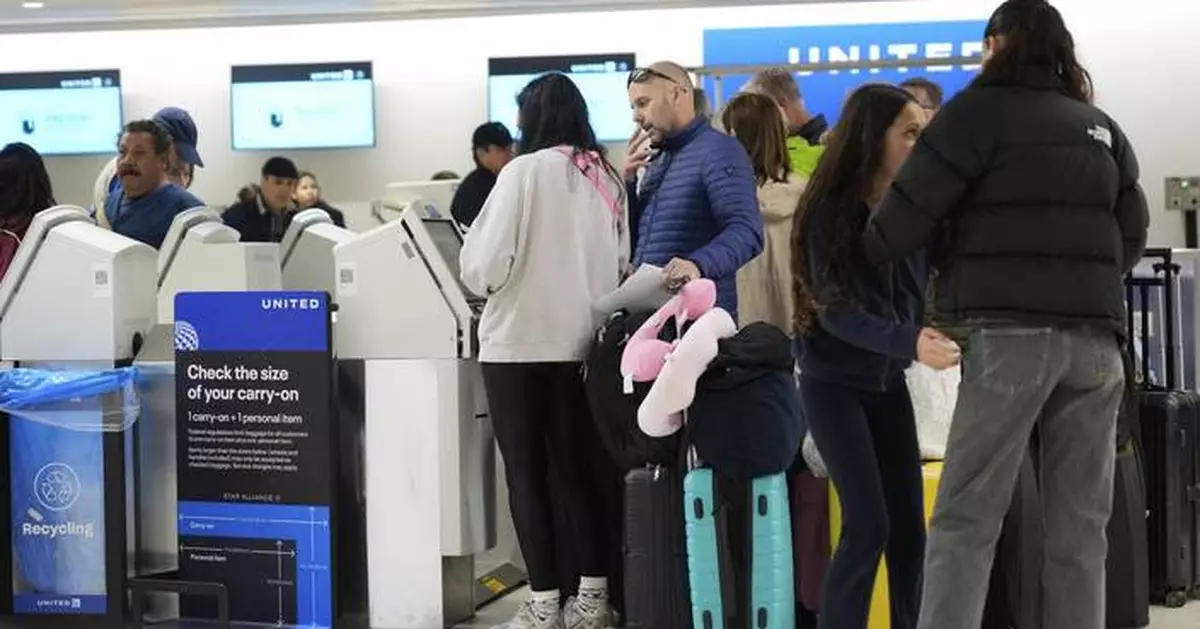
Travelers check into their flights at Newark Liberty International Airport in Newark, N.J., Monday, May 5, 2025. (AP Photo/Seth Wenig)