Twenty-three men have died by court-ordered execution so far this year in the U.S., and six other people are scheduled to be put to death in four states during the remainder of 2025.
Two men in Florida and Mississippi are scheduled to be executed on Tuesday and Wednesday, respectively. The last person to be put to death in the U.S. was a South Carolina man on June 13.
So far this year, executions have been carried out in Alabama, Arizona, Florida, Indiana, Louisiana, Oklahoma, South Carolina, Tennessee and Texas.
Other states with scheduled executions this year are Tennessee and Texas. Ohio has postponed two executions that had been planned later this year.
All of 2024 saw 25 executions, matching the number for 2018. Those were the highest totals since 28 executions in 2015.
Here's a look at recent executions and those scheduled for the rest of the year, by state:
Thomas Lee Gudinas, 51, is set to die by lethal injection on Tuesday. Gudinas was convicted in 1995 and sentenced to death for raping and killing Michelle McGrath near a bar. He would be the seventh person to be executed in Florida this year.
Michael B. Bell, 54, is scheduled to be executed on July 15 for fatally shooting a man and woman outside a Jacksonville bar as part of an attempted revenge killing. Bell was convicted in 1995 and sentenced to death for the murders of Jimmy West and Tamecka Smith.
Bell's death warrant was the eighth signed by Republican Gov. Ron DeSantis this year.
Mississippi’s longest-serving death row inmate is set to be executed on Wednesday.
Richard Gerald Jordan, 78, was sentenced to death in 1976 for kidnapping and killing a woman in a forest. Jordan has filed multiple death sentence appeals, which have been denied.
Mississippi allows death sentences to be carried out using lethal injection, nitrogen gas, electrocution or firing squad.
Byron Black, 69, is scheduled to die by lethal injection on Aug. 5. Black was convicted in 1989 of three counts of first-degree murder for the shooting deaths of his girlfriend, Angela Clay, and her two daughters in Nashville.
Harold Nichols, 64, is also scheduled to die by lethal injection on Dec. 11. Nichols was convicted of rape and first-degree felony murder in the 1988 death of Karen Pulley in Hamilton County.
Blaine Milam, 35, is scheduled to die by lethal injection on Sept. 25. Milam was convicted of killing his girlfriend’s 13-month-old daughter during what the couple had said was part of an “exorcism” in Rusk County in East Texas in December 2008.
Milam’s girlfriend, Jesseca Carson, was also convicted of capital murder and sentenced to life in prison without parole.
Ohio had two executions set for later this year, with Timothy Coleman scheduled to die on Oct. 30 and Kareem Jackson scheduled to be executed on Dec. 10. Those have been postponed into 2028.
Republican Gov. Mike DeWine has said that he does not anticipate any further executions will happen during his term, which runs through 2026.
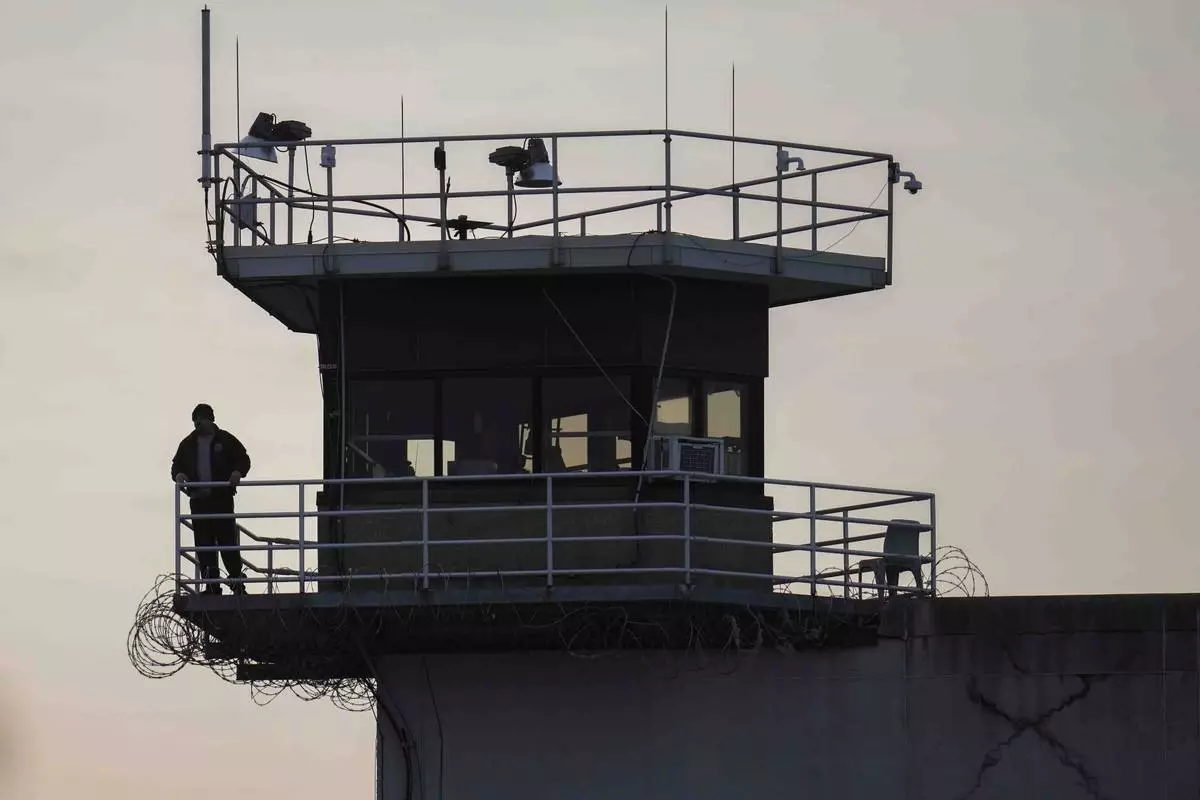
FILE - A guard stands in a tower at Indiana State Prison on Tuesday, Dec. 17, 2024, in Michigan City, Ind. (AP Photo/Erin Hooley, File)

This photo provided by Florida Department of Corrections shows death row inmate Glen Rogers. (Florida Department of Corrections via AP)
WASHINGTON (AP) — U.S. forces have boarded an oil tanker previously sanctioned for smuggling Iranian crude oil in Asia, the Pentagon said Tuesday, as it puts into place a global warning to track down vessels tied to Tehran.
U.S. forces “conducted a right-of-visit maritime interdiction” of the M/T Tifani “without incident,” the Pentagon said on social media.
The tanker was captured in the Bay of Bengal — between India and Southeast Asia — and it was carrying Iranian oil, according to a U.S. defense official who spoke on condition of anonymity to discuss an ongoing military operation. The military will decide in the next four days what to do with the vessel, such as tow it back to the U.S. or turn it over to another country, the official said.
It's the latest move by the U.S. to stop any ship tied to Iran or those suspected of carrying supplies that could help its government, from weapons and oil to metals and electronics. The tanker was seized before President Donald Trump announced that the U.S. was extending a tenuous ceasefire in the Iran war at mediator Pakistan’s request but was keeping the blockade in place.
The tanker is the second vessel linked to Iran that has been interdicted by the U.S. military. The U.S. Navy attacked and seized an Iranian-flagged cargo ship on Sunday that it said had tried to evade its blockade of Iranian ports, with Trump saying an American destroyer blew a hole in the ship’s engine room.
The Pentagon on social media described the Tifani as “stateless” despite it being a Botswana-flagged vessel.
“As we have made clear, we will pursue global maritime enforcement efforts to disrupt illicit networks and interdict sanctioned vessels providing material support to Iran — anywhere they operate,” the Pentagon announcement said, echoing previous statements from Trump administration officials. “International waters are not a refuge for sanctioned vessels.”
Gen. Dan Caine, chairman of the Joint Chiefs of Staff, said last week that the enforcement actions would extend beyond Iranian waters and the area under control of U.S. Central Command.
U.S. forces in other areas of responsibility, he told reporters at the Pentagon, “will actively pursue any Iranian-flagged vessel or any vessel attempting to provide material support to Iran.” He specifically pointed to operations in the Pacific and said the U.S. would target vessels that left before the blockade began outside the Strait of Hormuz, a crucial waterway for energy and other shipments.
The military also detailed an expansive list of goods that it considers contraband, declaring that it will board, search and seize them from merchant vessels “regardless of location.” A notice published Thursday says any “goods that are destined for an enemy and that may be susceptible to use in armed conflict” are “subject to capture at any place beyond neutral territory.”
The U.S. military’s actions against Iranian-linked vessels, namely the attack over the weekend on the cargo ship named the Touska, have raised questions about the two-week ceasefire.
The U.S. and Iran are operating in “an awkward space where the law doesn’t give you a clean yes-or-no answer” on whether the ceasefire was violated, said Jason Chuah, a law professor at the City University of London and the Maritime Institute of Malaysia.
“The United States seems to take the line that the conflict never fully switched off — that is there is still a state of armed conflict,” Chuah said. “By saying that, it can keep doing things like enforcing a blockade and even using limited force at sea.”
Iran is treating the ceasefire as a pause on all hostile acts, Chuah said.
Iranian Foreign Minister Abbas Araghchi on Tuesday called the U.S. blockade a breach of the ceasefire and said “striking a commercial vessel and taking its crew hostage is an even greater violation.” In a letter, Iran's U.N. Mission asked the U.N. Security Council and U.N. chief António Guterres to condemn the U.S. for seizing the Touska and its crew.
The U.S. earlier had instituted a blockade against sanctioned oil tankers linked to Venezuela but had never fired on those vessels.
Blockades and even limited attacks on vessels can be lawful in wartime, with merchant vessels becoming legitimate targets if they contribute to military actions, carry contraband or are incorporated into enemy logistics, Chuah said.
It's harder to prove that a ship such as the Touska is realistically contributing to military action against the U.S., Chuah said.
“The whole dispute really turns on a deceptively simple question: Did the ceasefire actually suspend the right to use force?” Chuah said. “If it did, then firing on vessels or seizing them is very hard to square with the United Nations Charter.”
Mark Cancian, a retired Marine colonel and a senior defense adviser with the Center for Strategic and International Studies, said a violation of the ceasefire is up for interpretation because there were no defined terms.
“Trump announced it. The Iranians agreed. But there’s no formal agreement,” Cancian said. “So whether it broke the ceasefire or not depends on your perspective. ... Nothing was written down.”
Michael O’Hanlon, a defense and foreign policy analyst at the Brookings Institution, said the U.S. did not violate the ceasefire because it was limited to bombing Iran, not the blockade.
“We agreed to stop dropping bombs on them, and that’s the basic thing they wanted,” O’Hanlon said, adding that the U.S. still had to enforce the blockade “if you’re going to make it mean anything.”
AP writer Farnoush Amiri at the United Nations contributed to this report.
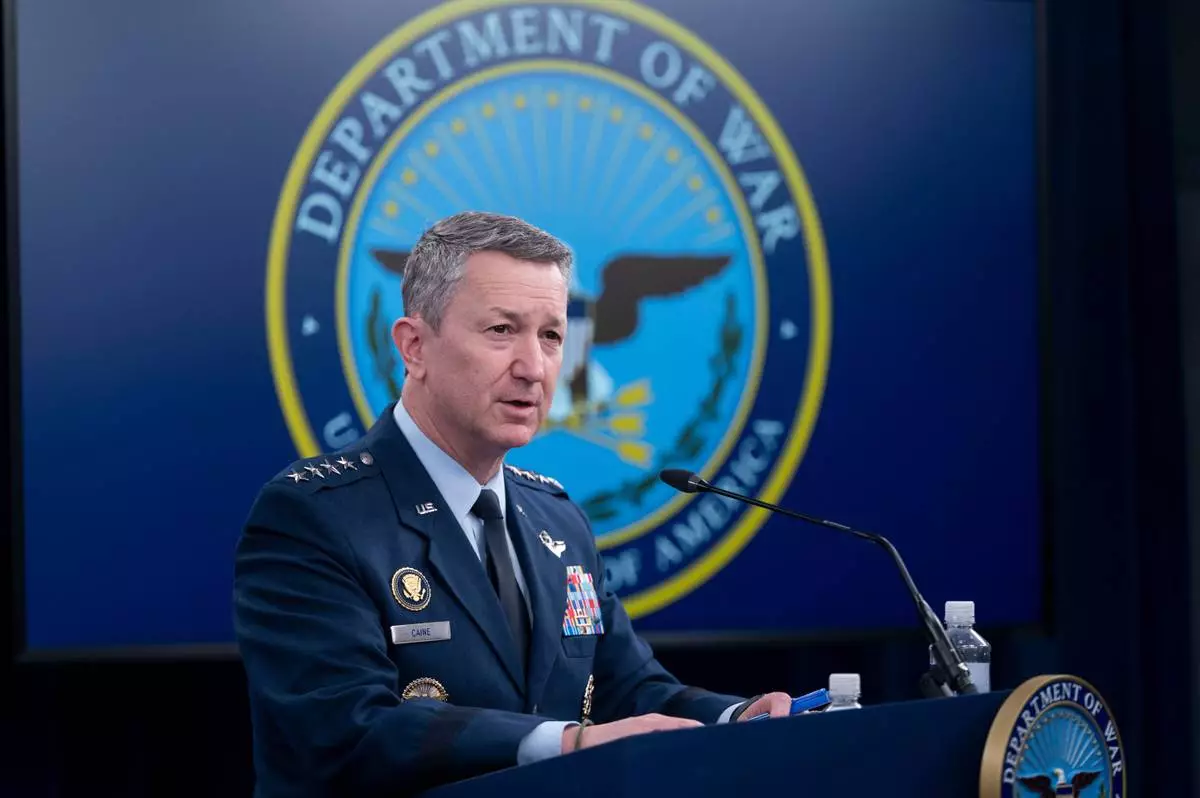
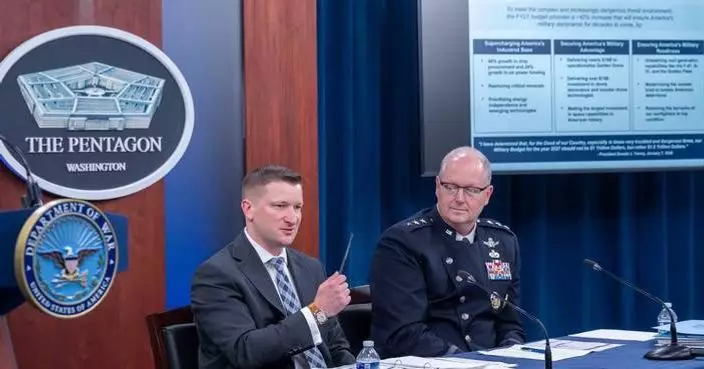
Chairman of the Joint Chiefs of Staff Gen. Dan Caine speaks to members of the media during a press briefing at the Pentagon, Thursday, April 16, 2026 in Washington. (AP Photo/Kevin Wolf)
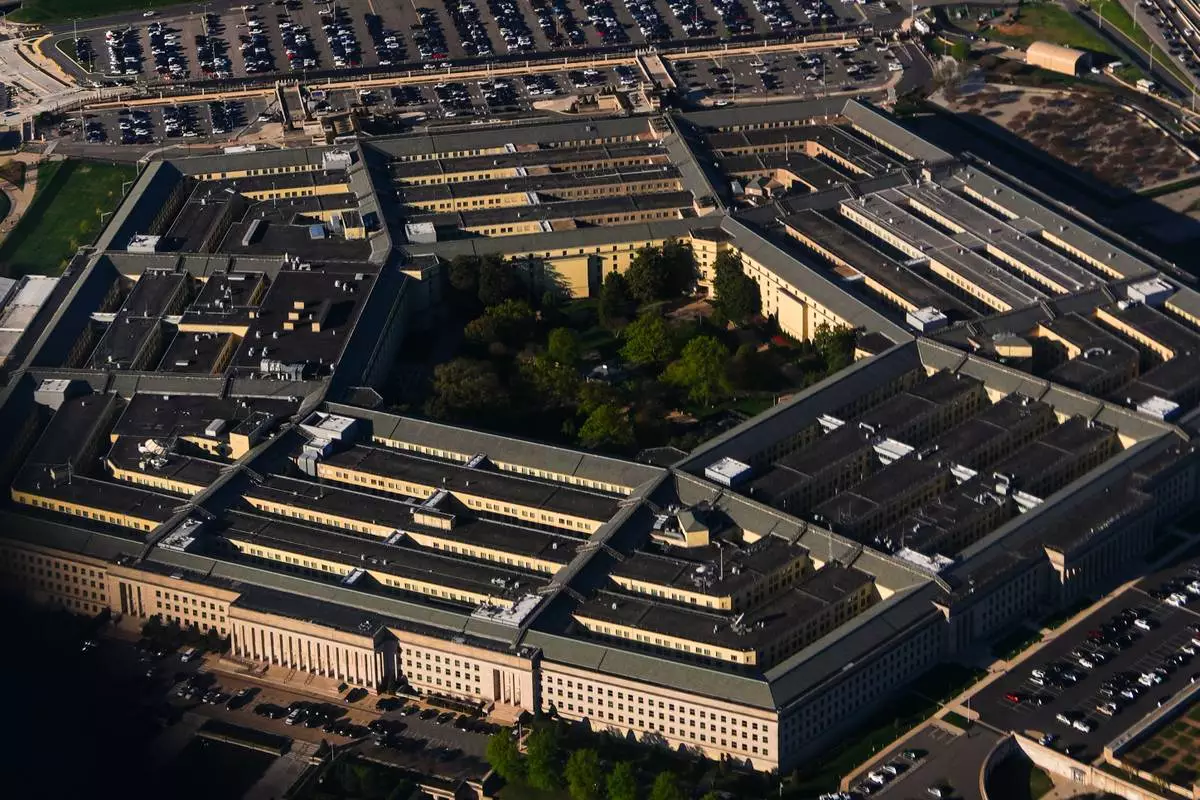
The Pentagon is seen from an airplane, Tuesday, April 7, 2026, in Washington. (AP Photo/Julia Demaree Nikhinson)