Chinese exporters have welcomed easing trade tensions between China and the United States, and are reconnecting with U.S. traders while remaining vigilant for potential shifts.
Following a two-day China-U.S. high-level meeting on economic and trade affairs in Geneva, the world's two largest economies announced in a joint statement on Monday a series of measures reducing additional tariffs imposed by both sides, which took effect on Wednesday.
Jiang Jiangping, vice president of the Yiwu China Commodity City Crafts Association, said shop owners at the world's largest small commodities market are pleased to see the new development though they hadn't really been affected by the tariffs that much.
"We are all very happy. I was chatting with the shop owner next door the other night, and they said American clients were scrambling to book flights. We are happy but it doesn't really affect us much, because our orders were already quite full. American clients usually come to place orders in early to mid-May, and then we finish production in July. So, it might be a little rushed this year, but we can still deliver on time," Jiang said.
"Starting yesterday, we have been getting notices from freight companies saying that with tariffs being significantly reduced, their shipping prices have also dropped. Now, more than 20 containers of our goods can be exported again," said Lin Wanyi, an exporter from Quanzhou City in east China's Fujian Province.
Li Erqiao, general manager of Soton Daily Necessities, said the new measures provide an important opportunity for Chinese exporters to restore ties with U.S. partners and to be better prepared for possible trade tensions in the future.
"The signals in the past couple of days have been very positive. Everyone is moving to get in touch with American clients again. A lot of cooperation had been suspended before. Now, the opportunity has come. We must make the best of this window, when both sides are showing signs of easing, to prevent our clients from slipping away," Li said.
"However, in the long run, we are still thinking about how to diversify our supply chain so that we're not passive in situations like this. We must prepare for the future. I believe we are clear-headed about this. We won't relax just because the American clients are coming. We'll stick to our original plans and continue with our follow-up strategies. I think this gives us a more relaxed timeline to make more comprehensive preparations," he added.
Chinese exporters hail tariff cuts with U.S.
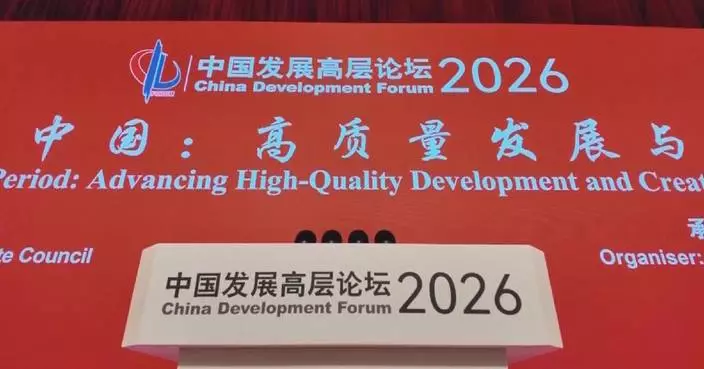
继续来关注中国发展高层论坛2026年年会。中东局势引发的能源危机也是本届论坛上嘉宾关注的重点。 黄金、原油、美元 在不确定性增加的当下,发生着怎样的变化,来听嘉宾的观点。
周一上午,就在这场围绕“不确定性”展开的专题讨论进行的同时,国际金价延续前几个交易日的颓势,开启了一天的巨幅震荡。中东冲突以来,油价大涨,黄金冲高后走低,资产价格的大幅波动似乎让世界的不确定性得以量化。油价何时回调,黄金的避险属性是否失灵,成为会场内讨论的一大热点。
Global economists and corporate executives at the China Development Forum (CDF) 2026 said that the world's second largest economy remains a predictable force at a time of geopolitical flux and global uncertainty.
Stability, a recurring theme from last year's forum, resonated more strongly during the two-day forum this year which concluded on Monday in Beijing, as the conflict in the Middle East continues to drive international oil and gold price volatility.
As gold prices extended another day of dramatic fluctuation on Monday following several days of decline, forum attendees, including leaders of international organizations, business executives and prominent scholars from around the world, gathered for a pair of symposiums on addressing uncertainty and exploring growth opportunities, as well as on the global low-carbon transition and sustainable development.
They held heated discussions about the energy prices surge rippling across the wider global economy as a result of the Middle East conflict, and the long-term impact of geopolitical tensions on gold, typically a go-to safe-haven in times of uncertainty.
Zhu Min, a member of the Senior Expert Advisory Committee of the China Center for International Economic Exchanges, shared his view on the declining investor confidence in the yellow metal, in an interview with China Central Television (CCTV).
【同期】朱民 中国国际经济交流中心 资深专家委员 其实现在(变)动的是机构投资者对黄金的需求,美元不降息 他们觉得持有黄金的成本过高,就开始离开市场 但从中期或者长期来看,我觉得有几个基本趋势,第一个就是美元还是走弱,美国现在政府把美元武器化,包括关税战,包括战争等等,大家信任下降,但是最根本的是地缘经济的结构变化,整个地缘经济美国的比重在下降,中国和其他全球南方的比重在上升,这个是根本的变化。 "What is actually shifting now is institutional investors' demand for gold. As the U.S. Fed leaves interest rates unchanged, they've felt that the cost of holding gold is too high and started shying away from the market. However, from a medium- to long-term perspective, I believe there are several fundamental trends. First, the U.S. dollar continues to weaken, and the current U.S. government has weaponized the dollar through measures such as tariff wars and armed conflicts, causing everyone's trust in the currency to slip. But the primary factor is the structural shift in the global geopolitical economy, where the share of the United States in the overall geopolitical economic landscape is declining, while the share of China and other Global South countries is rising. This represents a fundamental shift," he said.
朱民表示,黄金仍是当前避险的选择之一,而油价则直接受到战争影响,假如供应链遭受严重破坏,即便战争结束价格回调后仍可能维持在高位。中东冲突对于中国经济几乎没有影响,中国的战略规划提供了稳定的增长预期,也为世界注入确定性。
Zhu thinks gold is still a key safe-haven asset for investors, but expressed his concern over the lasting impact of severely disrupted supply chains on oil prices.
He dismissed the impact of the Middle East conflict on China, as the country has long highlighted the reduction of fossil fuel consumption and development of clean energy in its strategic planning, which he said not only stabilizes growth expectations, but also offers certainty to the world.
记者发现,寻找确定性是许多嘉宾此行最重要的目标之一。在论坛的会场里,即便能源危机阴云仍在,对转型的展望也大过对不确定性的隐忧。
中国在绿色转型上取得的成效,让许多传统能源巨头纷纷跟进,持续加注电力板块。
Foreign academics and executives at this year's forum agreed that the energy crisis has spotlighted the need to transition to renewables, which helps to create a predictable business environment, and said China's green transformation achievements offer opportunities for cooperation to multinationals in the global energy sector.
【同期】伊恩·戈尔丁 牛津大学教授 "What business, what investment, likes is a predictable world, to make long-term decisions, to decide where to put your money and lack of predictability, I think, leads to slower growth," Ian Goldin, a professor at the University of Oxford, told CCTV.
【同期】杰弗里·萨克斯 哥伦比亚大学教授 对任何国家都有一个启示,那就是要投资风能、太阳能、氢能,这才是自己的能源 许多国家来到中国,他们希望扩大可再生能源的规模,而中国的经验可以帮助大家采取更低成本的方式生产,战争将会推动能源转型。 "It is a signal to any country: invest in wind power, invest in solar power, invest in hydropower. It's your own energy. Countries are going to come to China and say, 'We want to scale up our renewable energy and we want you to help us to do this in a low-cost way.' So, in this sense, the war will be a spur to the energy transformation," said Jeffrey Sachs, a professor at the Columbia University.
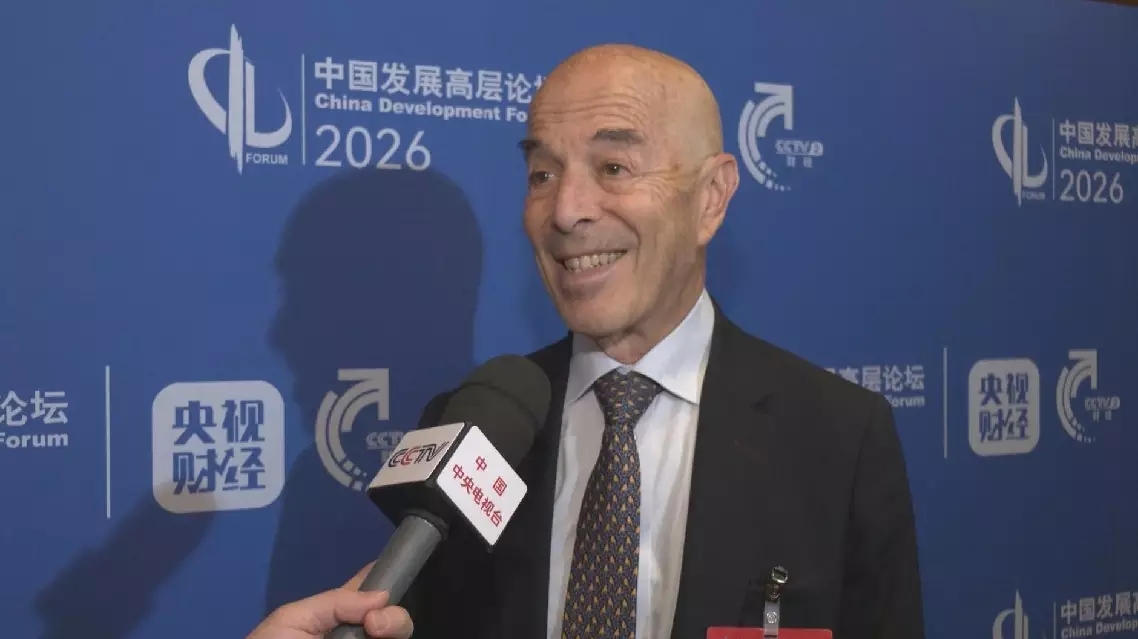
Patrick Pouyanne, CEO of French energy and petroleum company TotalEnergies, told CCTV that his company continues to seek business partnerships with China, whose world-leading electricity generation capacity, fueled by a renewables boom, will drive its AI-powered industrial transformation.
【同期】潘彦磊 道达尔能源董事长兼首席执行官 TotalEnergies CEO Patrick Pouyanne "We are an oil, gas company. We invest more and more in electricity, 4 billion dollars per year, like China does. I think in all the scenarios we need more electricity. We also need more electricity because of data centers, AI revolution," he said.
China's growth certainty, stable business environment win praise at development forum