WASHINGTON (AP) — The Supreme Court seemed intent Thursday on maintaining a block on President Donald Trump’s restrictions on birthright citizenship while looking for a way to scale back nationwide court orders.
It was unclear what such a decision might look like, but a majority of the court expressed concerns about would happen if the Trump administration were allowed, even temporarily, to deny citizenship to children born to people who are in the United States illegally.
The justices heard arguments in the Trump administration’s emergency appeals over lower court orders that have kept the citizenship restrictions on hold across the country.
Nationwide injunctions have emerged as an important check on Trump’s efforts to remake the government and a source of mounting frustration to the Republican president and his allies.
Judges have issued 40 nationwide injunctions since Trump began his second term in January, Solicitor General D. John Sauer told the court at the start of more than two hours of arguments.
Birthright citizenship is among several issues, many related to immigration, that the administration has asked the court to address on an emergency basis.
The justices also are considering the Trump administration’s pleas to end humanitarian parole for more than 500,000 people from Cuba, Haiti, Nicaragua and Venezuela and to strip other temporary legal protections from another 350,000 Venezuelans. The administration remains locked in legal battles over its efforts to swiftly deport people accused of being gang members to a prison in El Salvador under an 18th century wartime law called the Alien Enemies Act.
Trump signed an executive order on the first day of his second term that would deny citizenship to children who are born to people who are in the country illegally or temporarily.
The order conflicts with a Supreme Court decision from 1898 that held that the Citizenship Clause of the 14th Amendment made citizens of all children born on U.S. soil, with narrow exceptions that are not at issue in this case.
States, immigrants and rights group sued almost immediately, and lower courts quickly barred enforcement of the order while the lawsuits proceed.
The current fight is over the rules that apply while the lawsuits go forward.
The court's liberal justices seemed firmly in support of the lower court rulings that found the changes to citizenship that Trump wants to make would upset the settled understanding of birthright citizenship that has existed for more than 125 years.
Birthright citizenship is an odd case to use to scale back nationwide injunctions, Justice Elena Kagan said. "Every court has ruled against you,” she told Sauer.
If the government wins on today’s arguments, it could still enforce the order against people who haven’t sued, Kagan said. “All of those individuals are going to win. And the ones who can’t afford to go to court, they’re the ones who are going to lose,” she said.
Justice Ketanji Brown Jackson described the administration's approach as “catch me if you can,” forcing everyone to file suit to get “the government to stop violating people’s rights.”
Several conservative justices who might be open to limiting nationwide injunctions also wanted to know the practical effects of such a decision as well as how quickly the court could reach a final decision on the Trump executive order.
Justice Brett Kavanaugh pressed Sauer with a series of questions about how the federal government might enforce Trump’s order.
“What do hospitals do with a newborn? What do states do with a newborn?” he said.
Sauer said they wouldn’t necessarily do anything different, but the government might figure out ways to reject documentation with “the wrong designation of citizenship.”
Kavanaugh continued to push for clearer answers, pointing out that the executive order gave the government only about 30 days to develop a policy. “You think they can get it together in time?” he said.
The Trump administration, like the Biden administration before it, has complained that judges are overreaching by issuing orders that apply to everyone instead of just the parties before the court.
Picking up on that theme, Justice Samuel Alito said he meant no disrespect to the nation's district judges when he opined that they sometimes suffer from an “occupational disease which is the disease of thinking that 'I am right and I can do whatever I want.'”
But Justice Sonia Sotomayor was among several justices who raised the confusing patchwork of rules that would result if the court orders were narrowed and new restrictions on citizenship could temporarily take effect in more than half the country.
Some children might be “stateless,” Sotomayor said, because they'd be denied citizenship in the U.S. as well as the countries their parents fled to avoid persecution.
New Jersey Solicitor General Jeremy Feigenbaum, representing 22 states that sued, said citizenship could “turn on and off” for children crossing the Delaware River between Camden, New Jersey, where affected children would be citizens, and Philadelphia, where they wouldn't be. Pennsylvania is not part of the lawsuit.
One possible solution for the court might be to find a way to replace nationwide injunctions with certification of a class action, a lawsuit in which individuals serve as representatives of a much larger group of similarly situated people.
Such a case could be filed and acted upon quickly and might even apply nationwide.
But under questioning from Justice Amy Coney Barrett and others, Sauer said the Trump administration could well oppose such a lawsuit or potentially try to slow down class actions.
Supreme Court arguments over emergency appeals are rare. The justices almost always deal with the underlying substance of a dispute.
But the administration didn't ask the court to take on the larger issue now and, if the court sides with the administration over nationwide injunctions, it's unclear how long inconsistent rules on citizenship would apply to children born in the United States.
A decision is expected by the end of June.
Follow the AP's coverage of the U.S. Supreme Court at https://apnews.com/hub/us-supreme-court.
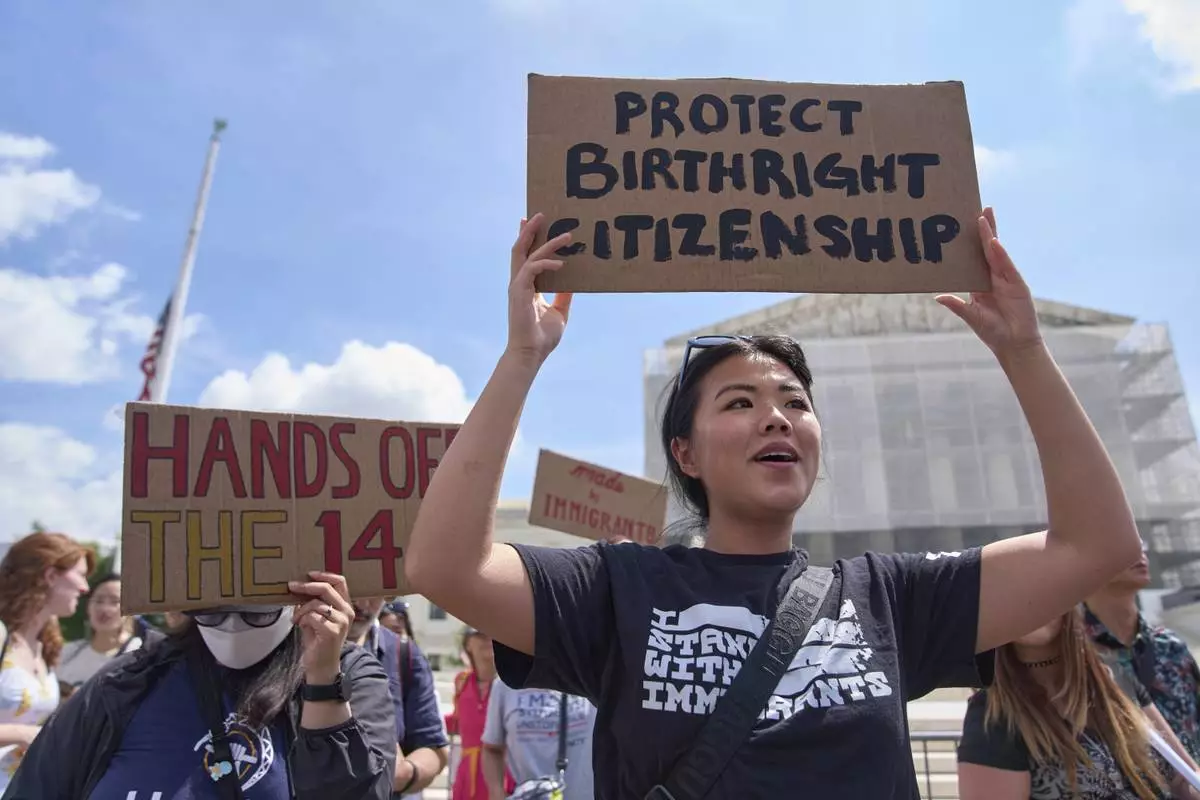
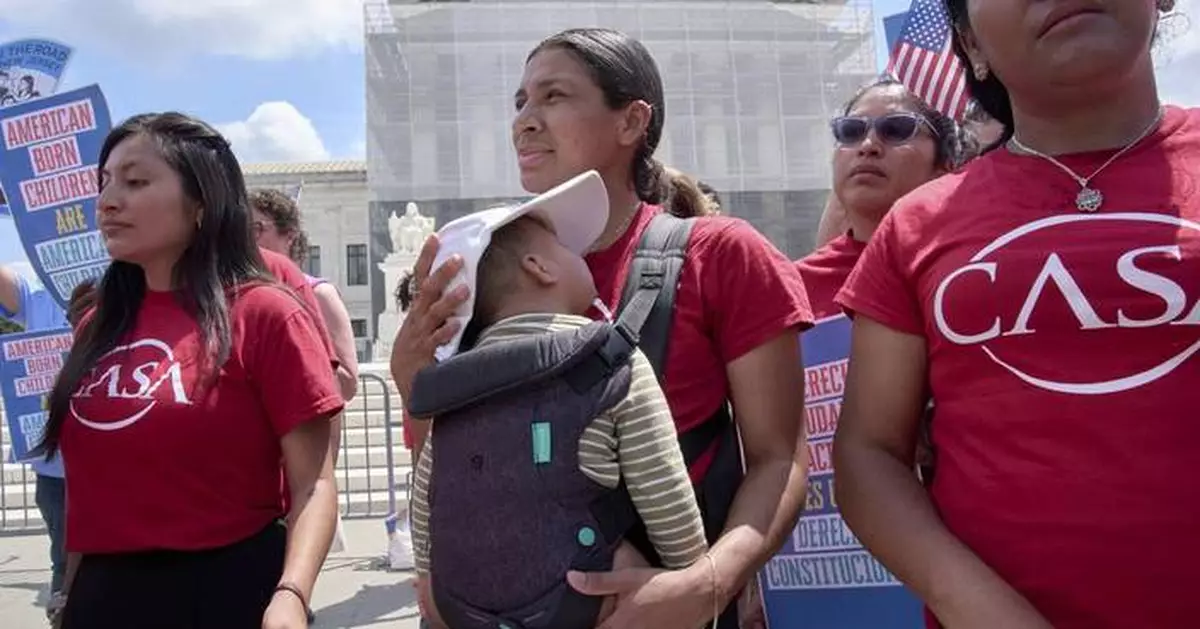
Hannah Liu, 26, of Washington, holds up a sign in support of birthright citizenship, Thursday, May 15, 2025, outside of the Supreme Court in Washington. "This is enshrined in the Constitution. My parents are Chinese immigrants," says Liu. "They came here on temporary visas so I derive my citizenship through birthright." (AP Photo/Jacquelyn Martin)
![Tanjam Jacobson, of Silver Spring, Md., holds a sign saying "Citizenship is a Birthright," Thursday, May 15, 2025, outside the Supreme Court in Washington. Jacobson is a naturalized U.S. citizen who was born in England of Indian descent, and her son was born here. "This is something that really matters," says Jacobson, "it's so wrong against the constitution [to take away birthright citizenship]." (AP Photo/Jacquelyn Martin)](https://image.bastillepost.com/1200x/wp-content/uploads/global/2025/05/2c495cddc1436e21a9fa976d295dc292_Supreme_Court_Birthright_Citizenship_26310.jpg.webp)
Tanjam Jacobson, of Silver Spring, Md., holds a sign saying "Citizenship is a Birthright," Thursday, May 15, 2025, outside the Supreme Court in Washington. Jacobson is a naturalized U.S. citizen who was born in England of Indian descent, and her son was born here. "This is something that really matters," says Jacobson, "it's so wrong against the constitution [to take away birthright citizenship]." (AP Photo/Jacquelyn Martin)
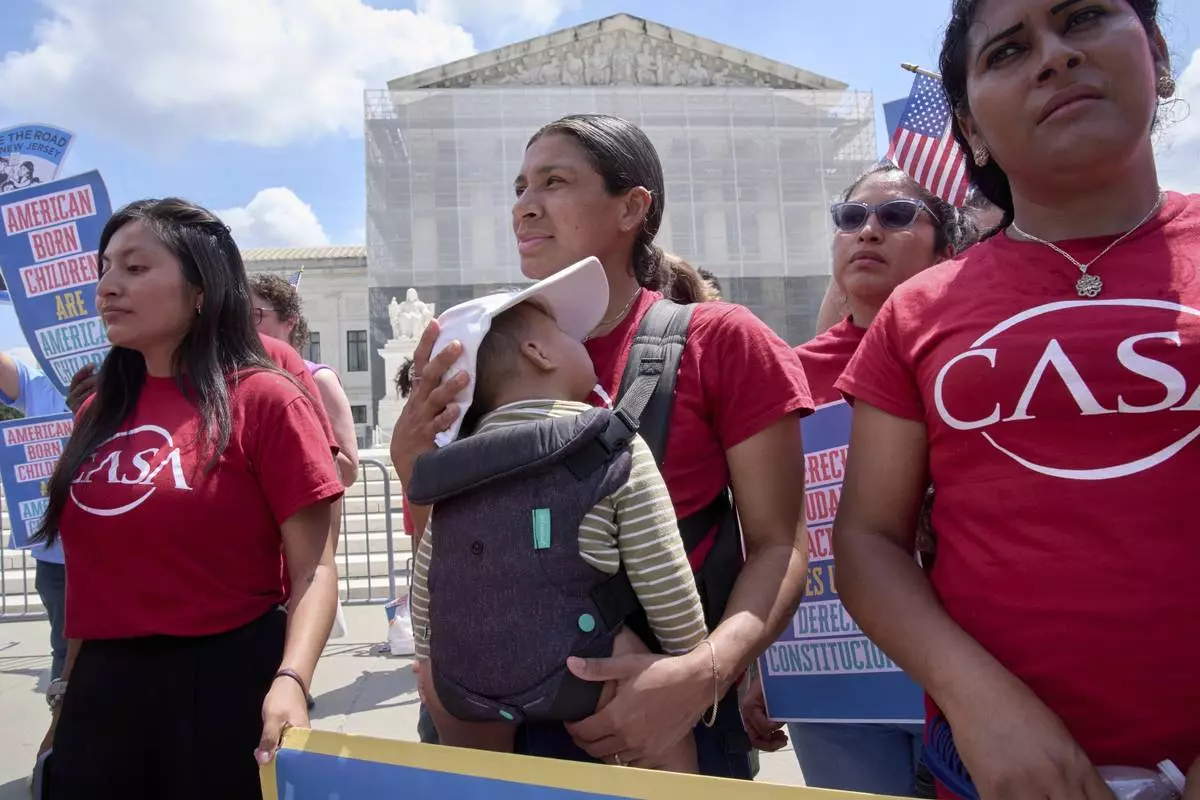
A woman from CASA Maryland holds her 9-month-old baby as she joins others in support of birthright citizenship, Thursday, May 15, 2025, outside of the Supreme Court in Washington. (AP Photo/Jacquelyn Martin)
GUANARE, Venezuela (AP) — Freedom came too late for Edilson Torres.
The police officer was buried Tuesday in his humble, rural hometown following his death in a Venezuelan prison, where he was held incommunicado since being detained in December on what his family said were politically motivated accusations.
Torres, 51, died of a heart attack Saturday, just as his family awaited the government's promised release of prisoners following the U.S. capture of then-President Nicolás Maduro. The loss left his family reeling.
Now scores of families — who once hesitated to approach advocacy groups — are coming forward to register their loved ones as “political prisoners" in the hope that they might have a more optimistic future than Torres.
Foro Penal, which tracks and advocates for Venezuelan prisoners, has received a “flood of messages” from families since last week, said Alfredo Romero, director of the nongovernmental organization.
“They didn’t report it out of fear, and now they’re doing it because, in a way, they feel that there is this possibility that their families will be freed,” Romero said. “They see it as hope, but more importantly, as an opportunity.”
The head of Venezuela’s national assembly, Jorge Rodríguez, said last week that a “significant number” of Venezuelan and foreigners imprisoned in the country would be released as a gesture to “seek peace” following the operation that captured Maduro in the early hours of Jan. 3. The U.S. and Venezuela's opposition have long demanded the widespread release of detained opposition figures, activists and journalists, whom they claim are used as a political tool by the ruling party.
Venezuela’s government denies that there are prisoners unjustly detained, accusing them of plotting to destabilize Maduro’s government.
Following Torres' death, Venezuela's Attorney General Tarek William Saab said in a statement that the case had been assigned to a terrorism unit and “was linked to criminal activities detected by state security agencies.” He did not offer any details, but the vague language tracks with past accusations leveled against real or perceived government critics.
Romero said that of the roughly 300 families who reached out to Foro Penal, about 100 cases so far have been confirmed as politically motivated. Most of those reported over the past few days, he said, once worked for Venezuela's military. That is on top of more than 800 people that the organization says continue to be detained for political reasons in Venezuela.
As of Tuesday evening, Foro Penal had confirmed 56 prisoners it said were detained for political reasons had been freed. The group criticized the lack of government transparency over the releases. Venezuela’s government negated the organization's count, and reported a far higher figure of 400 Tuesday afternoon.
But the government did not provide evidence of the releases, a time range in which they were carried out nor identify those freed, making it impossible to determine whether those freed were behind bars for political or other reasons.
Before Torres' funeral on Tuesday, a procession of cars and motorcycles stopped at a local jail, where his wife remains detained on disputed accusations.
“My little brother, my little brother,” Emelyn Torres said between sobs after his casket, cloaked in Venezuela's flag, arrived at her home for the wake. A few feet away, their grandmother nearly fainted as dozens of people crammed into the living room to pay their respects.
Hours earlier, as a minivan transported the body of her brother 267 miles (430 kilometers) from the capital, Caracas, to Guanare, Torres learned that other men linked to the WhatsApp group that led to her brother's arrest had just been released from prison. She wailed.
Among those who have been released are: human rights attorney Rocío San Miguel, who immediately relocated to Spain; Biagio Pilieri, an opposition leader who was part of Nobel Peace Prize winner María Corina Machado’s 2024 presidential campaign; and Enrique Márquez, a former electoral authority and presidential candidate.
Italian businessman Marco Burlò, who was released from prison Monday, told reporters outside a Rome airport Tuesday that he was kept isolated throughout his detention, which he characterized as a “pure and real kidnapping.”
“I can’t say that I was physically abused, but without being able to talk to our children, without the right to defense, without being able to speak to the lawyer, completely isolated, here they thought that I might have died,” he said.
The small set of releases over the past few days continues to fuel criticisms by families, human rights watchdogs at the United Nations and U.S. politicians, who have accused the government of not following through on their word of a wider release.
But the rapid political shifts in the Latin American nation and the distant possibility of release simultaneously marked a rare moment of hope for many families who have spent years wondering if their loved ones would ever be freed.
Part of the reason that Romero said he believed so many people had not come forward is the government's ongoing crackdown on dissent since Venezuela's tumultuous 2024 election, which Maduro claimed to have won despite ample credible evidence to the contrary.
As mass street protests broke out, authorities said they detained more than 2,000 people. In the month after July elections, Venezuela's government passed a law — dubbed the “anti-NGO law” by critics — making it easier for the government to criminalize human rights groups.
That had a chilling effect, Romero said, making families hesitant to come forward — until now.
Janetsky reported from Mexico City.
Follow AP’s coverage of Latin America and the Caribbean at https://apnews.com/hub/latin-america
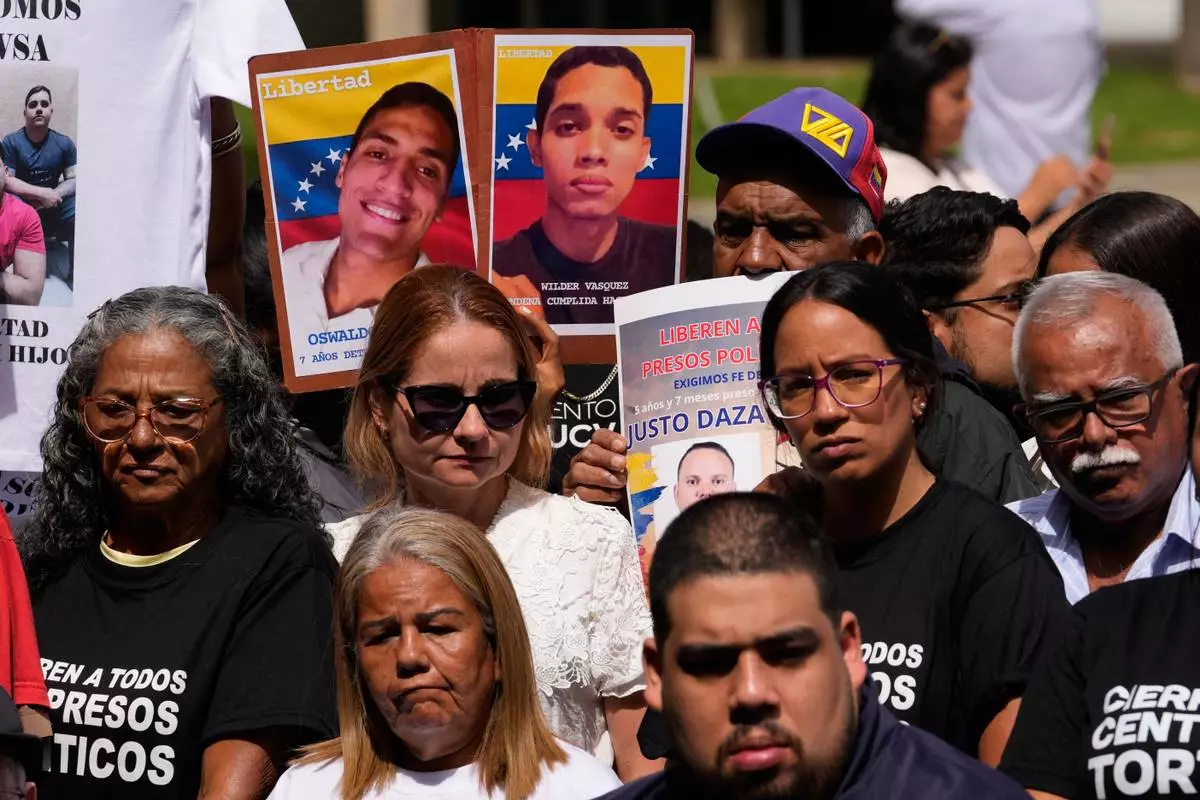
Relatives of political prisoners gather at the Central University of Venezuela to call for their release in Caracas, Venezuela, Tuesday, Jan. 13, 2026. (AP Photo/Matias Delacroix)
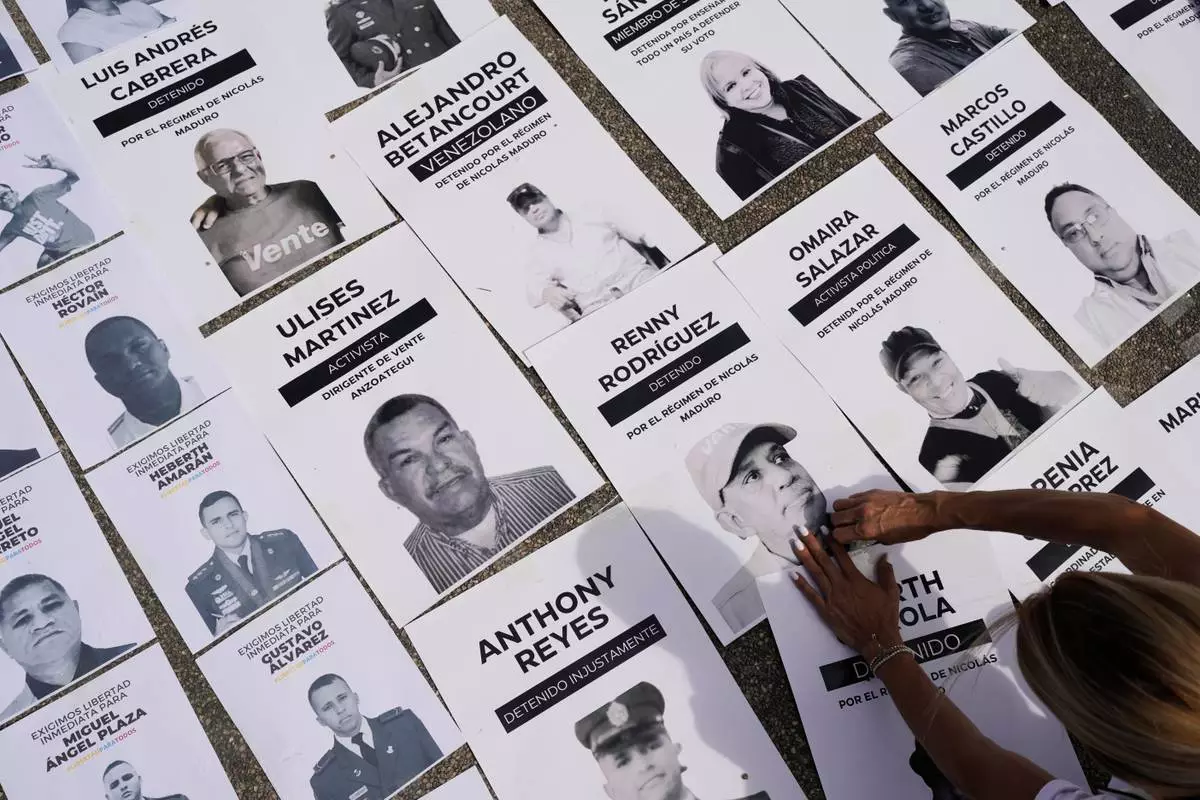
Jacklin Ibarreto, whose father Miguel Ibarreto is detained, lays out photos of political prisoners at the Central University of Venezuela in Caracas, Venezuela, Tuesday, Jan. 13, 2026. (AP Photo/Matias Delacroix)
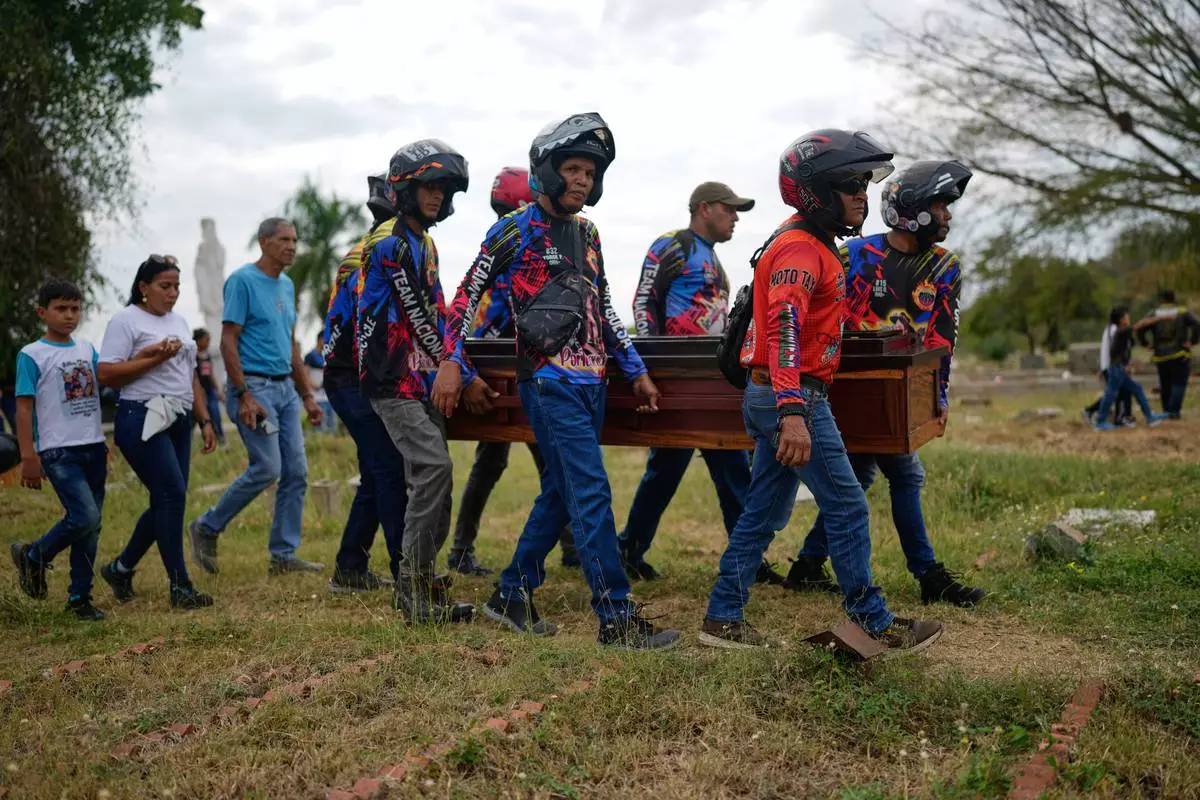
Members of a motorcycle club, friends of Edilson Torres, a Venezuelan police officer who died in prison a month after being arrested on accusations of treason, carry his coffin at a cemetery in Guanare, Venezuela, Tuesday, Jan. 13, 2026. (AP Photo/Ariana Cubillos)
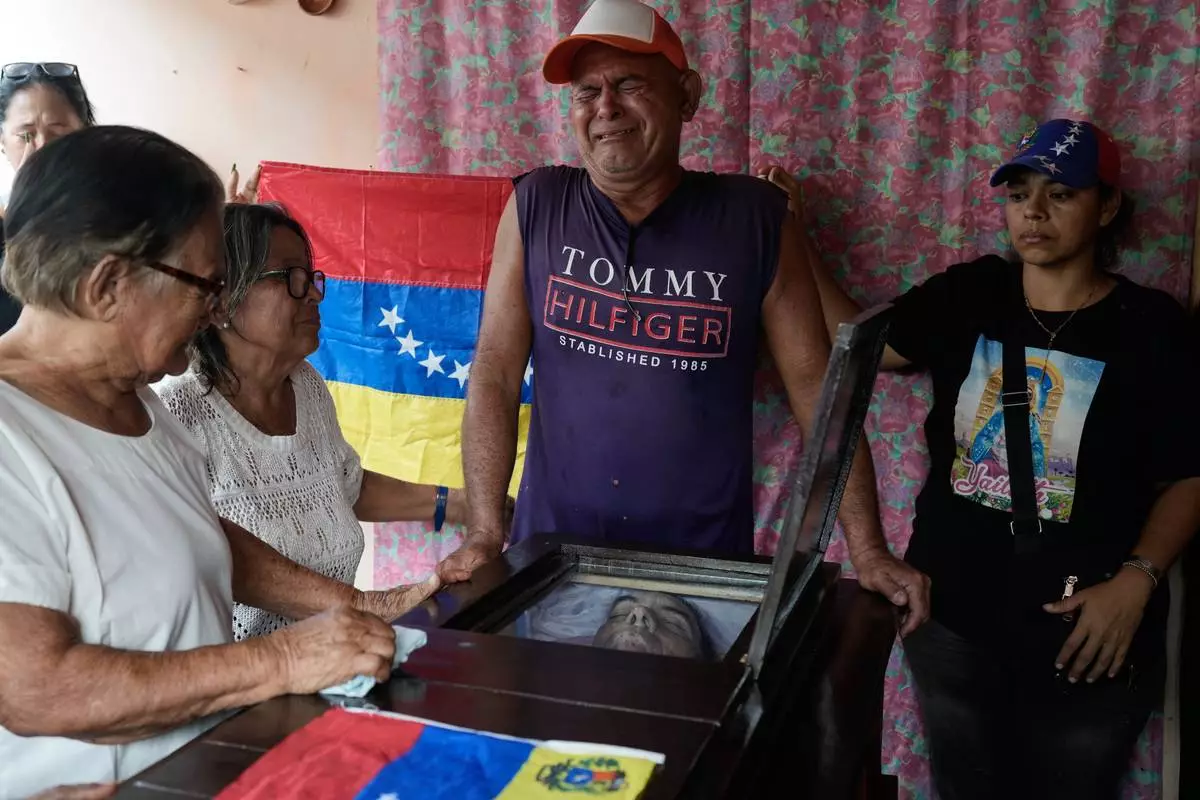
Relatives stand by the coffin of Edilson Torres, a Venezuelan police officer who died in prison a month after being arrested on accusations of treason, in Guanare, Venezuela, Tuesday, Jan. 13, 2026.. (AP Photo/Ariana Cubillos)
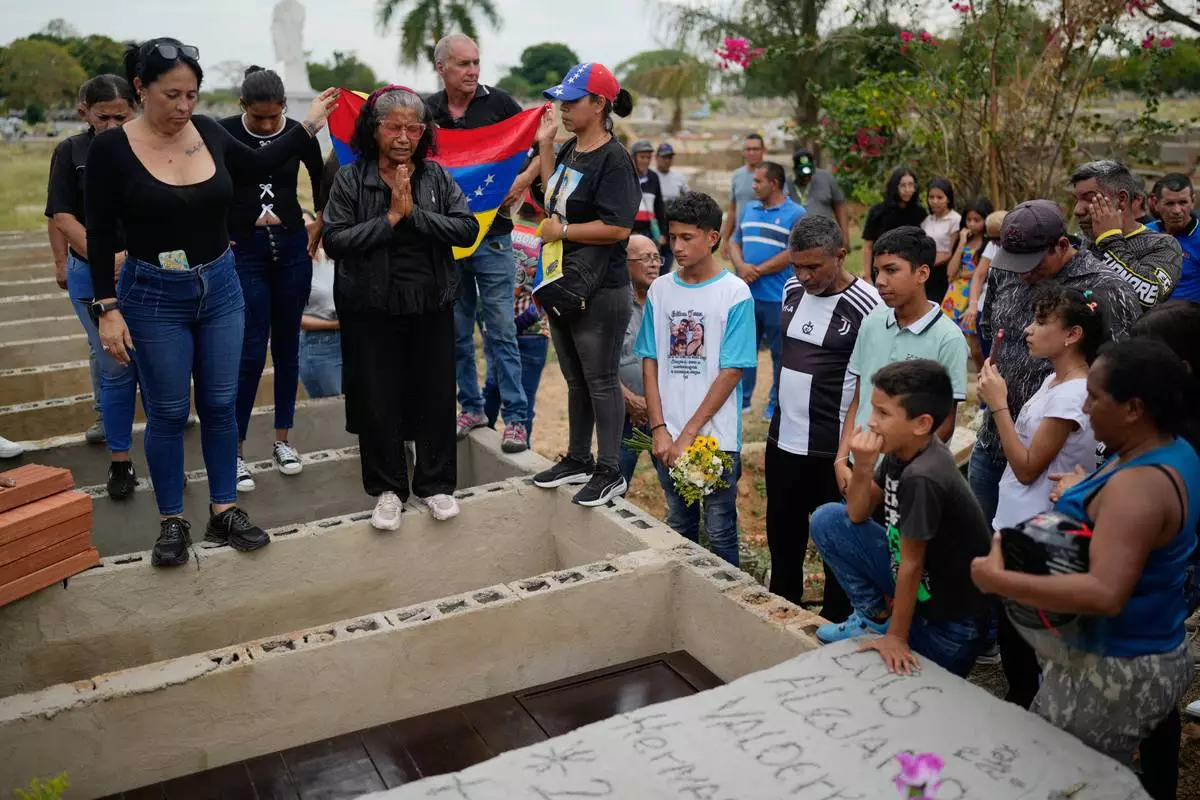
Relatives of Edilson Torres, a Venezuelan police officer who died in prison a month after being arrested on accusations of treason, gather around his grave during his funeral in Guanare, Venezuela, Tuesday, Jan. 13, 2026. (AP Photo/Ariana Cubillos)
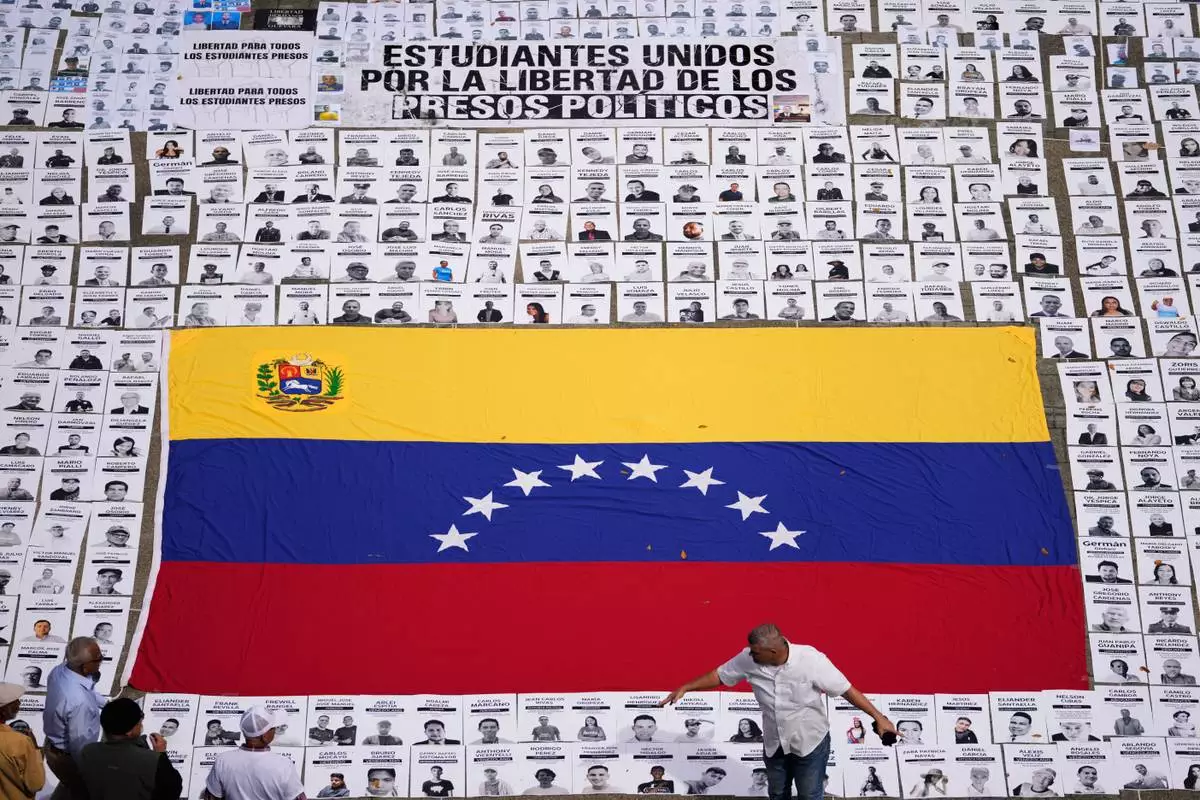
Students lay out photos of people they consider political prisoners at the Central University of Venezuela in Caracas, Venezuela, Tuesday, Jan. 13, 2026. (AP Photo/Matias Delacroix)
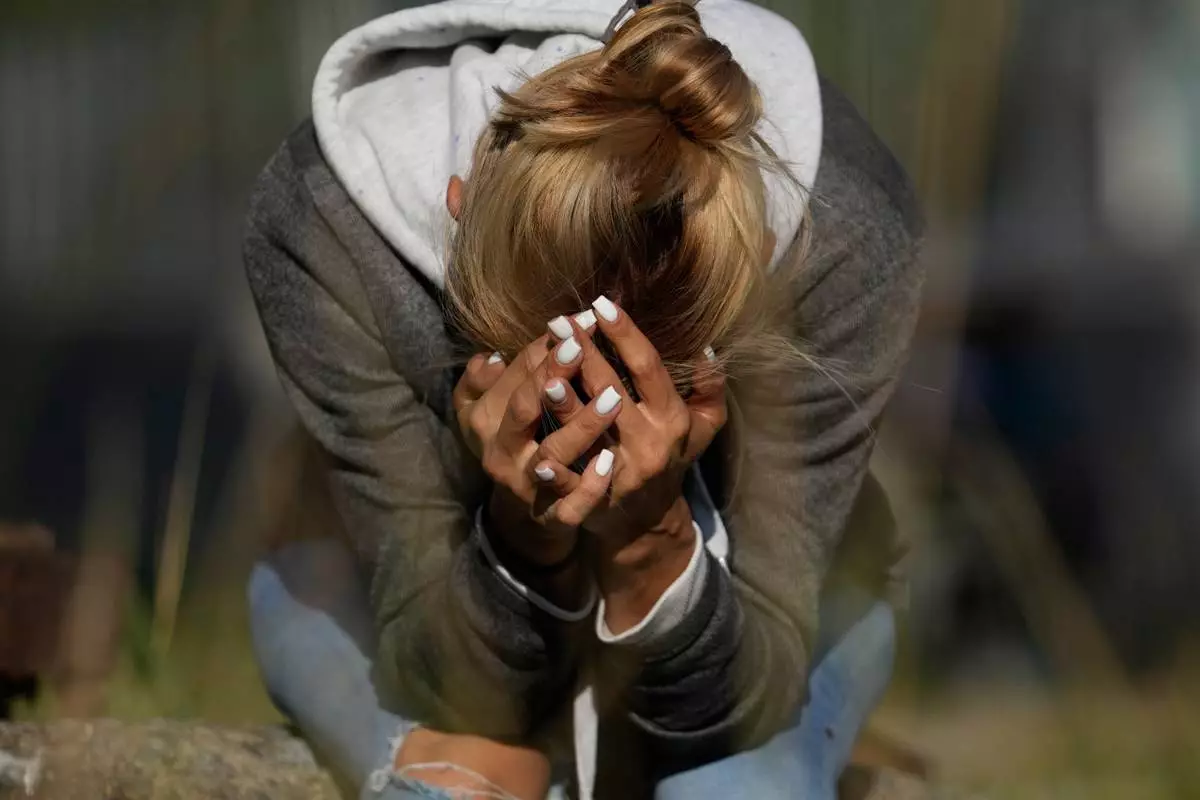
Jacklin Ibarreto, whose father Miguel Ibarreto is detained, waits outside the Rodeo I prison in Guatire, Venezuela, Friday, Jan. 9, 2026, after National Assembly President Jorge Rodriguez said the government would release Venezuelan and foreign prisoners. (AP Photo/Matias Delacroix)
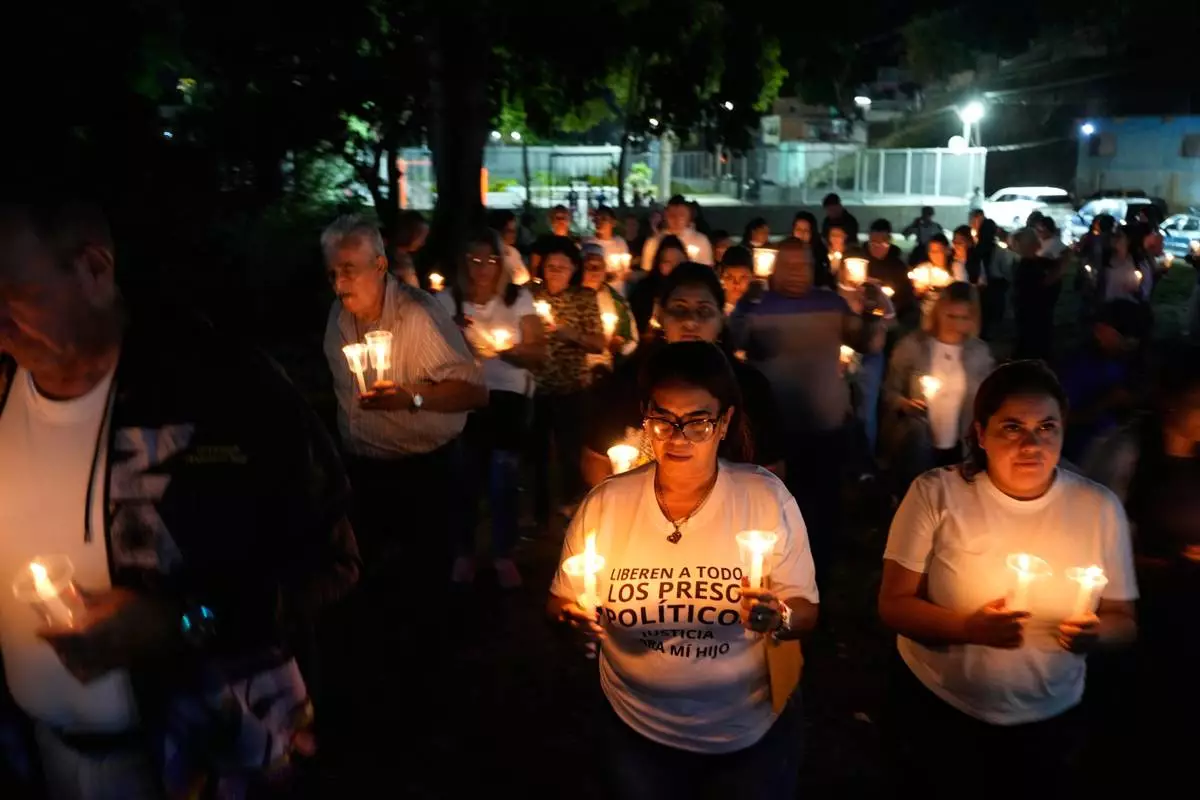
Relatives and friends of political prisoners hold candles calling for their loved ones to be set free outside the Rodeo I prison in Guatire, Venezuela, Friday, Jan. 9, 2026 after the government announced prisoners would be released. (AP Photo/Matias Delacroix)
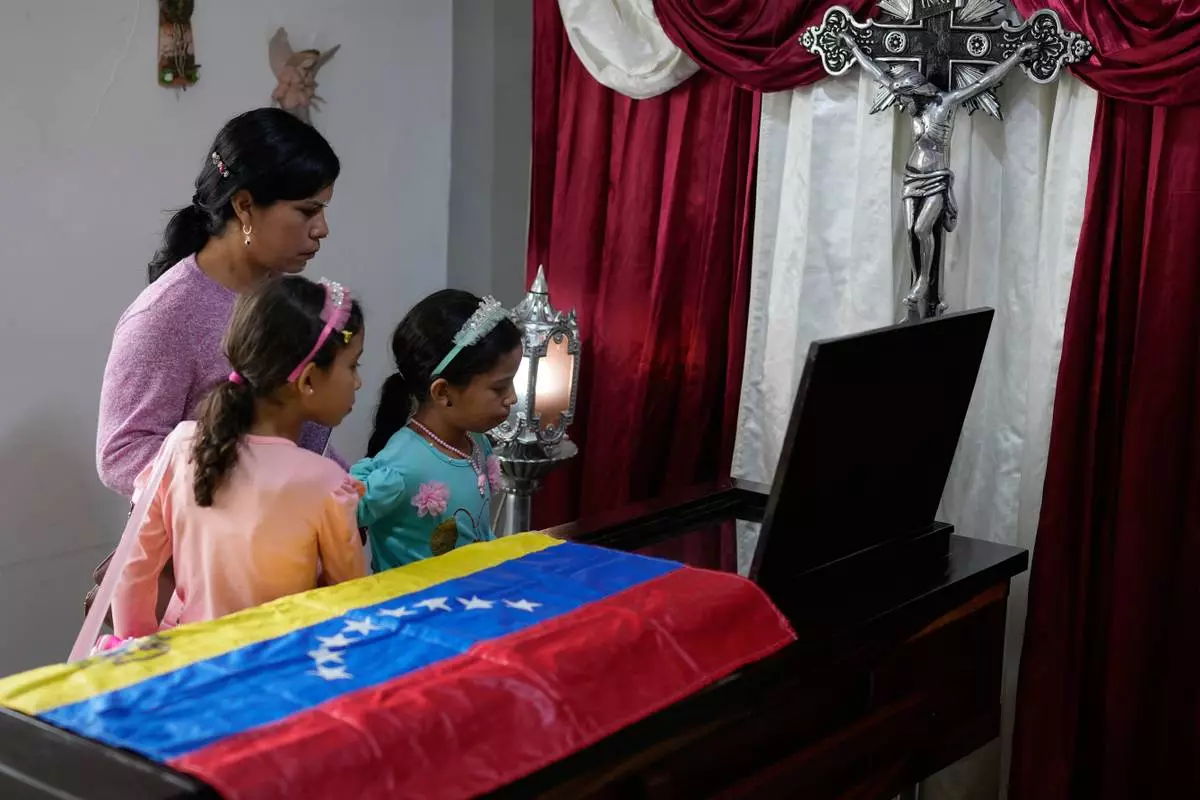
Relatives stand beside the coffin during the wake of Edilson Torres, a Venezuelan police officer who died in prison a month after being arrested on accusations of treason, in Guanare, Venezuela, Tuesday, Jan. 13, 2026. (AP Photo/Ariana Cubillos)
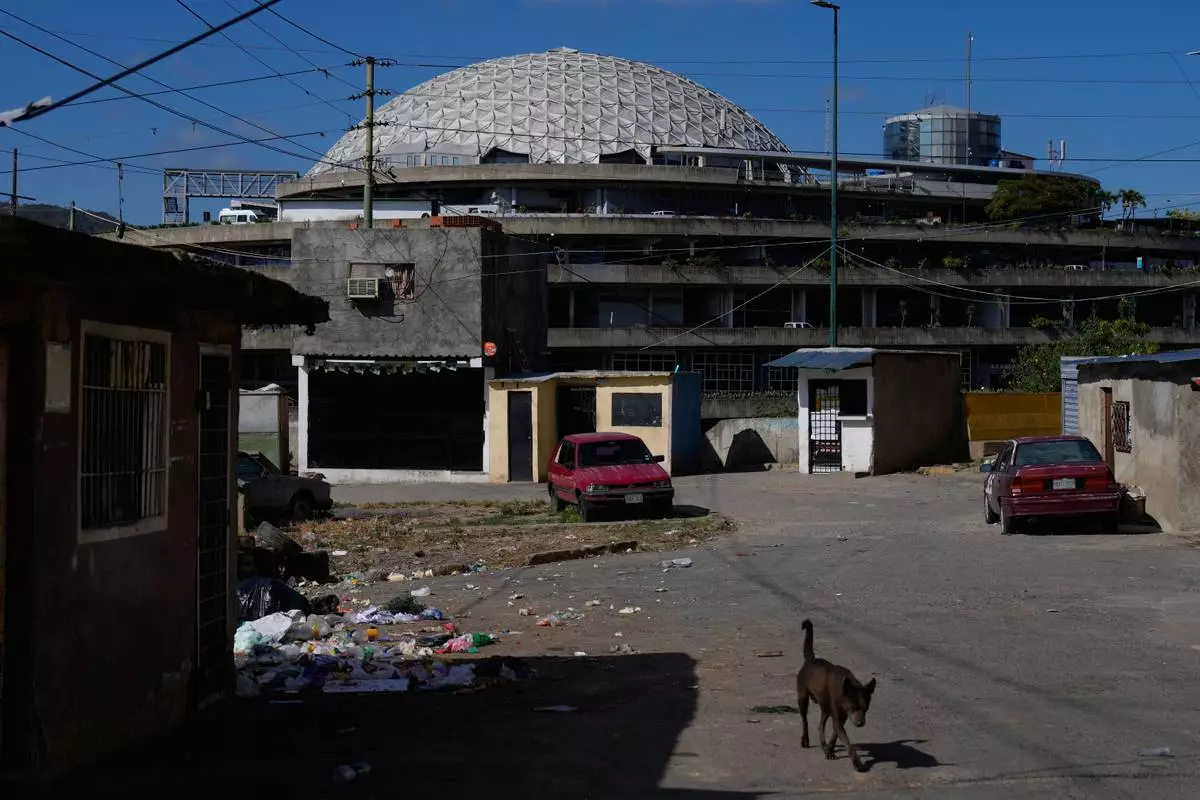
El Helicoide, the headquarters of Venezuela's intelligence service and detention center, stands in Caracas, Venezuela, Friday, Jan. 9, 2026, after National Assembly President Jorge Rodriguez said the government would release Venezuelan and foreign prisoners. (AP Photo/Ariana Cubillos)
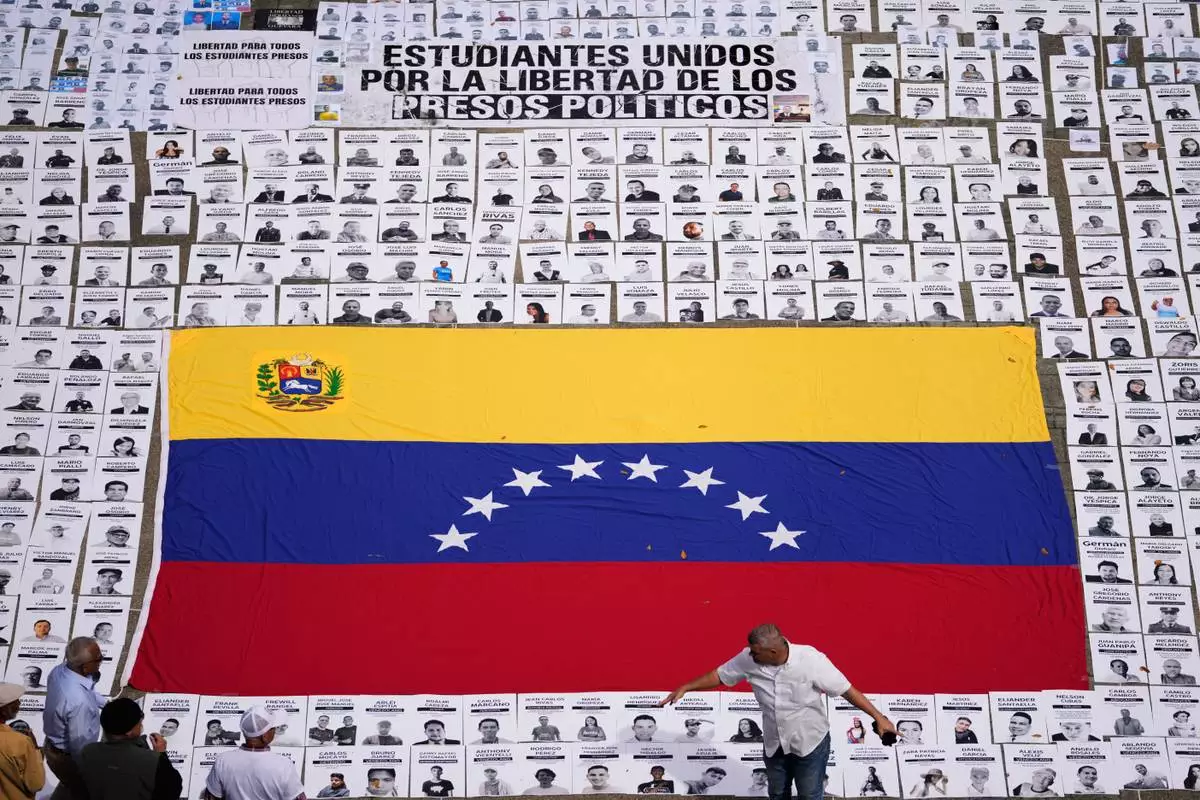
Students lay out photos of people they consider political prisoners at the Central University of Venezuela in Caracas, Venezuela, Tuesday, Jan. 13, 2026. (AP Photo/Matias Delacroix)
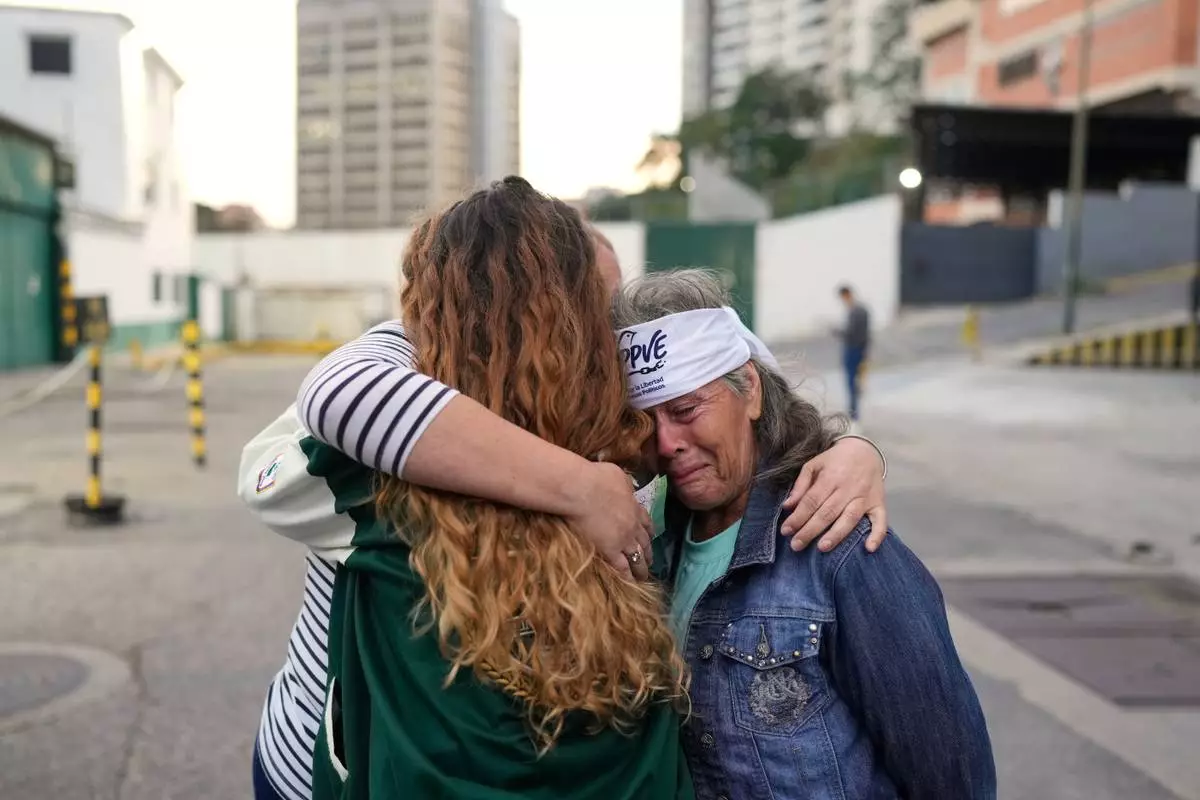
Flor Zambrano, whose son, Rene Chourio, she says is detained at Zone 7 of the Bolivarian National Police for political reasons, embraces relatives of other detainees outside the facility in Caracas, Venezuela, Monday, Jan. 12, 2026. (AP Photo/Matias Delacroix)
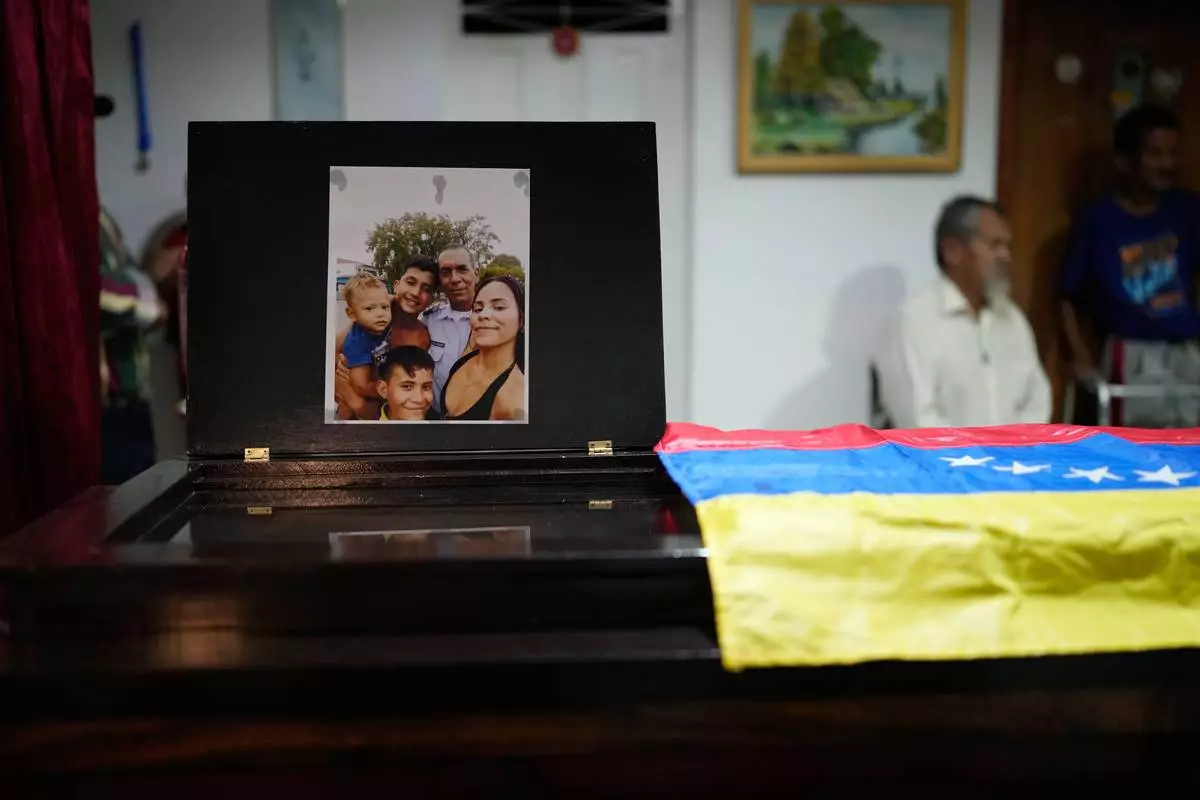
A photo of Edilson Torres, a Venezuelan police officer who died in prison a month after being arrested on accusations of treason, and his family adorns his coffin during his wake at his home in Guanare, Venezuela, Monday, Jan. 12, 2026. (AP Photo/Ariana Cubillos)
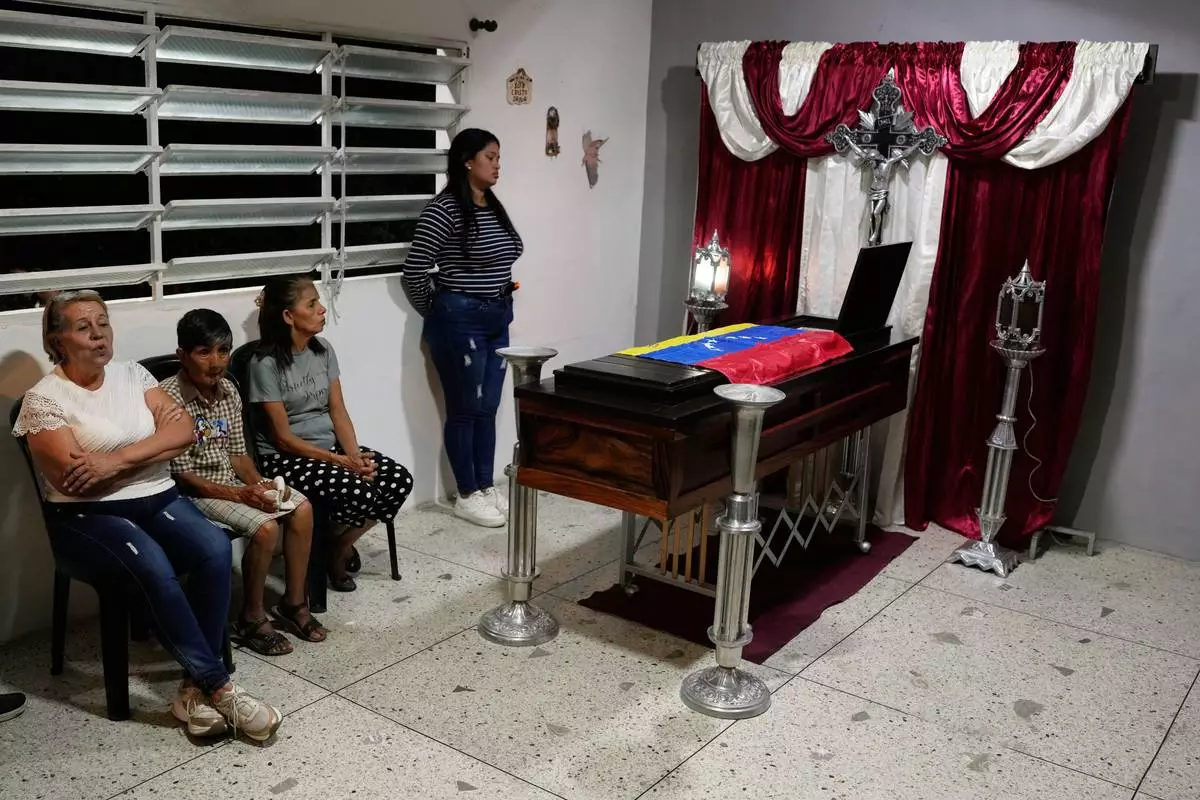
Relatives of Edilson Torres, a Venezuelan police officer who died in prison a month after being arrested on accusations of treason, sit by his coffin during his wake in Guanare, Venezuela, Monday, Jan. 12, 2026. (AP Photo/Ariana Cubillos)
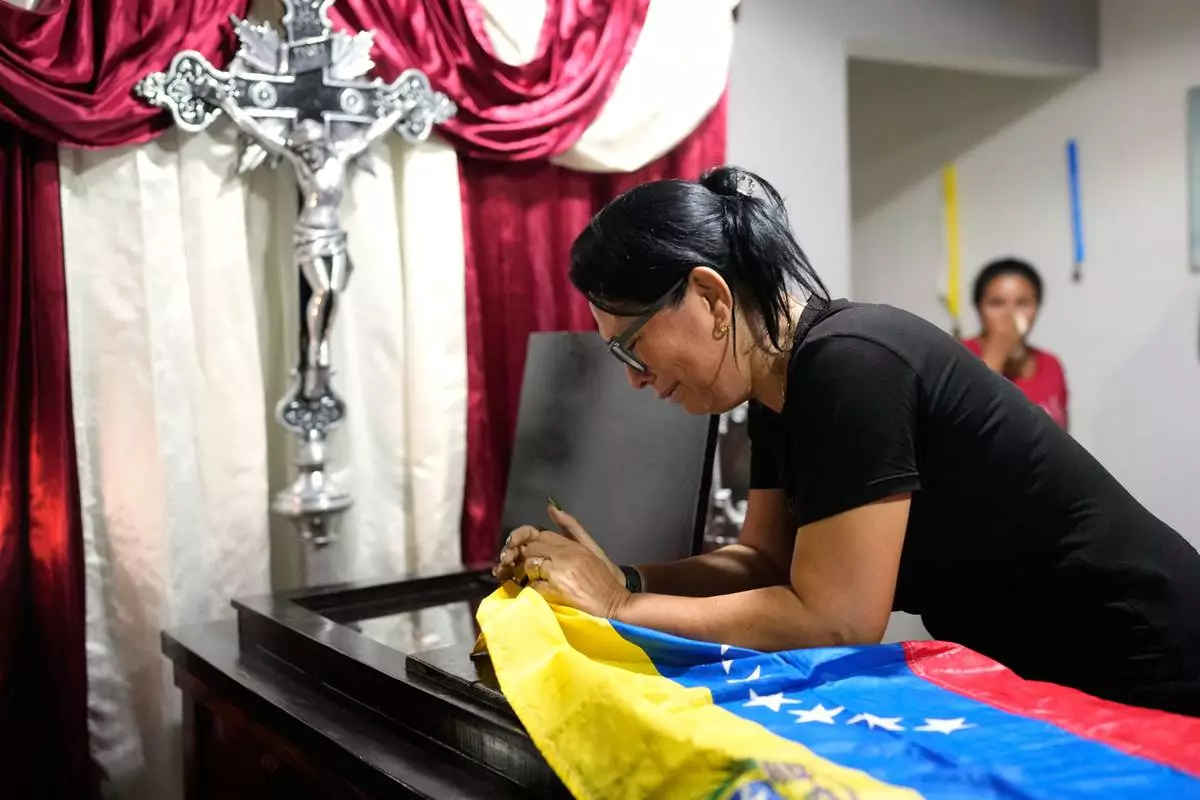
Emelyn Torres leans over the casket of her brother, Edilson Torres, a Venezuelan police officer who died in prison a month after being detained on accusations of treason, during his wake at his home in Guanare, Venezuela, Monday, Jan. 12, 2026. (AP Photo/Ariana Cubillos)
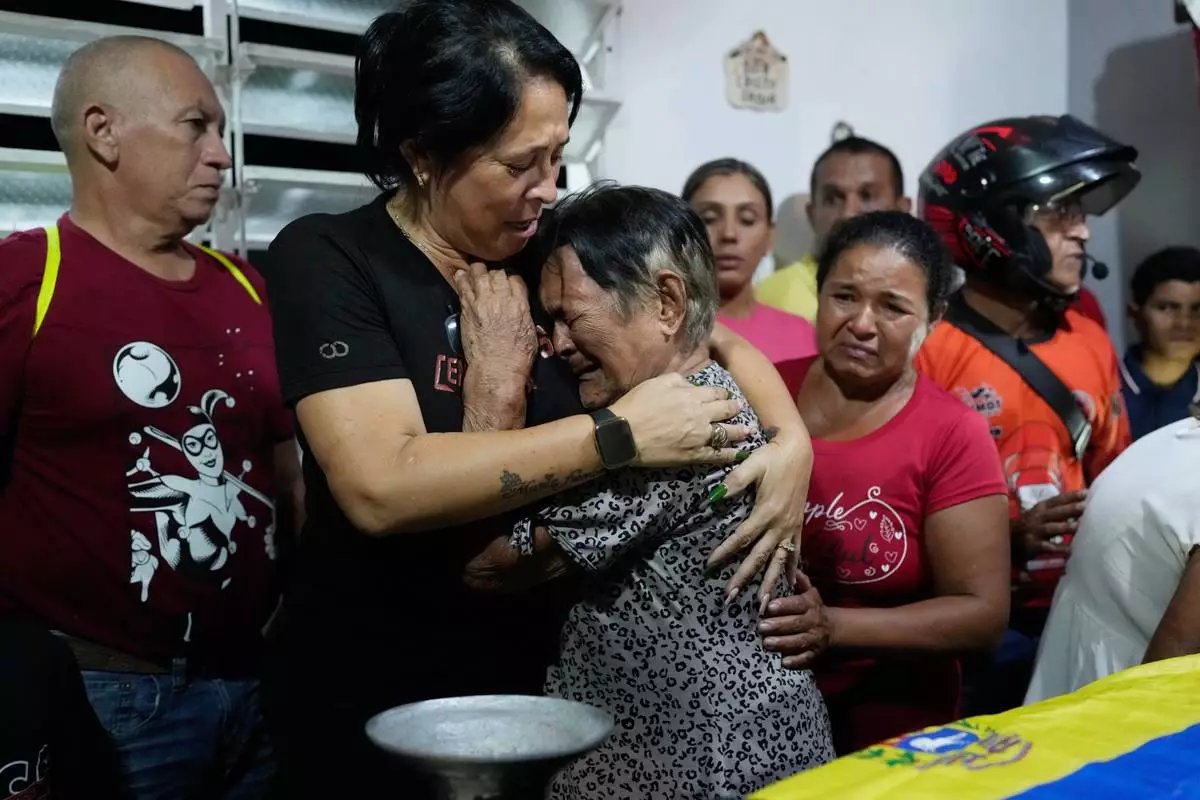
Emelyn Torres and Maria Cristina Fernandez, the sister and grandmother of Edilson Torres, a Venezuelan police officer who died in prison after being detained on accusations of treason, embrace during his wake at his home in Guanare, Venezuela, Monday, Jan. 12, 2026. (AP Photo/Ariana Cubillos)