HKSAR Government responds to media enquiries on reporting, photo and video-taking at prohibited places specified in subsidiary legislation made under Safeguarding National Security Ordinance
In response to media enquiries on reporting, photo and video-taking at prohibited places specified in the subsidiary legislation made under the Safeguarding National Security Ordinance, a spokesman for the Government of the Hong Kong Special Administrative Region today (May 16) said the following:
The Secretary for Security, Mr Tang Ping-keung, at the meeting of the Legislative Council Subcommittee on Two Items of Subsidiary Legislation Made under the Safeguarding National Security Ordinance and the subsequent media session yesterday (May 15), clearly said that according to section 45 of the Safeguarding National Security Ordinance, a "specified officer" (including a police officer or a guard of the prohibited place), who has reasonable grounds to believe that exercising such power is necessary for safeguarding national security, may order any person not to do or cease to do such acts as that of approaching or inspecting (including doing so by electronic or remote means) a prohibited place, and such officer may also order persons in the neighbourhood of a prohibited place to leave. Any person who contravenes an order commits an offence.
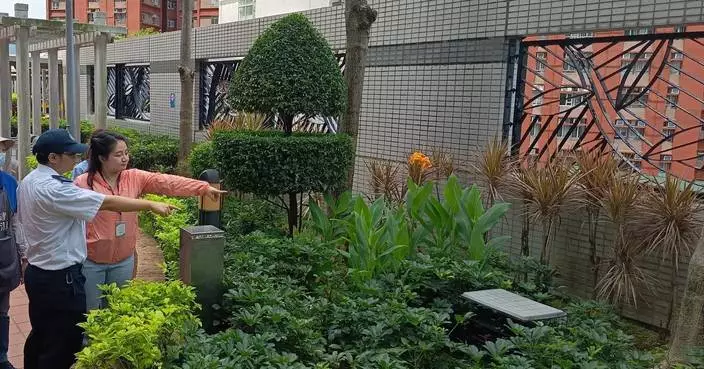
There is no problem for members of the public to purely "check in" and take photos near a prohibited place while passing by, without any intention of endangering national security. However, if they deliberately take photos or videos of the entrances or the interior of a prohibited place so as to inspect such place, or engage in other conduct during photo or video-taking giving people reasonable grounds to believe that they may endanger national security, police officers or guards of the prohibited place have the power to ask the members of the public to leave in accordance with the above legal requirements and the judgment made at the scene at the time.
Employers, contractors and employees should be aware of electrical safety at work during rainstorms
As the rainstorm warning has been issued by the Hong Kong Observatory, the Labour Department (LD) reminds employers and contractors that they should adopt necessary work arrangements and take suitable safety measures to protect the safety of their employees when they are carrying out electrical work or handling electrical plant.
A spokesman for the LD said today (June 13) that employers and contractors should avoid assigning employees to carry out electrical work (such as electric arc welding work) or handle electrical plant at places affected by rainstorms, and should refer to the "Code of Practice in Times of Adverse Weather and 'Extreme Conditions'" and the "Guide on Safety at Work in times of Inclement Weather" issued by the LD.
Even if electrical work is carried out or electrical plant is handled at places not affected by a rainstorm, suitable safety measures must still be adopted to prevent an electric shock as the air would be more humid. Such measures include:
(i) Ensure that all live parts of an electrical installation are isolated from the power supply source and rendered dead, and the isolation from the power supply source must be maintained as long as electrical work is being carried out;
(ii) Before carrying out any electrical work or handling any electrical plant, cut off and lock out the power supply source, then test the circuit concerned to confirm that it is dead and display suitable warning notices, and issue a work permit thereafter;
(iii) Ensure that protective devices (such as suitable and adequate fuses and circuit breakers) for the electrical installations or electrical plant have been installed and maintained in good working order, and portable electric tools must be double-insulated or properly earthed;
(iv) Provide suitable personal protective equipment such as insulating gloves and insulating mats for employees; and
(v) If live electrical work is unavoidable, a comprehensive risk assessment should be conducted by a competent person and the appropriate safety precautions should be taken to remove or properly control the electrical hazards involved before such work can proceed.
In addition, employees should co-operate with the employer or contractor to follow the safety instructions and use the safety equipment provided.
The LD has published guidebooks and leaflets on electrical work safety. These safety publications are available free from divisional offices of the department or can be downloaded from its website (www.labour.gov.hk/eng/public/content2_8.htm).
Should there be any questions about occupational safety and health matters, please contact the Occupational Safety Officer of the LD at 2559 2297.
Source: AI-found images