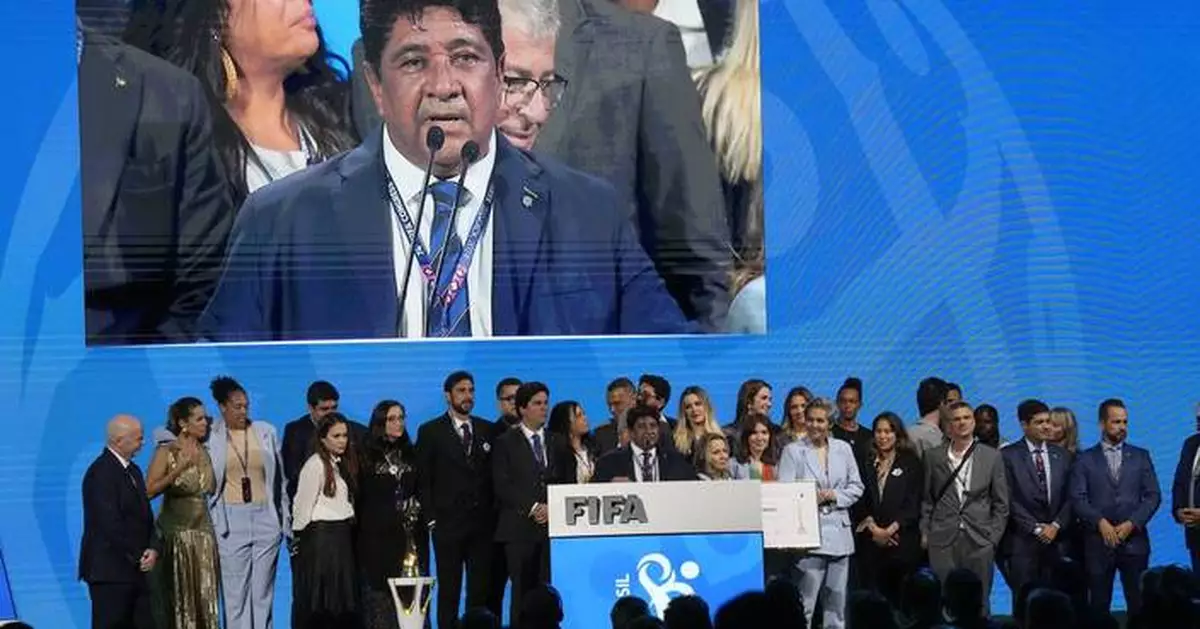
SAO PAULO (AP) — A Rio de Janeiro judge removed Ednaldo Rodrigues as Brazilian soccer confederation president on Thursday and ordered new elections “as soon as possible.” The embattled soccer executive later appealed to the country's Supreme Court to be returned to his position.
Rodrigues, who this week announced the signing of Carlo Ancelotti as Brazil’s national team coach, had won re-election in March to remain on the job until 2030.
But judge Gabriel de Oliveira Zefiro's ruling puts a confederation vice president, Fernando Sarney, in charge of organizing a new election. It was Sarney who had asked the court to unseat Rodrigues.
The judge ruled the agreement that validated Rodrigues' first term was null and void — and that without it, Rodrigues should not have been eligible for his second term.
Sarney said in a statement published on the Brazilian confederation website that he had already taken over to organize the new election as the longest-serving vice president of the soccer body. He also said “all sporting activities and current contracts will be preserved,” but it is yet to be clarified whether Ancelotti's deal, confirmed by the confederation and the coach himself, is already valid.
Speaking to TV Globo, Sarney said he will not touch Brazil's deal with Ancelotti.
“Soccer goes on. I am transitory,” Sarney said. “My objective is to hold the election as soon as possible. We need to sort this out to end it, no more fighting in courts.”
It is the second time that Rodrigues has been removed from office by a court’s decision. A similar situation took place in December 2023, as he also negotiated with Ancelotti to take over the national team. The removal was reversed by Brazil’s Supreme Court.
Because of that earlier legal dispute in mind, the confederation vice presidents reached an agreement in January validating Rodrigues' first term and clearing the way for him to run again.
In Thursday's ruling, the judge sided with Sarney, who claimed one of the signatories, the 86-year-old Antonio Carlos Nunes, was not mentally fit to sign the agreement.
The court had scheduled to hear Nunes on Monday to evaluate his mental state, but the hearing was suspended only hours after Ancelotti was announced by the confederation as Brazil's coach.
Zefiro wrote in his ruling that “(Nunes') mental capacity is in doubt since 2018, when he was diagnosed with brain cancer.”
The confederation did not make comments about the case.
AP soccer: https://apnews.com/hub/soccer
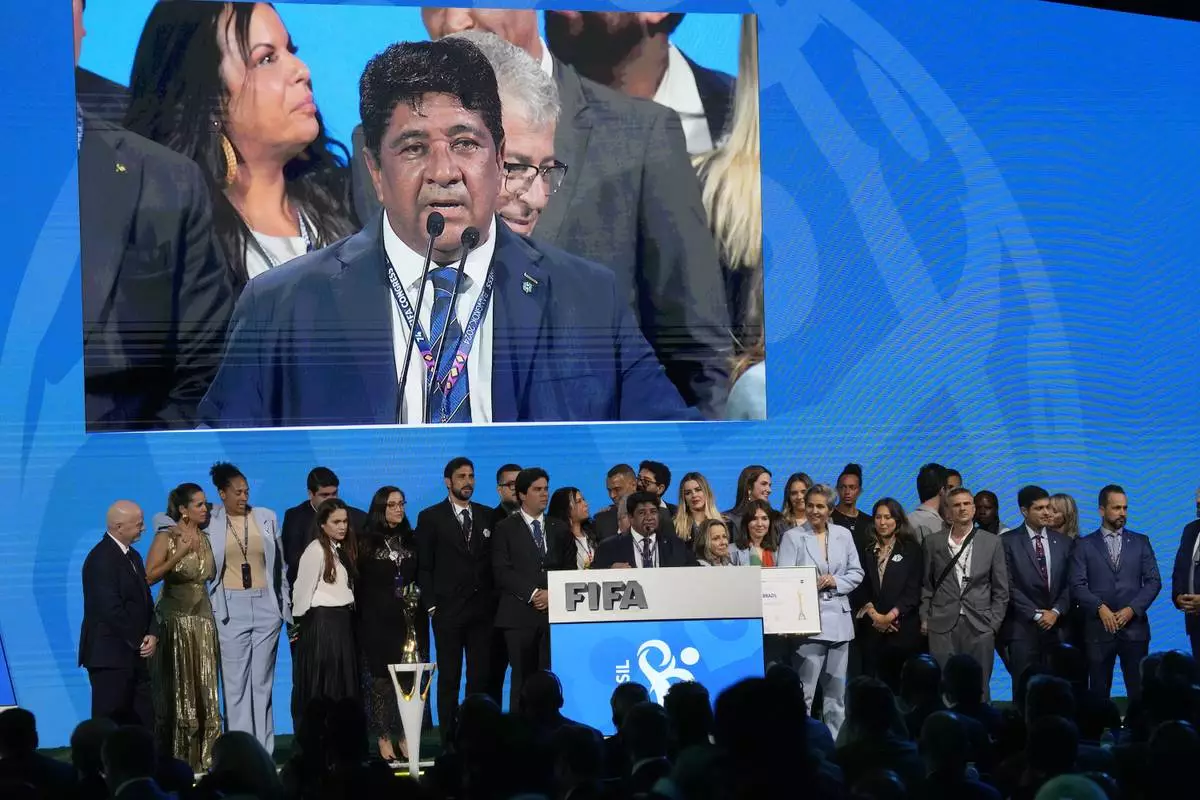
FILE - President of the Football Associated of Brazil Ednaldo Rodrigues, gives a speech after Brazil was chosen to host the 2027 Women's World Cup, at the FIFA Congress in Bangkok, Thailand, May 17, 2024. (AP Photo/Sakchai Lalit, File)
DUBAI, United Arab Emirates (AP) — The head of Iran’s judiciary signaled Wednesday there would be fast trials and executions ahead for those detained in nationwide protests despite a warning from U.S. President Donald Trump.
The comments from Iran’s judiciary chief Gholamhossein Mohseni-Ejei come as activists had warned hangings of those detained could come soon. Already, a bloody security force crackdown on the demonstrations has killed at least 2,571, the U.S.-based Human Rights Activists News Agency reported. That figure dwarfs the death toll from any other round of protest or unrest in Iran in decades and recalls the chaos surrounding the country’s 1979 Islamic Revolution.
Trump repeatedly has warned that the United States may take military action over the killing of peaceful protesters, just months after it bombed Iranian nuclear sites during a 12-day war launched by Israel against the Islamic Republic in June.
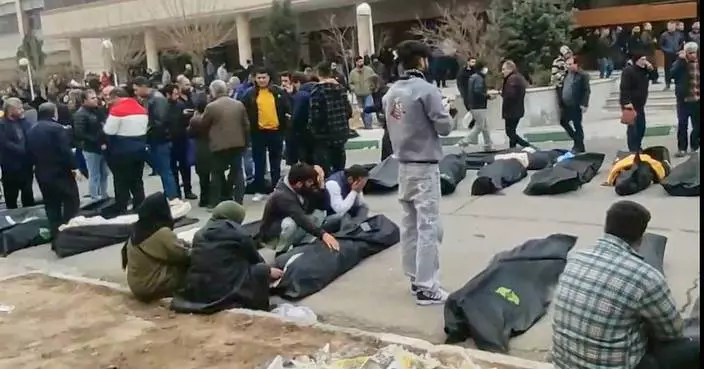
Meanwhile Wednesday, Iran held a mass funeral of some 100 security force members killed in the demonstrations after authorities earlier said it would be 300. Tens of thousands of mourners attended, holding Iranian flags and photos of Ayatollah Ali Khamenei. The caskets, covered in Iranian flags, stood stacked at least three high. Red and white roses and framed photographs of people who were killed covered them.
People elsewhere remained fearful in the streets. Plainclothes security forces still milled around some neighborhoods, though anti-riot police and members of the paramilitary Revolutionary Guard's all-volunteer Basij force appeared to have been sent back to their barracks.
“We are very frightened because of these sounds (of gunfire) and protests,” said one mother of two children shopping for fruits and vegetables Wednesday, who spoke on condition of anonymity for fear of reprisals. “We have heard many are killed and many are injured. Now peace has been restored but schools are closed and I’m scared to send my children to school again.”
Ahmadreza Tavakoli, 36, told The Associated Press he witnessed one demonstration in Tehran and was shocked by the use of firearms by authorities.
“People were out to express themselves and protest, but quickly it turned into a war zone,” Tavakoli said. “The people do not have guns. Only the security forces have guns.”
Mohseni-Ejei made the comment in a video shared by Iranian state television online.
“If we want to do a job, we should do it now. If we want to do something, we have to do it quickly,” he said. “If it becomes late, two months, three months later, it doesn’t have the same effect. If we want to do something, we have to do that fast.”
His comments stand as a direct challenge to Trump, who warned Iran about executions an interview with CBS aired Tuesday.
“We will take very strong action,” Trump said. “If they do such a thing, we will take very strong action.”
“We don’t want to see what’s happening in Iran happen. And you know, if they want to have protests, that’s one thing, when they start killing thousands of people, and now you’re telling me about hanging — we’ll see how that works out for them. It’s not going to work out good.”
One Arab Gulf diplomat told the AP that major Mideast governments had been discouraging the Trump administration from launching a war now with Iran, fearing “unprecedented consequences” for the region that could explode into a “full-blown war.” The diplomat spoke on condition of anonymity because he wasn't authorized to speak to journalists.
Meanwhile, activists said Wednesday that Starlink was offering free service in Iran. The satellite internet service has been key in getting around an internet shutdown launched by the theocracy on Jan. 8. Iran began allowing people to call out internationally on Tuesday via their mobile phones, but calls from people outside the country into Iran remain blocked.
“We can confirm that the free subscription for Starlink terminals is fully functional,” said Mehdi Yahyanejad, a Los Angeles-based activist who has helped get the units into Iran. “We tested it using a newly activated Starlink terminal inside Iran.”
Starlink itself did not immediately acknowledge the decision.
Security service personnel also apparently were searching for Starlink dishes, as people in northern Tehran reported authorities raiding apartment buildings with satellite dishes. While satellite television dishes are illegal, many in the capital have them in homes, and officials broadly had given up on enforcing the law in recent years.
The Human Rights Activists News Agency said 2,403 of the dead were protesters and 147 were government-affiliated. Twelve children were killed, along with nine civilians it said were not taking part in protests. More than 18,100 people have been detained, the group said.
Gauging the demonstrations from abroad has grown more difficult, and the AP has been unable to independently assess the toll given the communications being disrupted in the country.
Associated Press writers Melanie Lidman in Jerusalem and Samy Magdy in Cairo contributed to this report.
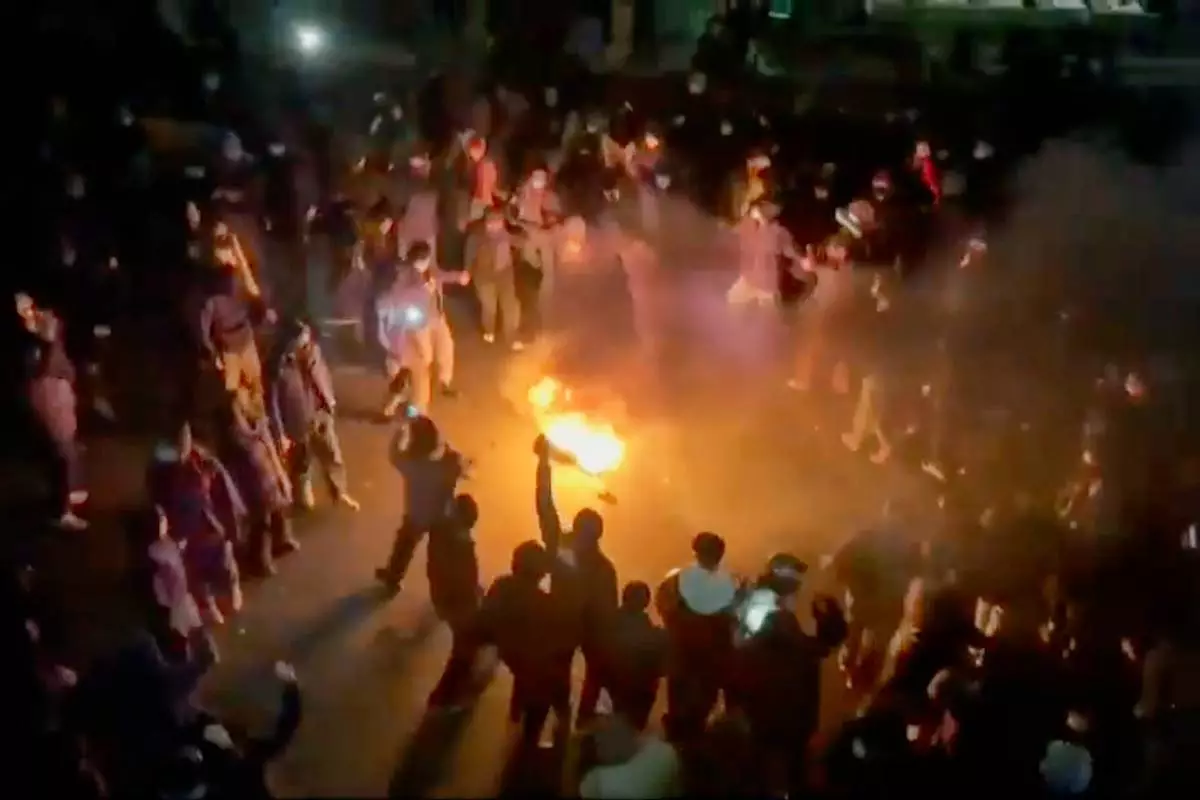
FILE - This frame grab from footage circulating on social media shows protesters dancing and cheering around a bonfire as they take to the streets despite an intensifying crackdown as the Islamic Republic remains cut off from the rest of the world, in Tehran, Iran, Jan. 9, 2026. (UGC via AP, File)
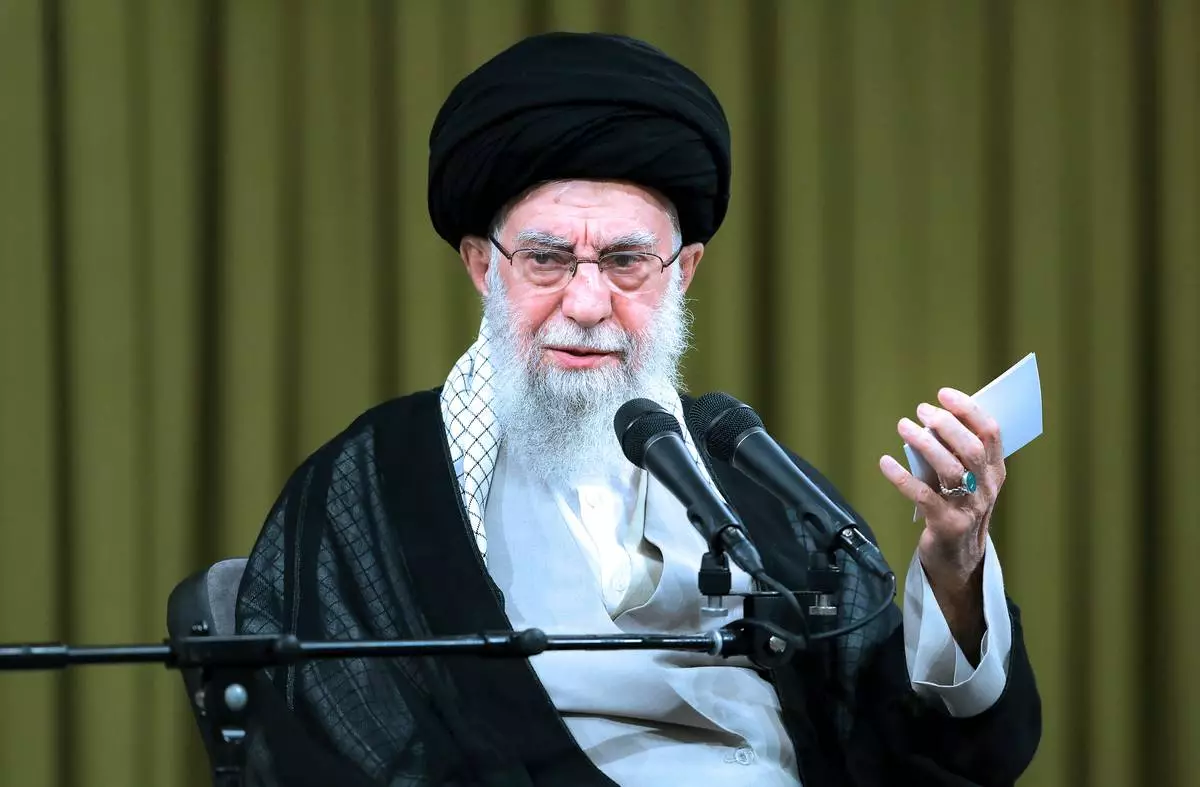
FILE - In this photo released by an official website of the office of the Iranian supreme leader, Supreme Leader Ayatollah Ali Khamenei speaks in a ceremony to mark the Shiite holiday of Eid al-Ghadir, in Tehran, Iran, Tuesday, June 25, 2024. (Office of the Iranian Supreme Leader via AP, File)