With dramyin lute and cymbals in hand and dressed in colorful traditional costume, 17-year-old Tenzin Norbu is among the proud youngsters in southwest China's Xizang Autonomous Region who have been helping preserve the centuries-old Tibetan opera, a multifaceted representative of Tibetan art and cultural heritage. Considered a living fossil of Tibetan culture, Tibetan opera is a comprehensive art combining folk songs, dance, storytelling, chant, acrobatics and religious performance. It was included on the UNESCO Representative List of the Intangible Cultural Heritage of Humanity in 2009.
Tenzin grew up listening to Tibetan opera along with his grandmother. The beat of the drum marked the rhythm of his childhood and quietly planted the seed of a dream.
The teenager leads a youth Tibetan opera troupe and guides his peers onto the very stage they once only dreamed of. He named it "Phudor Youth Tibetan Opera Troupe", because "Phudor" means "dream" in the Tibetan language.
"There are about 24 members in the troupe," said the teenager.
Tenzin once received a very special invitation to perform Tibetan opera for the opening ceremony of an art festival in Lhasa.
Although both their parents and teachers felt it's important for the children to be exposed to traditional culture from a young age, they didn't want it to affect their schoolwork.
The performance they were getting ready for was the first Sweet Tea House Art Festival, the troupe's very first public appearance. It's a rare opportunity for the children -- one too precious for them to pass up. But with their parents growing anxious about preparation for the performance eating into valuable study time, the children opted to rehearse in secret at weekends. Tenzin's family runs a tailor's shop. His father, who is hearing- and speech-impaired, is a superb tailor, while his mother helps him out by dealing with customers. Tenzin enjoyed Tibetan opera with his grandmother during childhood and later learned more about it from his uncle.
"Whenever I'm not feeling good, I'll take out the dramyin lute and the cymbals. When I hear the drumbeat, I get a feeling of elation that's simply indescribable," he said.
When Tenzin finally stepped onto the stage at the festival, he noticed that his parents were not in the audience. "My parents didn't have time to come to see my performance. But they always support me. They work hard every day, also for my sake. So, I'm happy whether they were here or not as long as I can keep performing Tibetan opera," said the youngster, believing that his passion for Tibetan opera will last a lifetime.
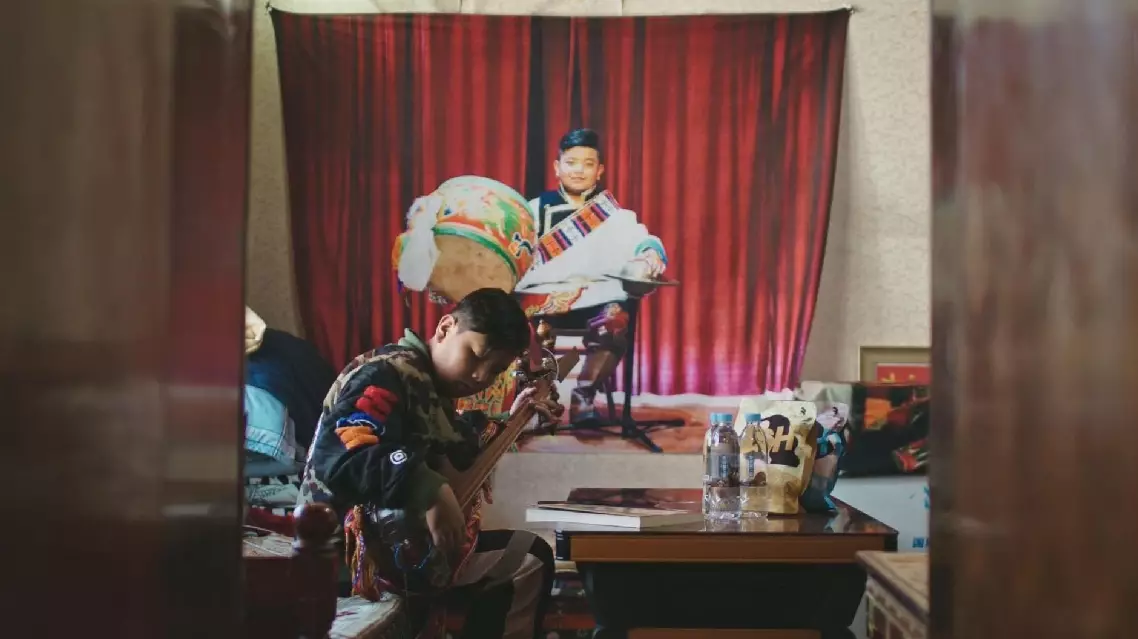
Childhood dream takes local boy onto Tibetan opera stage