China has added 288 new air cargo routes over one year, with enhanced loading capacity and an expanded route network, according to a report released by the China Federation of Logistics and Purchasing on Friday.
According to the report, between January 1, 2024, and April 30, 2025, 288 new air cargo routes were established across the country. Among them, 243 are international routes, creating a network that spans six continents.
The new international routes primarily focus on Asia and Europe, with nearly half targeting Asian destinations and 88 connecting to Europe. There are also 29 new routes to North America.
These cargo routes primarily transport three types of goods: e-commerce goods, electronic products, and general freight.
"The development of China's air logistics, especially the increasingly dense network of air routes, plays a crucial role in facilitating the export of Chinese products, especially high-end items suitable for air transportation. Therefore, it will significantly bolster the development of China's foreign trade," said Cui Zhongfu, chief economist at the China Federation of Logistics and Purchasing.
In addition, during the same period, 45 new domestic air cargo routes were launched, focusing primarily on the transportation of mail, express mail, fresh cold chain products, and e-commerce goods.
Among them, routes for fresh cold chain products account for more than 29 percent of the total, significantly surpassing other cargo routes.
The Jiaxing Global Aviation Logistics Hub project, China's second dedicated air cargo hub, is scheduled to be put into operation at the end of this year. The hub has a total land area of about 520 hectares, with a total investment of 2.11 billion U.S. dollars,
The hub will involve Jiaxing Airport's main structure, freight transport, supporting facilities, and the aviation logistics of YTO Express, a major parcel delivery company in China.
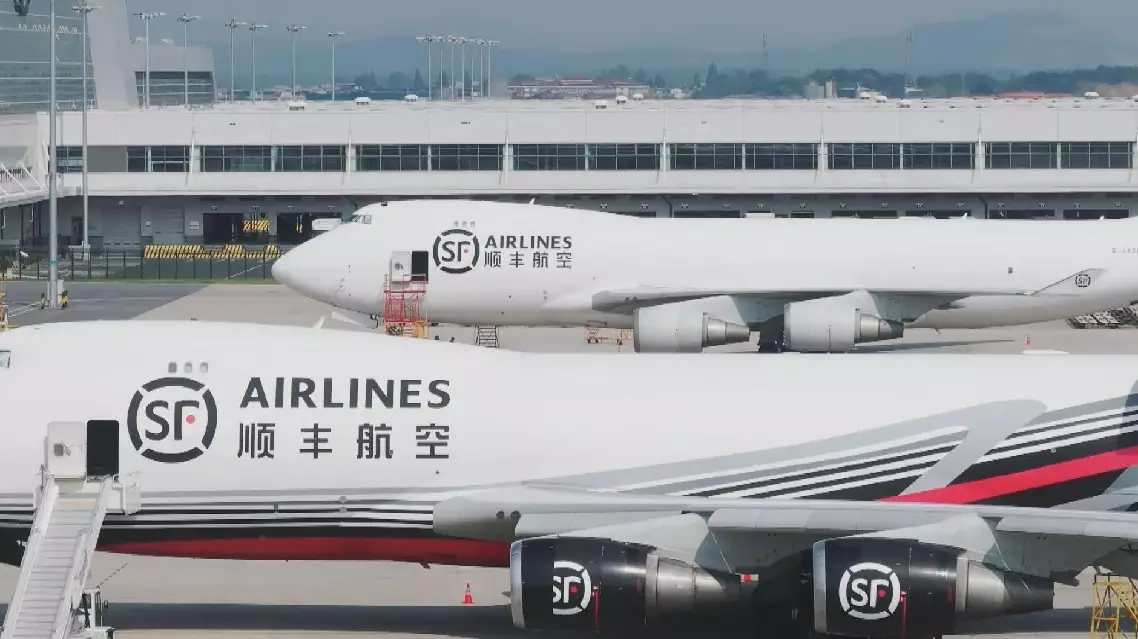
China's air cargo routes increase, route network expands: report
Commemorations honoring Chinese People's Volunteers (CPV) martyrs were held on the banks of the Yalu River in Dandong, Liaoning Province on Tuesday as part of ongoing tributes to those who fought in the War to Resist U.S. Aggression and Aid Korea (1950-1953).
The event was held to mark the return of the remains of 12 CPV martyrs, who were killed in the war, from the Republic of Korea (ROK) on Wednesday.
This will be the 13th such repatriation of CPV remains following the handover agreement between the two countries. Since 2014, the remains of 1,011 soldiers have been returned to China from the ROK, according to China's Ministry of Veterans Affairs.
More than 170 representatives, including veteran CPV soldiers, relatives of the martyrs, active-duty personnel, students, and other from various sectors of society, attended the event.
People boarded a ferry which slowly sailed down the Yalu River. Inside the cabin, all present stood in solemn silence as the national anthem of the People's Republic of China was played, and observed a moment of silence in honor of the CPV martyrs.
Then, they walked to the ship's railings one by one and scattered flower petals into the river to pay tribute to the martyrs.
"We, the CPV, went abroad to fight to defend our motherland, the people, and our good life and to resist U.S. imperialist aggression against the Democratic People's Republic of Korea (DPRK). I hope that our young comrades and students today will study hard and make contributions to our motherland," said Hu Changzhe, a CPV veteran.
"I feel deeply moved as these veteran soldiers are heroes who once fought for our country. Now, standing by the Yalu River, looking back on their past and remembering their comrades, they must be deeply touched," said Hong Jialu, a student at a branch of Liaoning Province Shiyan High School.
At the event, 10 student representatives from primary and middle schools read aloud a letter to express their reverence and remembrance for the heroic martyrs through their sincere words and heartfelt recitation.
The Korean War broke out in June 1950, eight months after the People's Republic of China was founded. At the request of the Democratic People's Republic of Korea (DPRK), China sent 2.9 million CPV soldiers to assist the DPRK during the war, of whom more than 360,000 were killed or injured.
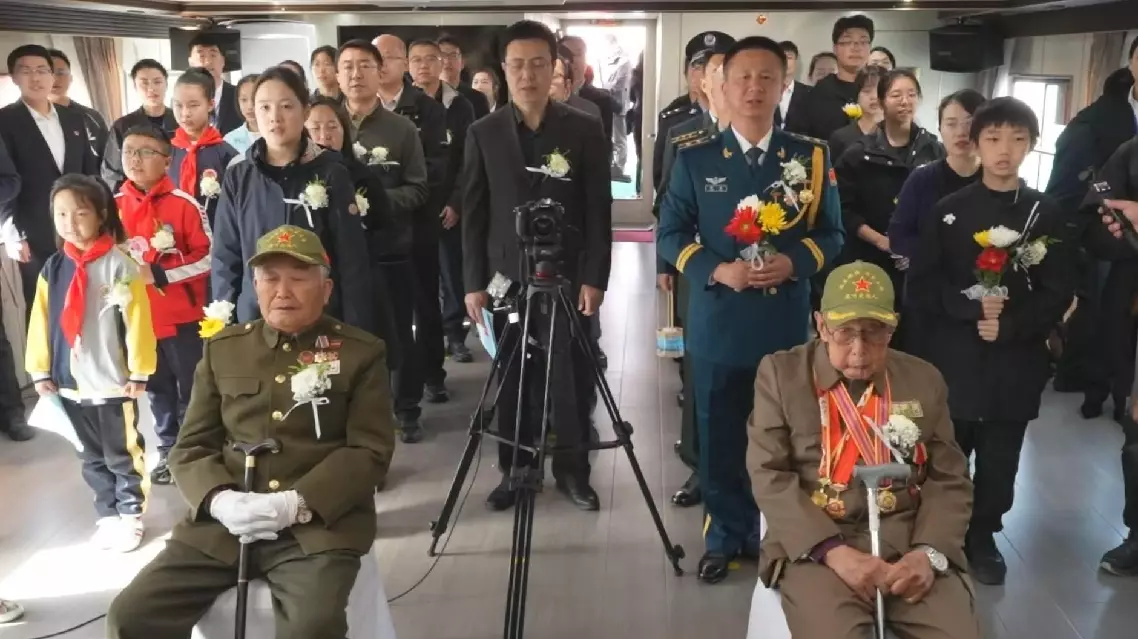
Commemorations held to pay tribute to CPV heroes in northeast China