Skip to Content Facebook Feature Image

Yunnan museum showcasing cultural diversity captivates visitors

China

China

China

Yunnan museum showcasing cultural diversity captivates visitors

2025-05-17 17:16 Last Updated At:20:47

A museum in Kunming, capital of southwest China's Yunnan Province, showcases the region's distinctive ethnic and cultural diversity, offering visitors a rich cultural experience beyond its renowned natural beauty.

Yunnan Nationalities Museum, one of the largest of its kind in China, houses an extensive collection covering all the 56 ethnic groups in China, with a total of 52,830 cultural artifacts.

The museum currently features eight key exhibition themes, including ethnic costumes and craftsmanship, ancient texts, musical instruments, masks, and pottery.

"This has been our most memorable experience during our visit in Kunming these couple of days, because the museum gathers the cultural essence of all ethnic minorities in Yunnan, showing us a culturally rich side rarely seen in daily life or at scenic spots," said Zhao Mengfei, a tourist from east China's Shandong Province.

Beyond getting up close to a wide range of unique ethnic exhibits, visitors can also buy distinctive handicrafts, such as Yi embroidery -- a national intangible cultural heritage -- and Bai ethnic group's traditional tie-dye fabrics.
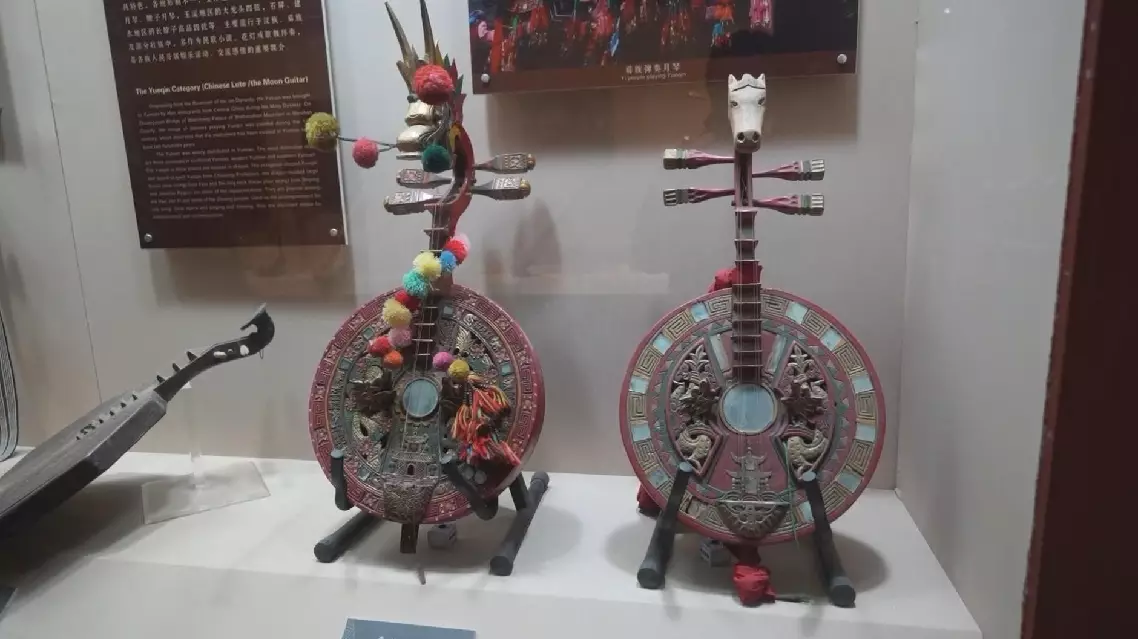
Yunnan museum showcasing cultural diversity captivates visitors
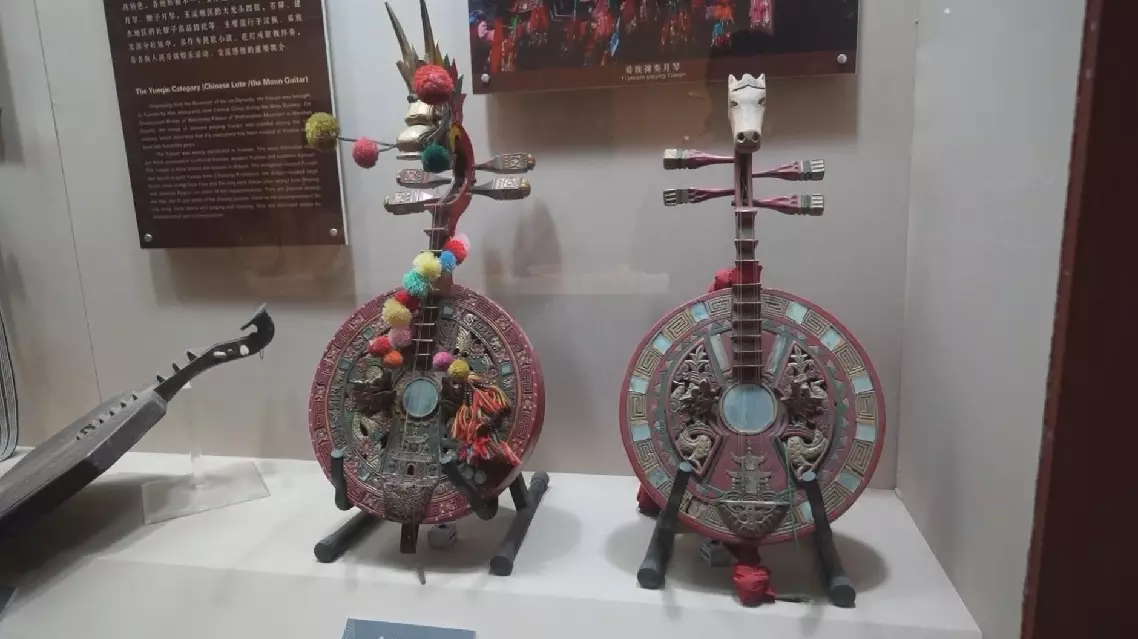
Yunnan museum showcasing cultural diversity captivates visitors

Yunnan museum showcasing cultural diversity captivates visitors

Yunnan museum showcasing cultural diversity captivates visitors
"AI Plus" became a central topic of heated discussion among members of the 14th National Committee of the Chinese People's Political Consultative Conference (CPPCC) during the ongoing "two sessions," with members actively offering suggestions from breakthroughs in fundamental technologies to the implementation of industrial applications.

The "two sessions" are the annual meetings of China's supreme organ of state power, the National People's Congress (NPC), and the top political advisory body, the National Committee of the Chinese People's Political Consultative Conference (CPPCC). Both bodies serve five-year terms and hold a plenary session each year.

The fourth session of the 14th NPC and the fourth session of the 14th CPPCC National Committee kicked off in Beijing on March 5 and March 4, respectively.

The government work report delivered by Chinese Premier Li Qiang on March 5 included the terms "new forms of smart economy" and "AI agents" for the first time, marking the third consecutive year that the government has prioritized the "AI Plus" initiative.

The draft outline of the 15th Five-Year Plan (2026–2030), submitted for deliberation at the two sessions, also systematically outlines plans for the innovative development of AI and its application across all sectors.

At a group discussion of the 14th CPPCC National Committee members, the core agenda was the deliberation of the draft outline of the 15th Five-Year Plan.

Several members shared their thoughts and insights in their speeches, focusing on the long-term development of the artificial intelligence sector.

Gao Jiangang mentioned what ultimately drives AI, sparking a discussion among other members.

"Some people say that AI ends in energy," said Gao.

"I'd like to echo what member Gao just mentioned, but I want to emphasize that the idea that AI ends in energy is based on current models and existing pathway. Is that pathway the optimal one? Actually, there must be other paths," said Chen Xianhui, an academician of the Chinese Academy of Sciences.

"The competition in AI hinges on architecture, and it ultimately comes down to chip architecture. So, AI ultimately comes down to the chip," said Zhu Songchun, head of the Beijing Institute for General Artificial Intelligence.

The debate over what truly represents the ultimate goal of AI development, though generating lively discussion among the members, ultimately pointed to a core challenge for the industry's long-term progress: How to break free from existing technological path dependence and accelerate the achievement of original and leading scientific and technological breakthroughs in the field of artificial intelligence.

"I suggest, or rather hope, that while the country vigorously promotes current AI technologies, it should also provide strong support for our nation's capable research institutions to break away from the current path dependence," said Gao Jiangang.

"Within this draft outline, I think what should be underscored are original innovation, scientific and technological innovation, and industrial innovation," said Chen Xianhui.

"In the process of supporting the development of emerging technologies, it (the draft outline)also specifically mentions exploring future strategies for emerging technologies, to reinforce AI research. So we can see that in the 15th Five-Year Plan, our country strengthens support for emerging industries and reinforces support for empowering all sectors with AI," said Zhao Xiaoguang, a researcher at the Institute of Automation, Chinese Academy of Sciences.

During the meeting, members actively offered suggestions on the top-level design and strategic planning for AI development. And out of the meeting, their discussions focused more on how to effectively implement policies and how to bring AI out of the laboratory to achieve deep integration with the real economy and the needs of people's livelihoods.

"You see, recently I've been using AI for programming. I use my wits against two AI agents every day, collaborating with them to create a new product. What I've discovered is, it's the best programmer I've ever worked with. It's smarter than me. Within two or three years, I estimate many companies will have silicon-based teams and carbon-based employees — hybrid teams composed of us humans and AI agents," said Zhou Hongyi, founder of Qihoo 360.

"Currently, in the field of original intelligence, our country is already world-leading in some industries, and our demonstration projects in promoting applications are also doing well. For example, autonomous driving, and the digital humans we are now experiencing, who are making various product introductions in shopping malls, helping to continuously boost our consumption in the consumer sector. So, the application of such digital humans will also create a new model within consumer scenarios," said Zhao Xiaoguang.

"For example, embodied intelligence has already performed remarkably well in areas like combat, performance, and competition. But I believe its applications extend far beyond these. It can also be used in fields like manufacturing, service industries, and agriculture. There are many application scenarios, and this can cultivate many new business formats, new drivers of growth, and new economic opportunities," said Chen Xiaohong, an academician of the Chinese Academy of Engineering, and director of the Xiangjiang Laboratory.

CPPCC members discuss AI development, picture new future for intelligent economy

CPPCC members discuss AI development, picture new future for intelligent economy

Recommended Articles