Skip to Content Facebook Feature Image

How the S&P 500 recovered all of its losses for the year

News

How the S&P 500 recovered all of its losses for the year
News

News

How the S&P 500 recovered all of its losses for the year

2025-05-17 20:00 Last Updated At:20:21

NEW YORK (AP) — Conditions appeared dire for the stock market in early April. President Donald Trump followed through on a campaign promise and announced sweeping tariffs against most U.S. trading partners. The S&P 500 dropped 12% in four days.

Economists warned of a recession. Consumer confidence, already waning, weakened further. Corporate executives struggled to give investors a clear picture of their financial prospects.

This week, though, the S&P 500 rallied 5.3% and turned positive for 2025. Just a few weeks ago, the index at the heart of many 401(k) accounts was down about 15% for the year.

Analysts caution that the tariff drama is hardly over, and stocks could fall again. But the run for U.S. stocks back upward has been just as wild and unexpected as its fall. Here’s a look at what happened:

Trump appeared in the Rose Garden on April 2 and announced steeper-than-expected tariffs on almost all U.S. trade partners. He especially targeted China, eventually raising the duties on imports from China to 145%. Beijing retaliated by raising tariffs on U.S. goods to 125%. Investors fled the U.S. stock market.

On April 9, Trump announced on social media a “90-day PAUSE” for most of the tariffs he’d announced a week earlier, except those against China. The S&P 500 soared 9.5% for one of its best days ever.

Trump largely ignored the damage to the stock market, surprising for a president who boasted repeatedly during his first term about how the Dow was doing. But he couldn’t ignore the signs of trouble in the bond and foreign exchange markets.

Tumbling prices for U.S. government bonds raised worries that the U.S. Treasury market was losing its status as the world’s safest place to keep cash. The value of the U.S. dollar also sank in another signal of diminishing faith in the United States as a safe haven for investors.

Unlike stocks, Treasurys and the dollar haven’t fully bounced back. Some of that may be because of shifting expectations for what the Federal Reserve will do with interest rates, but it’s also still a signal that investors globally still have some trepidation about the United States.

While consumer sentiment has weakened – it has fallen for five straight months by one measure -- what investors call “hard data,” such as employment numbers, indicate the economy is still doing OK. Recent data show employers added 177,000 jobs in April and that inflation has cooled.

Through all the market’s tumult, U.S. companies have continued to deliver profit reports for the start of the year that have topped analysts’ expectations. Stock prices tend to follow profits over the long term, and that’s given the market a notable boost.

Three out of every four companies in the S&P 500 have beaten analysts’ expectations for profits in recent weeks, including such market heavyweights as Microsoft and Meta Platforms. They’re on track to deliver growth of nearly 13.6% from a year earlier, according to FactSet.

Wall Street’s outlook brightened this month as the U.S. signaled a willingness to negotiate on trade. Last week, the administration struck a deal with the United Kingdom. Then came the biggest news: The U.S. and China said Monday that they were temporarily rolling back most of the tariffs they’d imposed on one another The S&P 500 rose to its best day since the first tariff pause.

Even as companies have delivered fatter profits than expected, many have also warned they’re unsure about what lies ahead. CEOs have been either lowering or withdrawing their financial forecasts for the year given all the uncertainty around how Trump’s tariffs will end up.

Market stalwarts such as Apple and Alphabet are still down double-digits for the year and the Nasdaq composite, with a bigger roster of technology companies, is still down 0.5%.

Analysts are quick to remind investors that most tariffs have been paused, not eliminated, and others are still in place. Trump retained a baseline 10% tariff against other counties. U.S. tariffs against China are still at 30%.

“I would advise investors to remain cautious in the near term and to be prepared for unexpected news from the trade front,” said Louis Wong, director for Phillip Securities Group in Hong Kong, earlier this week.
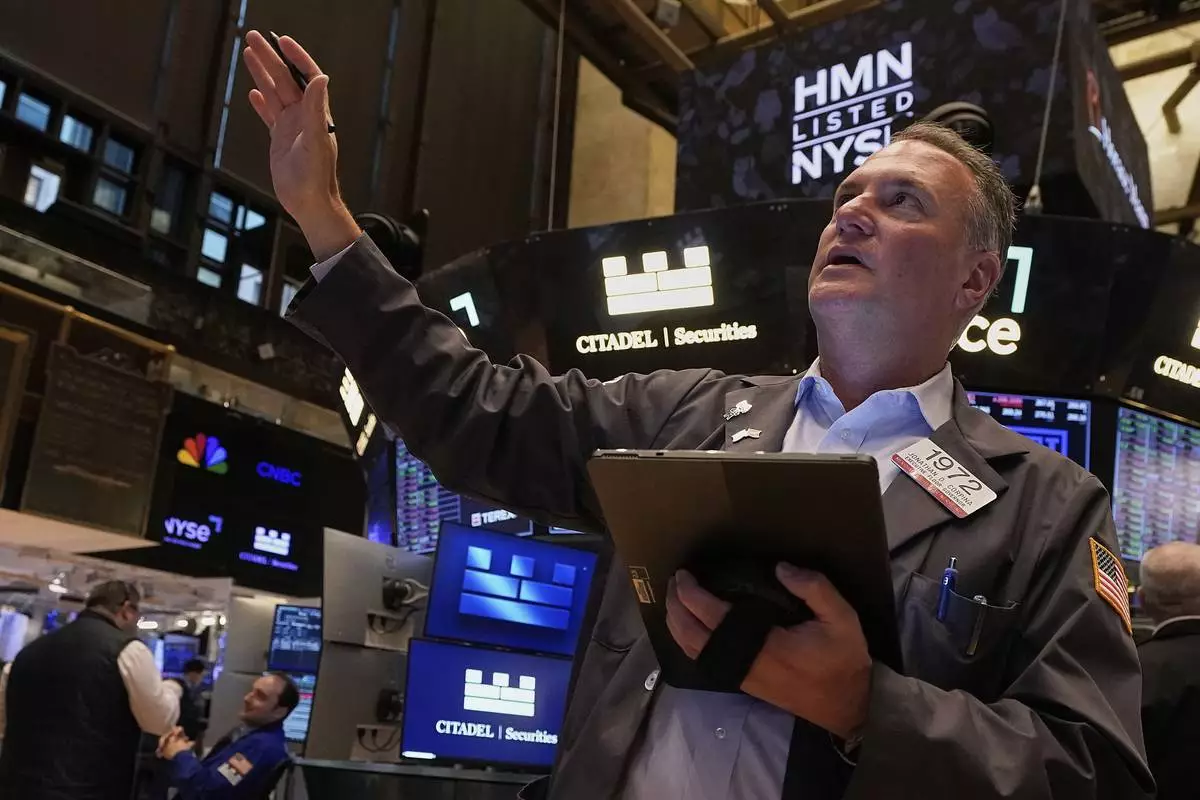
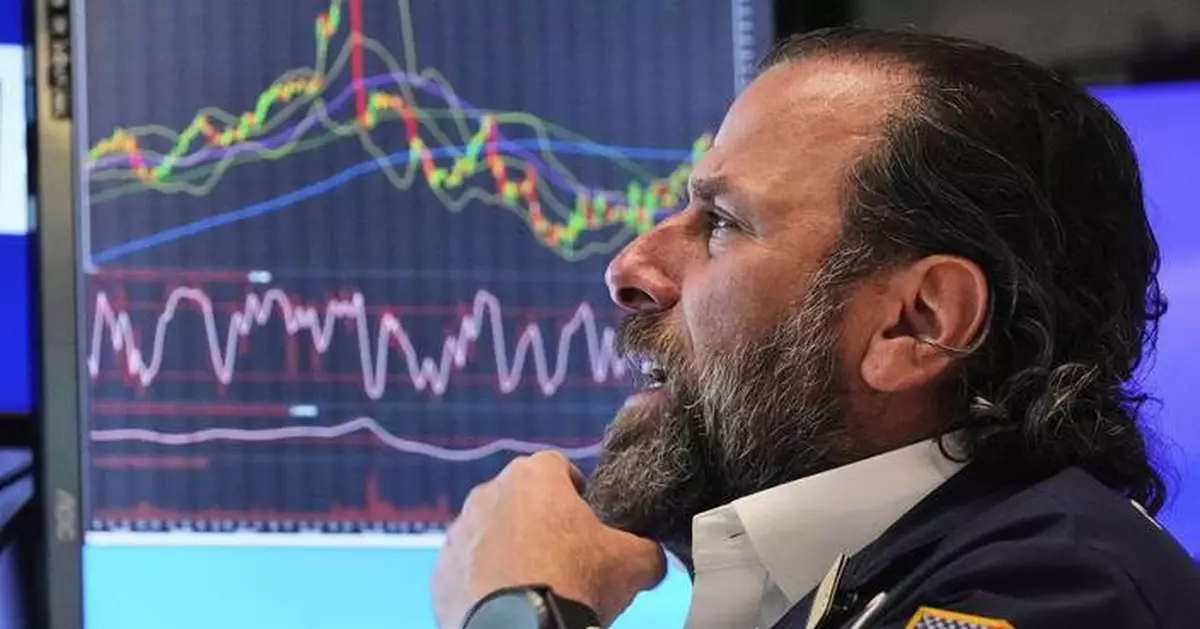
Trader Jonathan Corpina works on the floor of the New York Stock Exchange, Wednesday, May 14, 2025. (AP Photo/Richard Drew)
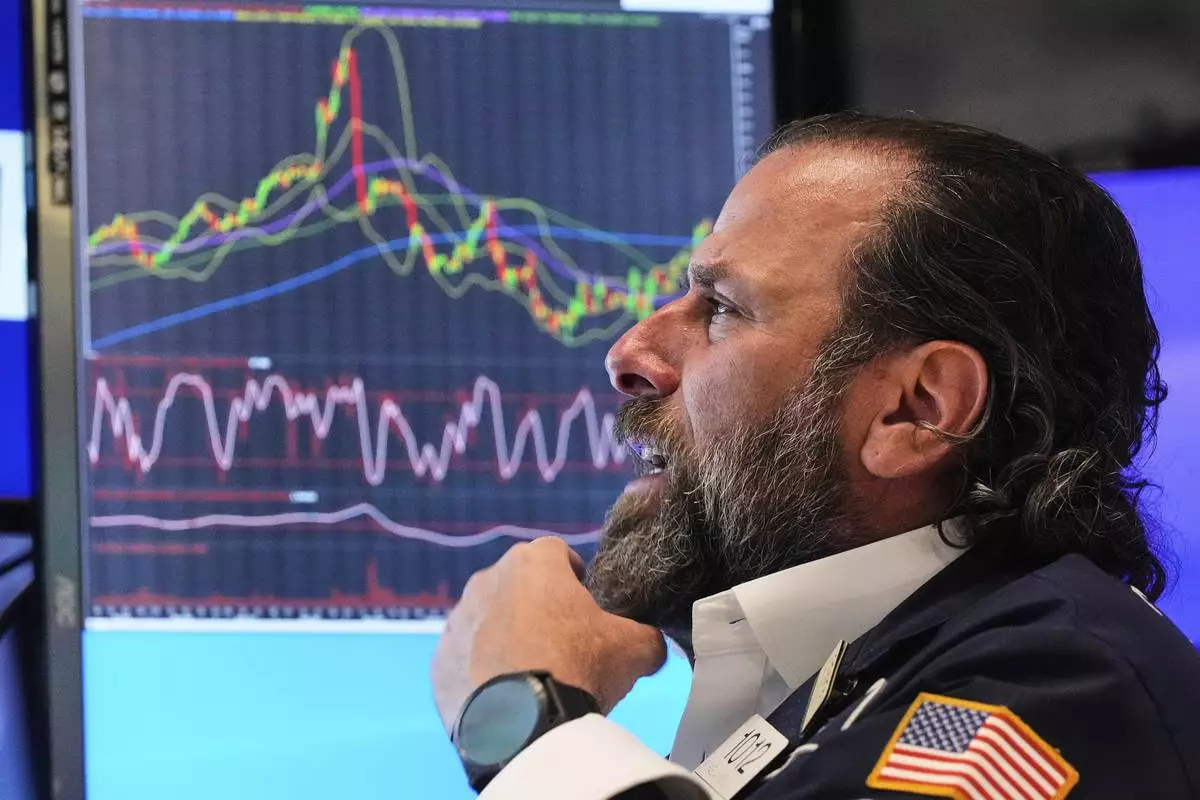
Trader Jonathan Corpina works on the floor of the New York Stock Exchange, Wednesday, May 14, 2025. (AP Photo/Richard Drew)

Specialist Michael Pistillo works at his post on the floor of the New York Stock Exchange, Monday, May 12, 2025. (AP Photo/Richard Drew)

Specialist Michael Pistillo works at his post on the floor of the New York Stock Exchange, Monday, May 12, 2025. (AP Photo/Richard Drew)
SEOUL, South Korea (AP) — Ahn Sung-ki, one of South Korean cinema’s biggest stars whose prolific 60-year career and positive, gentle public image earned him the nickname “The Nation’s Actor,” died Monday. He was 74.

Ahn, who had suffered blood cancer for years, was pronounced dead at Seoul's Soonchunhyang University Hospital, his agency, the Artist Company, and hospital officials said.

“We feel deep sorrow at the sudden, sad news, pray for the eternal rest of the deceased and offer our heartfelt condolences to his bereaved family members," the Artist Company said in a statement.

President Lee Jae Myung issued a condolence message saying Ahn provided many people with comfort, joy and time for reflection. “I already miss his warm smile and gentle voice,” Lee wrote on Facebook.

Born to a filmmaker in the southeastern city of Daegu in 1952, Ahn made his debut as a child actor in the movie “The Twilight Train” in 1957. He subsequently appeared in about 70 movies as a child actor before he left the film industry to live an ordinary life.

In 1970, Ahn entered Seoul’s Hankuk University of Foreign Studies as a Vietnamese major. Ahn said he graduated with top honors but failed to land jobs at big companies, who likely saw his Vietnamese major largely useless after a communist victory in the Vietnam War in 1975.

Ahn returned to the film industry in 1977 believing he could still excel in acting. In 1980, he rose to fame for his lead role in Lee Jang-ho’s “Good, Windy Days,” a hit coming-of-age movie about the struggle of working-class men from rural areas during the country’s rapid rise. Ahn won the best new actor award in the prestigious Grand Bell Awards, the Korean version of the Academy Awards.

He later starred in a series of highly successful and critically acclaimed movies, sweeping best actor awards and becoming arguably the country’s most popular actor in much of the 1980-90s.

Some of his memorable roles included a Buddhist monk in 1981’s “Mandara,” a beggar in 1984’s “Whale Hunting,” a Vietnam War veteran-turned-novelist in 1992’s “White Badge,” a corrupt police officer in 1993’s “Two Cops,” a murderer in 1999’s “No Where To Hide,” a special forces trainer in 2003’s “Silmido” and a devoted celebrity manager in 2006’s “Radio Star.”

Ahn had collected dozens of trophies in major movie awards in South Korea, including winning the Grand Bell Awards for best actor five times, an achievement no other South Korean actors have matched yet.

Ahn built up an image as a humble, trustworthy and family-oriented celebrity who avoided major scandals and maintained a quiet, stable personal life. Past public surveys chose Ahn as South Korea’s most beloved actor and deserving of the nickname “The Nation’s Actor.”

Ahn said he earlier felt confined with his “The Nation's Actor” labeling but eventually thought that led him down the right path. In recent years, local media has given other stars similar honorable nicknames, but Ahn was apparently the first South Korean actor who was dubbed “The Nation's Actor.”

“I felt I should do something that could match that title. But I think that has eventually guided me on a good direction,” Ahn said in an interview with Yonhap news agency in 2023.

In media interviews, Ahn couldn’t choose what his favorite movie was, but said that his role as a dedicated, hardworking manger for a washed-up rock singer played by Park Jung-hoon resembled himself in real life the most.

Ahn was also known for his reluctance to do love scenes. He said said he was too shy to act romantic scenes and sometimes asked directors to skip steamy scenes if they were only meant to add spice to movies.

“I don’t do well on acting like looking at someone who I don’t love with loving eyes and kissing really romantically. I feel shy and can’t express such emotions well,” Ahn said in an interview with the Shindonga magazine in 2007. “Simply, I’m clumsy on that. So I couldn’t star in such movies a lot. But ultimately, that was a right choice for me.”

Ahn is survived by his wife and their two sons. A mourning station at a Seoul hospital was to run until Friday.

FILE - South Korean actor Ahn Sung-ki smiles for a photo on the red carpet at the 56th Daejong Film Awards ceremony in Seoul, South Korea, June 3, 2020. (AP Photo/Ahn Young-joon, File)

FILE - South Korean actor Ahn Sung-ki smiles for a photo on the red carpet at the 56th Daejong Film Awards ceremony in Seoul, South Korea, June 3, 2020. (AP Photo/Ahn Young-joon, File)

FILE - South Korean actor Ahn Sung-ki attends an event as part of the 11th Pusan International Film Festival in Busan, South Korea, Oct. 13, 2006. (AP Photo/Kin Cheung, File)

FILE - South Korean actor Ahn Sung-ki attends an event as part of the 11th Pusan International Film Festival in Busan, South Korea, Oct. 13, 2006. (AP Photo/Kin Cheung, File)

Recommended Articles