An American businessman wasted no time boarding a flight to visit Chinese partners the moment news broke of reciprocal tariff reductions between China and the U.S., seizing on the opportunity to negotiate new purchases.
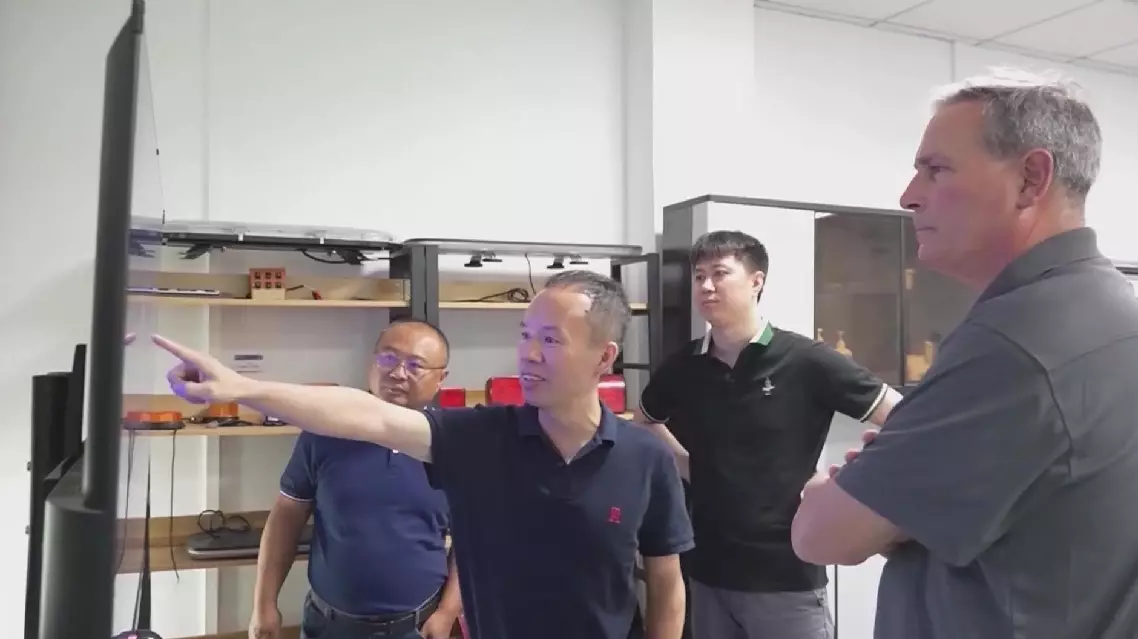
Mike, a longtime buyer of Chinese auto parts, headed straight to his partner factory in Foshan, Guangdong Province, a decade-long supplier relationship that had weathered recent trade tensions.
At the automotive lighting factory, Mike pushed to accelerate existing orders while negotiating new deals for advanced products like intelligent anti-glare headlights. The prototype's pedestrian-detection function and adaptive brightness controls particularly impressed him, though mass production hasn't yet begun.
"They have made a lot of improvements. They have a good manufacturing system. It's all tracked, it's well done," he said after a tour to the production line.
Following a high-level meeting between the world's two largest economies on trade affairs in Geneva, China and the U.S. announced in a joint statement on Monday a series of measures, tariff modification measures, aimed at easing trade tensions, which took effect on Wednesday.
"We would love to see it (China-U.S. tariff issue) get resolved and then we can move forward with business. So if it's cooperating to make better a product, to make it serve the customer with more features that either make things more safe or more efficient, that's what we are supposed to do," Mike said.
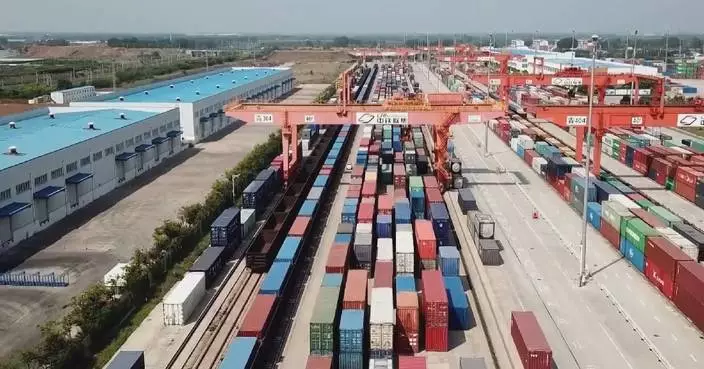
US buyers return to Chinese suppliers as tariffs ease
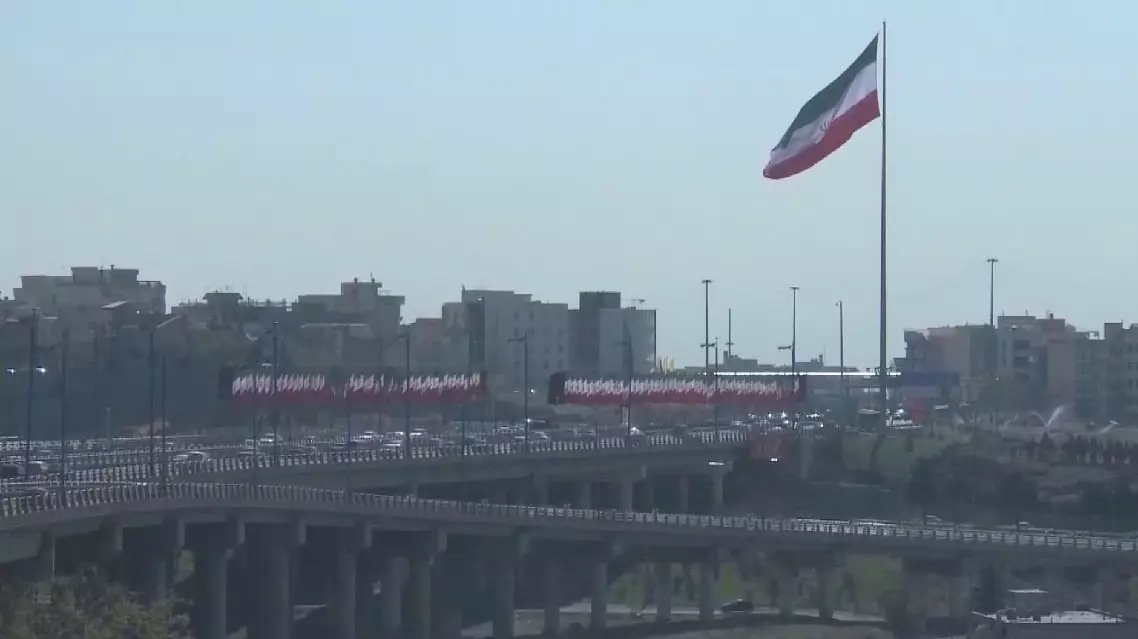
Iranian Parliament Speaker Mohammad Baqer Qalibaf warned on Sunday that Tehran would view the United States and Israel's military bases and facilities in the Middle East as "legitimate targets" should Washington take military action against Iran.
At a parliamentary session convened to review an emergency proposal on assembly regulations, Qalibaf emphasized that, at this highly sensitive juncture, Iran must accurately and thoroughly identify the schemes of its adversaries.
Qalibaf said that Iran is currently confronting Israel and the United States simultaneously on four fronts: economic, cognitive, military, and counterterrorism. Of them, the economic warfare and the cognitive and psychological warfare began many years ago and have persisted to this day, growing increasingly complex and intense in recent years.
The remarks came as U.S. President Donald Trump is reportedly "seriously considering authorizing a strike" against Iran, taking advantage of its nationwide unrest.
Protests have erupted in several Iranian cities since late December over the sharp fall of the rial and long-standing economic hardship. Iranian authorities have acknowledged the demonstrations and voiced willingness to address economic grievances, while warning against violence and vandalism.
Amid the ongoing protests, deadly clashes have been reported lately between police and what the government described as "rioters." However, no official death toll has been released.
Also on Sunday, Iran's semi-official Tasnim news agency reported that Iranian President Masoud Pezeshkian will address the country's economic situation and political environment in a televised interview later that day.
Iran swears to counterattack if attacked