The Huangpi Lake Wetland in Hefei City, east China's Anhui Province, now hosts the dramatic annual winter "bird wave," transforming into a breathtaking stage for massive flocks of migratory birds in synchronized flight.
As one of nature's most impressive aerial spectacles, tens of thousands of migratory birds have recently descended upon the lake, creating vast, fluid formations that ripple across the water at dusk and dawn.
Seen from afar, the flocks resemble drifting ribbons of silk or a colossal mythical fish gliding through the sky. Against the clear winter sky and the warm glow of sunset, their precise, synchronized flights weave ever-changing patterns over the serene lake, breathing vibrant life into the scene.
As a vital stopover along the East Asian-Australasian Flyway, Huangpi Lake marks the height of its birdwatching season from late November through February each year. The most striking "bird waves" are typically observed during the gentle light of early morning and late afternoon.
By December 2025, over 100,000 wintering birds from 137 species have been recorded here, turning the wetland into a bustling haven for avian life and a visual feast for nature enthusiasts and photographers alike.
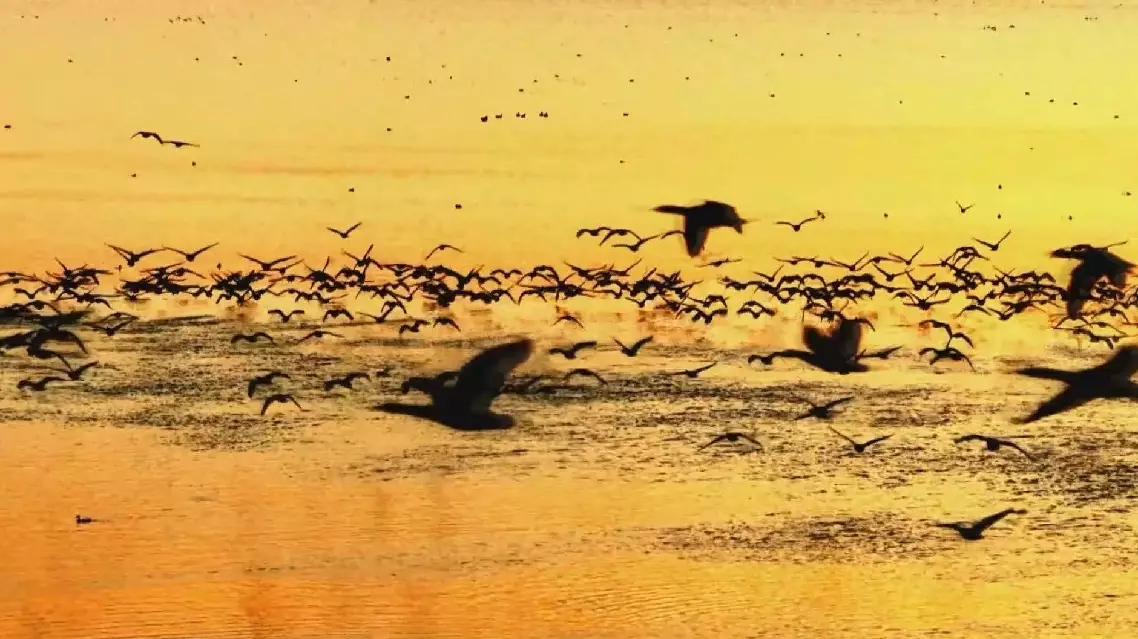
China's Huangpi Lake sees spectacular "Bird Wave" as winter migration peaks
More than 20 films will hit Chinese screens during the three-day Qingming Festival holiday from Saturday to Monday, spanning genres from revolutionary historical dramas, realism movies to suspense thrillers, according to the China Film Administration on Thursday.
Revolutionary historical films such as Blood-Spattered Cliff, Eight Sons, Eight Soldiers, and Half Of The Quilt, will pay tribute to martyrs through the lens.
Three films -- It's OK, Now I Met Her, and Sunshine Women's Choir -- tell moving stories of love, growth, and reconciliation.
It's OK is a contemporary family comedy that follows a mother and daughter navigating their joyful yet turbulent relationship. Now I Met Her tells a rebellious teenager who gets to know his late mother through her old diary. Sunshine Women's Choir, a film from the Taiwan region of China, portrays the "perfect" maternal love of "imperfect mothers."
The suspense film Game of Identity tells the story of two people from different backgrounds who accidentally swap lives, setting off an unexpected adventure. The documentary films Seeking Nature: The Code of Life, and Missions to the Moon (Part One) explore the connection between humanity and science.
Imported films from different countries, including The Super Mario Bros. Movie 2, Project Hail Mary, and Hoppers, will deliver spectacular cinematic experiences to audiences.
The Qingming Festival, or Tomb-Sweeping Day, falls on April 5 this year. It is a traditional Chinese festival for honoring the deceased and paying tribute to ancestors. The holiday also provides a short break for Chinese citizens as they engage in outdoor activities and sightseeing.

Over 20 films expected to hit Chinese screens during Qingming Festival Holiday