Skip to Content Facebook Feature Image

China vows to back global health efforts

China

China

China

China vows to back global health efforts

2025-05-19 10:01 Last Updated At:17:27

The Chinese delegation to the 78th World Health Assembly, set to convene on Monday in Geneva, has vowed to promote international health cooperation and actively contribute to discussions on a wide range of priorities, including an agreement on pandemics.

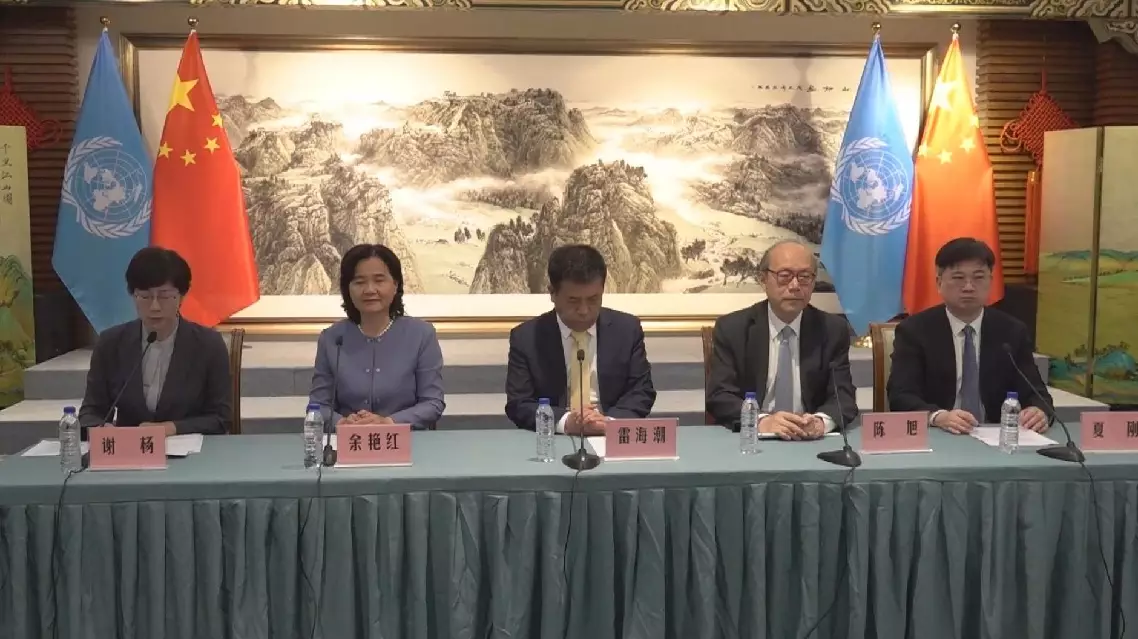
The delegation, led by Lei Haichao, head of China's National Health Commission, introduced their involvement in the gathering at a news briefing on Saturday in Geneva.

Lei briefed on China's main tasks and achievements in the past years since the Healthy China 2030 blueprint was unveiled in 2016 to achieve health targets aligned with the United Nations' sustainable development goals.

He said China actively advocates and practices the three major initiatives of global development, security and civilization, and is deeply involved in global health governance, contributing Chinese wisdom and strength to promoting the building of a global community of health for all.

China firmly supports the World Health Organization in playing a central role in coordinating global public health governance, he said.

This year's assembly, themed "One World for Health," runs through May 27. It will address about 75 items and sub-items, covering topics including health emergency preparedness and response, financing and budgeting, World Health Organization governance reform, and other pressing global health issues.

A key highlight will be the consideration of adopting the pandemic agreement -- a document outlining how to better tackle future pandemics in a more well-organized and equitable manner -- which WHO Director-General Tedros Adhanom Ghebreyesus describes as "truly historic."

The final draft of the treaty was released last month following three years of talks among WHO member states. Notable elements include the rapid sharing of data about new diseases, the allocation of medical resources to the WHO in the event of a future outbreak, and the transfer of health technologies to poorer nations, the BBC reported.

At the news briefing, Xia Gang, deputy director of the National Disease Control and Prevention Administration, said China welcomes consensus among all parties on the draft agreement.

Xia said he believes the pact will help promote the equitable distribution of technology, funding, and resources and support developing countries in strengthening their capacity to detect and respond to pandemics.

He said that China has always been a staunch supporter and practitioner of multilateralism and an active participant in global public health governance. China's constructive participation in the negotiations of the pandemic treaty is a prime example of this commitment, he added.

In addition to engaging in the main event, the Chinese delegation will host three side events during the assembly, focusing on the digital and intelligent empowerment of primary healthcare, traditional medicine, and mental health.

The World Health Assembly is the WHO's decision-making body. Attended by delegations from all 194 WHO member states, it brings together high-level country representatives and other stakeholders to address global health challenges.
China vows to back global health efforts
China vows to back global health efforts
China vows to back global health efforts
China vows to back global health efforts

China vows to back global health efforts
China vows to back global health efforts

The Guangdong–Hong Kong–Macao Greater Bay Area (GBA) is emerging as a key engine for China's fast-growing low-altitude economy by leveraging its dense industrial networks, efficient logistics systems, and rapid innovation capacity.

From logistics and manufacturing to urban services, the region is building an integrated industrial chain that allows low-altitude industries to scale up at unprecedented speed, thus turning drone-based applications from isolated trials into large-scale, commercial operations.

China's 15th Five-Year Plan, covering 2026 to 2030, calls for the cultivation of new pillar industries and the accelerated development of strategic emerging industrial clusters, including the low-altitude economy.

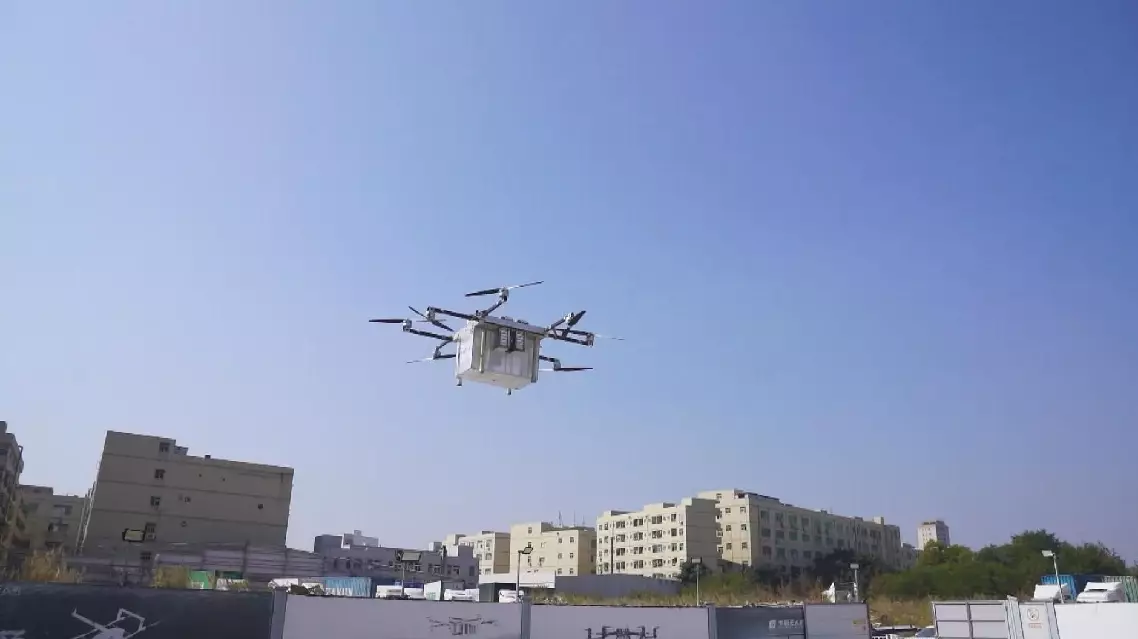
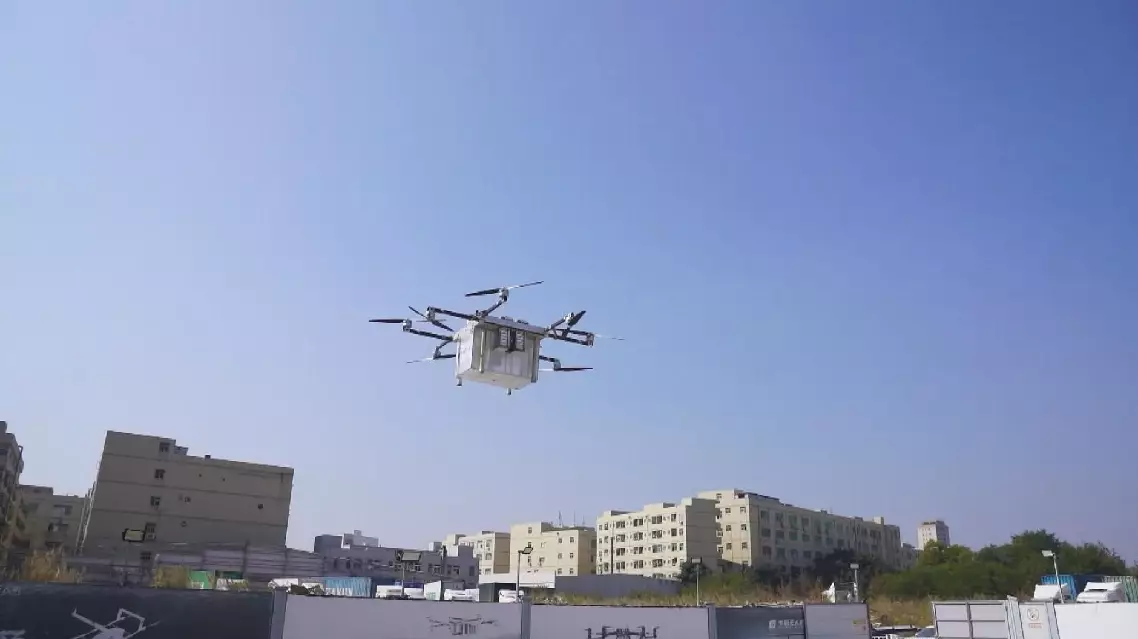
At a drone operations center in Bao'an District, Shenzhen City in south China's Guangdong Province, a dozen logistics drones take off and land within minutes. Urgently needed production parts, documents, and small parcels are dispatched from here to cities in the province including Dongguan, Zhongshan, and Zhuhai.

Behind these high-flying aircraft lies what observers describe as an "invisible industrial chain", built on speed and efficiency.

"Look at this aircraft. About 90 percent of its components come from nearby areas. Relying on Shenzhen's strong logistics capabilities and its complete supply chain, these parts can be delivered to our factory within half an hour for assembly, processing, and production," said Li Kunhuang, person-in-charge of Shenzhen GODO Innovation Technology Co., Ltd.

Once a new product is unveiled, testing and calibration begin immediately at the drone testing field. As soon as the process is completed, the new models can be put into real-world operation, realizing almost “zero delay” from research and development to application.

Supported by a robust industrial chain, low-altitude routes in Shenzhen are effectively connecting the urban landscape. From its Bao'an District to Songshan Lake in Dongguan City, production components can be delivered within one hour. Supplies are transported between Zhuhai City's Xiangzhou Port to Dong'ao Island in just 25 minutes. And light industrial goods can travel round-trip within a single day between Guzhen Town in Zhongshan City and Xinhui District in Jiangmen City.

More low-altitude application scenarios are expected to be implemented in the near future.

In Qianhai District, Shenzhen is accelerating the construction of a pilot demonstration zone of low-altitude integrated three-dimensional transportation hub.

"We have built the country's first low-altitude integrated three-dimensional transportation hub, and are gradually developing a pilot flight zone that integrates multiple scenarios such as inspection, logistics, and cultural tourism. This will provide technical support for the next step of commercializing cross-border logistics and emergency rescue services across the Guangdong–Hong Kong–Macao Greater Bay Area," said Wu Xuemin, head of the Shenzhen Qianhai Low-Altitude Integrated Three-Dimensional Transportation Hub Pilot Demonstration Zone.

Integrated supply chains propel Greater Bay Area's low-altitude economy growth

Integrated supply chains propel Greater Bay Area's low-altitude economy growth

Integrated supply chains propel Greater Bay Area's low-altitude economy growth

Integrated supply chains propel Greater Bay Area's low-altitude economy growth

Recommended Articles