The 2025 Shanghai Science Festival, a two-week celebration of scientific innovation and technological advancement, opened Saturday across all 16 districts in the city under the theme "Science and Technology Make Life Better."
The festival from May 17 to 30 will run 2,000 public events across six themes, including exhibitions, popular science lectures, innovation competitions, and interactive tech experiences.
The opening ceremony showcased an artificial intelligence-powered scientific red carpet featuring extended reality (XR) technology and humanoid robots, highlighting progress in China's rapidly advancing robotics industry.
During the festival, 56 key laboratories and large-scale scientific facilities will be open to the public. Among them are the Shanghai Key Laboratory of Intelligent Manufacturing and Robotics and the National Facility for Protein Science in Shanghai.
At the Shanghai Institute of Technical Physics (SITP ) of the Chinese Academy of Sciences, there are interactive workshops on topics ranging from water rockets, Chang'e lunar probe-themed competitions, and field fabrication of human body movement intelligent sensors as part of the festival.
The researchers also demonstrated life science experiments on the space station for young visitors in their lab.
"The two scientific experiments we conducted were cultivating rice and zebrafish in space. We have opened up 'space lectures' for these two experiments, which greatly interest children. We also introduced the design principles of the device and its working principle to them," said Jia Chaoxian, an SITP doctoral candidate.
"This year's festival has two purposes. One is to promote the spirit of scientists. We invite academicians here to tell of their scientific study stories. The other is to foster scientific thinking among young people. We encourage them to explore and think actively through collecting questions and opening laboratories," said Huang Hong, vice chairman of the Science and Technology Commission of Shanghai Municipality.
Since its establishment in 1991 as China's first government-led science festival and the world's second city-named science festival, the Shanghai Science Festival has evolved into a crucial platform for public engagement with science and innovation.

Shanghai Science Festival showcases city's achievements, innovation
China will strengthen fiscal and financial coordination to amplify policy effectiveness, experts said as the draft central and local budgets for 2026 were unveiled on Friday at the ongoing fourth session of the 14th National People's Congress.
According to the draft central and local budgets for 2026, 1.3 trillion yuan (190 billion U.S. dollars) of ultra-long special treasury bonds will be issued to provide continued support for the implementation of major national strategies and security capacity-building in key areas and for large-scale equipment upgrades and consumer goods trade-in programs.
Ultra-long special treasury bonds totaling 800 billion yuan will be allocated to support the implementation of major national strategies and security capacity-building in key areas, and 250 billion yuan in ultra-long special treasury bonds will be earmarked for consumer goods trade-in programs.
The country will refine these programs in terms of their scope and subsidy standards, and continue to support the scrapping and replacement of automobiles, home appliance trade-in schemes, and purchases of new digital and smart products.
China will also set up a 100-billion-yuan fiscal-financial coordination fund to boost domestic demand. The fund will support consumption and private investment through loan interest subsidies, financing guarantee, and risk compensation.
"Fiscal and monetary policies are the two major macroeconomic tools for macro-control, and their coordination is crucial. For instance, fiscal funds primarily serve as a guiding role, while financial institutions provide the capital. When fiscal guidance and financial resources are combined, the synergistic effect creates a result greater than the sum of its parts," said Yang Zhiyong, director of the Chinese Academy of Fiscal Sciences.
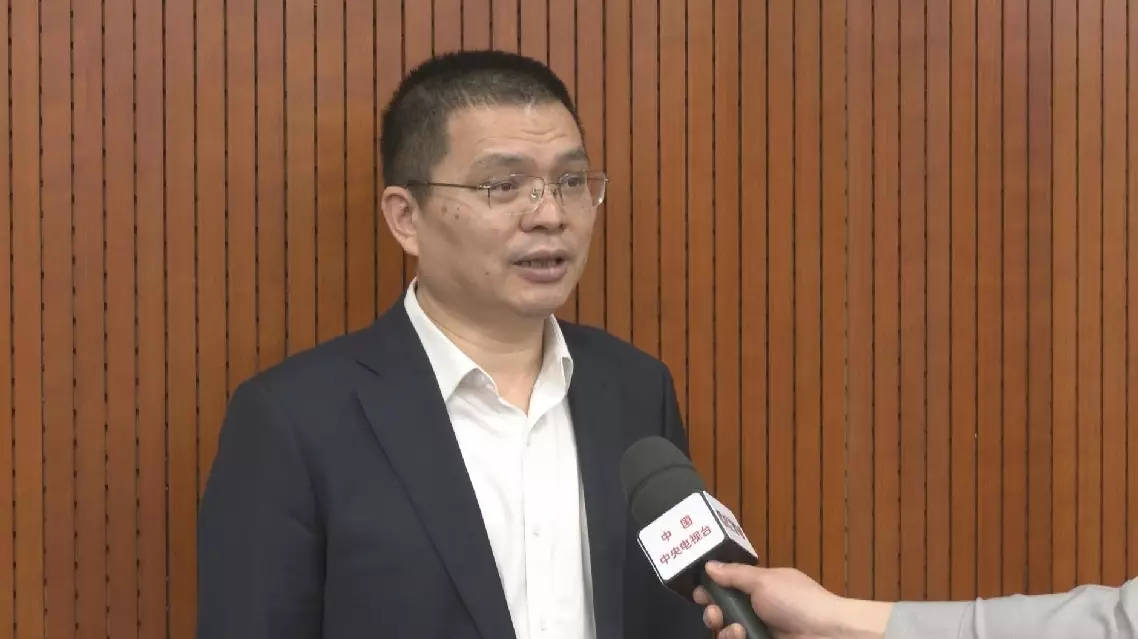
"By leveraging interest subsidies, we can mobilize substantial credit from financial institutions, thereby naturally stimulating consumption. The Ministry of Finance, in collaboration with the People's Bank of China, has introduced highly innovative measures, such as providing guarantees for the issuance of corporate bonds by small and medium-sized enterprises (SMEs), and compensating investors for losses. I believe the leveraging effect, making minimal efforts for maximum results, will become even more potent," said Yao Dongmin, director of the Center for China Fiscal Development under the Central University of Finance and Economics.
China's top legislature opened its annual session on Thursday morning at the Great Hall of the People in Beijing, with Chinese President Xi Jinping and other Party and state leaders attending the opening meeting alongside more than 2,700 NPC deputies. This year's NPC session is scheduled to run till March 12.
China to strengthen fiscal, financial coordination to amplify policy effectiveness: experts