A recent Politico article has revealed that contrary to White House claims of tariffs bringing "trillions of dollars of foreign investments", state officials report the policies have actually slowed capital inflows due to economic uncertainty.
With the headline "In states, tariffs aren't yet producing the surge of foreign investment Trump is promising," the report criticized the White House for being "indiscriminate" about what announcements it claims come from "the Trump effect." Some corporate investments have been in the works for years before they are announced. Others are in line with what the company would have invested, regardless of the tariffs. Some are inflated, adding previous investments to new pledges.
The Sunday article also pointed out that despite the Trump administration's efforts to tout auto companies to move production to the U.S., "auto manufacturing jobs are down 20.8 percent from 2024, according to the Bureau of Labor Statistics." Also, "auto manufacturing jobs fell 4.7 percent between March and April, when Trump's 25 percent tariffs on foreign auto imports went into effect," it said.
Politico quoted North Carolina's Commerce Secretary Lee Lilley as saying "One of our contacts described it to me as driving a car in the fog," indicating investing in the U.S. is lack of certainty and stability now. Ron Johnson, Senator from Wisconsin, echoed "What I'm hearing from Wisconsin businesses, manufacturers ... is right now investment is on hold."
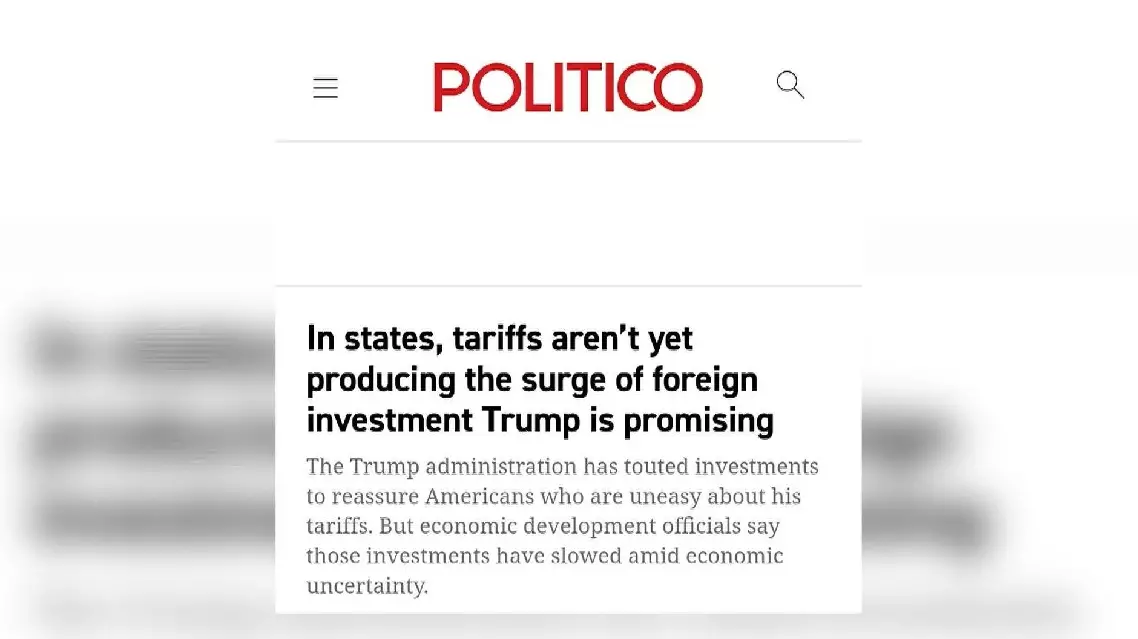
Foreign investment in US slows down, contrary to Trump's tariff promises: US media report
Foreign investment in US slows down, contrary to Trump's tariff promises: US media report
Foreign investment in US slows down, contrary to Trump's tariff promises: US media report
Nicaragua's co-foreign minister Valdrack Jaentschke has warned that militarism must never be allowed to rise again, as Japan's recent moves to lift its arms export ban and revise the pacifist Constitution continue to draw international concern.
This year marks the 80th anniversary of the opening of the Tokyo Trials, where Japan's Class-A war criminals from World War II were brought to justice.
In an interview with China Global Television Network (CGTN), Valdrack Jaentschke voiced his concern that today's world order is being undermined by interventionism and other challenges.
"It is necessary for us to remember that after the end of World War II, countries worked hard to build a new international order based on international law. However, regrettably, more than 80 years later, we are seeing that this once explored and attempted order is being challenged by interventionism, a confrontational mindset, and tendencies like 'might makes right.' These are precisely the conditions that gave rise to fascism and militarism in the past, which ultimately led to the tragedy of World War II," he said.
He said the international community has a responsibility to pursue a new international order -- one fundamentally grounded in peace.
"Looking back at the history more than eight decades ago and comparing it with today's reality, it is our responsibility to recognize that the world should, and must, build a new international order that is more just, fairer, rooted in international law, based on a logic of mutual benefit and shared success, and fundamentally grounded in peace," said the minister.
"Today, as we revisit the Tokyo Trials, it is meant to remind the world that such a tragedy must never be repeated -- and that we must do everything in our power to prevent it from happening again. We must stop that dark world -- born from militarism, interventionism, and fascism -- from ever returning," he said.
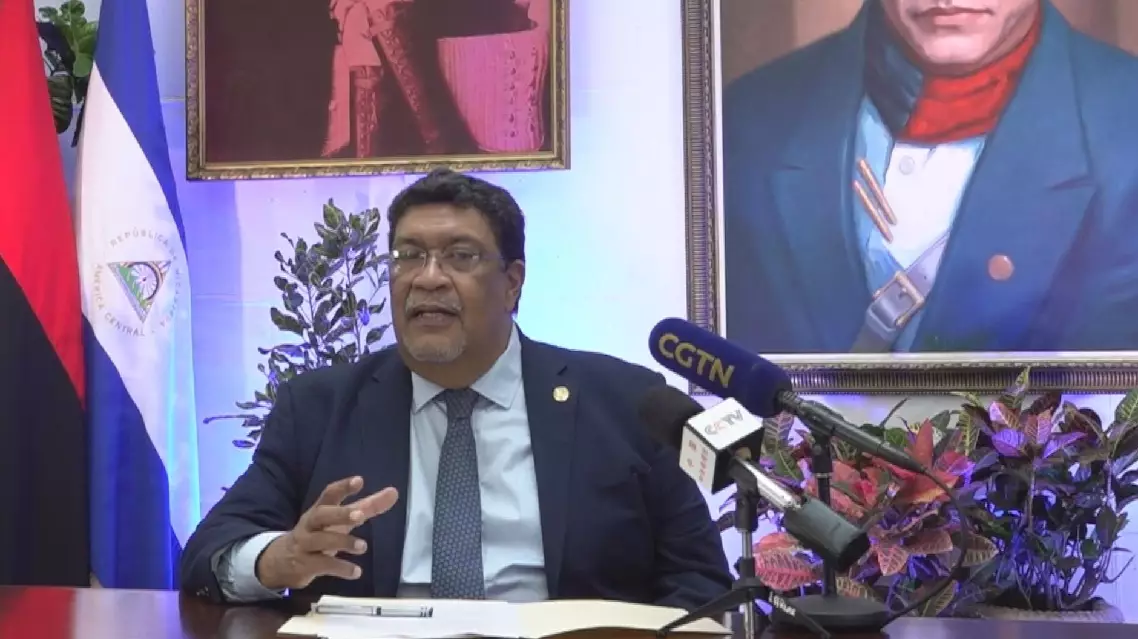
Nicaraguan FM warns of militarism revival