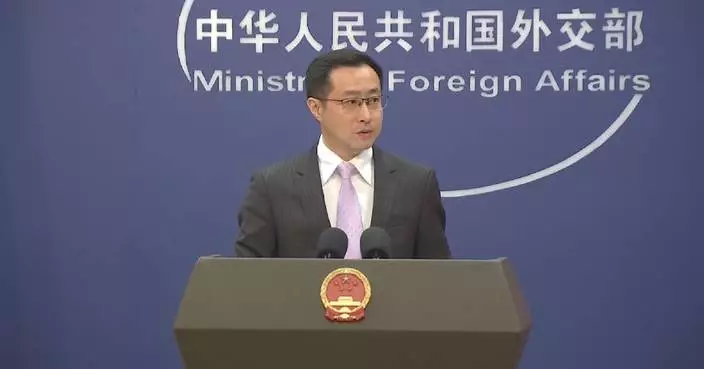
Chinese Foreign Minister Wang Yi held talks with his Danish counterpart Lars Lokke Rasmussen in Beijing on Monday, with both sides agreeing to promote the growth of bilateral ties and safeguard the multilateral trading system.
At the talks, Wang, also a member of the Political Bureau of the Communist Party of China Central Committee, said that over the past 75 years since China and Denmark established diplomatic relations, the two countries have always respected each other and treated each other as equals, developed a comprehensive strategic partnership, and fostered high-level mutually beneficial cooperation led by green development.
"Denmark is well known for its scientific-technological research, innovation, green transition and international trade. We share a broad understanding of common challenges such as upholding multilateralism and free trade, and addressing climate change," Wang said.
He said the two countries should take the celebration of the 75th anniversary of the establishment of diplomatic ties between them this year as an opportunity to maintain high-level exchanges, strengthen political mutual trust, and push for greater development of China-Denmark relations.
The most important experience from the healthy and steady development of China-Denmark ties over the past 75 years is that the two countries have consistently treated each other as equals regardless of their size, respecting and accommodating each other's core interests, Wang said, calling for joint efforts to consolidate the political foundation of bilateral relations.
China fully respects Denmark's sovereignty and territorial integrity regarding the Greenland issue and hopes that Denmark will continue to support China's legitimate position on issues concerning China's sovereignty and territorial integrity, he said.
China is ready to work with Denmark to uphold two-way opening up, take green development as a key focus to inject new impetus into practical cooperation, and continuously deepen bilateral collaboration in economy and trade, scientific research and innovation, green economy and other fields, Wang said.
China is committed to expanding high-level opening up to the rest of the world and create broader development space for foreign-funded enterprises. The country welcomes Danish companies to invest and start up businesses in China and hopes that Denmark can provide a fair, transparent and non-discriminatory business environment for Chinese enterprises, he continued.
He called for efforts of both sides to enhance people-to-people and cultural exchanges to continuously accumulate positive energy for the development of bilateral relations.
This year marks the 50th anniversary of the establishment of diplomatic relations between China and the European Union (EU), Wang said, noting that China-EU ties have been steadily turning for the better since the beginning of the year.
He recalled that the leaderships of the two sides have reaffirmed the political consensus for the advancement of China-EU ties in their earlier exchanges of congratulations on the anniversary.
Noting that Denmark will assume the rotating presidency of the Council of the European Union in the second half of the year, Wang said China stands ready to enhance dialogue and cooperation with the EU to jointly promote sound development of bilateral relations, and expressed the hope that Denmark will play an active role in this regard.
The current international situation is undergoing drastic changes, severely impacting the post-WWII international system and pushing global governance to a new crossroads. China and Denmark have reached broad consensus on upholding multilateralism, defending free trade, and meeting other common challenges since Denmark assumed its role as a new non-permanent member of the United Nations Security Council, Wang said.
China is willing to enhance coordination and cooperation with European countries including Denmark, jointly safeguard the international system with the U.N. at its core and the multilateral trading mechanism with the World Trade Organization at its center, and contribute to world peace, stability, development and prosperity, he said.
For his part, Rasmussen said that the Danish government and parliament are firmly committed to the one-China policy.
Denmark is willing to strengthen high-level exchanges with China, enhance dialogue and mutual understanding in various fields, deepen mutually beneficial cooperation in such sectors as investment and green transformation, and intensify people-to-people and cultural exchanges, so as to promote sustained and vigorous development of bilateral relations, he said.
"In challenging times, dialogue and candid exchanges remain very important. And I have always valued our talks. And I'm looking very much forward to our talks today," said Rasmussen.
Rasmussen said Denmark is open to Chinese companies' investment in Denmark and Danish enterprises are also willing to make long-term investment and take deep roots in the Chinese market.
Denmark is ready to play its role in promoting healthy development of EU-China relations, he said.
He said Denmark firmly supports free trade, opposes decoupling, and believes that trade wars are not in the interest of any party.
Denmark looks forward to strengthening communication and coordination on multilateral affairs with China, jointly safeguarding the multilateral system and international order, and sustaining the advancement of globalization, Rasmussen said.
The two sides also exchanged views on international and regional issues including the Ukraine crisis.
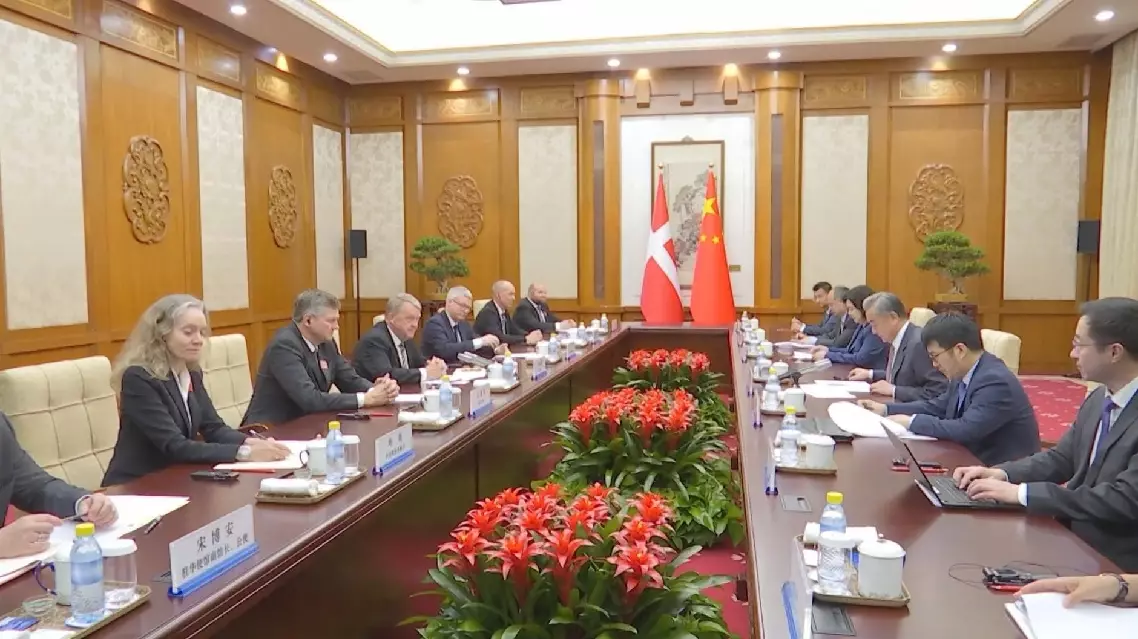
China, Denmark agree to promote growth of ties, safeguard multilateral trading system