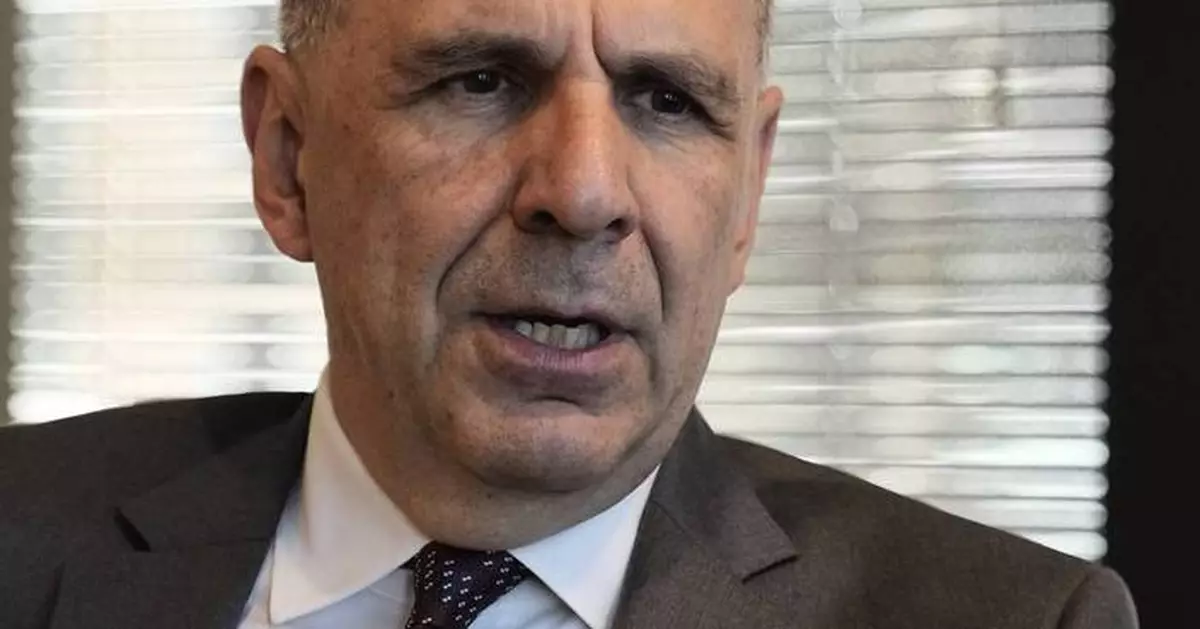
UNITED NATIONS (AP) — The world is facing the most turbulent times since World War II, Greece’s top diplomat says, pointing to a crossroads in democracy and saying Europe is facing a “political identity crisis.”
In a wide-ranging interview with The Associated Press, Foreign Minister Giorgos Gerapetritis weighed in on two of the globe's major conflicts, saying the “nightmare” and escalating death toll in Gaza must end and Greece stands by Ukraine.
Click to Gallery
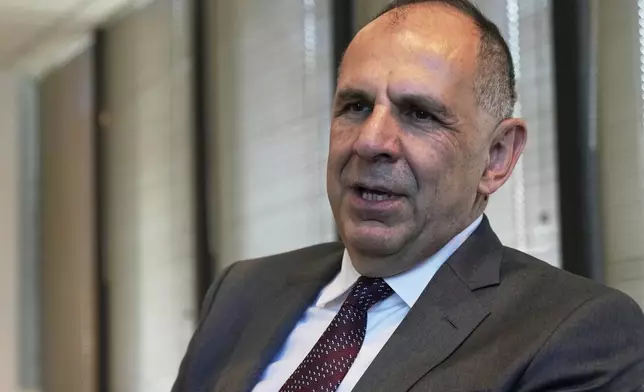
Greece Foreign Minister Giorgos Gerapetritis responds to questions during an interview at the Permanent Mission of Greece to the United Nations, in New York, Monday, May 19, 2025. (AP Photo/Richard Drew)
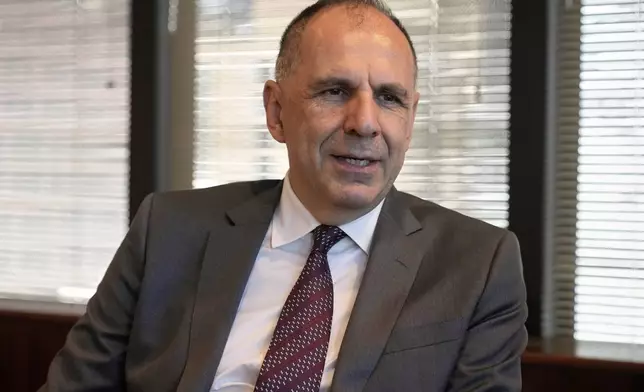
Greece Foreign Minister Giorgos Gerapetritis responds to questions during an interview at the Permanent Mission of Greece to the United Nations, in New York, Monday, May 19, 2025. (AP Photo/Richard Drew)
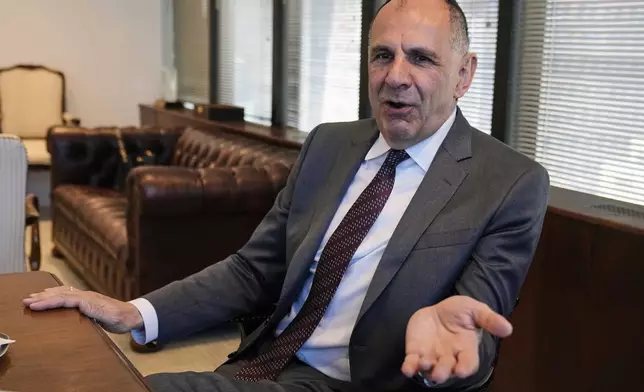
Greece Foreign Minister Giorgos Gerapetritis responds to questions during an interview at the Permanent Mission of Greece to the United Nations, in New York, Monday, May 19, 2025. (AP Photo/Richard Drew)
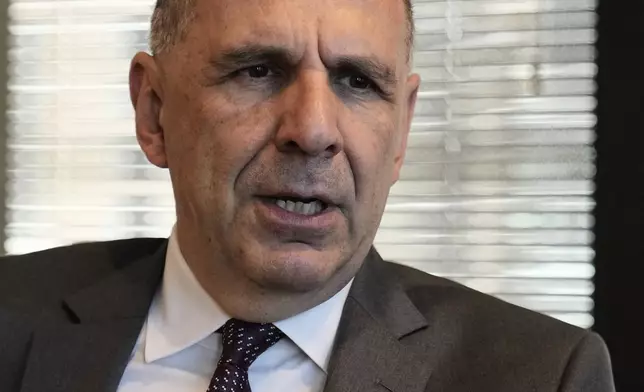
Greece Foreign Minister Giorgos Gerapetritis responds to questions during an interview at the Permanent Mission of Greece to the United Nations, in New York, Monday, May 19, 2025. (AP Photo/Richard Drew)
He also noted that U.S. President Donald Trump's tariffs are not “good news.”
Here are some takeaways from Monday's interview:
Gerapetritis, whose country holds the rotating presidency of the U.N. Security Council this month, said inequalities between nations and people are challenging “the essence of democracy and the rule of law.” As a result, “we have turned into an era where populism and demagogues are essentially ruling the state,” he said.
He said global turmoil is also the result of technology and the world's mobility, which mean every challenge — from pandemics to climate and migration — touches everyone. The upheaval also follows a crisis in overall global cooperation and belief in international organizations, which have failed to address challenges in recent years.
Nonetheless, Gerapetritis said, Greece believes “democracy has a self-corrective mechanism” and what’s needed at this challenging time is strong leadership in major nations and international organizations “to make people believe in the noble cause of being together in peace and prosperity.”
The Greek foreign minister said the European Union’s requirement that decisions be adopted unanimously by its 27 members — giving a single nation veto power — has become an obstacle.
On the other hand, he said, the veto reflects national interests that should be at the core of European politics.
At the moment, Gerapetritis said Europe is in a “political identity crisis.”
“It seems that on occasions, we forget what are the essential elements that brought us together as Europeans, and we do suffer from some divergences and conflict,” he said. “And now we’re suffering the post-shock syndrome after the war in Ukraine. So I think Europe needs again to find its resilience and identity.”
Greece stands by Ukraine because it supports the rule of law and its sovereignty and territorial integrity, he said.
As for EU and U.S. sanctions against Russia over its invasion of Ukraine in February 2022, Gerapetritis said they have been only partially successful because Moscow has found ways to circumvent their impact. The economic penalties have not become “a turning point for peace,” he said.
Gerapetritis said his country supports a two-state solution, has discussed it and Gaza's reconstruction extensively with Israel and the Palestinians, and sees itself as an “honest broker.”
“We would like to be actively involved, but to be totally honest, it’s not a matter of who mediates, it’s a matter of stopping the nightmare,” he said.
Hamas’ killing of 1,200 people and taking of hostages from Israel on Oct. 7, 2023, was absolutely inhumane, he said. Also, “I cannot really tolerate what is happening now in the Middle East,” he said, pointing to the more than 53,000 Palestinians killed in Gaza, mostly women and children, according to its health ministry, which doesn’t differentiate between civilians and combatants in its count.
Gerapetritis, who will preside at a Security Council meeting Thursday on protecting civilians in conflict, called for massive humanitarian aid for Gaza and a speedy ceasefire.
The first few aid trucks entered Gaza this week following nearly three months of an Israeli blockade of food, medicine and other supplies. Israel says a new distribution system will launch to prevent Hamas from accessing aid, which Israel says the militant group uses to bolster its rule in Gaza.
Gerapetritis said U.S.-Greek ties are growing, citing investments by Amazon, Google, Pfizer and other companies, including in the energy field.
Tariffs imposed by the Trump administration haven’t had a major influence in the country, he said, “because we are not overexposed to that type of bilateral trade.”
But Greece is in favor of free trade, he said, and while “we do not consider that tariffs are good news … we do believe that there must be a modus vivendi,” a Latin phrase that in international relations often means a compromise between parties.
Trump imposed a 20% levy on goods from the EU amid a series of such moves against trading partners but later paused them to give a chance to negotiate solutions to U.S. trade concerns. Countries subject to the pause will face Trump’s 10% baseline tariff.
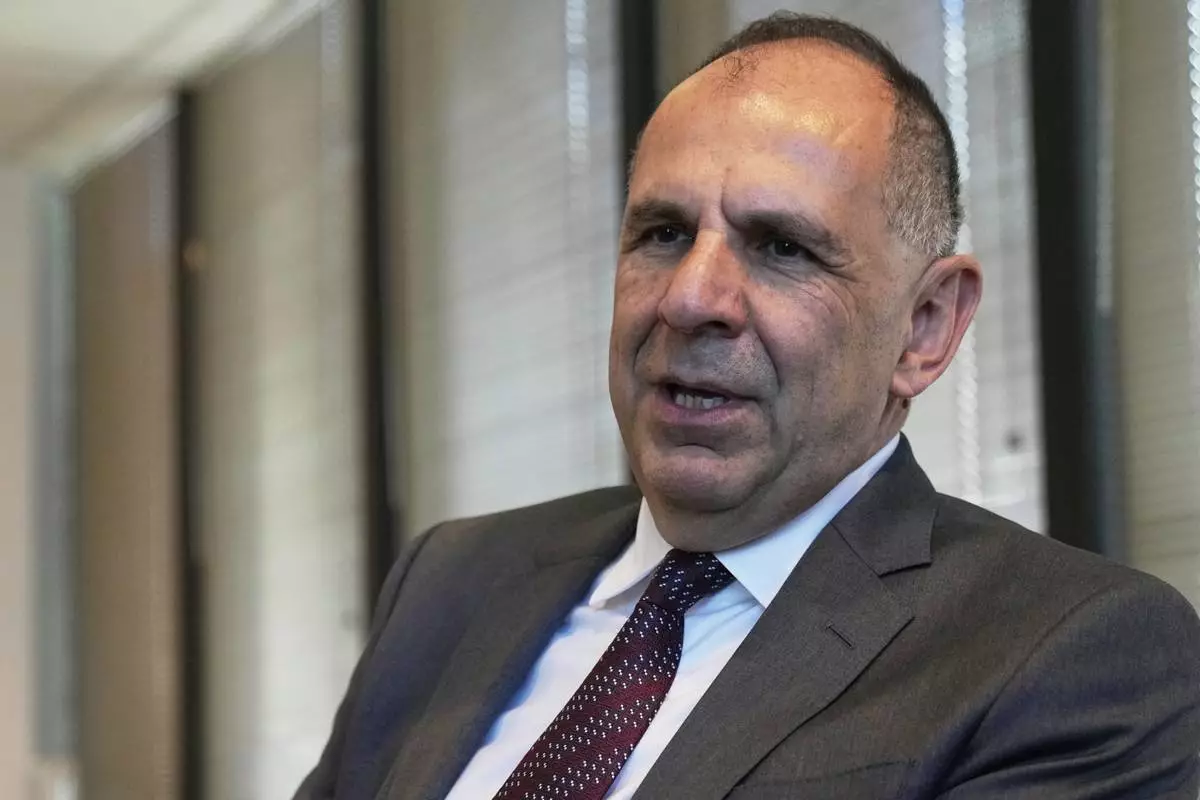
Greece Foreign Minister Giorgos Gerapetritis responds to questions during an interview at the Permanent Mission of Greece to the United Nations, in New York, Monday, May 19, 2025. (AP Photo/Richard Drew)
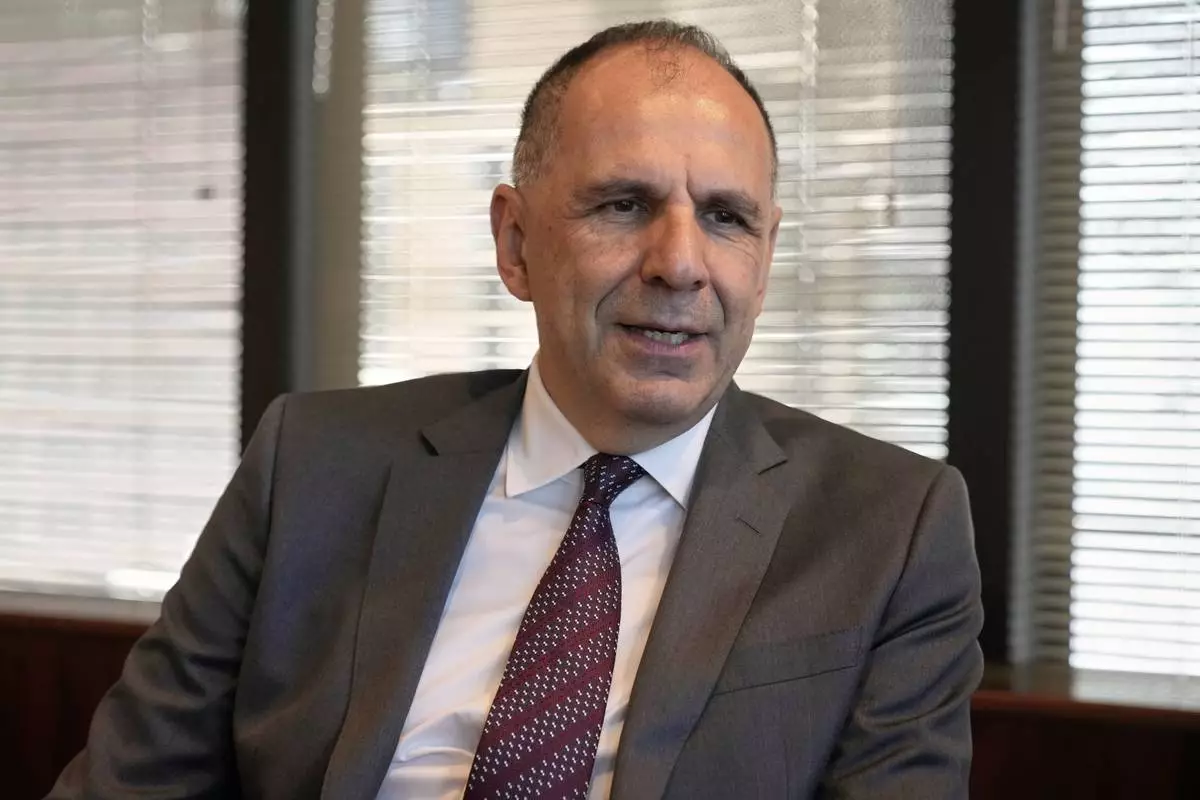
Greece Foreign Minister Giorgos Gerapetritis responds to questions during an interview at the Permanent Mission of Greece to the United Nations, in New York, Monday, May 19, 2025. (AP Photo/Richard Drew)
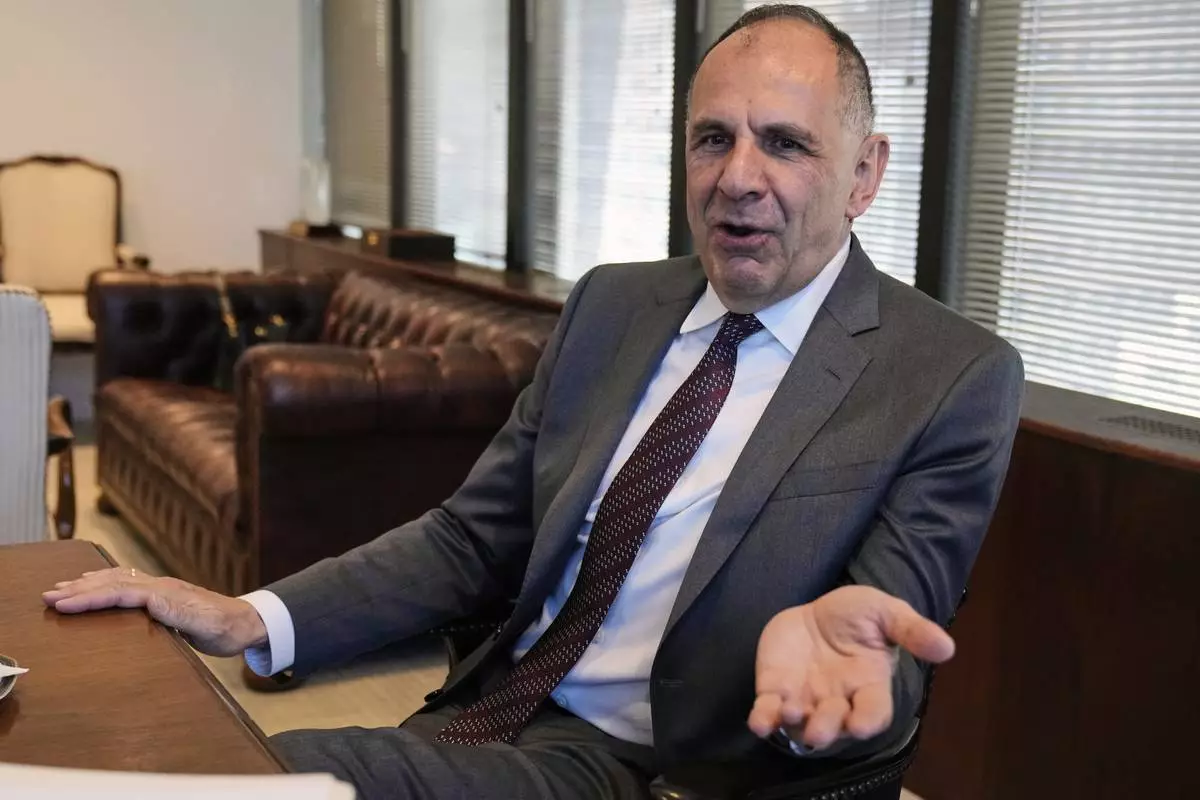
Greece Foreign Minister Giorgos Gerapetritis responds to questions during an interview at the Permanent Mission of Greece to the United Nations, in New York, Monday, May 19, 2025. (AP Photo/Richard Drew)
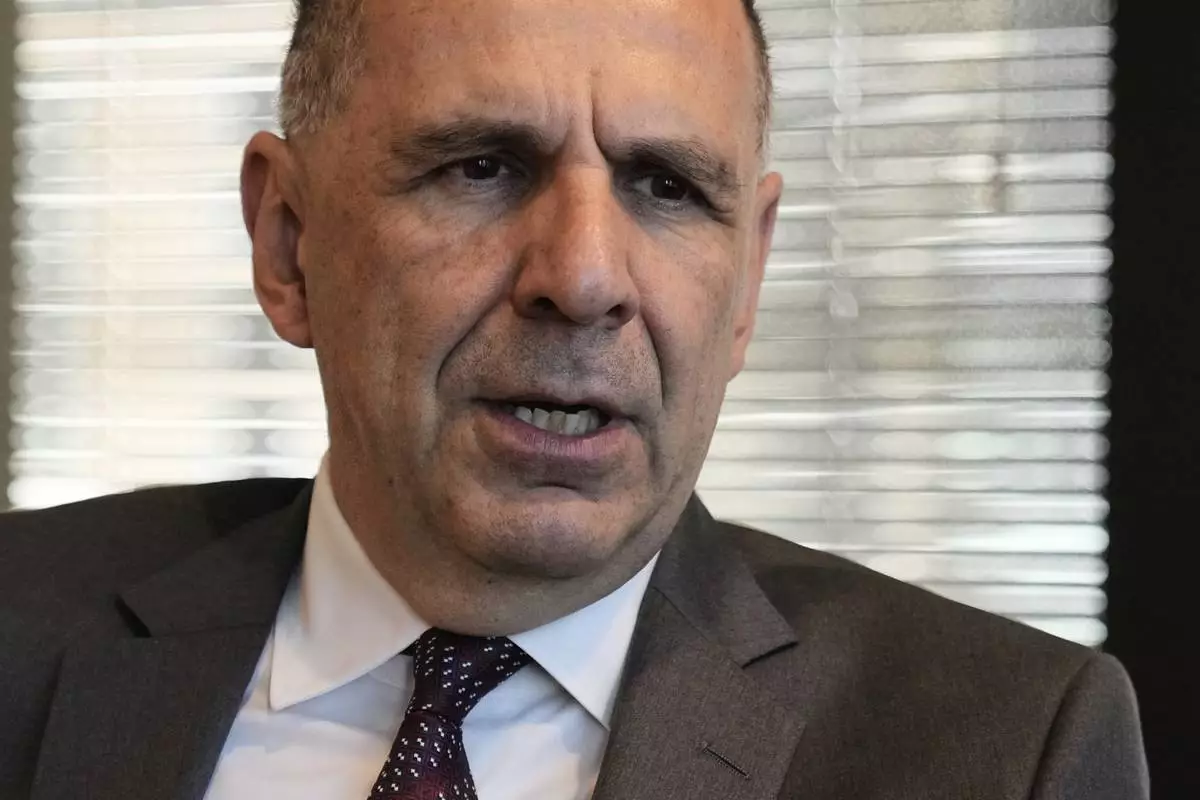
Greece Foreign Minister Giorgos Gerapetritis responds to questions during an interview at the Permanent Mission of Greece to the United Nations, in New York, Monday, May 19, 2025. (AP Photo/Richard Drew)