On the eve of the Tibetan New Year, households in southwest China's Xizang Autonomous Region come alive with the scent of Gutu porridge, a cherished tradition blending culinary artistry with heartfelt wishes for the year ahead.
Gutu, a traditional porridge containing nine ingredients including balls of dough, beef and turnip, is a key feature of family lunar New Year celebrations in Xizang.
"Gu" in Tibetan means nine, which is a lucky number. "Tu" means "pasta." Nine different fillings like wool, charcoal and chili are placed inside the dough drops, and each of these fillings has a meaning.
On May 16, China Global Television (CGTN) released a documentary short film highlighting Tibetan traditions, featuring a woman named Tsedrup as she prepared Gutu porridge.
"Rice grain represents a kind heart. Wool symbolizes patience. Meat means loyalty. Wheat stands for good luck," she said.
As the pot bubbles at Tsedrup's home, her granddaughter, Kalsang Drolkar, learns to mold small dough pieces into symbols of prosperity and good fortune.
"We're making a symbol of happiness. I hope Kalsang Drolkar and her brother Rinchen will understand," Tsedrup said.
The Tibetan New Year, known as Losar, is the most important festival in the Tibetan calendar. It is a time for family reunions and marked by religious rituals, long prayers, horse racing, family gatherings and feasts.
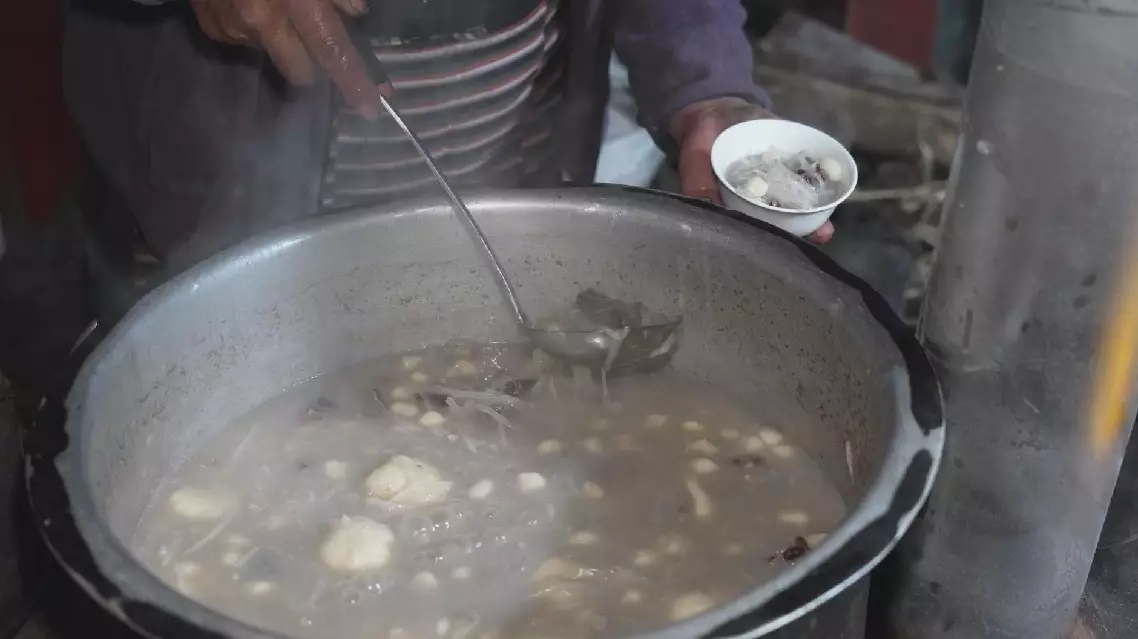
Tibetan New Year celebrations shine through Gutu porridge traditions