Skip to Content Facebook Feature Image

South Africa’s leader aims to salvage relationship with Trump in White House visit

News

South Africa’s leader aims to salvage relationship with Trump in White House visit
News

News

South Africa’s leader aims to salvage relationship with Trump in White House visit

2025-05-21 14:02 Last Updated At:05-22 21:39

JOHANNESBURG (AP) — U.S. President Donald Trump will host South Africa's leader at the White House on Wednesday for a meeting that might be tense after Trump accused the country's government of allowing a “genocide” to take place against minority white farmers.

South Africa has strongly rejected the allegation and President Cyril Ramaphosa pushed for the meeting with Trump in an attempt to salvage his country's relationship with the United States, which is at its lowest point since the end of the apartheid system of racial segregation in 1994.

More Images
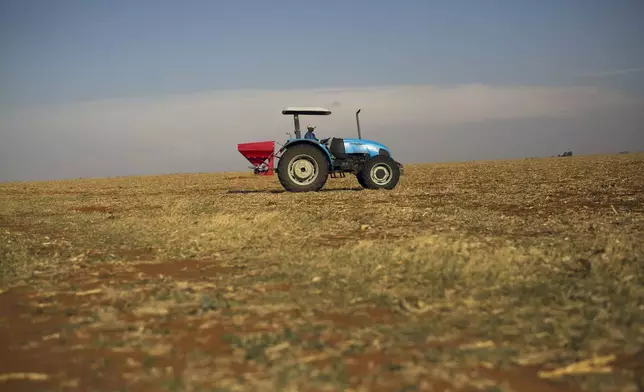
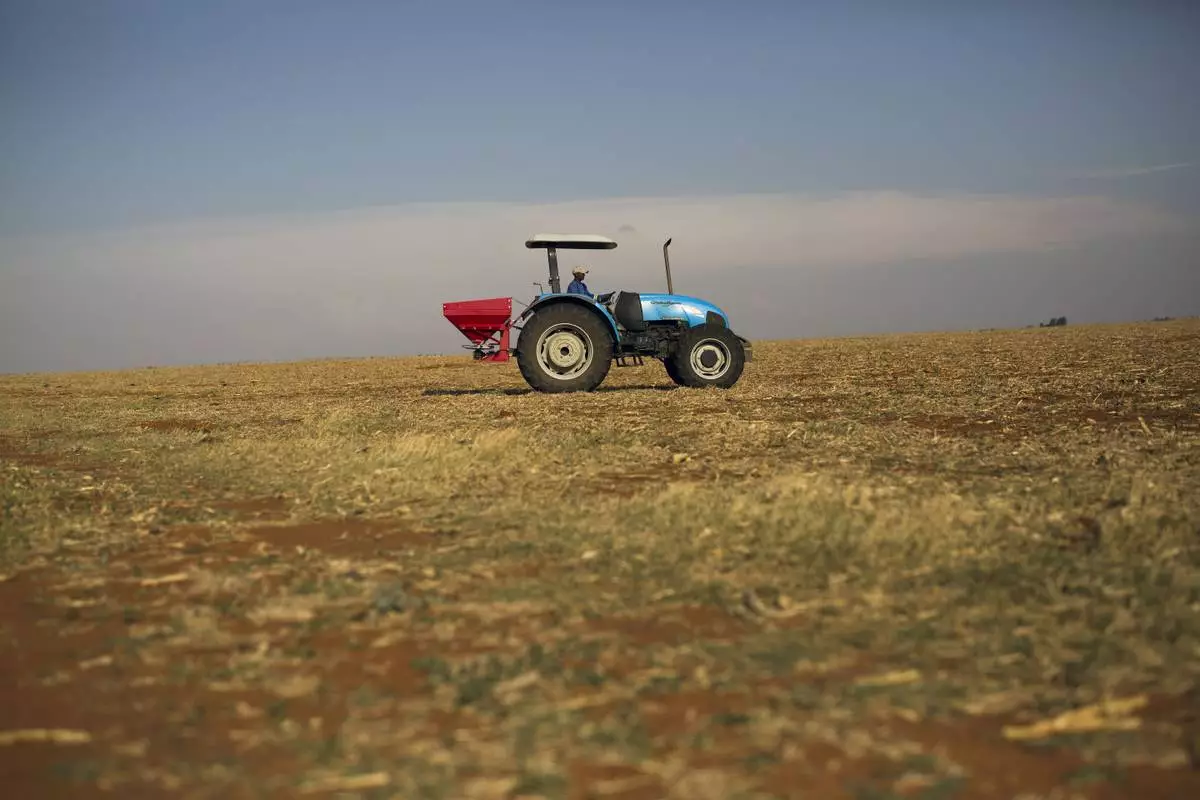
FILE- A farm hand spreads fertilizer on John Rankin's commercial farm in Gerdau, South Africa, Nov. 19, 2018. (AP Photo/Jerome Delay, File)

FILE- A farm hand spreads fertilizer on John Rankin's commercial farm in Gerdau, South Africa, Nov. 19, 2018. (AP Photo/Jerome Delay, File)

Afrikaner refugees from South Africa holding American flags arrive, Monday, May 12, 2025, at Dulles International Airport in Dulles, Va. (AP Photo/Julia Demaree Nikhinson)
Afrikaner refugees from South Africa holding American flags arrive, Monday, May 12, 2025, at Dulles International Airport in Dulles, Va. (AP Photo/Julia Demaree Nikhinson)

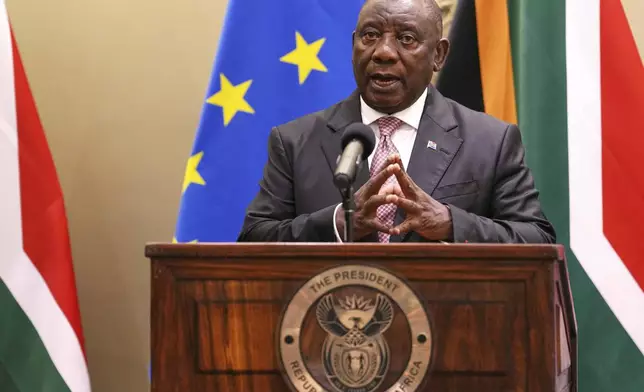
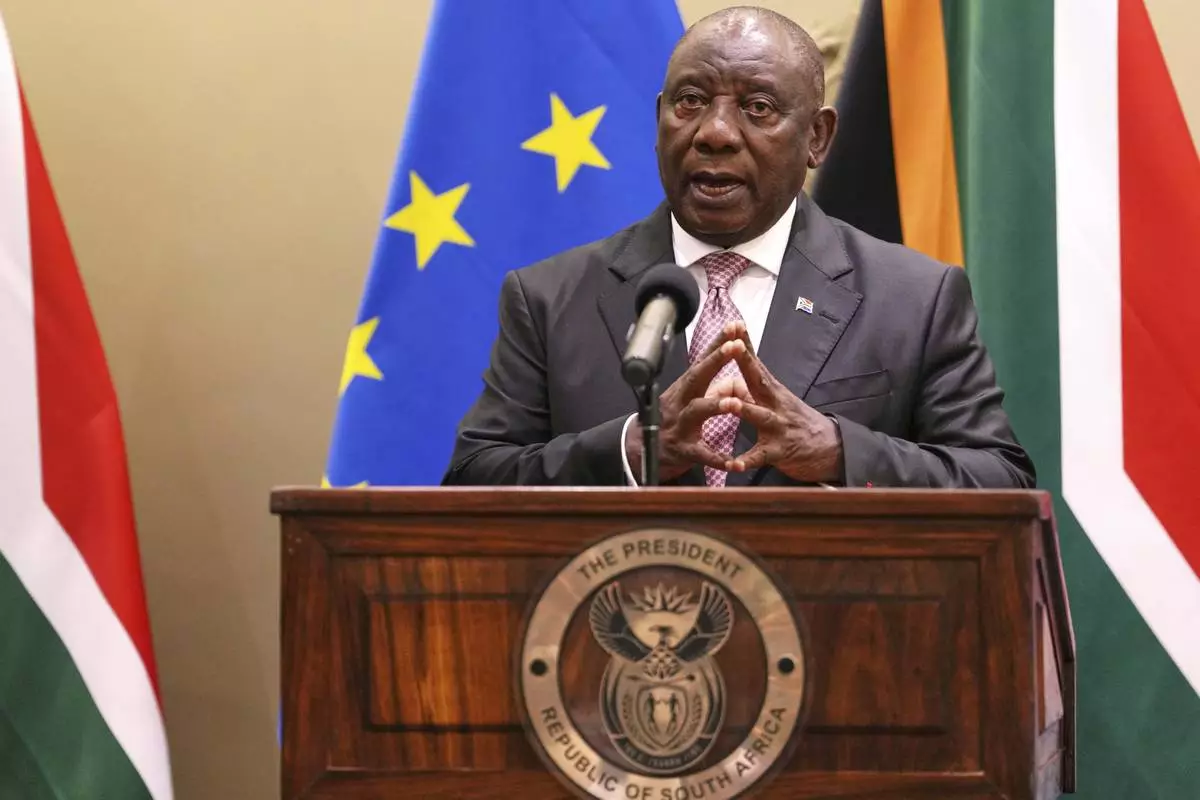
FILE - South Africa's President Cyril Ramaphosa speaks to journalists during the eighth EU-South Africa summit in Cape Town, South Africa, March 13, 2025. (AP Photo/Nardus Engelbrecht, File)

FILE - South Africa's President Cyril Ramaphosa speaks to journalists during the eighth EU-South Africa summit in Cape Town, South Africa, March 13, 2025. (AP Photo/Nardus Engelbrecht, File)

FILE - White South Africans demonstrate in support of U.S. President Donald Trump in front of the U.S. embassy in Pretoria, South Africa, Feb. 15, 2025. (AP Photo/Jerome Delay, File)
FILE - White South Africans demonstrate in support of U.S. President Donald Trump in front of the U.S. embassy in Pretoria, South Africa, Feb. 15, 2025. (AP Photo/Jerome Delay, File)

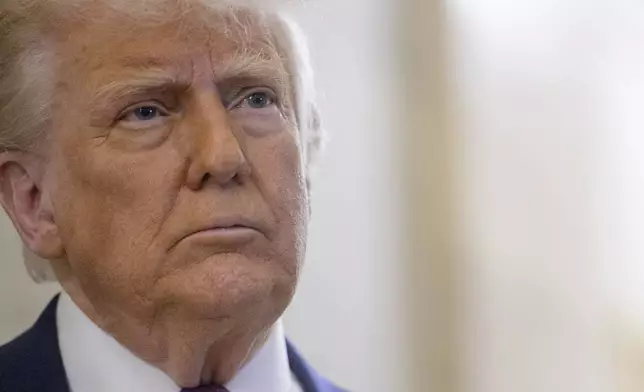
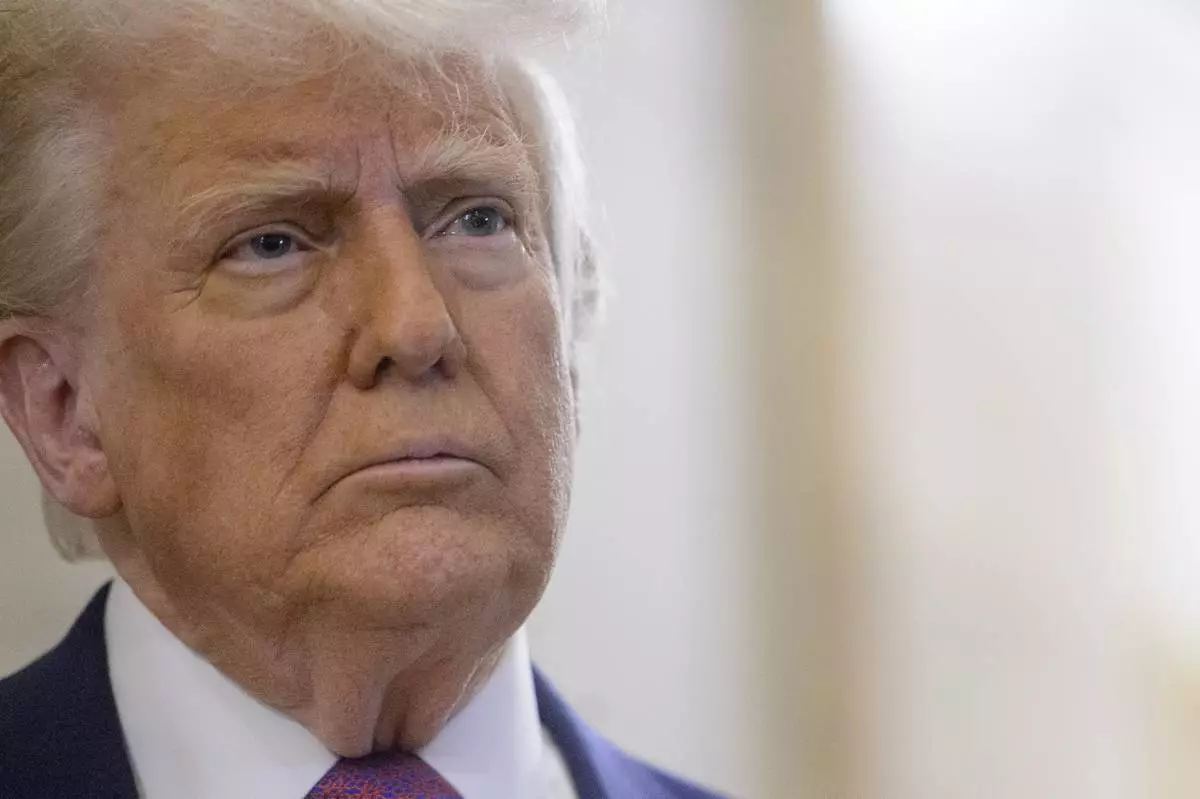
President Donald Trump speaks to reporters as he arrives for a meeting with the House Republican Conference at the Capitol, Tuesday, May 20, 2025, in Washington. (AP Photo/Rod Lamkey, Jr.)

President Donald Trump speaks to reporters as he arrives for a meeting with the House Republican Conference at the Capitol, Tuesday, May 20, 2025, in Washington. (AP Photo/Rod Lamkey, Jr.)

Trump has launched a series of accusations at South Africa's Black-led government, including that it is seizing land from white farmers, enforcing anti-white policies and pursuing an anti-American foreign policy.

Ramaphosa said he hopes to correct what he calls damaging mischaracterizations during the meeting, which is Trump's first with an African leader at the White House since he returned to office.

Some in South Africa worry their leader might get "Zelenskyy'd" — a reference to the public bashing Trump and Vice President JD Vance handed out to the Ukrainian president in their infamous Oval Office meeting in February.

In advance of the meeting, a White House official said Trump's topics of discussion with Ramaphosa were likely to include the need to condemn politicians who “promote genocidal rhetoric” and to classify farm attacks as a priority crime. The official, who spoke on condition of anonymity to discuss internal planning, said Trump also was likely to raise South African race-based barriers to trade and the need to “stop scaring off investors.”

Here’s what to know ahead of the Trump-Ramaphosa meeting.

Trump's criticism of South Africa began in early February in a post on Truth Social when he accused South Africa's government of seizing land from white Afrikaner farmers and a "massive Human Rights VIOLATION" against members of the white minority.

Trump's allegation that Afrikaners were being mistreated was at the center of an executive order he issued days later that cut all U.S. assistance to South Africa.

He went further this month, alleging there was a “genocide” against white farmers and the Trump administration has brought a small group of white South Africans to the U.S. as refugees in what it says is the start of a larger relocation program.

The U.S. has been asked if it will stand by the genocide allegation. Secretary of State Marco Rubio said in an interview with CBS that it would and that the administration felt there was evidence, citing instances of white farmers being murdered and claiming some were being “forcibly removed” from their properties.

Some white farmers have been killed in violent home invasions. But the South African government says the causes behind the relatively small number of homicides are misunderstood by the Trump administration; they are part of the country's severe problems with crime and not racially motivated, it says. Black farmers have also been killed.

The South African government has said the allegations against it are misinformation.

South African Agriculture Minister John Steenhuisen, who is white and a member of a different political party from Ramaphosa, said in an interview with The Associated Press that no land was being seized from farmers and claims of genocide were false.

“When you mischaracterize things like that and this misinformation gets out, it does have real-world consequences,” said Steenhuisen, who is part of the South African delegation in Washington.

The White House official said Trump would also likely impress on Ramaphosa the need for the South African government to publicly condemn politicians who repeat an apartheid-era chant that contains the lyrics “kill the farmer” and “shoot the farmer.” The chant is sometimes used at political rallies by a minority opposition party.

It has often been cited by critics of South Africa — including South African-born Trump ally Elon Musk — as evidence of the persecution of white farmers because it uses the word Boer, which specifically refers to Afrikaners.

While Ramaphosa's party does not use the chant, the government has not condemned it. An Afrikaner group says it should be labelled hate speech.

Musk has been at the forefront of the criticism of his homeland, casting its affirmative action business laws as racist. Musk said on social media that his Starlink satellite internet service wasn't able to get a license to operate in South Africa because he was white.

South African authorities say Starlink hasn't formally applied. If it did, it would be bound by laws that require foreign companies to allow 30% of their South African subsidiaries to be owned by shareholders who are Black or from other racial groups disadvantaged under apartheid.

The Trump administration considered those laws a trade barrier and U.S. companies should be exempt from racial requirements, according to the White House official.

Bloomberg reported Tuesday, quoting unnamed sources, that South Africa was willing to negotiate on easing the laws for Musk's Starlink in an attempt to defuse tensions with the U.S. Ramaphosa didn't comment on any possible discussions with Musk or his representatives when asked by South African reporters in Washington.

Ramaphosa was also asked if he worried he might be “humiliated” in a public appearance with Trump. Parts of the South African media have questioned whether Ramaphosa might get “Zelenskyy'd” at the White House — a reference to Trump's berating of Ukrainian President Volodymyr Zelenskyy in front of the world's media.

Trump has directed much of his criticism at Ramaphosa and senior government officials, accusing them of doing “some terrible things.”

Ramaphosa said the meeting would focus on trade and normalizing relations and he was not concerned it would become confrontational or that he would be humiliated.

“South Africans are never humiliated, are they? South Africans always go into everything holding their heads high,” he said.

AP White House Correspondent Zeke Miller contributed to this report.

AP Africa news: https://apnews.com/hub/africa
FILE- A farm hand spreads fertilizer on John Rankin's commercial farm in Gerdau, South Africa, Nov. 19, 2018. (AP Photo/Jerome Delay, File)

FILE- A farm hand spreads fertilizer on John Rankin's commercial farm in Gerdau, South Africa, Nov. 19, 2018. (AP Photo/Jerome Delay, File)

Afrikaner refugees from South Africa holding American flags arrive, Monday, May 12, 2025, at Dulles International Airport in Dulles, Va. (AP Photo/Julia Demaree Nikhinson)
Afrikaner refugees from South Africa holding American flags arrive, Monday, May 12, 2025, at Dulles International Airport in Dulles, Va. (AP Photo/Julia Demaree Nikhinson)

FILE - South Africa's President Cyril Ramaphosa speaks to journalists during the eighth EU-South Africa summit in Cape Town, South Africa, March 13, 2025. (AP Photo/Nardus Engelbrecht, File)

FILE - South Africa's President Cyril Ramaphosa speaks to journalists during the eighth EU-South Africa summit in Cape Town, South Africa, March 13, 2025. (AP Photo/Nardus Engelbrecht, File)

FILE - White South Africans demonstrate in support of U.S. President Donald Trump in front of the U.S. embassy in Pretoria, South Africa, Feb. 15, 2025. (AP Photo/Jerome Delay, File)
FILE - White South Africans demonstrate in support of U.S. President Donald Trump in front of the U.S. embassy in Pretoria, South Africa, Feb. 15, 2025. (AP Photo/Jerome Delay, File)

President Donald Trump speaks to reporters as he arrives for a meeting with the House Republican Conference at the Capitol, Tuesday, May 20, 2025, in Washington. (AP Photo/Rod Lamkey, Jr.)
President Donald Trump speaks to reporters as he arrives for a meeting with the House Republican Conference at the Capitol, Tuesday, May 20, 2025, in Washington. (AP Photo/Rod Lamkey, Jr.)

SAN FRANCISCO (AP) — Wildlife crews are no longer actively searching for two juvenile gray wolves who were part of a pack that killed dozens of cows and calves last summer in Northern California’s Sierra Valley, an official said Tuesday.

The two wolves were members of the Beyem Seyo pack that in 2025 killed or injured at least 92 calves and cows in a seven-month period, according to a report released last week by two researchers with the University of California, Davis.

Wolves in the state are protected under California law and the federal Endangered Species Act. Under former President Joe Biden, officials said they planned a first-ever national recovery plan for wolves, but President Donald Trump’s administration ended that initiative in November.

In October, the California Department of Fish and Wildlife announced it had euthanized four gray wolves — three adults and a juvenile — from the Beyem Seyo pack after “an unprecedented level of livestock attacks across the Sierra Valley” by a single wolf pack since the canids returned to the state. It also said it planned to capture and relocate the remaining two wolves to wildlife facilities to prevent their behavior from spreading to other wolves in California.

Gray wolves primarily prey on wild animals like deer and elk, not livestock, but the pack became used to killing cows and calves, the department said.

“These wolves had become habituated to preying on cattle, a feeding pattern that persisted and was being taught to their offspring which would leave to form their own packs and could teach them the same cattle-preying behavior,” the department said at the time.

But following weeks of searching for the remaining two wolves, officials have “reduced efforts to capture” them, Katie Talbot, CDFW Deputy Director of Public Affairs, said in a statement.

“Despite best efforts from CDFW’s expert wolf biologists and law enforcement officers, we have not been able to find or get close enough to these young wolves to safely capture them,” Talbot said.

“We remain hopeful our continued remote monitoring will allow for sightings that will lead to safe capture of these juveniles,” she added.

Talbot said that CDFW crews will be working this week on capturing wolves and collaring them throughout the state, including in the Sierra Valley.

Wildlife officials tried for months to prevent the pack from attacking farm animals by using drones, nonlethal bean bags, installing flags or rope to deter them and having officers in the field 24 hours a day, seven days a week, but their efforts failed.

“The efforts that the (CDFW) made were tremendous and heroic but it was too late,” said Amaroq Weiss, senior wolf advocate for the Center for Biological Diversity.

She said that cattle ranchers in the area should have been taking proactive prevention measures for years, including increased human presence around the cattle, keeping the livestock bunched up instead of letting them loose on large grazing pastures, and calving at the same time of year that deer and elk are birthing so wolves have a source of wild prey.

“Ranchers in California have been on notice that wolves were coming since late December 2011, when we got our first wolf. They have been on notice they would establish packs since 2015,” when the first pack was confirmed in Siskiyou County, Weiss said.

Gray wolves were eradicated in California early in the last century because of their perceived threat to livestock, with the last known native wolf killed in 1924 in Lassen County. Since their reintroduction in Idaho and at Yellowstone National Park in the mid-1990s, they’ve proliferated throughout the West. The recovering population has meant increasing conflict with ranchers.

“It was a horrible summer here for everybody and the emotional strain was probably worse than the financial strain for most people. They did the right thing. We couldn’t go on living the way we were living,” said Rick Roberti, a cattle rancher in Plumas County and president of the California Cattlemen’s Association, who lost several animals.

Economist Tina Saitone and researcher Tracy Schohr said in UC Davis’ quarterly agricultural economics update released Friday that the Beyem Seyo pack killed more livestock than the entire wolf population of Montana killed in 2024 and the killings of farm animals by the wolves in Wyoming in 2023.

In Montana, the state’s 1,100 wolves killed 54 domestic animals in 2024, and Wyoming’s 352 wolves killed 49 livestock in 2023, the scientists said.

In California, about 70 gray wolves were responsible for 175 livestock kills between January and October of last year, with the Beyem Seyo pack responsible for half the killings, according to CDFW data.

Roberti said the attacks on livestock in Plumas and Sierra counties left many ranchers angry. He said he would like to see certain areas in the state declared “special zones” where people are allowed to hunt wolves that attack livestock.

“We’re pretty much in unison about thinking that it would help if we started taking out the ones that are just killing cattle and are too habituated to man or they’re not afraid of us,” he said.

The predators are a long way from recovery, Weiss said, adding that killing them is not a long-term solution.

“The scientific literature is pretty conclusory that killing wolves to resolve conflicts with livestock is not a solution. It can actually be counterproductive. It can result in there being more conflicts with livestock,” she said.

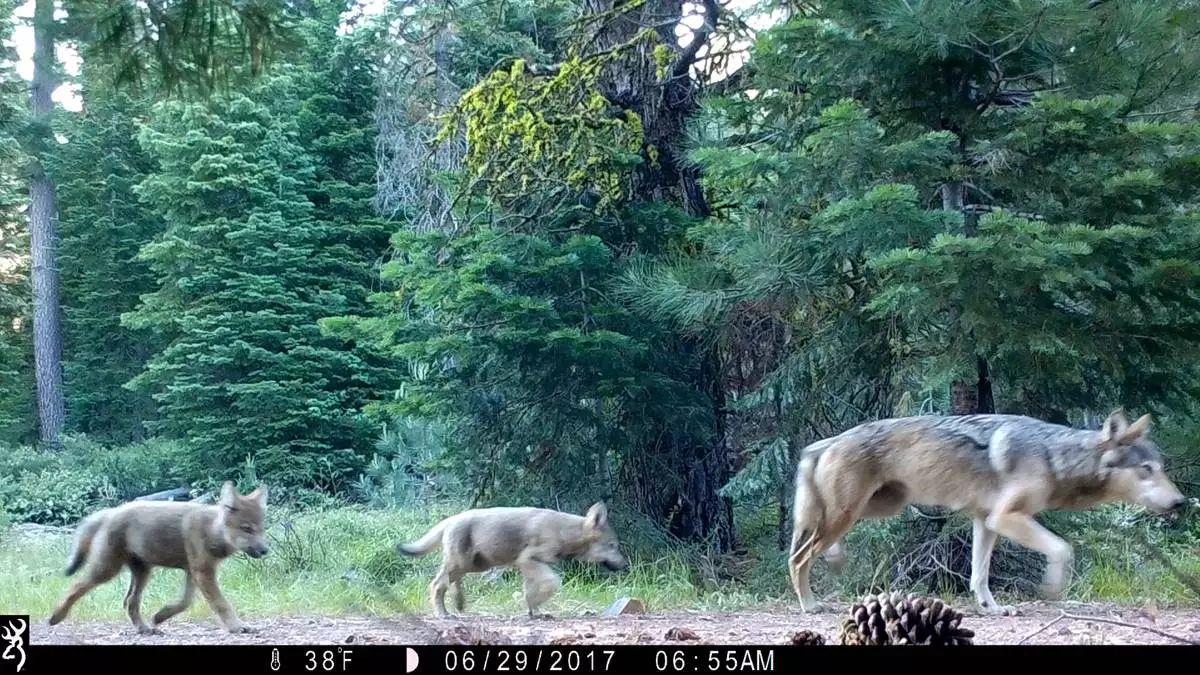
FILE - This remote camera image provided by the U.S. Forest Service shows a female gray wolf and two of the three pups born in 2017 in the wilds of Lassen National Forest in northern California on June 29, 2017. (U.S. Forest Service via AP, File)

FILE - This remote camera image provided by the U.S. Forest Service shows a female gray wolf and two of the three pups born in 2017 in the wilds of Lassen National Forest in northern California on June 29, 2017. (U.S. Forest Service via AP, File)

Recommended Articles