The U.S. Supreme Court has allowed the Trump administration to revoke legal protections for over 300,000 Venezuelan asylum seekers, sparking widespread concern among migrant communities across the United States.
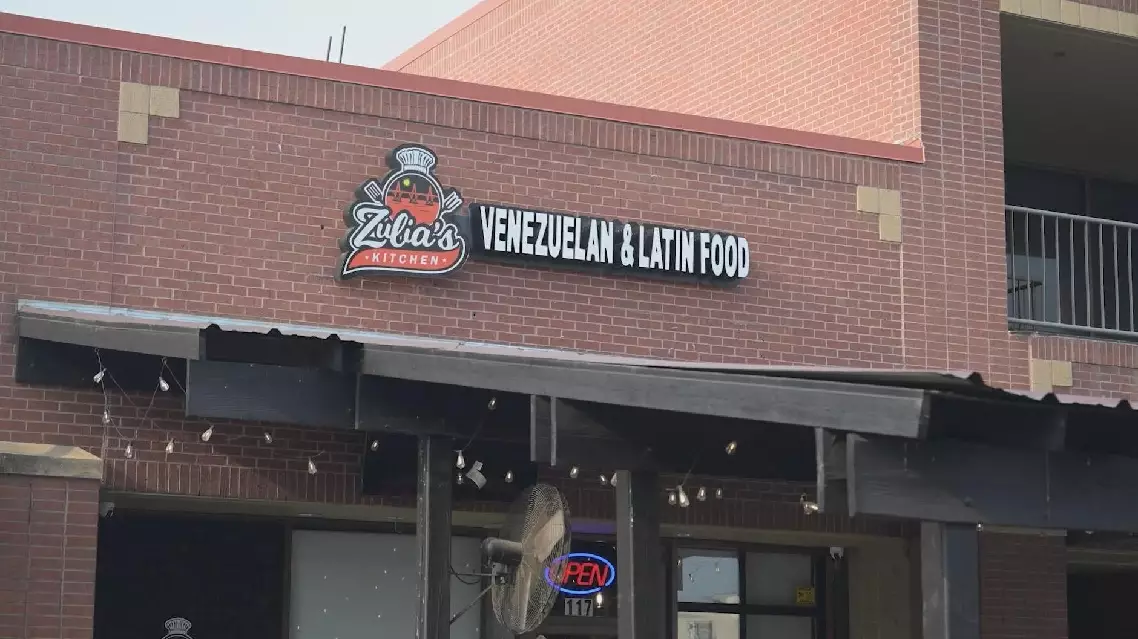
In San Antonio, Texas, home to a large Venezuelan community, tensions are high following the ruling.
Critics argue the Trump administration unfairly targeted Venezuelan refugees, while authorities in the city report issues with Venezuelan gangs, including the "Tren de Aragua." The administration has spotlighted this group, transferring suspected gang members to a maximum-security prison in El Salvador.
Homeland Security Secretary Kristi Noem, who recently visited the notorious Salvadoran mega-prison -- defended the administration's actions in testimony before Congress last week.
"The mission of the Department of Homeland Security is to secure our nation and to make sure that we're out there going after those that are the worst of the worst, the criminals, the bad actors," she said.
However, a Venezuelan asylum seeker who would like to speak on condition of anonymity said that hundreds of thousands of honest Venezuelan refugees in America have been tarnished with the same brush.
"We are all seen as criminals. A minority of Venezuelans have turned to crime here, and now we are all being labelled as bad people," he said.
Other immigrant groups are watching closely. Nicaraguans like Joniel Ramirez are currently covered by Temporary Protected Status -- but that's due to expire in July -- and he says he's not counting on courts to come through for him.
"I'm going to self-deport. I'd rather leave on my own than be arrested and ejected as if I were a criminal. I don't understand all this hatred against immigrants; we're the ones who keep this country afloat," said the Nicaraguan migrant.
As the Trump administration cracks down on refugees, migrant communities across the country are growing increasingly nervous.
Court's ruling deepens migrant concerns amid revoked Venezuelan protection in US

From cutting-edge technology exhibitions to retail stores thousands of kilometers away from Europe and Southeast Asia, China-made robot vacuum cleaners are increasingly becoming a popular choice among consumers worldwide.
At electronics retailers in Berlin, Germany, Chinese brands such as Roborock and Dreame occupy prominent positions in dedicated robot vacuum sections, offering a wide range of products priced between 200 and 2,000 euros.
Many local consumers said that when purchasing smart home appliances including robot vacuum cleaners, they tend to give priority to Chinese-made products.
"It's a good price and good quality. It's also the innovation. I have a feeling that the European brands are not innovating enough," said one customer.
"I think they're always on top of the other technologies. They are getting them out faster. A lot of us are switching to the Chinese technology," another consumer said.
Germany is one of the most important overseas markets for China's floor-cleaning robots.
According to data from market research firm GfK, from January to November 2025, more than six out of 10 robot vacuum cleaners sold in Western Europe were Chinese brands.
Industry data also point to a strong global momentum.
According to the International Data Corporation (IDC), global shipments of smart robot vacuum cleaners reached 17.424 million units in the first three quarters of 2025, representing a year-on-year increase of 18.7 percent.
Chinese brands including Roborock, Ecovacs, Dreame, Xiaomi and Narwal ranked among the world's top five in terms of shipment volume, with a combined share of nearly 70 percent of the global market.
At a robot vacuum cleaner manufacturing plant in Huizhou, south China's Guangdong Province, workers were seen stepping up production of newly launched models that recently debuted at the Consumer Electronics Show in the United States, which concluded Friday in Las Vegas, Nevada.
The factory adjusted its production lines as early as December 2025 and stocked inventory in advance for overseas markets to ensure that new products could be delivered to global consumers at the earliest possible time.
"In 2025, Roborock's global shipments exceeded 7.2 million units. Since 2024, overseas revenue has accounted for more than 50 percent of our total revenue. Our products have now been sold to more than 170 countries and regions, serving more than 20 million households worldwide," said Quan Gang, president of Roborock.
At another robot vacuum cleaner manufacturing facility in Dongguan, Guangdong, rising overseas orders have prompted the company to upgrade its production lines with intelligent technologies to further boost capacity. The factory is currently operating at full load to meet a growing demand.
"For 2026, we have already obtained overseas orders worth at least 300 million to 400 million yuan (around 43 million to 57.3 million U.S. dollars). In addition, we've engaged in strategic cooperation with European home appliance group Cebos Group, and our total confirmed orders have exceeded 600 million yuan (around 86 million U.S. dollars)," said Zhang Junbin, founder and CEO of Narwal Robotics.
Chinese robot vacuum brands gain strong global traction