The United States is being asked to explain why it appears to be deporting migrants from as far away as Vietnam and Cuba to South Sudan, a chaotic country that's once again in danger of collapsing into civil war.
A U.S. judge ordered Trump administration officials to appear at an emergency hearing Wednesday to answer questions. The administration said it had expelled eight immigrants convicted of violent crimes in the U.S. but refused to say where they would end up.
If South Sudan is the confirmed destination, that means people from Vietnam, Mexico and elsewhere are being sent to a nation they have no link to, thousands of miles from where they want to be. Vietnam's list of its embassies in Africa shows the closest one to South Sudan is in Tanzania, over 800 miles away.
South Sudan’s police spokesperson, Maj. Gen. James Monday Enoka, told The Associated Press that no migrants had arrived and if they did, they would be investigated and “redeported to their correct country" if not South Sudanese.
Some in the capital, Juba, worried their country would become a kind of dumping ground. “Those people who are deported, some of them are criminals, they have been involved in crimes. So once they are brought to South Sudan, that means that criminal activities will also increase,” said Martin Mawut Ochalla, 28.
This would not be the first time the Trump administration has pressured South Sudan over deportees. Recently, the administration abruptly revoked the visas of all South Sudanese, saying their government failed to accept the return of its citizens “in a timely manner.” South Sudan pushed back, saying the person in question was Congolese, but later said it would allow him to enter “in the spirit of maintaining friendly relations” with the U.S.
South Sudan’s government has struggled since independence from Sudan in 2011 to deliver many of the basic services of a state. Years of conflict have left the country heavily reliant on aid that has been hit hard by another Trump administration decision — sweeping cuts in foreign assistance.
Here’s a look at South Sudan, whose own people had been granted U.S. temporary protected status because of insecurity at home.
The euphoria of independence turned to civil war two years later, when rival factions backing President Salva Kiir and deputy Riek Machar opened fire on each other in South Sudan’s capital, Juba, in 2013.
The two men’s tensions have been so much at the heart of the country’s insecurity that the late Pope Francis once took the extraordinary step of kneeling to kiss their feet in a plea for lasting peace.
Five years of civil war killed hundreds of thousands of people. A peace deal reached in 2018 has been fragile and not fully implemented, to the frustration of the U.S. and other international backers. South Sudan still hasn’t held a long-delayed presidential election, and Kiir remains in power.
His rivalry with Machar is compounded by ethnic divisions. Machar has long regarded himself as destined for the presidency, citing a prophecy years ago by a seer from his ethnic group.
Earlier this year, the threat of war returned. Machar was arrested and allies in the government and military were detained following a major escalation that included airstrikes and an attack on a United Nations helicopter. Machar’s opposition party announced South Sudan’s peace deal was effectively over.
“Let’s not mince words: What we are seeing is darkly reminiscent of the 2013 and 2016 civil wars, which killed 400,000 people,” U.N. Secretary-General Antonio Guterres warned.
Some Western countries have closed their embassies there while others, including the U.S., have reduced embassy staff. The U.S. Embassy's travel warning said that “violent crime, such as carjackings, shootings, ambushes, assaults, robberies, and kidnappings are common throughout South Sudan, including Juba.”
The Trump administration’s pressure on South Sudan to take in deportees, including foreign ones, is in sharp contrast to Washington’s past warm embrace as its rebel leaders — including Kiir and Machar — fought for independence.
Now there is less support than ever for most of South Sudan's over 11 million people because of the cuts in U.S. aid.
Climate shocks including flooding have long caused mass displacement and closed schools. South Sudan’s health and education systems were already among the weakest in the world. Aid organizations had offered essential help.
South Sudan's government has long relied on oil production, but little money from that is seen, in part because of official corruption. Conflict in neighboring Sudan has affected landlocked South Sudan’s oil exports. Civil servants at times go months without being paid.
How South Sudan is equipped to handle migrants arriving abruptly from the U.S. is yet to be seen.
Associated Press journalist Florence Miettaux in Juba, South Sudan, contributed.
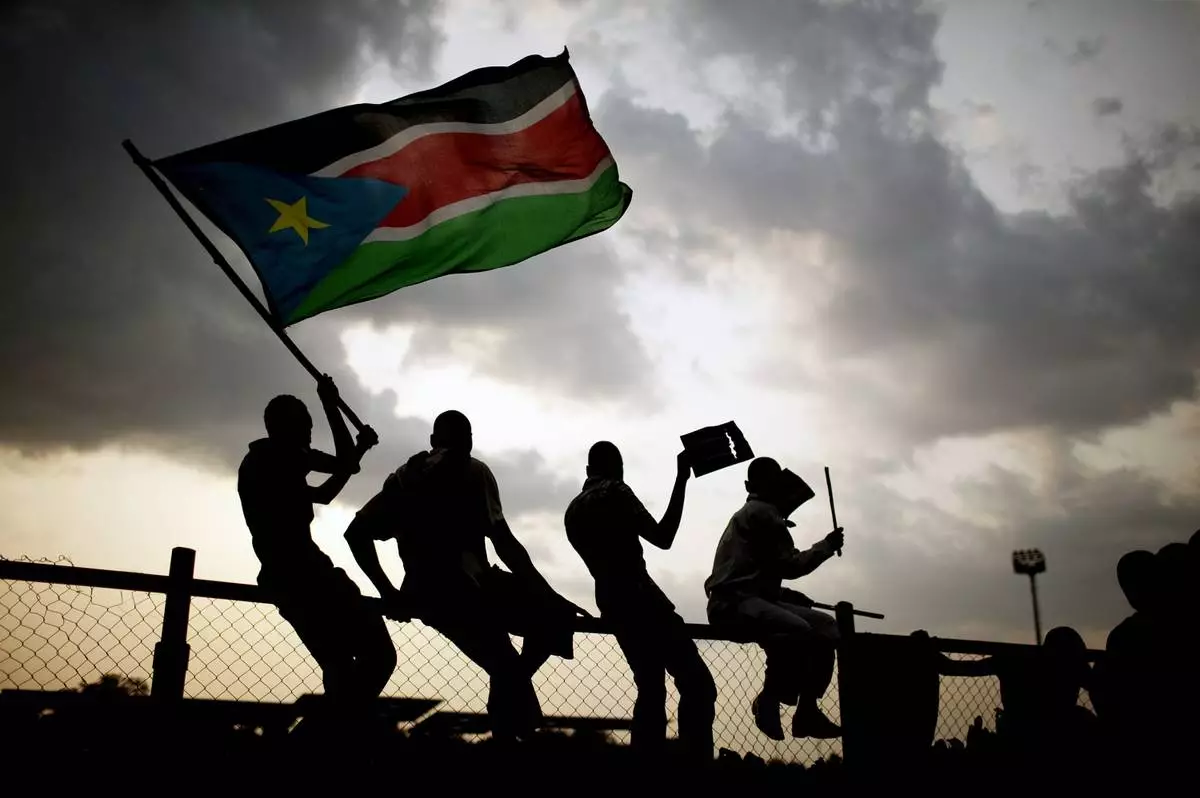
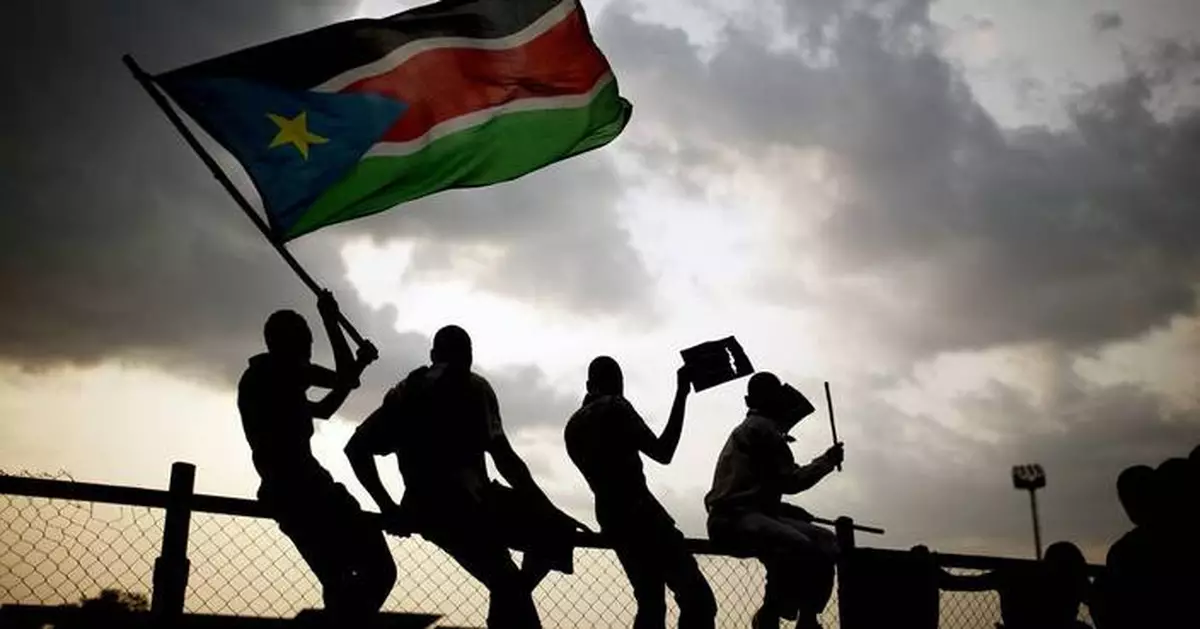
FILE - In this Sunday, July 10, 2011 file photo, Southern Sudanese wave the national flag in the capital Juba. (AP Photo/Pete Muller, File)
BETHLEHEM, West Bank (AP) — Thousands of people flocked to Bethlehem's Manger Square on Christmas Eve as families heralded a much-needed boost of holiday spirit. The giant Christmas tree that was absent during the Israel-Hamas war returned on Wednesday, overlooking a parade of scouts playing songs on bagpipes.
The city where Christians believe Jesus was born cancelled Christmas celebrations for the past two years. Manger Square had instead featured a nativity scene of baby Jesus surrounded by rubble and barbed wire in homage to the situation in Gaza.
Cardinal Pierbattista Pizzaballa, the top Catholic leader in the Holy Land, kicked off this year's celebrations during the traditional procession from Jerusalem to Bethlehem, calling for “a Christmas full of light.”
Arriving in Manger Square, Pizzaballa said he came bearing greetings from Gaza's tiny Christian community, where he held a pre-Christmas Mass on Sunday. Among the devastation, he saw a desire to rebuild.
“We, all together, we decide to be the light, and the light of Bethlehem is the light of the world,” he told thousands of people, Christian and Muslim.
Despite the holiday cheer, the impact of the war in the Israeli-occupied West Bank is acute, especially in Bethlehem, where around 80% of the Muslim-majority city’s residents depend upon tourism-related businesses, according to the local government.
The vast majority of people celebrating were residents, with a handful of foreigners in the crowd. But some residents said they are starting to see signs of change as tourism slowly returns.
“Today is a day of joy, a day of hope, the beginning of the return of normal life here,” said Bethlehem resident Georgette Jackaman, a tour guide who has not worked in more than two years.
She and her husband, Michael Jackaman, another guide, are from established Christian Bethlehem families that stretch back generations. This is the first real Christmas celebration for their two children, aged 2 1/2 and 10 months.
During the war, the Jackamans pivoted to create a website selling Palestinian handicrafts to try to support others who have lost their livelihoods.
During the Gaza war, the unemployment rate in the city jumped from 14% to 65%, Bethlehem Mayor Maher Nicola Canawati said earlier this month.
A visitor from France, Mona Riewer, said that “I came because I wanted to better understand what people in Palestine are going through, and you can sense people have been through a very hard time."
Although friends and family cautioned her against coming due to the volatile situation, Riewer said being in Bethlehem helped her appreciate the meaning of the holiday.
“Christmas is like hope in very dark situations, a very vulnerable child experiencing harshness,” she said.
Despite the Gaza ceasefire that began in October, tensions remain high across much of the West Bank.
Israel’s military continues to carry out frequent raids in what it says is a crackdown on militants. Attacks by Israeli settlers against Palestinians have reached their highest level since the United Nations humanitarian office started collecting data in 2006. Israel captured the West Bank in the 1967 Mideast war.
The internationally recognized Palestinian Authority has limited autonomy in parts of the territory, including Bethlehem. Palestinian President Mahmoud Abbas is expected to attend midnight Mass for the first time in two years, the mayor said.
As poverty and unemployment have soared, about 4,000 people have left Bethlehem in search of work, the mayor said. It’s part of a worrying trend for Christians, who are leaving the region in droves.
Christians account for less than 2% of the West Bank’s roughly 3 million residents. Across the Middle East, the Christian population has steadily declined as people have fled conflict and attacks.
Fadi Zoughbi, who previously worked overseeing logistics for tour groups, said his children were ecstatic to see marching bands streaming through Bethlehem's streets.
The scouts represent cities and towns across the West Bank, with Palestinian flags and tartan draped on their bagpipes, drummers spinning mallets adorned with pompoms. For the past two years, the scouts marched silently as a protest against the war.
Irene Kirmiz, who grew up in Bethlehem and now lives in Ramallah, said the scout parade is among her favorite Christmas traditions. Her 15-year-old daughter plays the tenor drum with the Ramallah scouts.
But her family had to wake up at 5 a.m. to arrive in time for the parade and waited upwards of three hours at Israeli checkpoints. The drive previously took 40 minutes without the checkpoints that have increasingly made travel difficult for Palestinians, she said.
“It's very emotional seeing people trying to bounce back, trying to celebrate peace and love,” Kirmiz said.
The Israeli Ministry of Tourism estimates 130,000 tourists will visit Israel by the end of December, including 40,000 Christians. In 2019, a banner year for tourism before the pandemic, the tourism ministry said 150,000 Christian tourists visited during Christmas week alone.
During the previous two years, the heads of churches in Jerusalem urged congregations to forgo “any unnecessarily festive activities.” They encouraged priests and the faithful to focus on Christmas’ spiritual meaning and called for “fervent prayers for a just and lasting peace for our beloved Holy Land.”
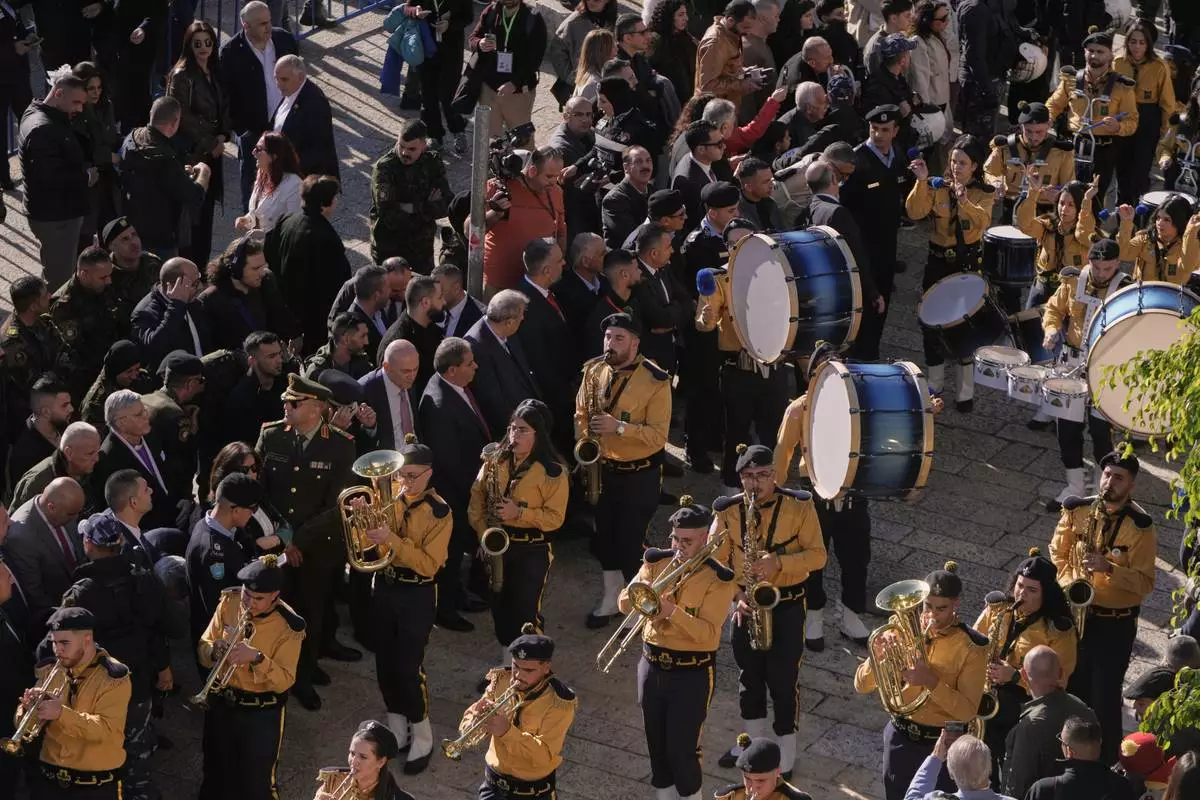
Palestinian scout bands parade at the Manger Square near the Church of the Nativity, traditionally believed to be the birthplace of Jesus, on Christmas Eve, in the West Bank city of Bethlehem, Wednesday, Dec. 24, 2025. (AP Photo/Mahmoud Illean)
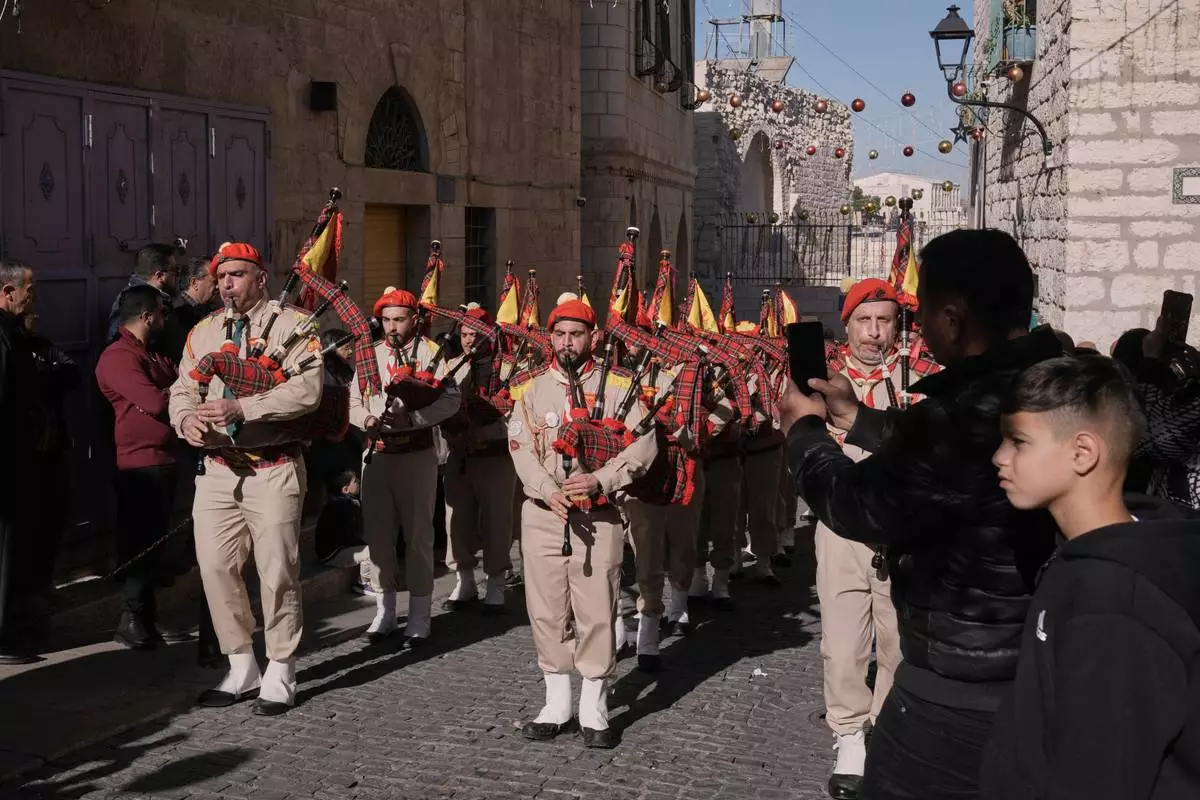
Palestinian scout bands parade toward the Manger Square near the Church of the Nativity, traditionally believed to be the birthplace of Jesus, on Christmas Eve, in the West Bank city of Bethlehem, Wednesday, Dec. 24, 2025. (AP Photo/Mahmoud Illean)
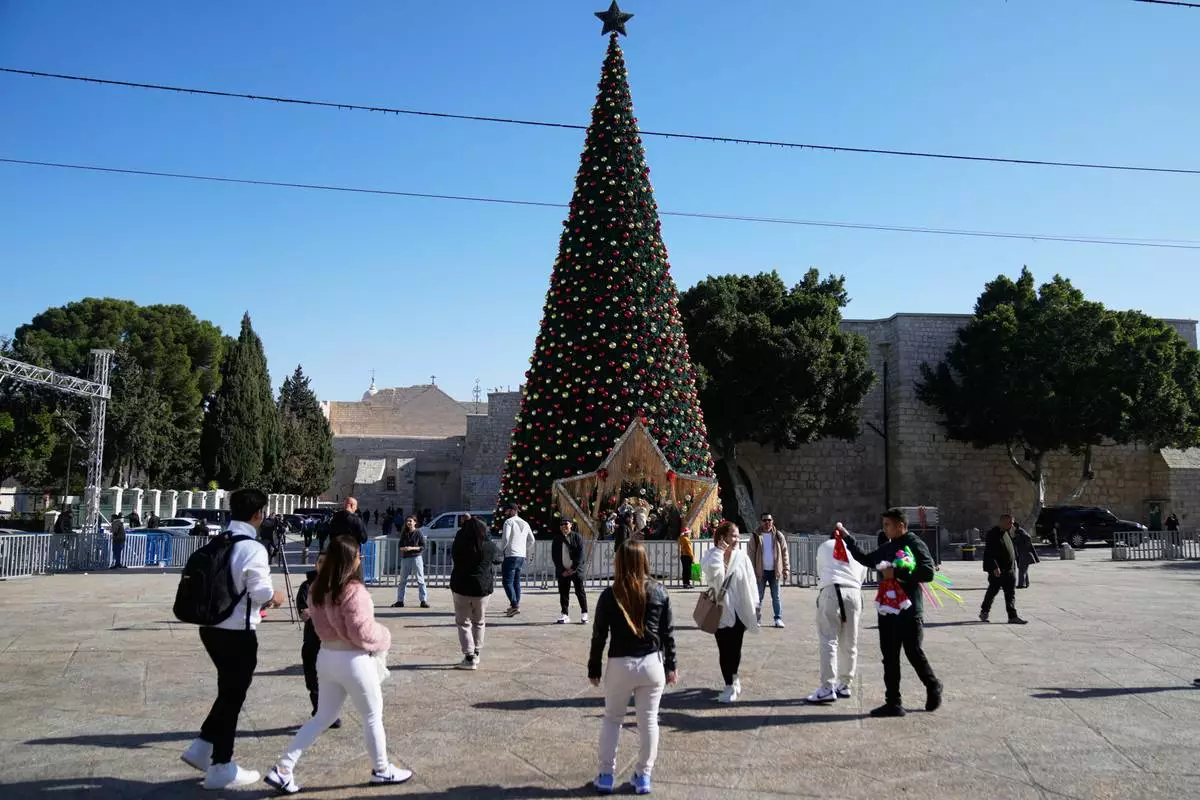
Palestinians and tourists visit the Manger Square and the Church of the Nativity, believed to be Jesus' birthplace, ahead of Christmas, in the West Bank city of Bethlehem, Tuesday, Dec. 23, 2025. (AP Photo/Nasser Nasser)
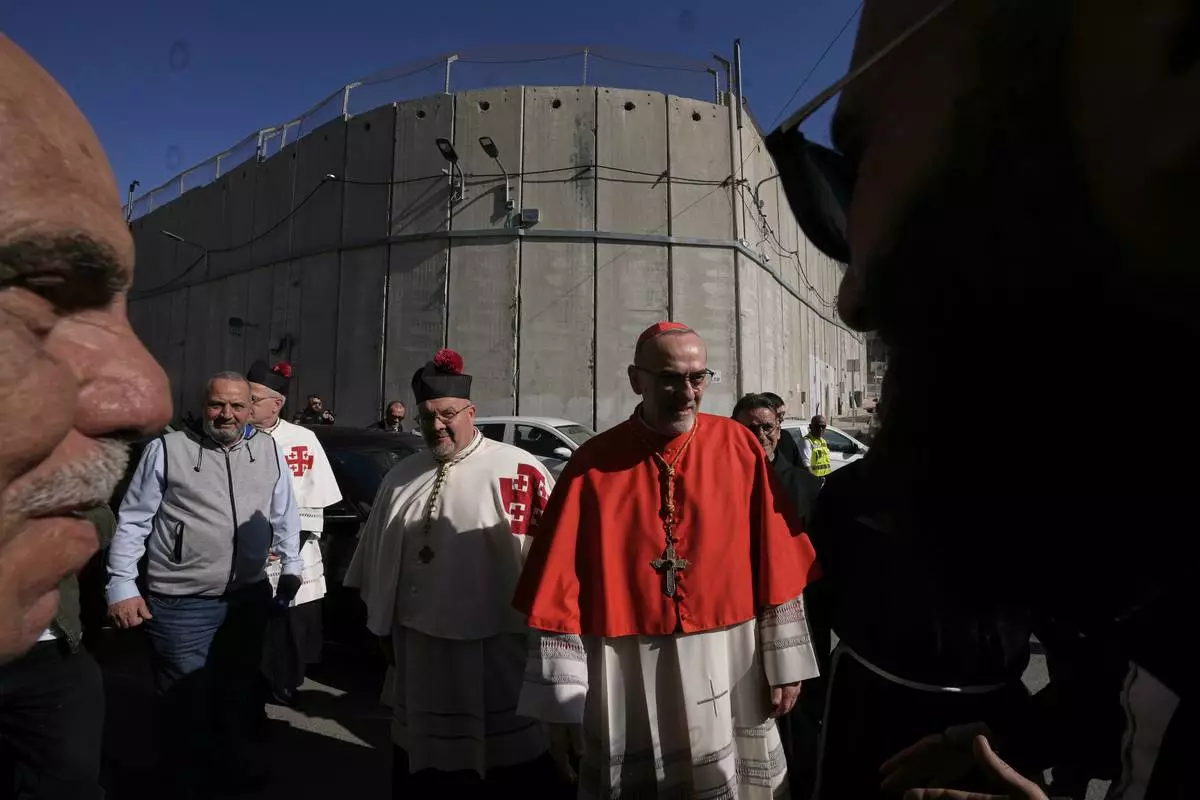
Latin Patriarch Pierbattista Pizzaballa, the top Catholic clergyman in the Holy Land, is received by local community while crossing an Israeli military checkpoint from Jerusalem ahead of celebrations at the Church of the Nativity, traditionally believed to be the birthplace of Jesus, on Christmas Eve, in the West Bank city of Bethlehem, Wednesday, Dec. 24, 2025. (AP Photo/Mahmoud Illean)
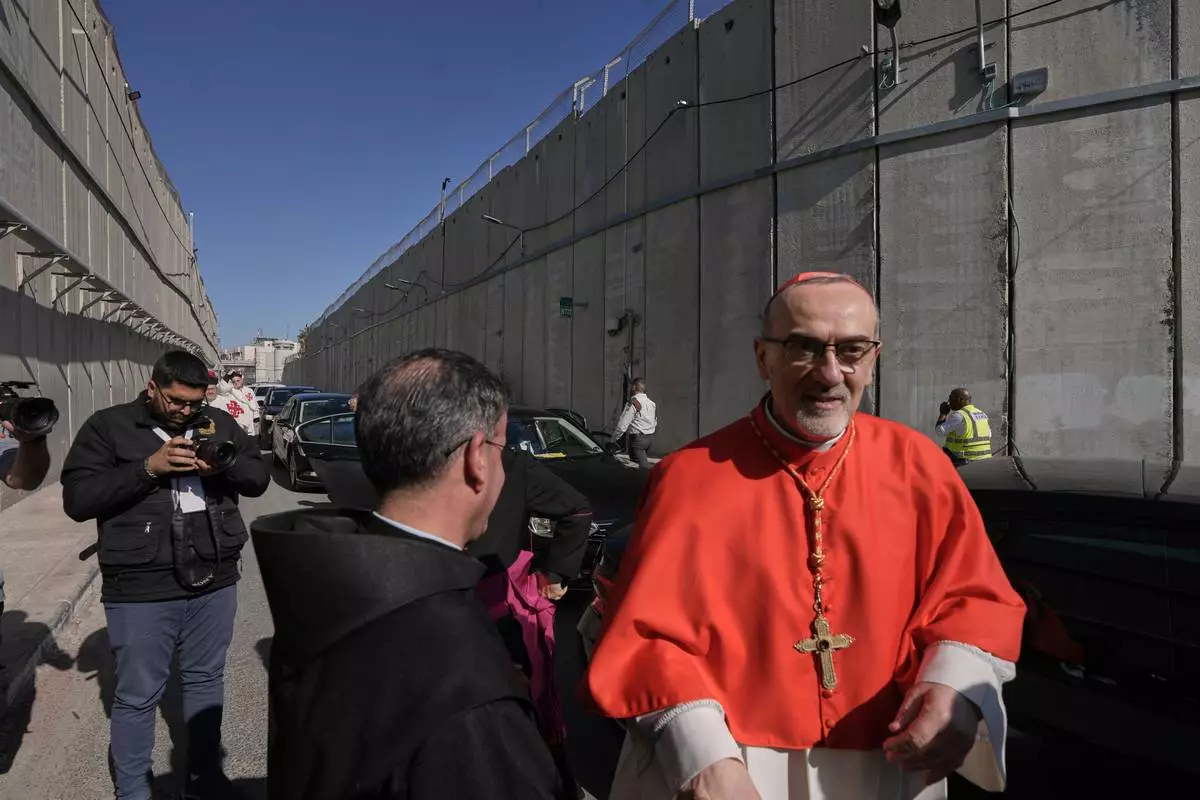
Latin Patriarch Pierbattista Pizzaballa, the top Catholic clergyman in the Holy Land, is received by local community while crossing an Israeli military checkpoint from Jerusalem ahead of celebrations at the Church of the Nativity, traditionally believed to be the birthplace of Jesus, on Christmas Eve, in the West Bank city of Bethlehem, Wednesday, Dec. 24, 2025. (AP Photo/Mahmoud Illean)