Scores of foreign journalists visited southwest China's Chongqing Municipality and explored the city's green development, sci-tech innovation and the building of a global trade corridor from May 19-21.
Over 40 reporters from more than 20 countries and regions including the U.S., U.K., Germany, Japan, Indonesia, Iraq, in addition to enjoying the scenery of the Yangtze River, visited many local undertakings including a waste-to-energy plant, an EV manufacturing base and the new international land-sea trade corridor.
"It's my first time to take a boat ride on the Yangtze River, and I am enjoying. The water is so clean and calm, and the beauty of nature, the greenery. This is a very strategic lane, Yangtze River, to the east coast of China. Despite that this is a main route for shipping, but still [it is under] ecological preservation," said Hamid Mahdi Faraj, a journalist from the Iraqi Rudaw Media Network.
While visiting Chongqing Sanfeng Baiguoyuan Environmental Energy Co., Ltd., the journalists gained a better understanding of how household waste is minimized, recycled, safely treated, and ultimately converted into electricity.
The waste-to-energy plant serves as a microcosm of Chongqing's broader efforts to build a higher-quality, city-wide "zero-waste city."
"The government's philosophy is about improving waste management to be more environmentally sustainable," said Will Glasgow, a journalist from The Australian.
Inside the showroom of new energy vehicle (EV) models of Chang'an Automobile, many journalists were impressed by the high performance of the cars after trying them in person.
They also stepped into the company's welding and assembly workshops and observed the orderly operation of robotic arms in the automated system.
"Auto manufacturing is very important for China's economy, and Chongqing is important for auto manufacturing as a city in China. Chinese EV companies have surprised everybody because of low price and high quality," said Donald Weinland, a journalist from The Economist.
The journalists also visited a national logistics hub of the New International Land-Sea Trade Corridor which bridges China's inland regions with more than 550 ports in 127 countries and regions.
This trade corridor connects global ports via railways, sea routes and highways through southern Chinese provincial regions such as Guangxi and Yunnan.
More than 251,800 20-foot equivalent units (TEUs) of goods were transported through Chongqing via the trade corridor in 2024, with the total value reaching 46.7 billion yuan (about 6.4 billion U.S. dollars).
This trip marks the inaugural stop of a nationwide media tour organized by China's State Council Information Office to witness the high-quality development of the Yangtze River Economic Belt which comprises 11 provincial-level regions along the river.
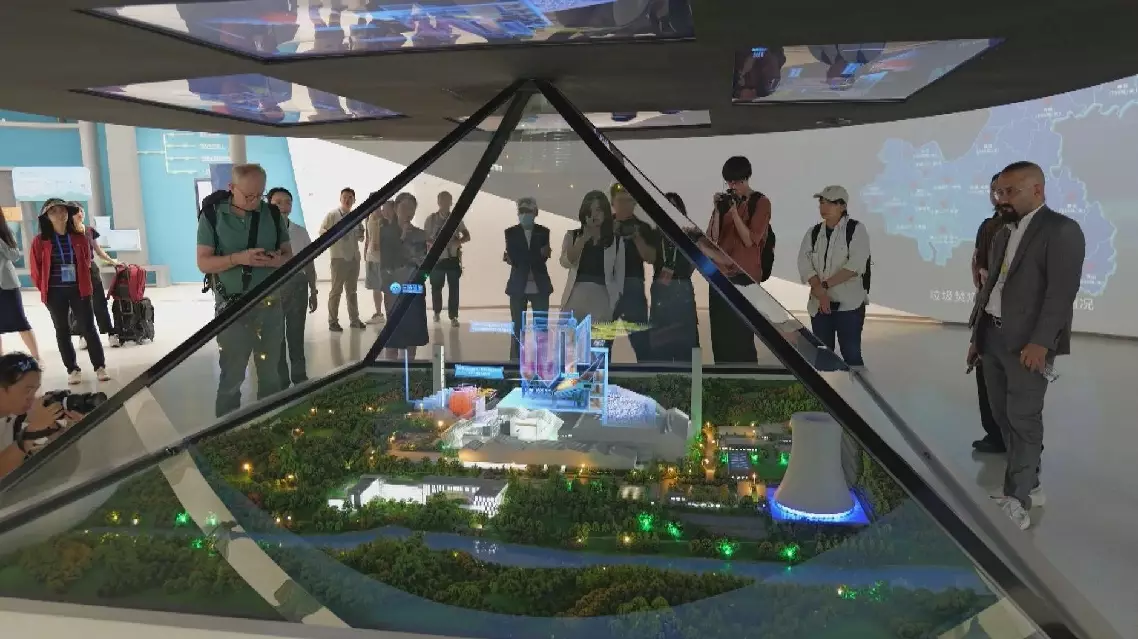
Foreign journalists visit Chongqing to explore development