CONCORD, N.H. (AP) — New Hampshire has agreed to pay $2.25 million to the mother of Harmony Montgomery, a 5-year-old girl whose father was convicted of murdering her.
Crystal Sorey filed a negligence lawsuit against the state last May accusing social workers of ignoring signs that her daughter was being physically abused by her ex-husband after he was awarded custody in early 2019.
Adam Montgomery is serving a minimum of 56 years in prison after being convicted of murdering Harmony and moving her corpse around for months before disposing of it. Police believe he killed Harmony nearly two years before she was reported missing in 2021. Her body has not been found.
The state does not admit any wrongdoing in the settlement agreement reached last month.
“The state agreed to these settlements to avoid prolonged litigation and support closure for the families. We recognize their profound loss and hope this brings some measure of peace," Attorney General John Formella said.
In July, the state agreed to pay $5.75 million to the mother of a Laconia boy the state placed with a grandmother who is now charged with his 2019 death. In December, it settled with the father of 5-year-old boy Merrimack killed by his mother in 2021.
In 2018, the state created an Office of the Child Advocate to serve as an independent watchdog agency, but lawmakers are considering eliminating it in the next state budget.

FILE - Adam Montgomery arrives for his sentencing hearing at Hillsborough Superior Court, Thursday, May 9, 2024, in Manchester N.H. (AP Photo/Charles Krupa, Pool, File)
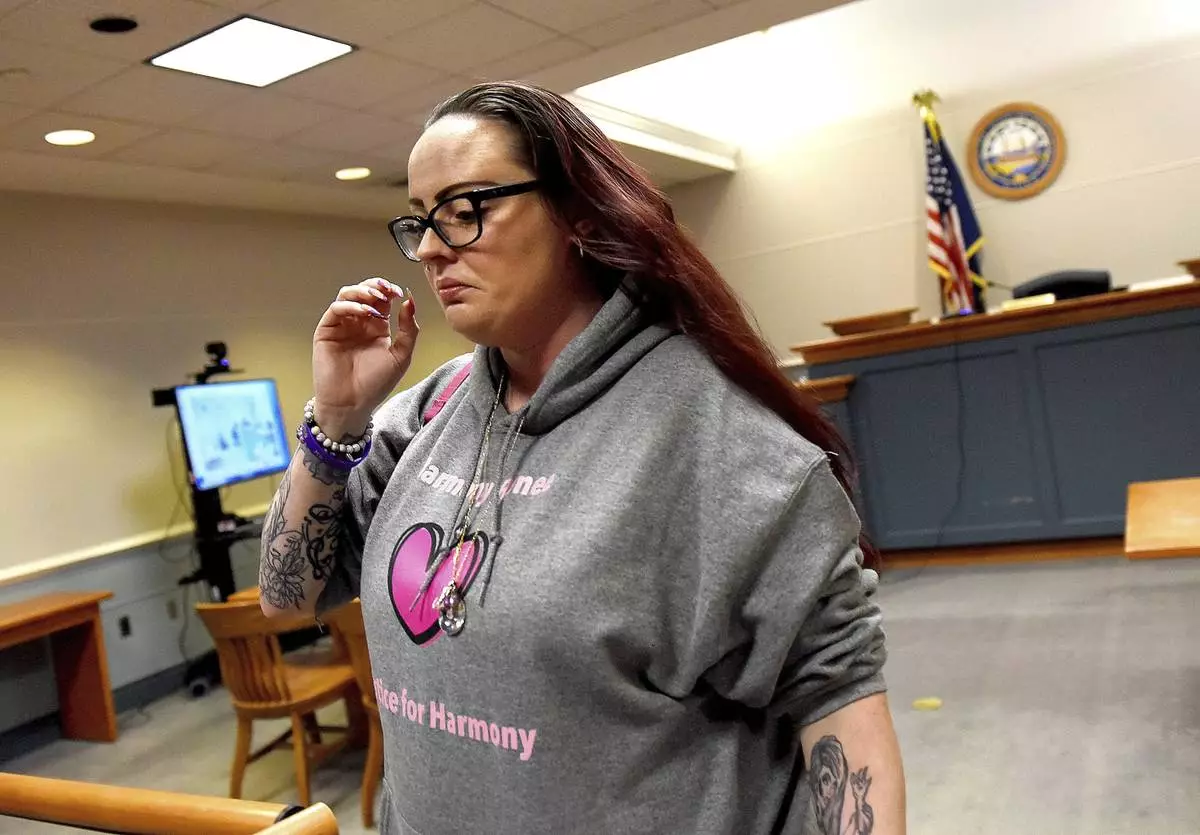
FILE - Crystal Sorey, the mother of Harmony Montgomery, leaves court following a probate case hearing at Nashua Circuit Court in Nashua, N.H., Monday, March 11, 2024. (David Lane/Union Leader via AP, Pool, File)
NASHVILLE, Tenn. (AP) — A human smuggling case against Kilmar Abrego Garcia, whose mistaken deportation helped galvanize opposition to President Donald Trump's immigration policies, was thrown out on Friday.
Abrego Garcia's deportation to El Salvador last year became an embarrassment for Trump officials when they were ordered to return him to the U.S. Abrego Garcia claimed that both the timing of the criminal charges and inflammatory statements about him by top Trump officials demonstrated that the prosecution was vindictive.
U.S. District Judge Waverly Crenshaw, ruling from Nashville, granted Abrego Garcia's motion to dismiss for “selective or vindictive prosecution."
Without Abrego Garcia’s “successful lawsuit challenging his removal to El Salvador, the government would not have brought this prosecution,” said Crenshaw, dismissing claims of “new evidence” against him.
In earlier court filings, Crenshaw wrote he had found some evidence that the prosecution against Abrego Garcia "may be vindictive.” The judge said many statements by Trump administration officials “raise cause for concern.” He cited a statement by then-Deputy Attorney General Todd Blanche that seemed to suggest the Justice Department charged Abrego Garcia because he won his wrongful-deportation case.
First Assistant U.S. Attorney for the Middle District of Tennessee Rob McGuire had resisted requests to provide documents and testimony to Abrego Garcia from senior Justice Department officials including Blanche. McGuire insisted that he was the decision-maker in the case and that his motivations were the only relevant ones.
Abrego Garcia was charged with human smuggling and conspiracy to commit human smuggling, with prosecutors claiming that he accepted money to transport within the United States people who were in the country illegally.
The charges stem from a 2022 traffic stop in Tennessee for speeding. Body camera footage from a Tennessee Highway Patrol officer shows a calm exchange with Abrego Garcia. There were nine passengers in the car, and the officers discussed among themselves their suspicions of smuggling. However, Abrego Garcia was eventually allowed to continue driving with only a warning.
A Department of Homeland Security agent testified at an earlier hearing that he did not begin investigating the traffic stop until after the U.S. Supreme Court said in April 2025 that Trump's Republican administration must work to bring Abrego Garcia back from El Salvador. The deportation violated a 2019 immigration court order granting him protection from deportation to his home country, after the judge found he faced danger there from a gang that targeted his family.
Abrego Garcia is a Salvadoran citizen with an American wife and child who has lived in Maryland for years although he immigrated to the U.S. illegally as a teenager. The 2019 order allowed him to live and work in the U.S. under Immigration and Customs Enforcement supervision, but he was not given residency status.
Meanwhile, Trump administration officials have said Abrego Garcia cannot remain in the U.S. They have vowed to deport him to a third country, most recently Liberia.
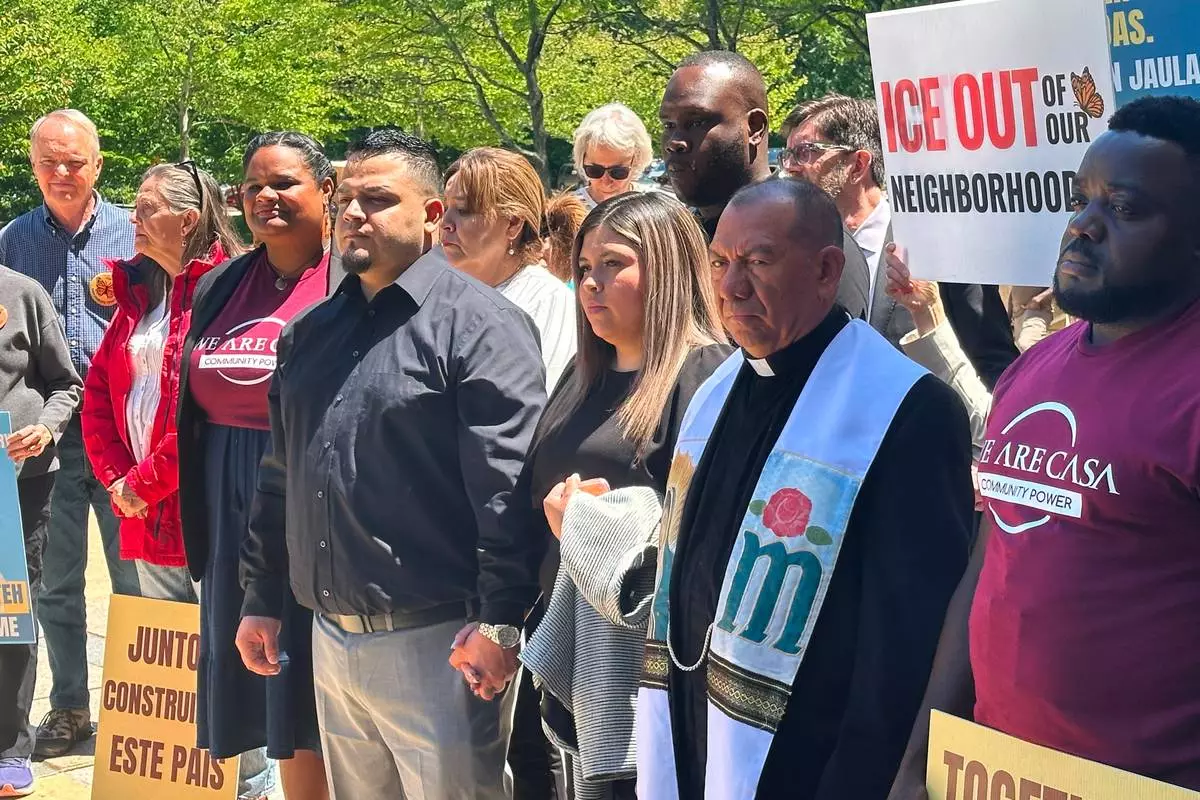
Kilmar Abrego Garcia and his wife, center, hold hands as people rally in support of him at a news conference outside federal court after a hearing in his case on Tuesday, May 12, 2026, in Greenbelt, Md. (AP Photo/Michael Kunzelman)