WASHINGTON (AP) — A coalition of President Donald Trump's critics, including a fired prosecutor and a college professor acquitted of assaulting federal agents at a protest, sued Friday to block payouts from a new $1.776 billion settlement fund for Trump allies claiming to be victims of a weaponized government.
The lawsuit adds fuel to a mounting backlash against the Trump administration's creation of an “Anti-Weaponization Fund” to resolve the Republican president's lawsuit against the Internal Revenue Service over the leak of his tax returns.
Plaintiffs' attorneys from the legal advocacy group Democracy Forward are seeking a court order halting the fund's implementation and preventing the Trump administration from disbursing any payouts from it. The federal suit, filed in Alexandria, Virginia, claims there is no legal basis or accountability behind the fund.
“The unlawfulness that has imbued the Anti-Weaponization Fund from its inception requires that it be wholly dismantled,” the suit says.
Another advocacy group, Citizens for Responsibility and Ethics in Washington, separately filed its own lawsuit on Friday in Washington, D.C., to challenge the “slush fund” created by Trump's “sham settlement.” CREW's suit refers to the fund as "a jaw-dropping act of presidential corruption."
Two police officers who helped defend the U.S. Capitol from a mob's attack on Jan. 6, 2021, also sued this week to prevent anyone, including Capitol rioters, from receiving payments from the settlement fund.
During a congressional hearing on Tuesday, Acting Attorney General Todd Blanche wouldn’t rule out the possibility that rioters who assaulted police on Jan. 6 could be eligible for fund payouts.
The plaintiffs for Friday’s lawsuit include former Assistant U.S. Attorney Andrew Floyd, an Alexandria resident who prosecuted Capitol riot cases in Washington, D.C., before he was fired last year by then-Attorney General Pam Bondi. Floyd was a deputy chief of the Justice Department’s Capitol Siege Section. He believes his firing was retaliation for his Jan. 6 work.
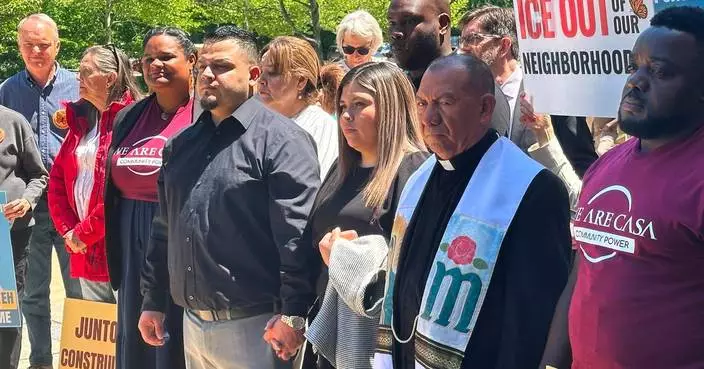
Another plaintiff is California State University Channel Islands professor Jonathan Caravello, who was acquitted of an assault charge. He was accused of throwing a tear gas canister at federal agents during a 2025 protest against an immigration raid at a Camarillo, California, cannabis farm.
Also named as plaintiffs are the government watchdog Common Cause; the city of New Haven, Connecticut; and the National Abortion Federation, an association of abortion providers. New Haven claims the Trump administration officials have targeted it and other municipalities that they perceive to be “sanctuary” cities. The federation fears that the fund will issue payments to people who have attacked abortion clinics, providing an incentive for more violence against its members.
The suit's defendants include the Justice and Treasury departments, Blanche and Treasury Secretary Scott Bessent. Spokespeople for the departments didn't immediately respond to emails seeking comment.
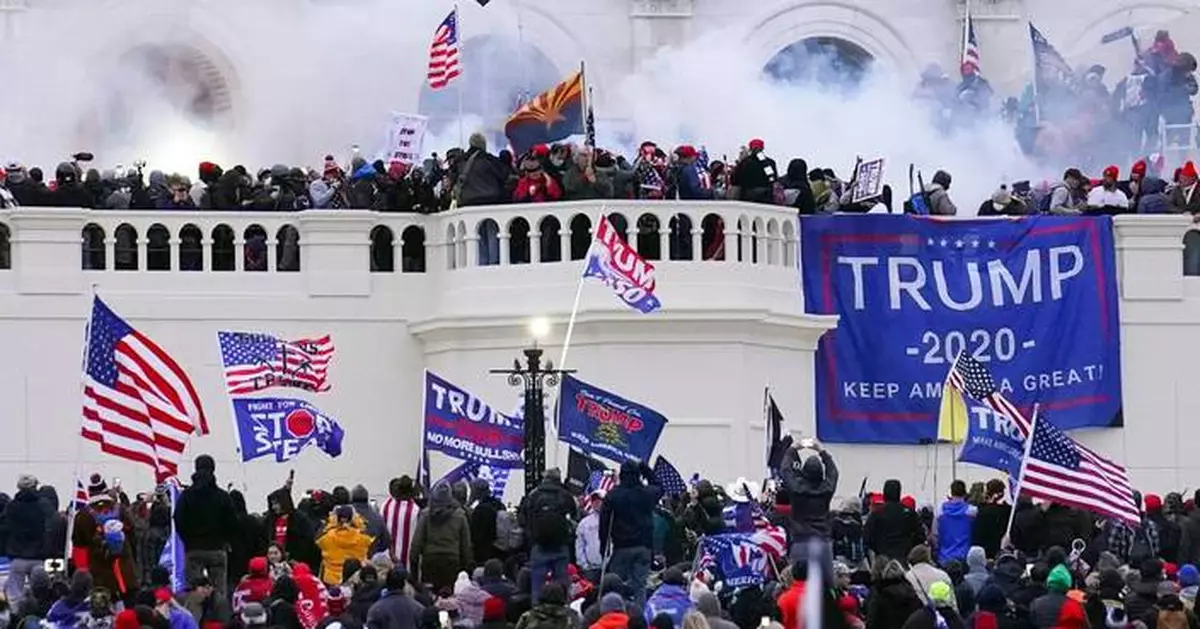
The Capitol riot investigation was the largest in Justice Department history. Trump ended it with the stroke of his pardon pen, erasing hundreds of Jan. convictions.
Nearly 1,600 people were charged with Capitol riot-related federal crimes. Over 1,200 were convicted and sentenced before Trump handed out mass pardons, commuted prison sentences and ordered the dismissal of every pending Jan. 6 criminal case.
Beneficiaries of Trump’s sweeping act of clemency included supporters who assaulted officers at the Capitol. He also freed far-right extremist group members who were imprisoned for plotting to attack the Capitol to keep Trump in office after he lost the 2020 presidential election to Democrat Joe Biden.
After Trump returned to the White House last year, he appointed conservative activist Ed Martin as interim U.S. Attorney for the District of Columbia. Martin, a leading advocate for Jan. 6 defendants, fired or demoted some prosecutors who worked on Capitol riot cases.
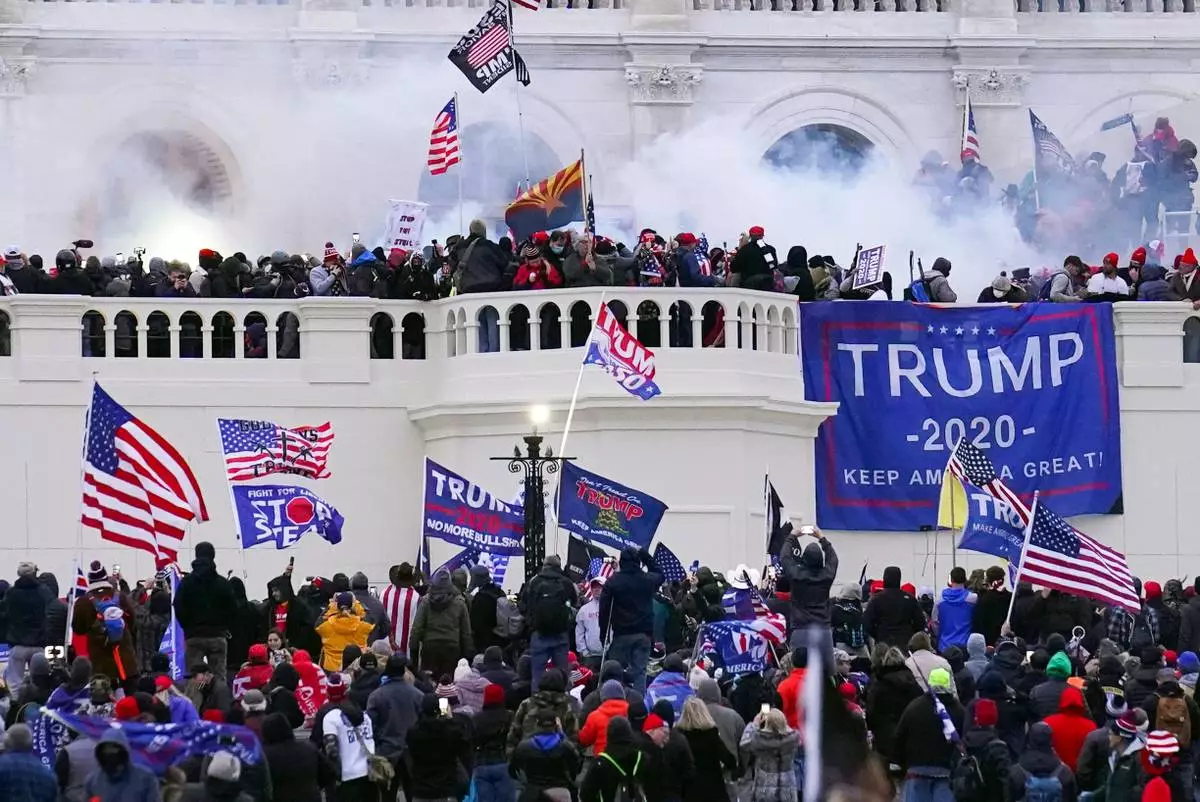
FILE - Rioters storm the West Front of the U.S. Capitol Jan. 6, 2021, in Washington. (AP Photo/John Minchillo, File)
HELSINGBORG, Sweden (AP) — NATO allies and defense officials expressed bewilderment Friday at U.S. President Donald Trump’s announcement that he would send 5,000 U.S. troops to Poland just weeks after ordering the same number of forces pulled out of Europe.
The apparent change of mind came after weeks of statements from Trump and his administration about reducing — not increasing — the U.S. military footprint in Europe. Trump's initial order set off a flurry of action among military commanders and left allies already doubtful about America's commitment to Europe's security to ponder what forces they might have to backfill on NATO's eastern flank with Russia and Ukraine.
Earlier this month, the Trump administration said it was reducing levels in Europe by about 5,000 troops, and U.S. officials confirmed about 4,000 service members were no longer rotating into Poland from Germany. The dispatch to Germany of U.S. personnel trained to fire long-range missiles was also halted.
But in a post on Truth Social on Thursday, Trump said he would now send "an additional 5,000 Troops to Poland,” citing his strong ties with Polish President Karol Nawrocki, whom Trump endorsed in elections last year.
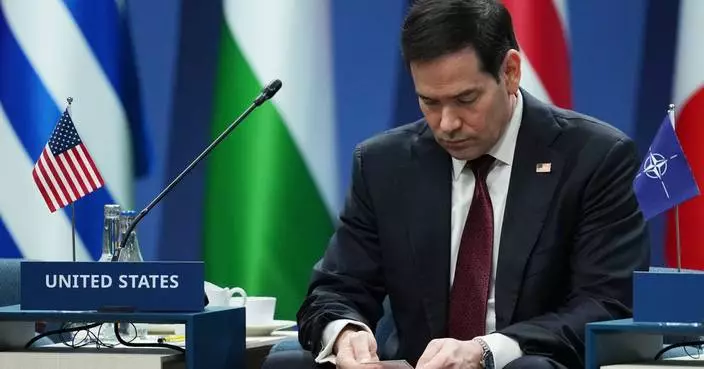
“It is confusing indeed, and not always easy to navigate,” Swedish Foreign Minister Maria Malmer Stenergard told reporters Friday at a meeting she was hosting of her NATO counterparts, including U.S. Secretary of State Marco Rubio.
Ministers from the Netherlands and Norway were sanguine about Trump’s latest move, as was Latvian Foreign Minister Baiba Braže, who said allies knew the U.S. troop “posture was being reconsidered, and now there is no change of posture. For now.”
U.S. defense officials also expressed confusion. “We just spent the better part of two weeks reacting to the first announcement. We don’t know what this means either,” said one of two officials who spoke on condition of anonymity to discuss sensitive military matters.
But Rubio said Washington’s allies understand that changes in the U.S. troop presence in Europe will come as the Trump administration reevaluates its force needs. “I think there’s a broad recognition that there are going to be eventually less U.S. troops in Europe than there has historically been for a variety of reasons,” he said.
The latest surprise came despite a U.S. pledge to coordinate troop deployments, including one from NATO’s top military officer, U.S. Gen. Alex Grynkewich, on Wednesday.
Trump's initial announcement that he would withdraw troops came as he fumed over remarks by German Chancellor Friedrich Merz, who said that the U.S. was being “humiliated” by the Iranian leadership and criticized what he called a lack of strategy in that war.
Trump told reporters that the U.S. would be cutting even more than 5,000 and also announced new tariffs on European cars. Germany is the continent’s biggest auto producer.
Rubio insisted that Trump’s decision “is not a punitive thing. It’s just something that’s ongoing.”
About 80,000 U.S. troops are stationed in Europe. The Pentagon is required to keep at least 76,000 troops and major equipment on the continent unless NATO allies are consulted and there is a determination that such a withdrawal is in U.S. interests.
The withdrawal of 5,000 troops might drop numbers below that limit.
But Trump's latest post suggests that troop numbers in Europe would not change. Polish Foreign Minister Radek Sikorski welcomed the decision to send more forces to his country, saying it ensures that “the presence of American troops in Poland will be maintained more or less at previous levels.”
NATO Secretary-General Mark Rutte also welcomed the move. On Thursday, before Trump took to Truth Social again, Rutte had underlined that it was important for Europe to take care of its own security. “We have a process in place. This is normal business,” he told reporters.
At NATO headquarters in Brussels, meanwhile, U.S. officials briefed the allies on the Pentagon's aims for its commitments to the NATO Force Model, which involves contingency planning for Europe’s defense in the event of serious security concerns. It was widely expected that a further reduction of U.S. forces would be coming.
Asked whether any cuts were announced, Rutte said: “I’m afraid it’s much more complicated than that.” He said the procedure “is highly classified” and declined to give details.
Rubio played down concerns about a shift in U.S. force levels in Europe, saying: "Every country has to constantly reevaluate what their needs are, what their commitments are around the world, and how to properly structure that.”
Cook reported from Brussels. Associated Press writer Emma Burrows in London contributed.
——-
This story has been updated to correct the title for Gen. Alex Grynkewich
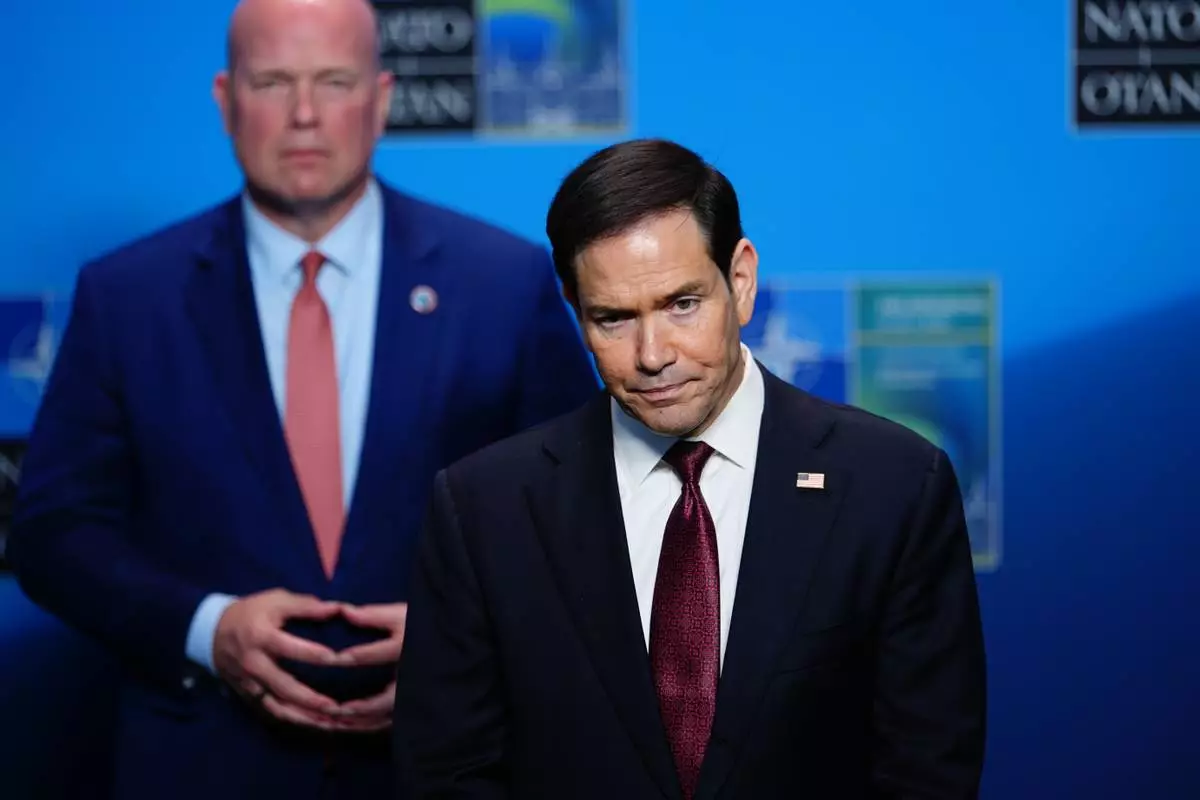
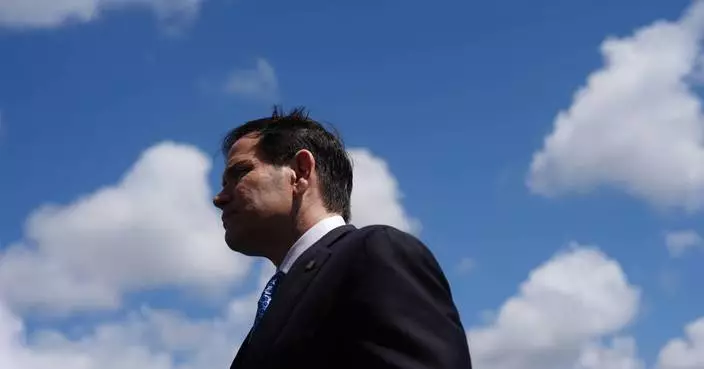
United States Secretary of State Marco Rubio speaks with journalists during a meeting of NATO foreign ministers in Helsingborg, Sweden, Friday, May 22, 2026. (AP Photo/Julia Demaree Nikhinson, Pool)
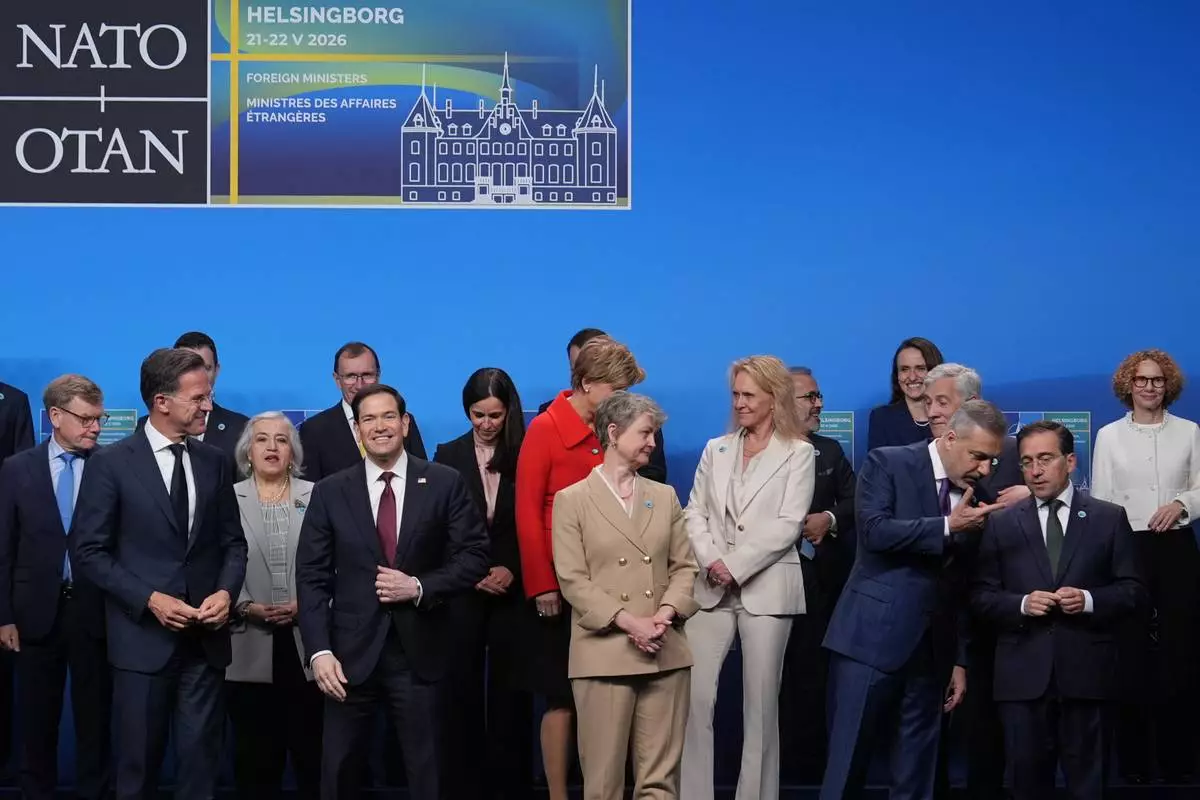
United States Secretary of State Marco Rubio, front second left, and NATO Secretary General Mark Rutte, front left, speak with each other during a group photo at a meeting of NATO foreign ministers in Helsingborg, Sweden, Friday, May 22, 2026. (AP Photo/Julia Demaree Nikhinson, Pool)
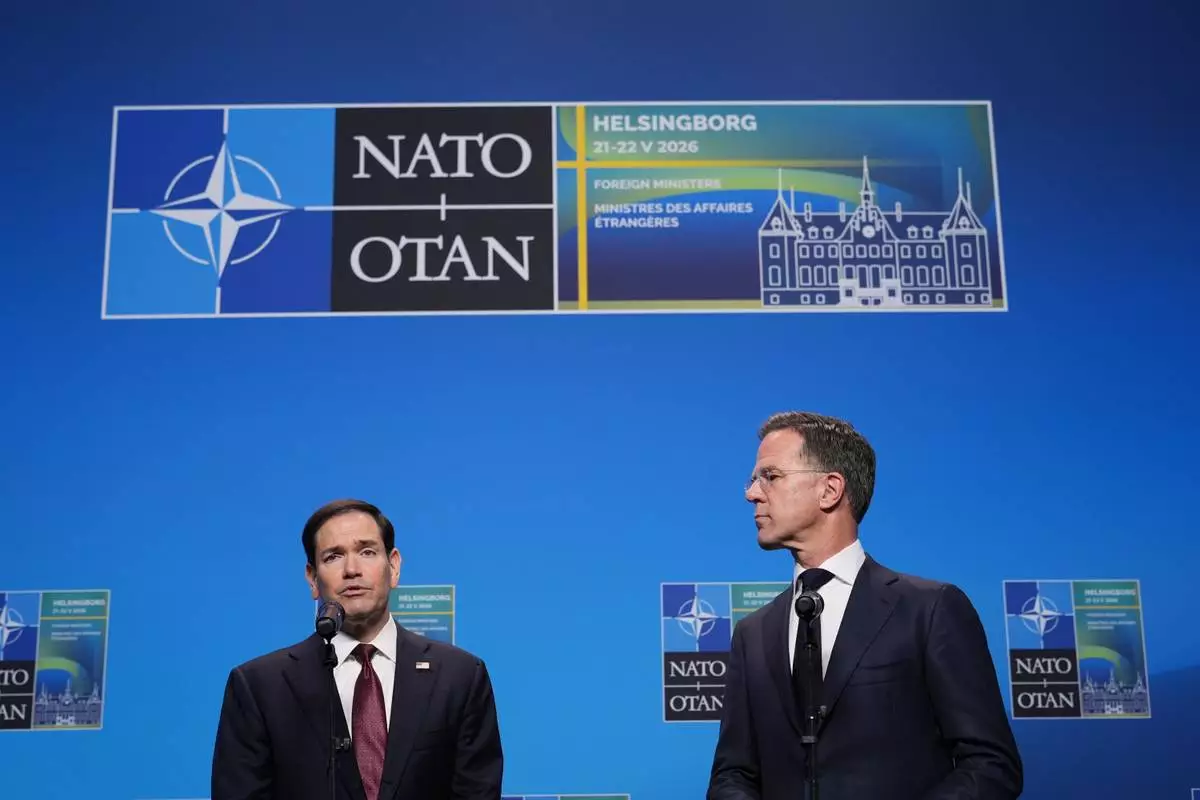
United States Secretary of State Marco Rubio, left, and NATO Secretary General Mark Rutte look at each other as they deliver a statement during a meeting of NATO foreign ministers in Helsingborg, Sweden, Friday, May 22, 2026. (AP Photo/Julia Demaree Nikhinson, Pool)
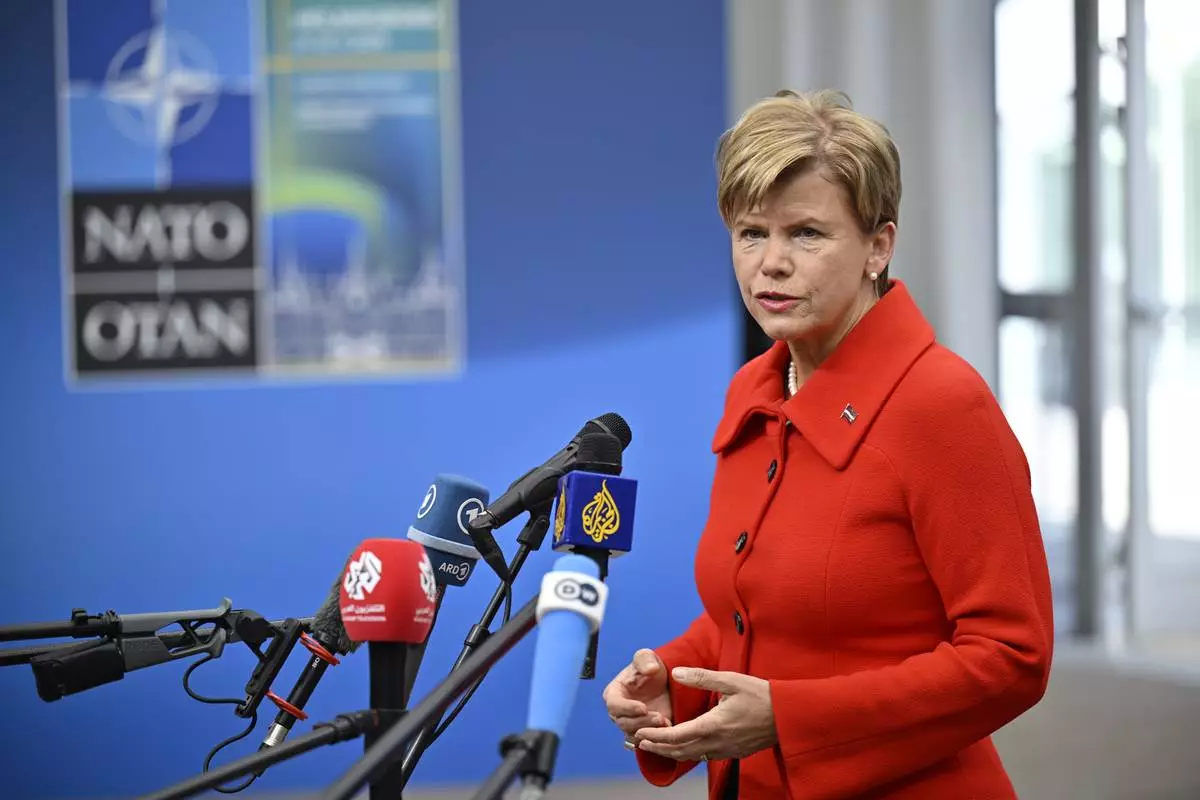
Latvian Foreign Minister Baiba Braže speaks at the doorstep of the NATO foreign ministers' meeting at Sea U in Helsingborg, Sweden, Friday, May 22, 2026. (Johan Nilsson/TT News Agency via AP)
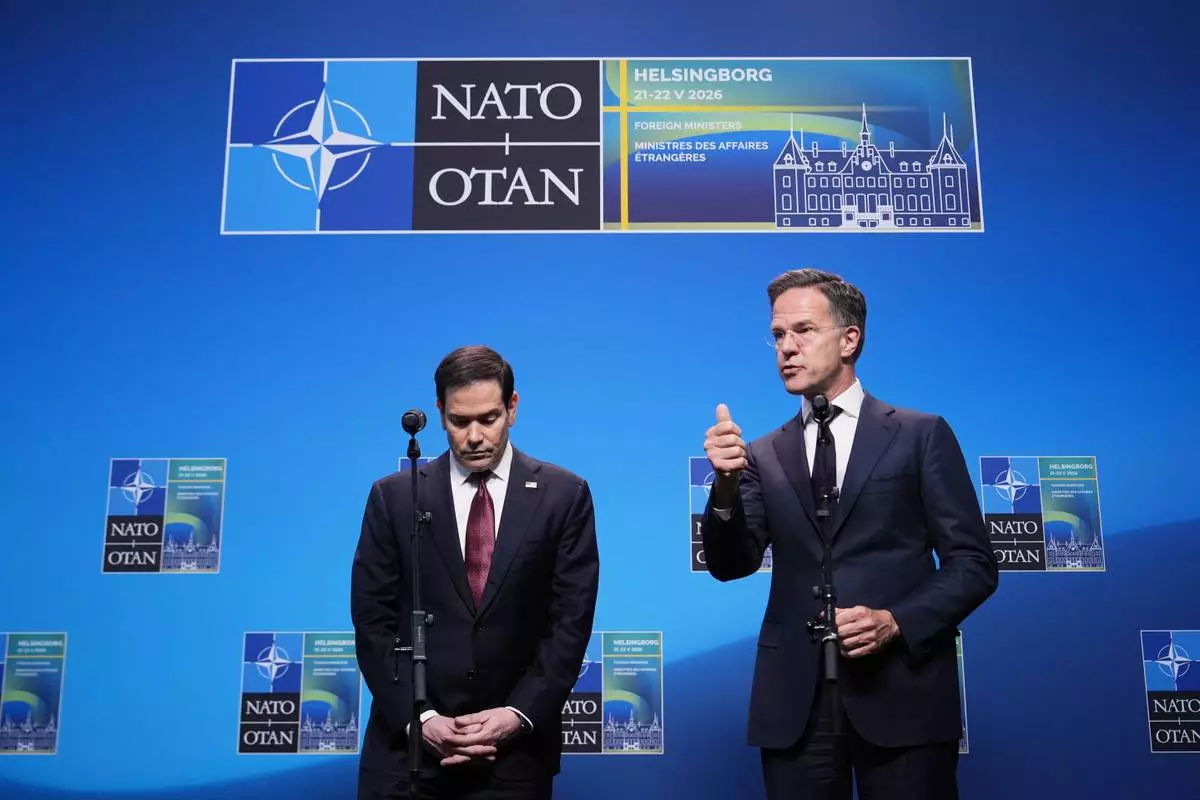
United States Secretary of State Marco Rubio, left, and NATO Secretary General Mark Rutte deliver a statement during a meeting of NATO foreign ministers in Helsingborg, Sweden, Friday, May 22, 2026. (AP Photo/Julia Demaree Nikhinson, Pool)
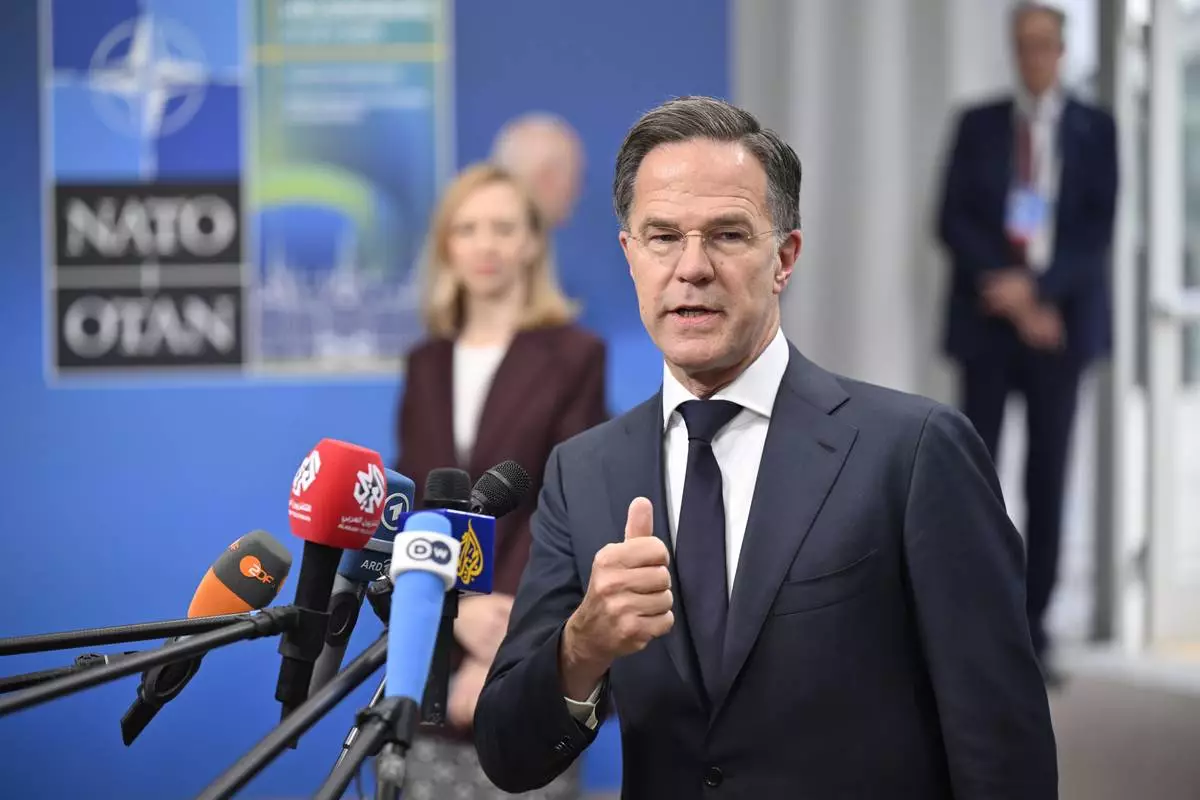
NATO Secretary General Mark Rutte speaks to media at the NATO Foreign Ministers' meeting in Helsingborg, Sweden, Friday, May 22, 2026. (Johan Nilsson/TT News Agency via AP)
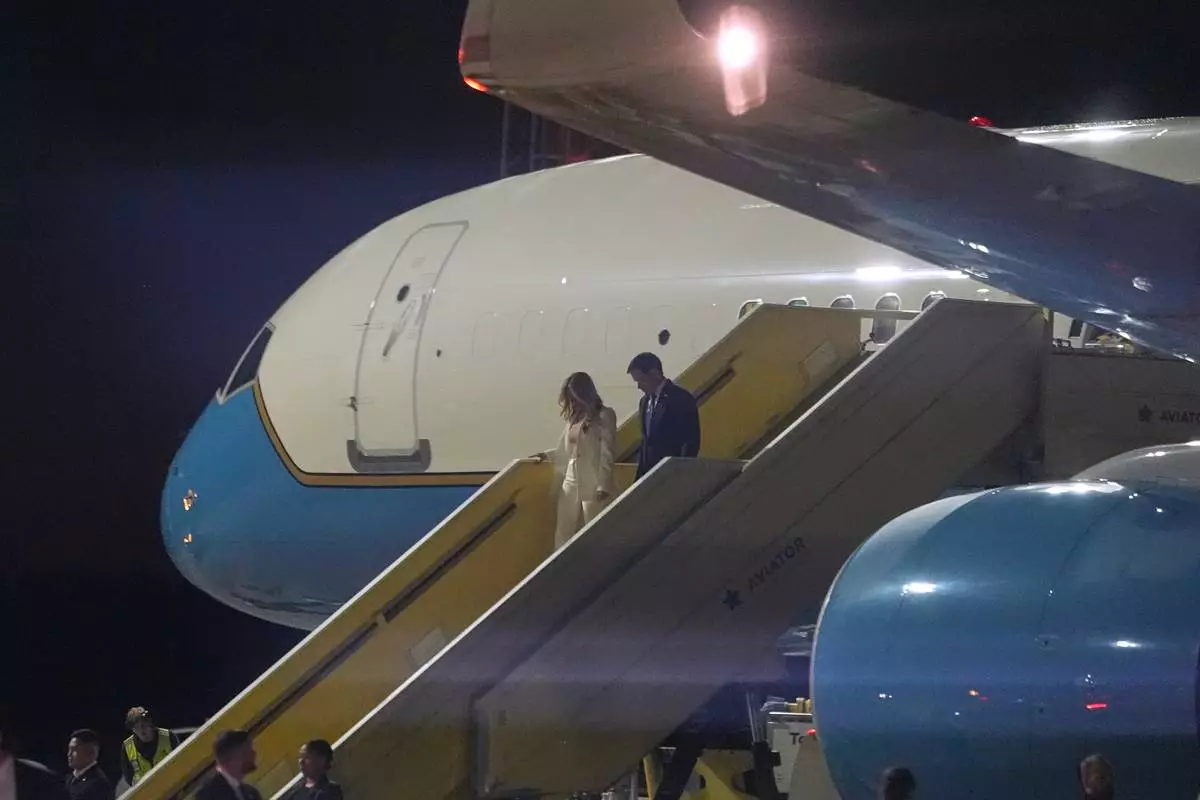
Secretary of State Marco Rubio arrives with his wife Jeanette at Malmo Airport, Friday, May 22, 2026, in Malmo-Sturup, Sweden, ahead of a NATO foreign ministers meeting. (AP Photo/Julia Demaree Nikhinson, Pool)
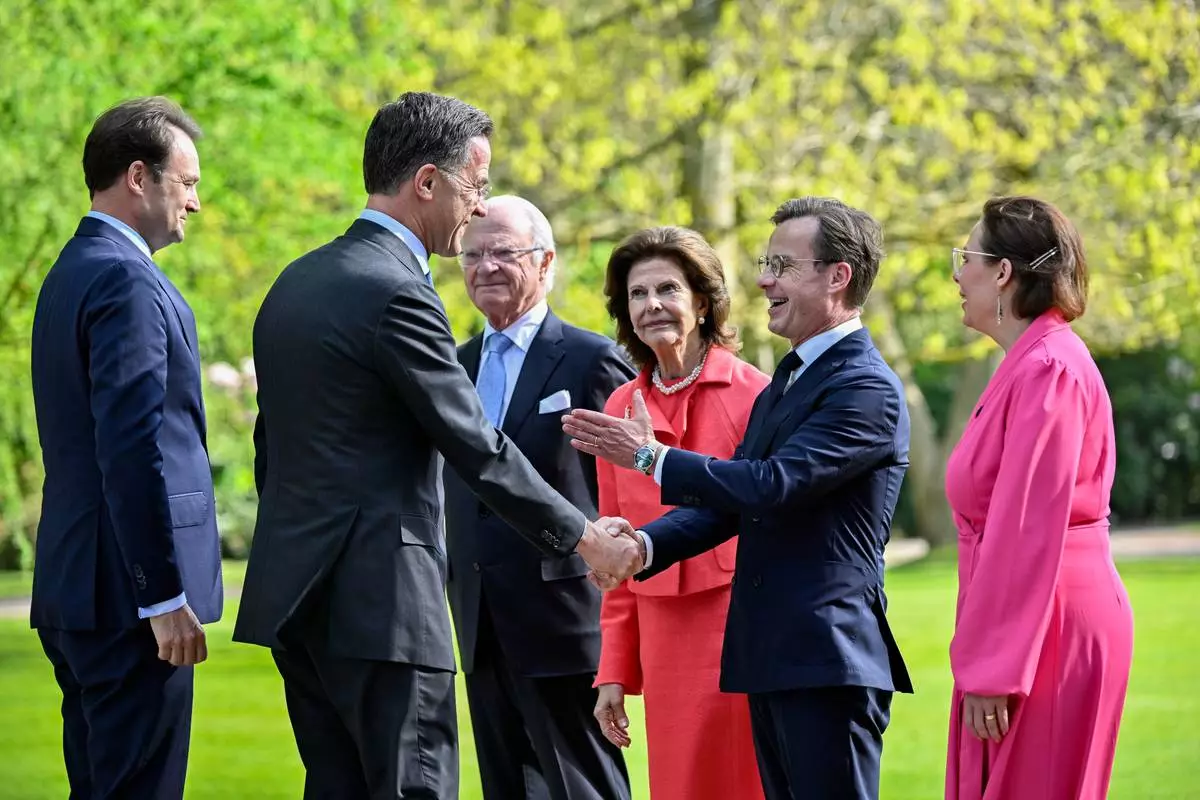
NATO Secretary General Mark Rutte, second from left, shakes hands with Prime Minister of Sweden Ulf Kristersson, as he is greeted by King Carl Gustaf of Sweden, Queen Silvia of Sweden and Minister for Foreign Affairs of Sweden Maria Malmer Stenergard, right, before a dinner at Sofiero Castle in Helsingborg, Sweden, Thursday May 21 2026. (Johan Nilsson/TT News Agency via AP)
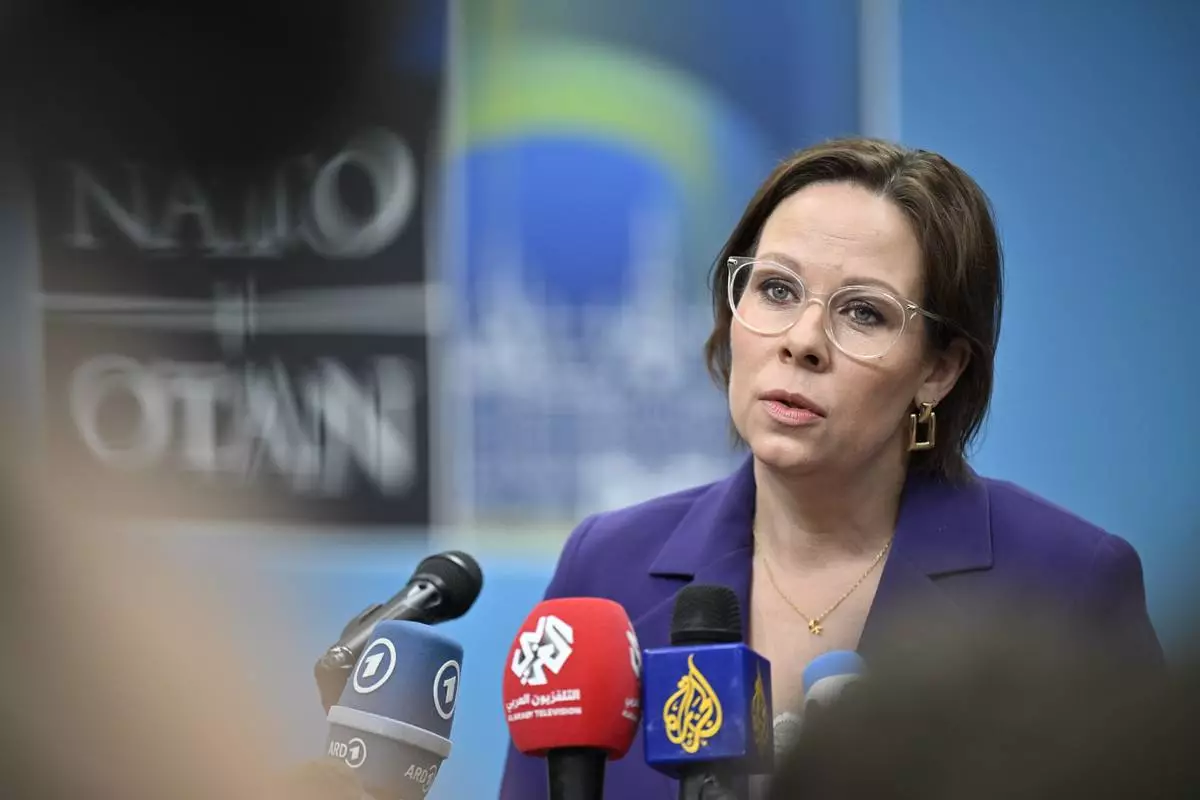
Swedish Foreign Minister Maria Malmer Stenergard speaks to media at the NATO Foreign Ministers' meeting in Helsingborg, Sweden, Friday, May 22, 2026. (Johan Nilsson/TT News Agency via AP)