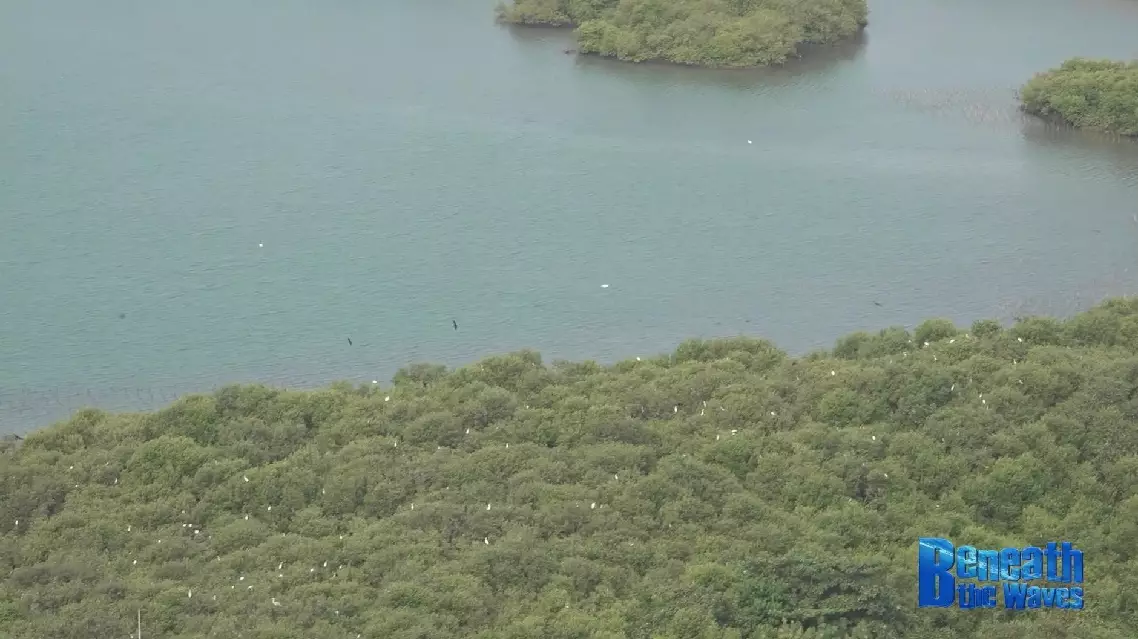
A mangrove protection project is making great strides as it helps cut carbon emissions, boost local circular economic growth and allow marine wildlife to thrive on the northern coastline of Indonesia's Java Island.
The project is launched by the "Java 7 Powerplant", the most technologically advanced and environmentally friendly thermal power plant in Indonesia and a joint venture between China Energy Investment Corporation and Indonesia's state-owned electricity company Perusahaan Listrik Negara.
Mangrove protection helps reduce carbon emissions. The mangrove protection project started with planting 5 hectares of mangrove seeds eight years ago. Now, it's a 20-hectare mangrove forest that is home to diverse wildlife that also helps with reducing carbon emissions.
"The mangrove forest is very efficient in absorbing carbon. It can reduce carbon three to five times better than an average tropical forest," said Zhou Xianglong, deputy general manager of a joint venture between China Shenhua Energy Co. Ltd. and PT Pembangkitan Jawa Bali - a subsidiary of Perusahaan Listrik Negara.
The mangrove forest also delivers a range of environmental benefits. It can naturally purify seawater, which allows non-seawater wildlife like the monitor lizard to grow and thrive in the area. It also acts as a shield from coastal erosion, and a barrier for typhoons during the monsoon season. Moreover, it also produces food that could be processed into economic food that boosts local circular economy.
"These mangrove fruits can be processed into many kinds of food that can be sold by local merchants. With that, this will enhance the circular economy for locals living in the area," said Tumpal Sirait, director for general affairs of Guohua Taidian Pembangkitan Jawa Bali, an operations and maintenance services company for the Java 7 Powerplant.
In addition, the mangrove offers a temporary home for migrating birds and marine mammals as they travel long distances during the change of seasons and also provides a permanent home for marine wildlife that will protect the biodiversity of the ecosystem.
As part of the ongoing efforts, in February this year, another 30,000 mangrove seeds were planted, inching closer to Indonesia's ambitious target of net-zero emissions by 2060.
Mangrove protection project jointly launched by China, Indonesia contributes to environmental protection
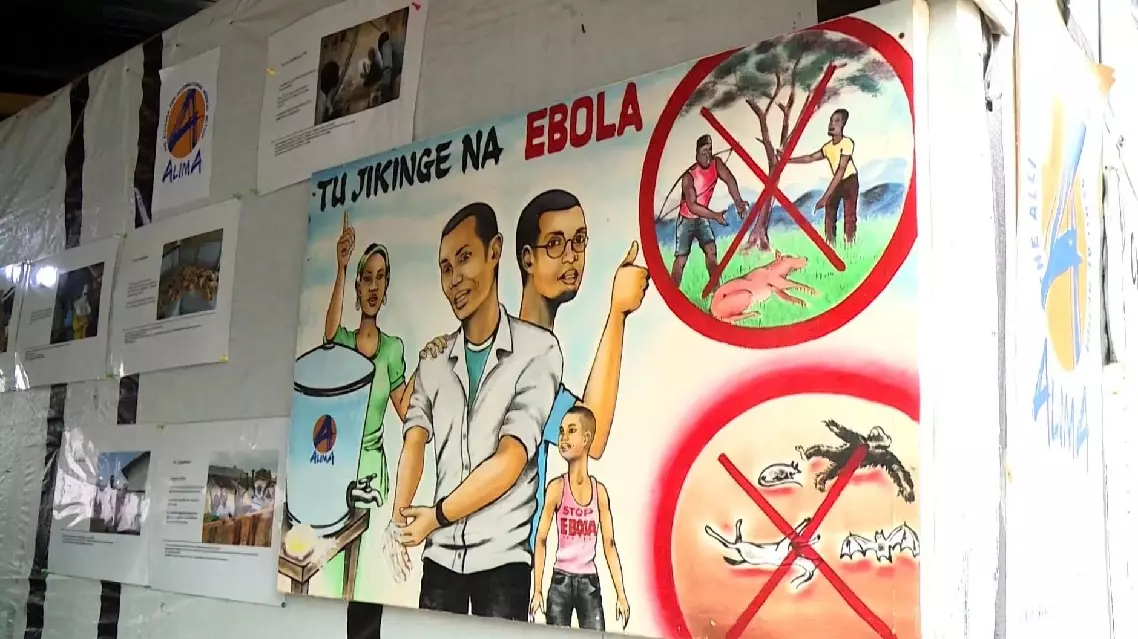
UN Under-Secretary-General for Humanitarian Affairs and Emergency Relief Coordinator Tom Fletcher announced on Friday that he is allocating up to 60 million U.S. dollars from the UN Central Emergency Response Fund to accelerate the response to the Ebola outbreak in the Democratic Republic of the Congo (DRC) and the wider region.
"We need to get ahead of this Ebola outbreak," Fletcher said in a statement.
While the humanitarian community is fully mobilized, he said, "the epidemiological context is challenging: there are not yet licensed vaccines or treatments for the Bundibugyo strain."
Noting that these are some of the most difficult operating environments in the world for the life-saving work, with conflict and high population movement, Fletcher said the United Nations is working to secure safe and sustained access for frontline responders, including to areas controlled by armed groups.
"It is essential that there is no obstruction of our response. We must have access to all routes -- air, land and water -- across the affected areas," he said.
The UN relief chief underscored that containment depends on fast, coordinated action at the community level, stressing the importance of strong communication with governments, and effective early warning and detection systems.
Fletcher said he is in close contact with UN humanitarian coordinators and the teams in the DRC, Uganda and South Sudan, and more staff from key UN agencies and partners are being deployed this weekend to reinforce the effort.
In addition, the World Food Programme (WFP) is scaling up its emergency operations in eastern DRC to assist the government, the World Health Organization, and other partners in containing the spread of the Ebola outbreak as quickly as possible.
Meanwhile, the UN Humanitarian Air Service is working to repair damaged airport facilities and is adding new flight routes to ensure that relief workers and critical supplies reach target areas as quickly as possible.
Stephane Dujarric, spokesman for UN Secretary-General Antonio Guterres, told reporters that relief efforts need multiple conditions on top of medical treatment.
"Containing Ebola requires more than treatment alone, WFP says. It requires food, it requires access, it requires transport and it requires logistics so frontline teams can move fast and affected families can safely follow public health measures," he said.
UN allocates 60 mln USD to accelerate response to Ebola outbreak in DRC