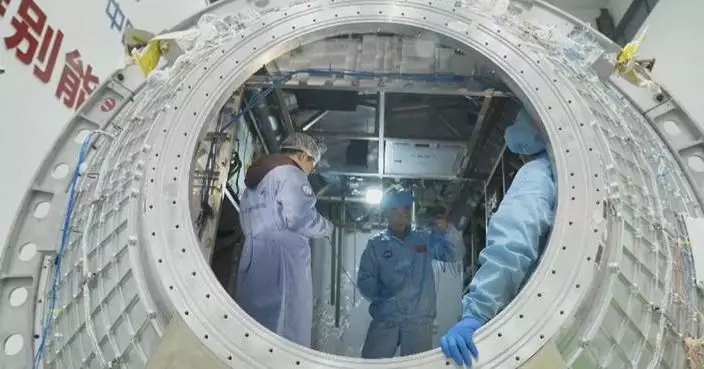
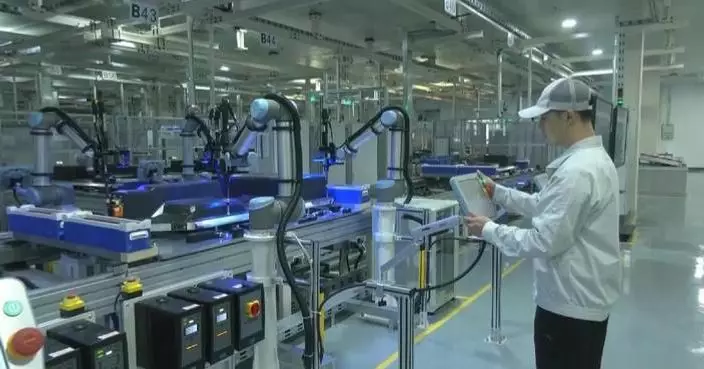
Made-in-China products are catching the eye with their technological innovations and excellent quality at the 4th China-Central and Eastern European Countries (CEEC) Expo and International Consumer Goods Fair in Ningbo City, east China's Zhejiang Province.
This year's expo has set up a dedicated digital and smart manufacturing area for the first time. Visitors are amazed by nearly 100 cutting-edge artificial intelligence and robotics products, including humanoid robots, bionic products, and AR interactive applications developed and made by Chinese companies.
"I really like the hands, the technology of the fingers, and everything; they can really do the really precise stuff. I think this kind of product has the possibility of entering the world market, not just in our countries," said a businessman from Slovenia. A Zhejiang-based humanoid robot innovation center has brought to the fair its newly developed humanoid robot, which can be used in numerous fields such as manufacturing, retail, navigation, and inspection.
Other items made in the province, such as ultra-light and environmentally friendly backpacks, carbon fiber rackets, and multilingual real-time interactive translation devices, are also on display at the expo. Fruitful transactions have occurred at the expo. A Chinese trade company for pet products signed an over 200 million yuan (about 28 million U.S. dollars) deal with a Serbian company for the pet nutrition products market.
"China is one of the biggest markets, of course. China is our friendly country and the people of Serbia and China have really friendly communication. So this is an opportunity for both countries to export to another country," said Aleksandar Brankov, co-owner of Belgrade-based pet health product company VetPlanet.
So far, over 30 enterprises from across China and Central and Eastern European countries have signed contracts with a total value of 2.49 billion yuan (about 346 million U.S. dollars) through the expo, which will end on Sunday.
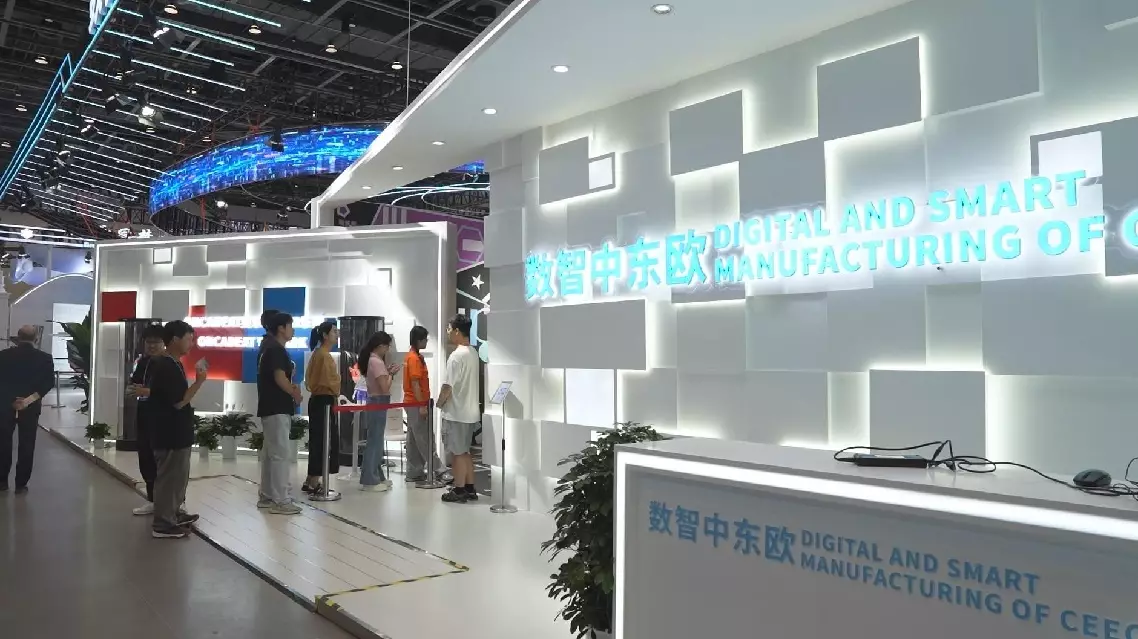
Innovative Chinese products shine at China-CEEC Expo
The U.S. embargo against Cuba is violating fundamental rights and worsening shortages of food and medicine, Aleida Guevara, daughter of revolutionary leader Ernesto "Che" Guevara, said Monday in an interview.
Her comments came on the sidelines of an international solidarity conference in Berlin, where activists warned that the United States' decades-long blockade has shifted from a political tool to a humanitarian crisis, cutting off basic supplies and isolating Cuba from global trade.
"The blockade is one of the worst things that a country can experience, causing years of severe suffering for the Cuban people. The embargo should not affect food and medicine, but it hit those basic needs first -- food and medicine for the people. So for many years, we have faced constant shortages of supplies," she said.
Guevara, a pediatrician at a Havana children’s hospital, said U.S. sanctions prevent pharmaceutical companies from selling medicines to Cuba, directly harming public health. She added that Washington’s measures, imposed in the name of democracy and human rights, have instead created a humanitarian crisis.
"It is unacceptable that the U.S. is trying to prevent other countries in the world from engaging in free trade with Cuba. This is damaging every aspect of our lives. People's lives are affected. Food, medicine, and transportation -- everything is impacted," she said.
The embargo dates back more than half a century. Rooted in the Trading with the Enemy Act of World War I, it was formally codified when President John F. Kennedy signed an executive order in 1962, launching an economic, commercial and financial blockade that has survived 11 successive U.S. administrations.
Today, Cuba is enduring one of its worst economic crises since the 1990s. The island has suffered three nationwide blackouts in March, while gasoline shortages have crippled hospitals, slashed public transport, and strained essential services. Since January, the Trump administration has imposed new oil restrictions and repeatedly issued military threats, further tightening pressure on Havana.
Aleida Guevara’s comments carry symbolic weight given her father’s legacy. Born in Argentina in 1928, Ernesto "Che" Guevara trained as a doctor before joining Fidel Castro’s insurgency in 1956 to overthrow Cuban dictator Fulgencio Batista. After playing a leading role in the rebel victory, he left Cuba to pursue revolutionary struggles abroad, eventually being killed in Bolivia in 1967.
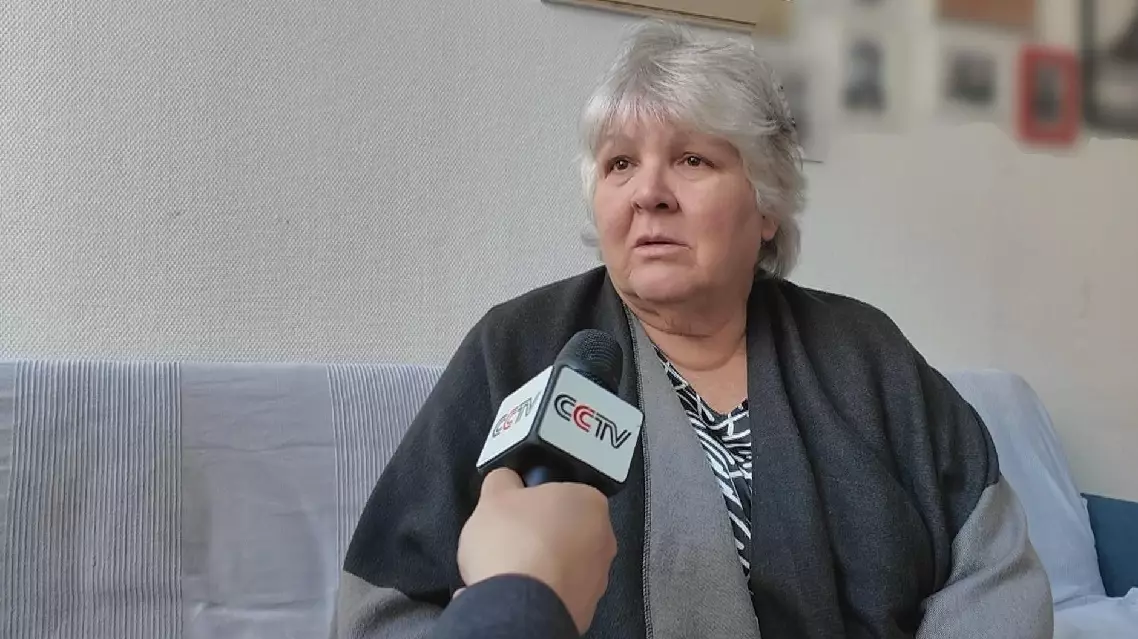
Guevara's daughter warns US embargo deepening Cuba’s humanitarian crisis
Guevara's daughter warns US embargo deepening Cuba’s humanitarian crisis