European universities and research institutions have taken measures to attract American researchers who have been suppressed by the U.S. government, but they face many challenges including funding, said a university president in Belgium.
The Trump administration has recently taken frequent actions to suppress the scientific research community, leading to uneasy feelings among many researchers and causing some to consider leaving the United States. The European Commission pledged to invest 500 million euros between 2025 and 2027 to turn Europe into a magnet for scientific researchers.
Jan Danckaert is President of the Free University of Brussels, an international university with a history of nearly 200 years. He underscored that the U.S. government's series of actions, including cutting scientific research funding and firing scientists, have also affected the school.
"We had two grants which were sponsored by the American governments, which have been abruptly cut by the U.S. Administration because, as they said, they were no longer in line the with the administration priorities. It has affected our university, of course, to a much lesser scale than what is happening in the U.S.," he said.
Danckaert said that the suspension of scientific research projects has made the school more empathetic to the plight of American researchers, and the university is willing to embrace those researchers who intend to leave the United States.
"I believe what is happening in the United States is regrettable for science in general and is jeopardizing the advancement of science. I mostly see it as an opportunity for funding research that faces abrupt cuts and which is important for science in general and for humanity. It's not so much about our university or our field, but we think that there are a number of important fields like climate research, de-carbonizing our economy, and also, AI," he said.
In order to attract American scientific researchers, the Free University of Brussels has taken multi-dimensional measures to create a warm and attractive cross-oceanic recruitment platform.
"We've had a number of mobility grounds, we believe there might be a specific interest now from scientists currently working in the US in order to apply. We have 19 apartments which are available for scientists who want to come and spend a longer period in Brussels. And we've opened an email address where researchers can inquire for more information. We had about more than 100 inquiries for more information, mainly coming from the U.S.," Danckaert said.
Recent analysis by Bruegel, a well-known think tank in Brussels, revealed that the educational background of American researchers may become a key factor in their future choices. Data shows that among postdoctoral fellows working in top American universities, 7 to 19 percent have obtained degrees in Europe.
However, Europe still faces many challenges in attracting these top scientific research talents, the first of which is funding.
"In Europe, the funding landscape is much more fragmented. The basic funding from research comes from the member states and then the European union adds a layer on top of that. But this fragmentation should be overcome in Europe by more coordination, more coordination between the member states, and more coordination offered by the European Union," said the university president.
Data from Bruegel also shows that annual salary of top researchers at the University of California can reach 500,000 or even more than 1 million U.S dollars, while the annual salary of professors at top European universities usually does not exceed 75,000 euros. Such a huge salary gap could also be an obstacle for many U.S. researchers to migrate to Europe.
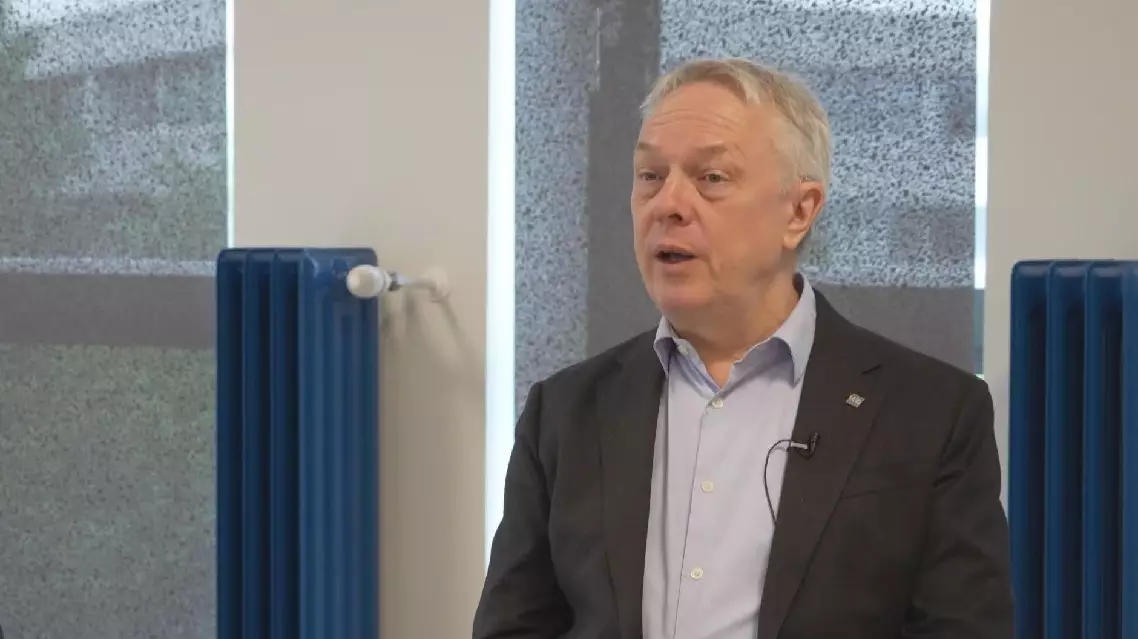
Europe eager to attract US researchers amid Trump administration actions: university president