China's first large-scale lithium-sodium hybrid energy storage station was put into operation on Sunday in southwest China's Yunnan Province.
The Baochi Energy Storage Station of China Southern Power Grid, located in Wenshan Zhuang and Miao Autonomous Prefecture, has an installed capacity of 400 MWh. It can regulate 580 million kilowatt-hours of electrical power per year, equivalent to the annual electricity consumption of 270,000 households, of which green electricity accounts for 98 percent.
Yunnan is a typical region in China with a high proportion of new energy. At present, the installed capacity of new energy has exceeded 60 million kilowatts across the province, and its penetration rate in the entire power system is close to 70 percent. The high proportion of new energy means that the power grid is more volatile, putting a higher demand on energy storage.
"The energy storage station serves more than 30 wind power and photovoltaic plants in Yunnan. The combination of lithium and sodium technologies can better support the stable access of a large amount of new energy to the power grid. It can also help with subsequent participation in electricity market transactions and promote the efficient use of new energy," said Wu Bin, deputy manager of the Baochi Energy Storage Station Project under China Southern Power Grid.
At present, China's new energy storage technologies are developing rapidly, among which lithium-ion battery energy storage, the most mature with low cost, takes up a dominant position. However, with the increasing demand for lithium batteries, lithium resources will face shortage.
The Baochi energy storage station integrates the advantages of lithium batteries and sodium batteries, further expanding the application scenarios of sodium-ion battery energy storage.
"Seventy percent of the production materials of lithium batteries in China come from overseas, making the production highly dependent on imports. The raw materials of sodium batteries can be extracted from salt mines, seawater, and salt lakes. The sodium resources of the Qarhan Salt Lake alone are 500 times the global lithium resources," said Chen Man, a member of the National Electric Energy Storage Technical Committee (TC550).
Experts said that in addition to abundant reserves, sodium have many excellent characteristics, such as being able to operate stably under an environment with a temperature difference of 45 degrees Celsius. The Baochi energy storage station puts into use the world's first large-capacity sodium-ion battery developed by China, with a maximum response speed six times that of other existing sodium-ion batteries.
"This grid-type sodium battery system can flexibly adjust its charging and discharging mode according to the access of new energy, so as to balance the volatility of new energy. It can be further applied in regions with high proportion of new energy in China, including Tibet, Xinjiang, Gansu, and Ningxia, to help the stable delivery of electrical power from the new energy bases in deserts, Gobi and wasteland areas," said Wan Minhui, a researcher at the energy storage research institute under China Southern Power Grid.
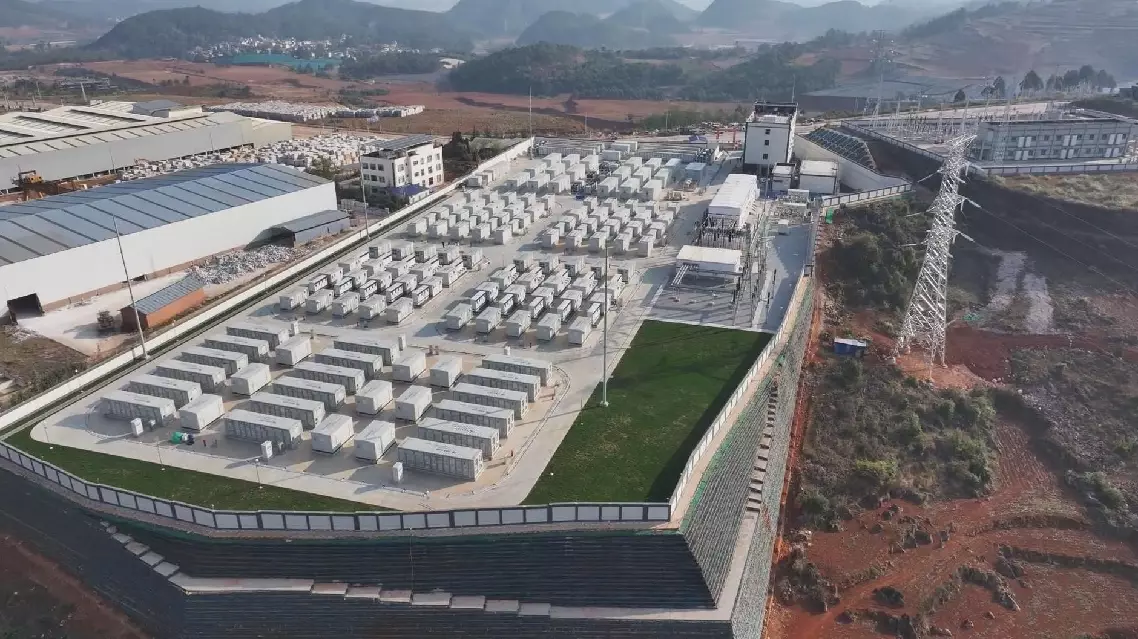
China’s 1st large lithium-sodium hybrid energy storage station put into operation