Porcelain plates and other artifacts from China's Ming Dynasty (1368-1644) found in Indonesia's Cirebon City are a testament to the centuries-old friendship between the two countries, as well as the historic trade links between Chinese traders and the then-Cirebon Sultanate supported by the Maritime Silk Road.
Located on the northern coast of Java Island, Cirebon is renowned for its rich cultural heritage and historical role in the Maritime Silk Road.
The city was recently welcomed as a new member of the City Alliance for the Protection and Joint Application of Maritime Silk Road World Heritage, the first city outside China to join the alliance.
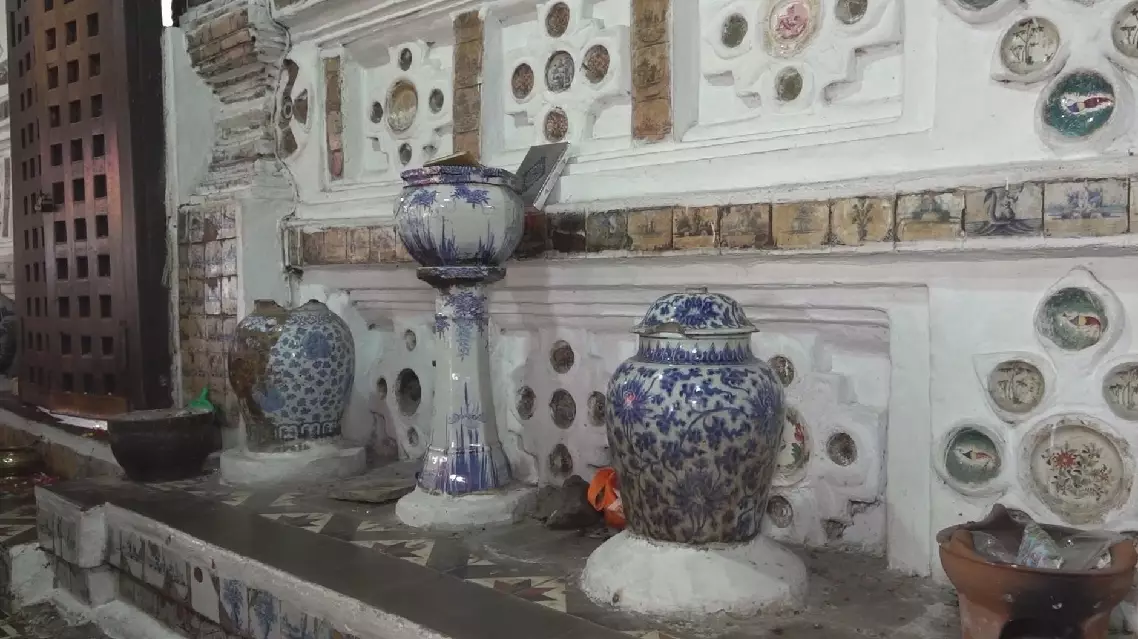
At the Keraton Kasepuhan Complex, the Cirebon Sultanate's royal residence, the exterior and interior walls are decorated with Chinese porcelain tableware.
Locals believe the porcelain plates were brought in when a Chinese woman named Ong Tien Nio journeyed to Cirebon to marry Cirebon's first king Sunan Gunungjati around the year 1480.
"Princess Ong Tien Nio and her personal guards met Sunan Gunungjati there. Perhaps it was destiny by God for Sunan Gunungjati and Princess Ong Tien Nio to meet and finally get married in Luragung Village," said Pangeran Goemelar, a member of royalty of the Cirebon Sultanate.
Sunan Gunungjati, a renowned Muslim cleric, also commissioned a bright red pillar in the throne room as a symbol of friendship between China and the Cirebon Sultanate.
Clothing items worn by Ong Tien Nio, as well as other Chinese tableware artifacts were brought in from China on several sail boats and are now on display in the local museum.
"In tomb of Sunan Gunungjati, we can see an assortment of trade products from China, such as ceramics from different generations. From the Ming Dynasty (1368-1644) until the Qing Dynasty (1644-1911) - it's all here. The oldest is from the 16th century," said Mustakim Asteja, an art and culture lecturer from the Prima International Tourism Polytechnic.
The hundreds of years old water tanks used at the tomb of the Cirebon king and Ong Tien Nio also originate from China.
There are more than enough artifacts to prove that Cirebon indeed is a city of rich cultural heritage that was part of the Maritime Silk Road.
Ancient Chinese porcelain found in Indonesia testament to centuries-old bilateral ties