China and the Association of Southeast Asian Nations (ASEAN) have set a fine example of regional cooperation and integrated development when global trade protectionism has been on the rise, particularly with the emergence of unilateralist policies like those under U.S. President Donald Trump, posing challenges to the multilateral trading system.
Business communities from around the world are still embroiled in this trade war. Nine of the 10 ASEAN members have been slapped with reciprocal tariffs with Cambodia being the worst hit by a whopping 49 percent tariff.
Shi Zhongjun, secretary-general of the ASEAN-China Center, the only inter-governmental organization co-founded by the two sides, said the U.S. government's advocacy for decoupling and bloc confrontation has resulted in a global rise of protectionism that has a very big impact on both China and ASEAN countries.
"Economic data and facts consistently demonstrate that decoupling is neither realistic nor beneficial. We even see the consequences of this tariff policy in the past several months in the U.S. itself. However, we could see a completely different picture in our region. Confronting unilateralism and protectionism, ASEAN, China set a very successful example of seeking win-win results and integrated development through mutually beneficial cooperation," he said.
The secretary-general shed light on how China and ASEAN can further strengthen regional cooperation to safeguard globalization and resist protectionism.
"The two sides should make full use of the two advantages at least. First, leveraging a large combined market with a total population of over 2 billion people, a quarter of the global total. China and ASEAN represent the world's largest economic emergence in terms of scale. Together, they form a demographic and consumer powerhouse with unmatched growth potential. This is not just a market, it's the future center of gravity for global demand," Shi said.
"Second, unlocking the complementary strength of the two sides. China's industrial capacity and technological leadership from AI to green technology could accelerate the modernization of ASEAN countries. With its comprehensive industrial system, robust manufacturing capabilities, infrastructure and digital expertise, China is a pivotal force in driving ASEAN's industrial upgrade and digital transformation. Its vast market and investment power also make it a major partner for ASEAN," he said.
Noting ASEAN's strategic location boosts global trade and attracts foreign investment, including from China, Shi said the abundance of natural resources and a large young workforce in ASEAN present significant opportunities for Chinese businesses in areas such as trade, investment, and the tourism industry.
ASEAN, made up of 10 Southeast Asian countries, is China's largest trading partner. In 2024, bilateral trade increased to 6.99 trillion yuan (968 billion U.S. dollars), accounting for 15.9 percent of China's foreign trade, according to official statistics.
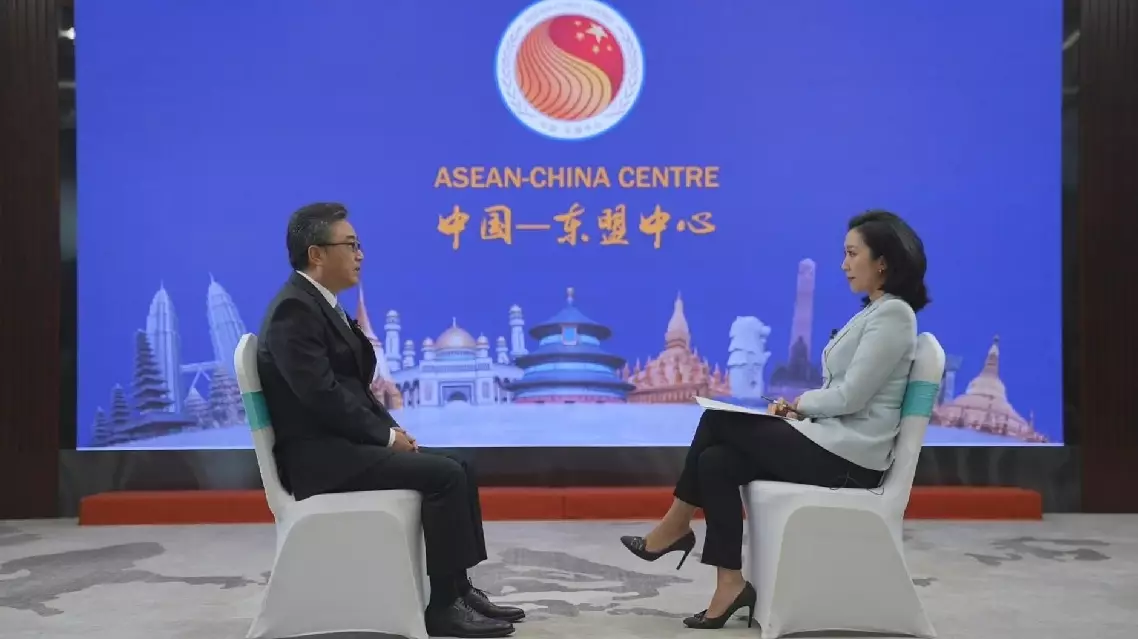
China, ASEAN set example of regional cooperation against trade protectionism: official