Skip to Content Facebook Feature Image

U.S. science fiction movie tells story of heartwarming power

HotTV

HotTV

HotTV

U.S. science fiction movie tells story of heartwarming power

2026-03-25 04:55 Last Updated At:03-27 10:54

Christopher Miller and Phil Lord, directors of the film Project Hail Mary, said their science fiction movie aims to showcase the heartwarming power of understanding and acceptance.

The film was released worldwide last Friday, grossing more than 140 million U.S. dollars in its opening weekend.

Not only has the film performed strongly at the box office, but it has also pushed the boundaries of science fiction with its heartwarming touch.

In the film, as the protagonist's only companion in the cosmos, Rocky's exterior is composed of irregular rocks, yet his personality is lively and endearing.

In an exclusive interview with China Central Television (CCTV) via video link, Miller and Lord said that to visualize this unique alien creature, they turned to the natural world for inspiration.

"We looked at lots of like minerals and like chrysoprase rough, which is a gemstone. And we loved the way that like there were veins of like pretty gemstones amongst more regular sandstone and rock," said Lord.

In addition to its exterior design, Rocky's body language is equally distinctive.

"The way that he moves is sometimes animal-like and sometimes it's like a cat or a dog, but also sometimes he's like a person. And then he also has ways of moving that are from his own alien culture that were invented by us and James Ortiz, the lead puppeteer who portrayed rocky," said Miller.

When two vastly different beings meet in space, their differences do not create a barrier; instead, they bring them closer together. With its imaginative sci-fi premise, the film tells the story of a friendship that transcends species.

"That's something that we can take with us in the world, as we come across people who are different from us and find common ground and make accommodations for each other and try and see the world through their eyes, and then pretty much anything is possible," said Miller.

U.S. science fiction movie tells story of heartwarming power

U.S. science fiction movie tells story of heartwarming power

U.S. science fiction movie tells story of heartwarming power

U.S. science fiction movie tells story of heartwarming power

Geopolitical tensions and energy supply disruptions have risen to become the top concerns for U.S. financial stability, a Federal Reserve report said on Friday.

The Fed's latest semi-annual Financial Stability Report revealed a dramatic shift in how professionals view risks to the U.S. financial system, as the U.S.-Israeli war against Iran has sent shock waves through the global economy.

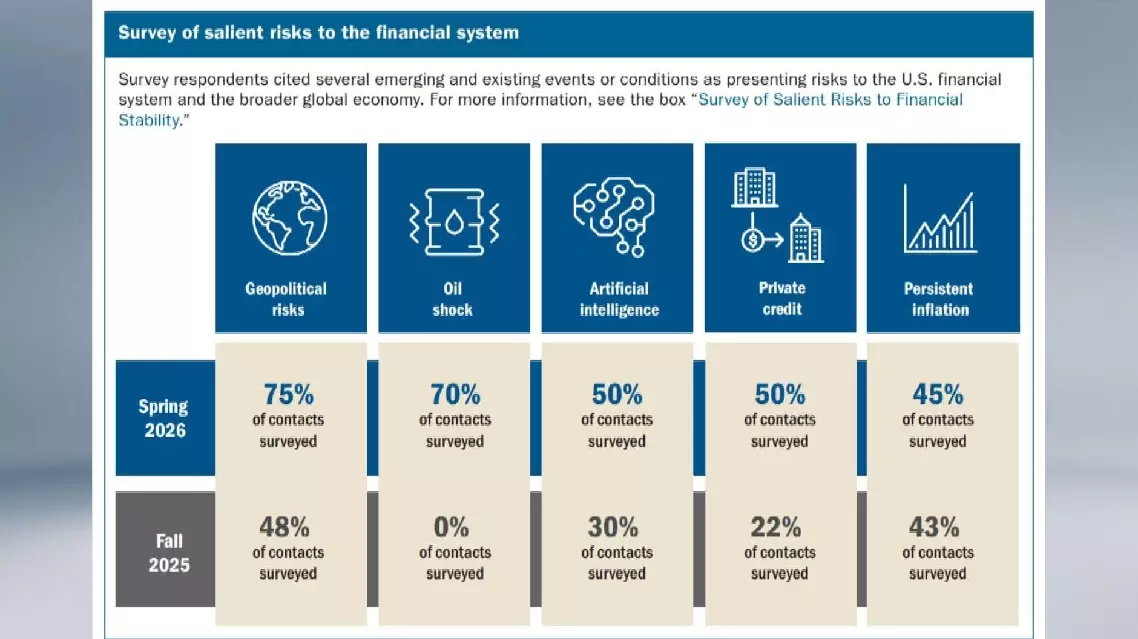
According to a survey conducted by the Federal Reserve Bank of New York between March and April, 75 percent of respondents cited geopolitical tensions as a major risk, a sharp jump from 48 percent just six months earlier. Even more striking, 70 percent now see oil supply shocks as a threat, a concern that was not mentioned at all in the survey from last fall. Respondents widely pointed to the war with Iran as a potential trigger for prolonged energy market disruptions, which could also keep inflation higher for longer.

Half of those surveyed raised concerns about artificial intelligence. They pointed to equity valuations, rising leverage in the financial system as capital spending becomes increasingly reliant on debt, and potential job losses from widespread AI adoption.

Private credit was also flagged as a threat by 50 percent of respondents. The market faces mounting pressure from investor redemptions and worsening market sentiment, they warned. In addition, fast-evolving AI could weaken the credit quality of some borrowers, which, in turn, might tighten credit conditions and spill over into broader markets.

Meanwhile, 45 percent of respondents identified persistently high inflation as a salient risk, with many worrying that prolonged energy supply shocks from the U.S.-Israeli war against Iran could force the Fed to adopt tighter monetary policy.

Geopolitical tensions, oil supply shocks pose primary risks to US financial system: Fed report

Geopolitical tensions, oil supply shocks pose primary risks to US financial system: Fed report

Recommended Articles